© Chanel
© Chanel
© Chanel
Chanel
Matthieu Blazy is only the fourth artistic director in Chanel's 115-year history. He built his first collection from a photograph: Gabrielle Chanel wearing Boy Capel's shirts from Charvet. He called Charvet. He had the shirts made again — with "Chanel" embroidered in the same cursive script the house used on its labels in the 1920s. The past as raw material, handled with complete confidence.
Paris · 1910 · The Fourth Artistic Director
Gabrielle Chanel founded her house in 1910. Karl Lagerfeld took the creative direction in 1983 and held it for thirty-six years, until his death in February 2019. Virginie Viard followed and led the house through the pandemic years. Matthieu Blazy was announced as the fourth artistic director in December 2024 — chosen, in the words of Bruno Pavlovsky, president of Chanel fashion, not to "do Chanel" but to push the boundaries of what Chanel is. "We chose him so he could push the boundaries of what Chanel is, for the future. He will bring his modernity, his way of working — Chanel is ready to let itself be transported." Blazy is French-Belgian, raised on fashion's most rigorous production floors: Raf Simons, Maison Margiela, Celine under Phoebe Philo, Calvin Klein, and three years as creative director of Bottega Veneta, where he made the brand's show the hottest ticket in Milan. He joined Chanel in the spring of 2025 and showed his first collection in October — nine months after his appointment, the house taking no shortcuts on preparation.
Spring/Summer 2026 · The Grand Palais · A New Universe
Blazy's debut collection was presented on October 7, 2025, at the Grand Palais in Paris — the house's historic venue, recently restored after a $500-million renovation — transformed into a planetarium. Multicolored planets suspended overhead, others placed at ground level on the gleaming black floor. The set was not an aesthetic choice but a conceptual one: where Lagerfeld had closed his final decade with a Chanel rocket, Blazy opened his first collection with an entire solar system. The ambient soundtrack — from Debussy's "Clair de Lune" to Isao Tomita's electronic rendition of Holst's The Planets — set the register precisely: cosmic, serious, and unexpectedly joyful. The audience included Nicole Kidman, newly re-announced as house ambassador; Margot Robbie; Penélope Cruz; Pedro Pascal; Ayo Edebiri, the first ambassador named under Blazy's direction; Jennie Kim. The show closed with model Awar Odhiang dancing down the runway. The last word was joie de vivre.
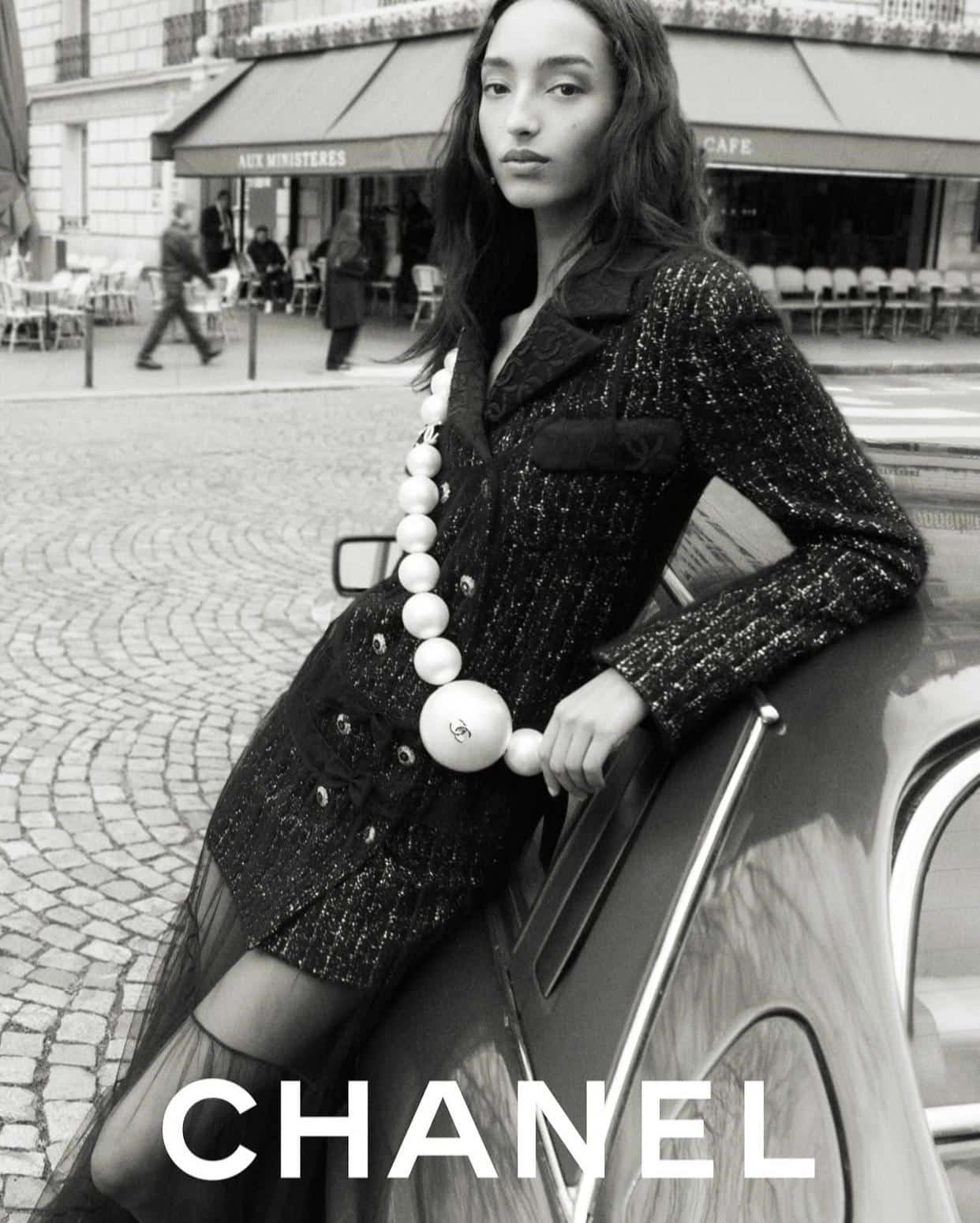
The opening look was a cropped tweed jacket and wide-leg trousers — not the canonical 1950s skirt suit, but a pantsuit that Gabrielle Chanel herself wore in the 1920s to challenge traditional gender norms. The 2.55 bags were crushed, unclasped, their worn-in leather suggesting a woman too busy and too confident to manage a clasp. Boucle jackets were lighter, silhouettes softer. Frayed hems. Raw edges. A Charvet button-down with "Chanel" embroidered in 1920s cursive. The word the industry reached for most often: nonchalant. "Attitudes become form," one expert said. More than a specific garment or motif, Blazy had captured the body language of Gabrielle Chanel's earliest portraits — and made it entirely contemporary.
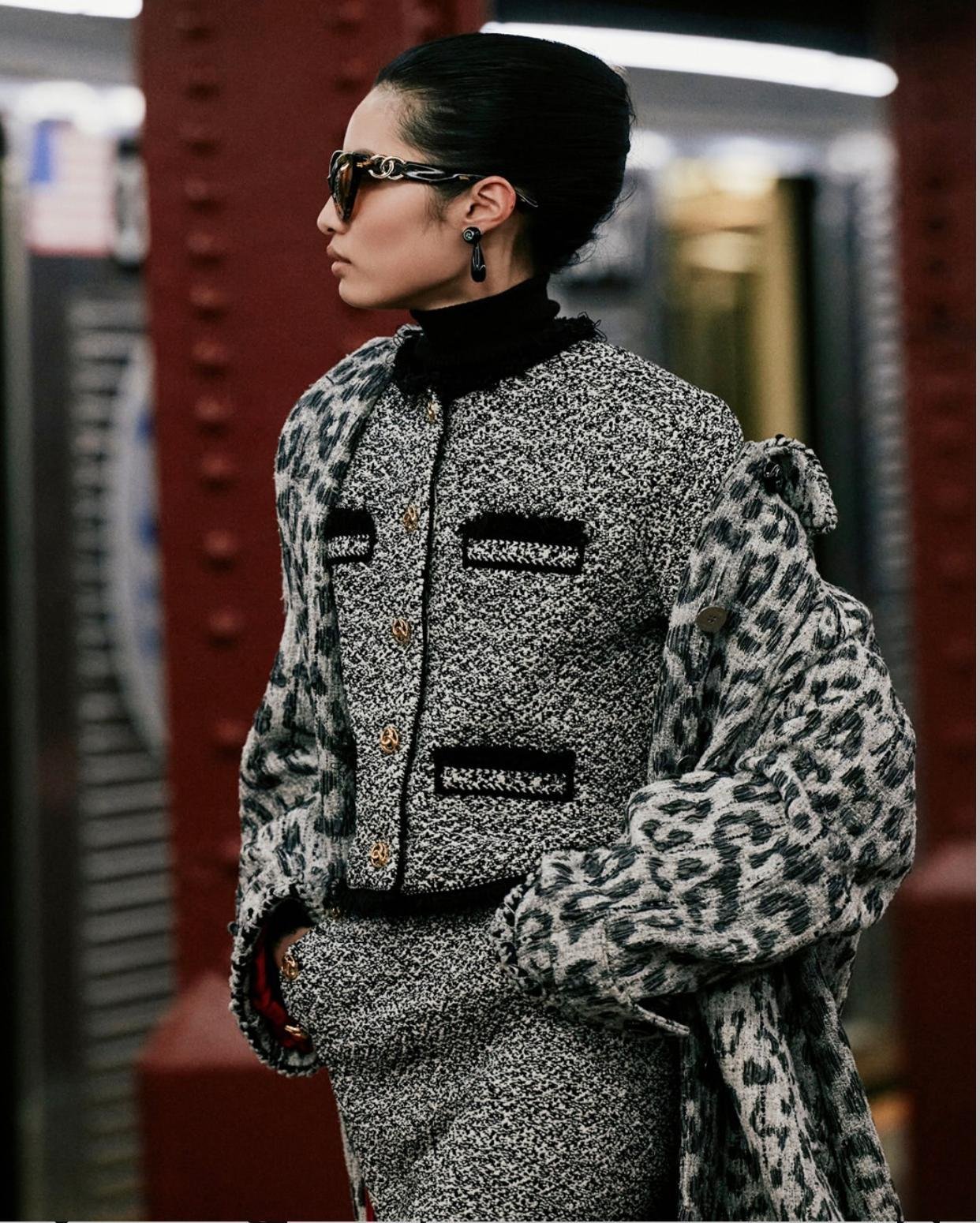
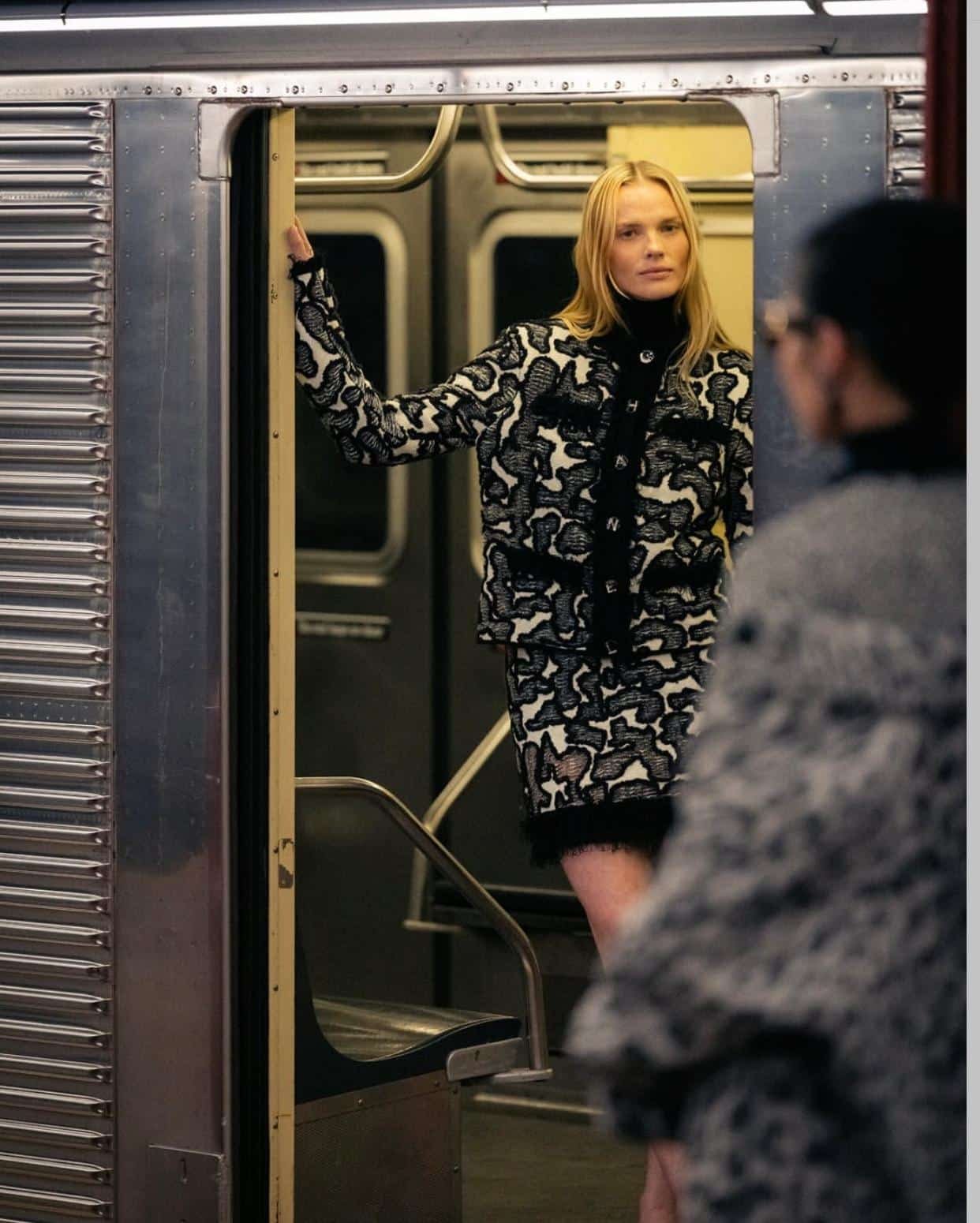
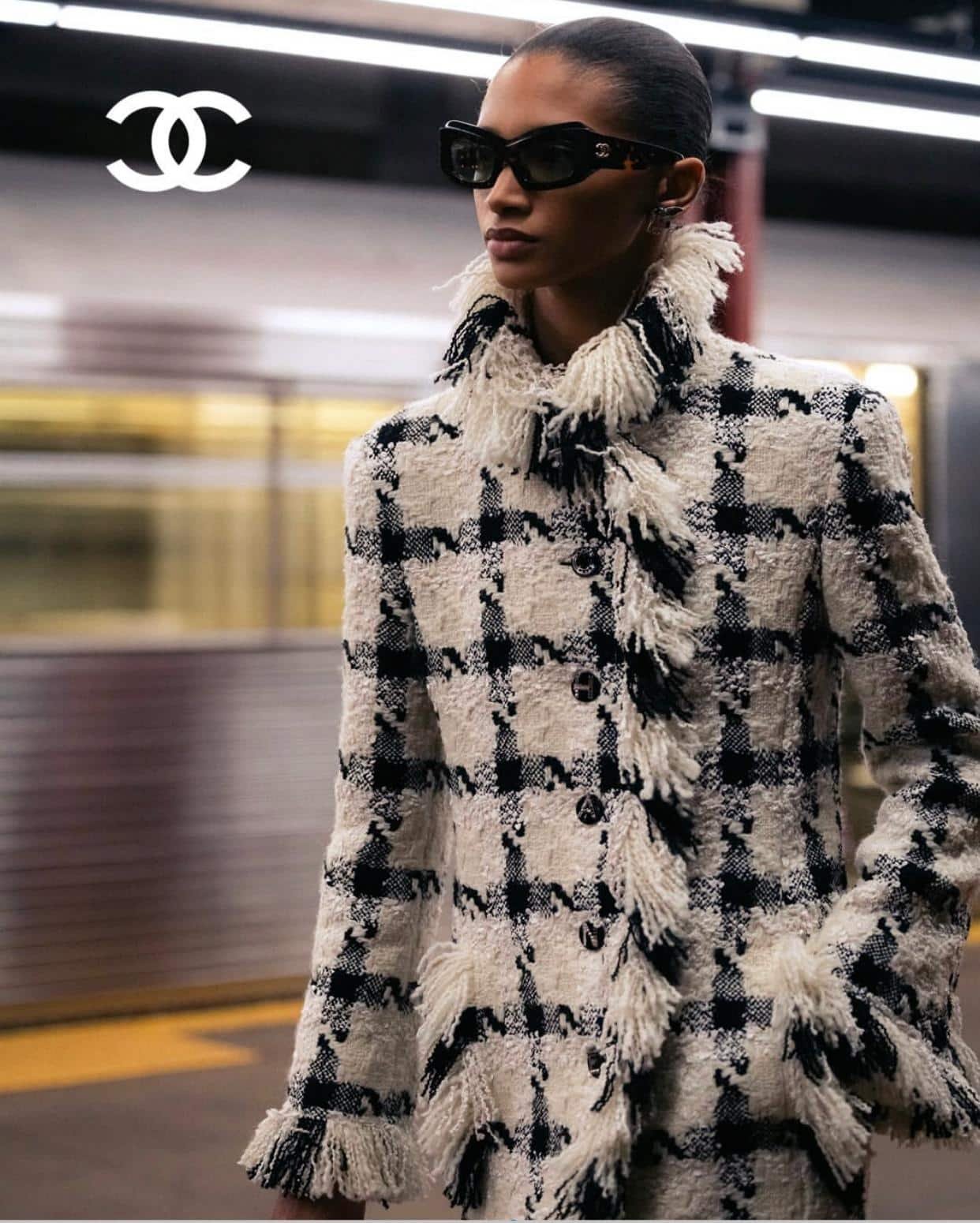
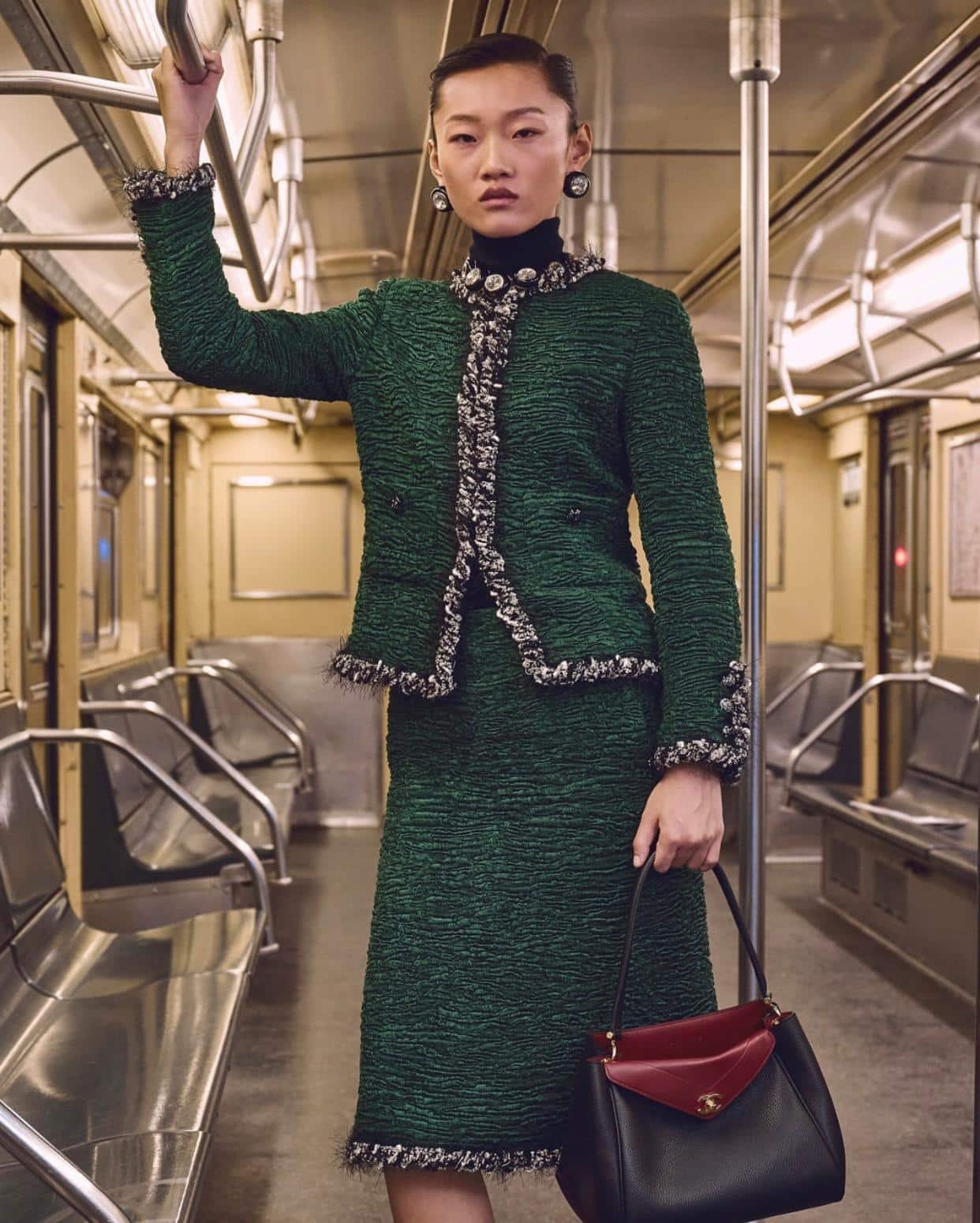
The tweed — Chanel's most unimpeachable house code — appears in Blazy's collections as a material for experimentation rather than a symbol of continuity. Spring 2026 contained 26% tweed by look count, compared to 42% in the previous collection — a reduction that made each tweed piece more deliberate, more present. The jackets are lighter, their construction less rigid, their silhouettes shaped by the body inside them rather than by their own architecture. In the Métiers d'Art 2026 collection shown in New York, new bouclé check flannels with chains on the hemline introduced what Blazy calls the American chapter of the tweed story: "the story of Pendleton in America — what would be that version of Gabrielle." Tweed not as tradition but as question.
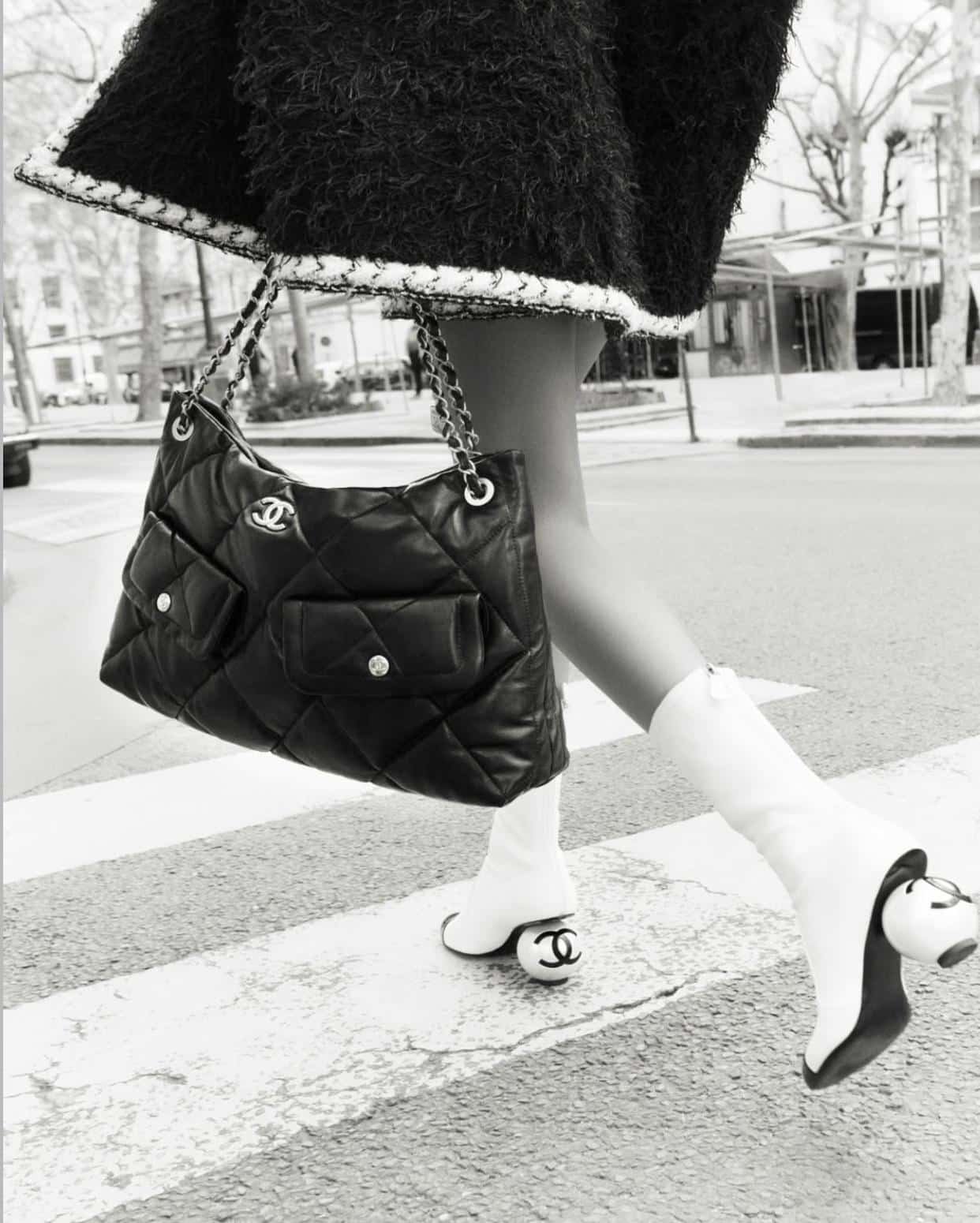
The 2.55 — the quilted flap bag that Gabrielle Chanel created in February 1955, with its burgundy lining the color of Convent School uniforms and its chain strap that freed women's hands — appears in Blazy's debut crushed, unclasped, apparently used. The worn-in leather recalls the pre-Chanel flap era of the bag's origins, making a new bag feel as vintage as the original design really is. The gesture communicates everything about Blazy's Chanel: that the codes are not to be preserved but to be lived in, that the most luxurious relationship with a Chanel bag is the one in which the woman is too fully occupied with her life to pay it formal attention. "This Chanel girl is in a hurry," the fashion press observed. She always was.
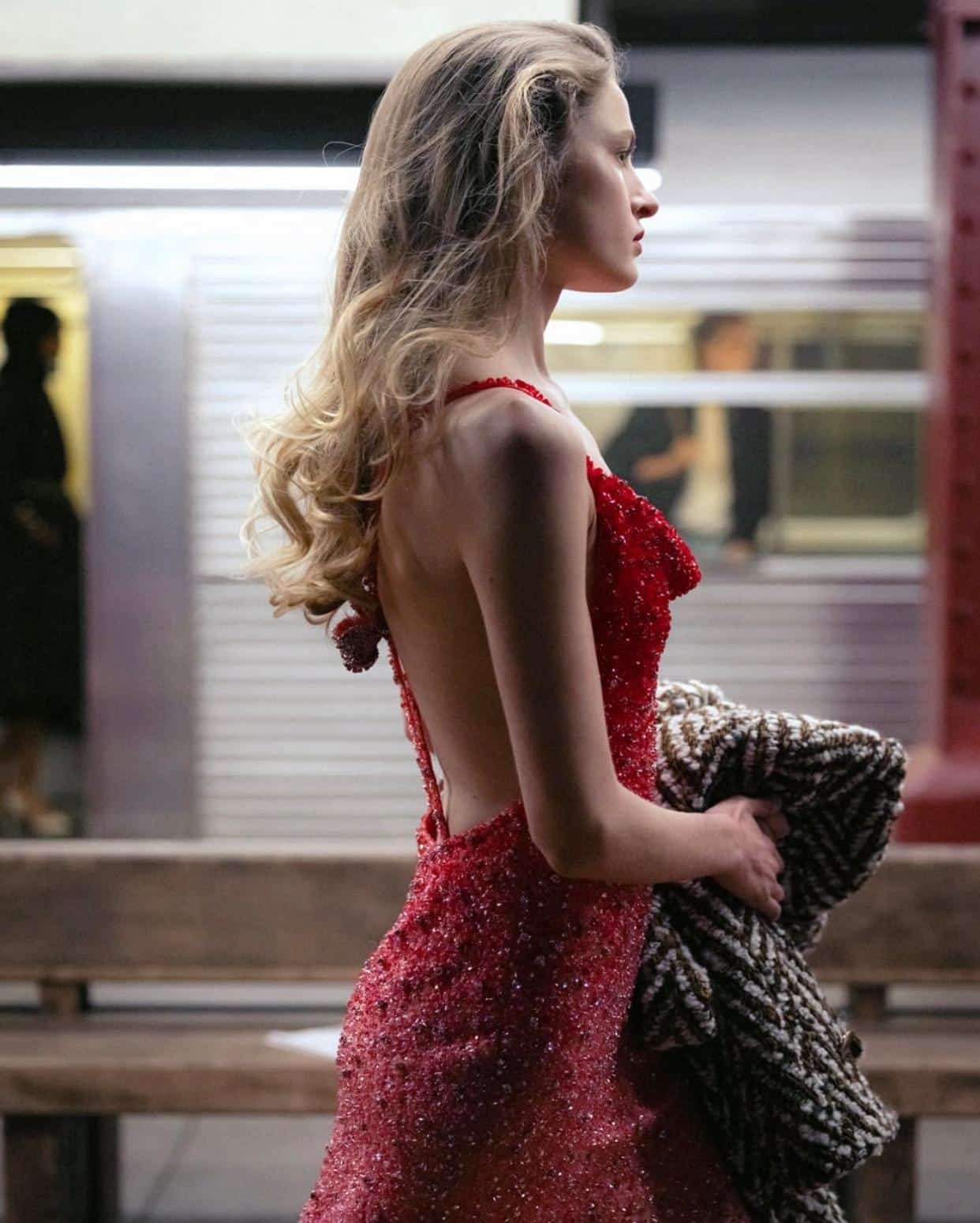
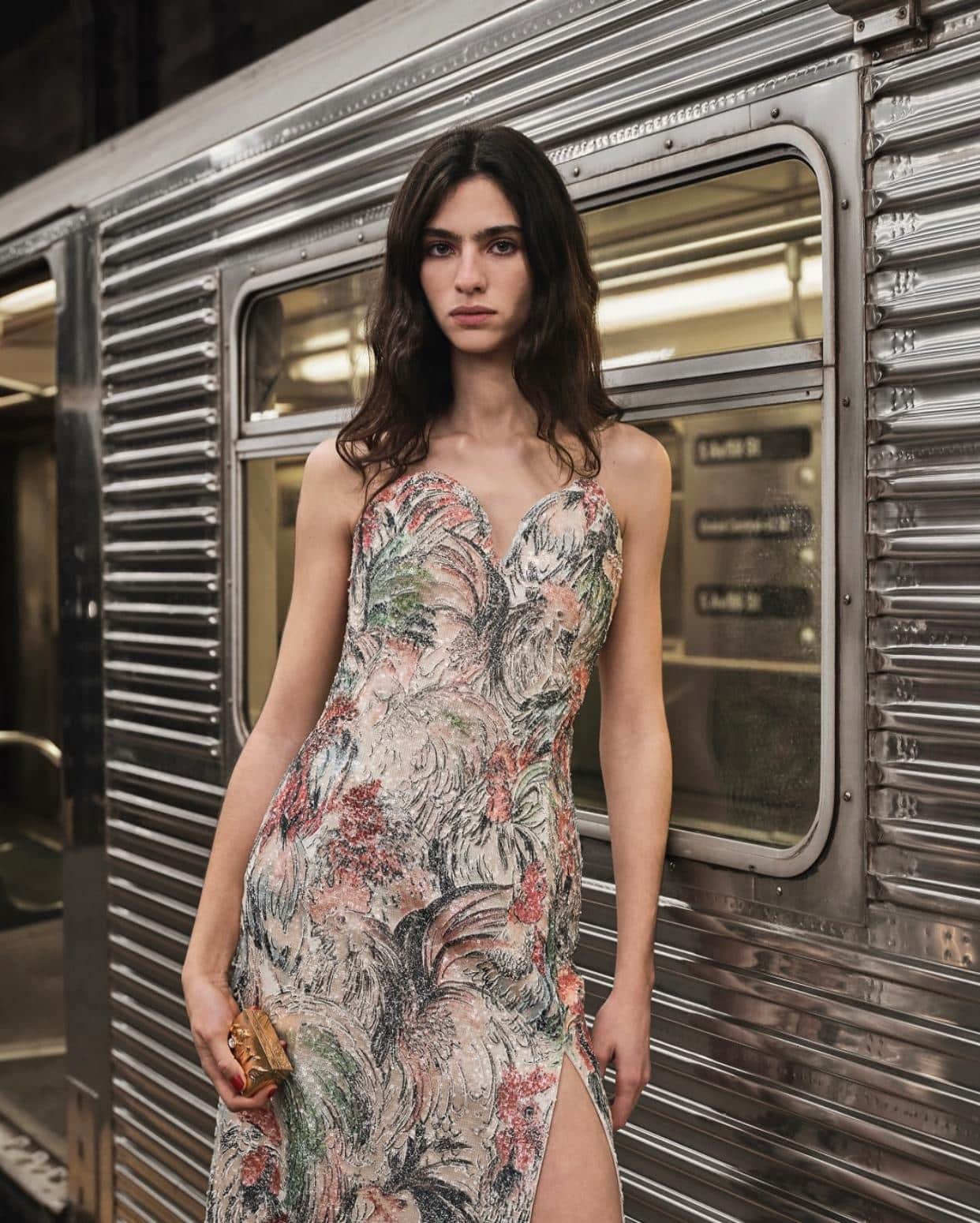
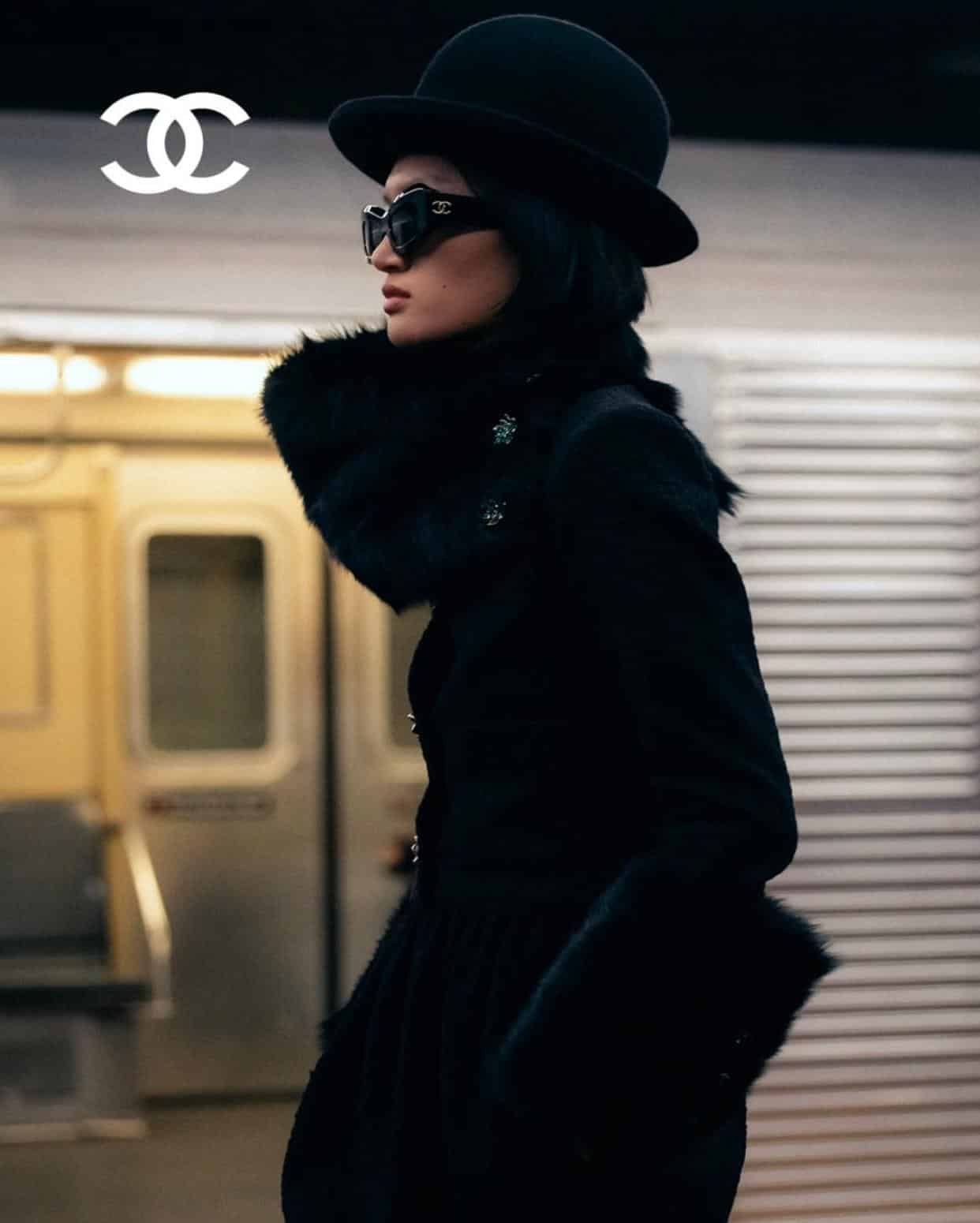
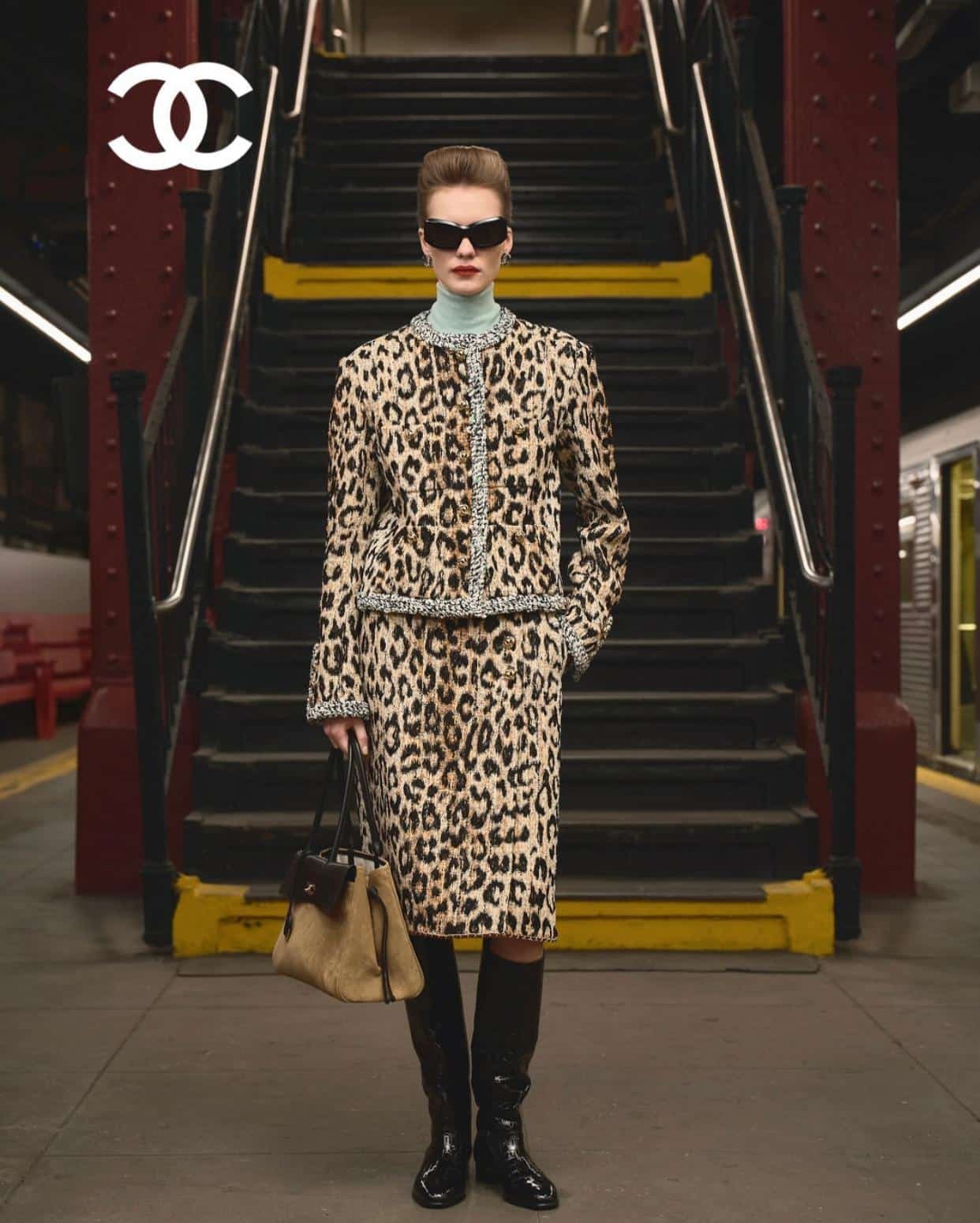
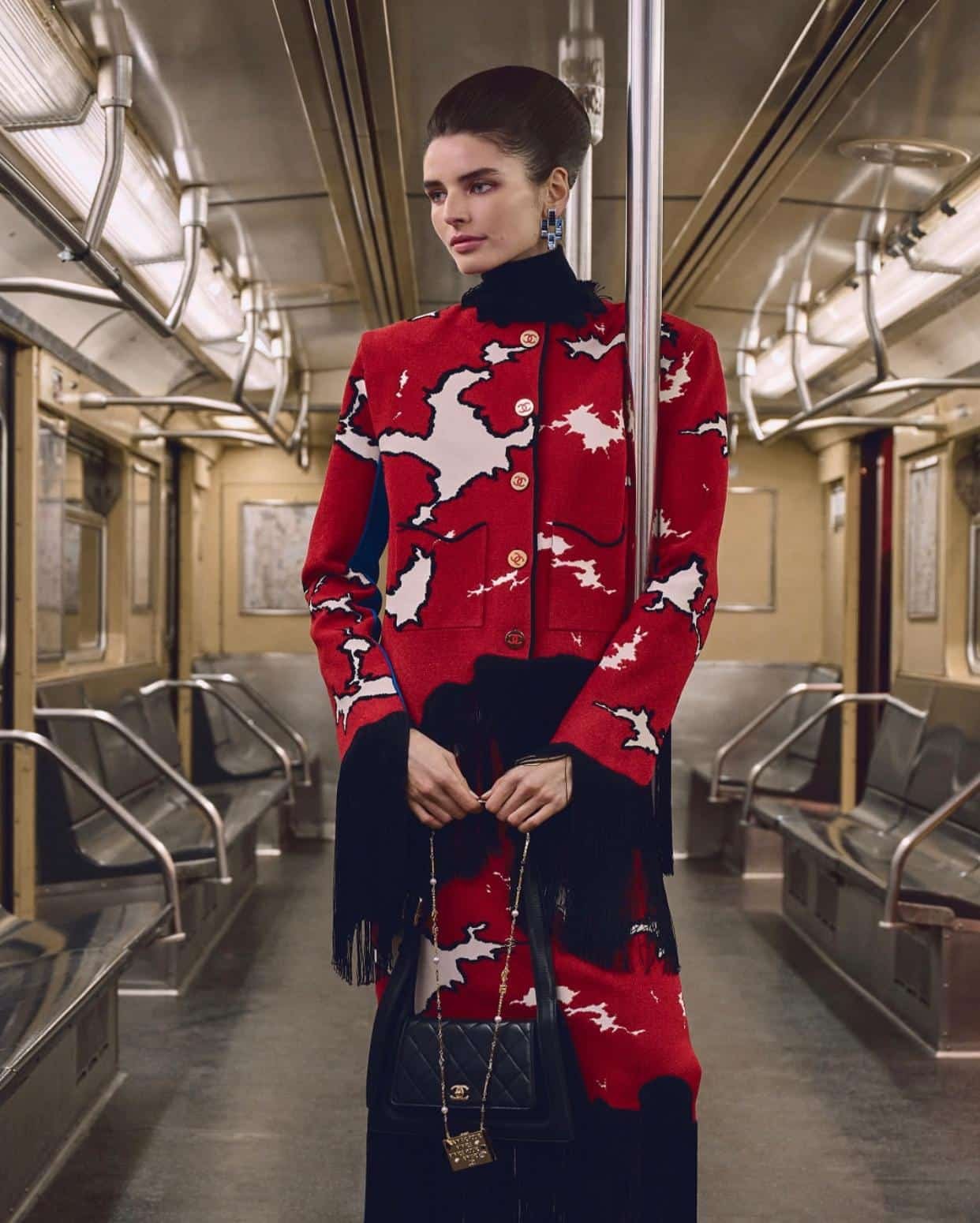
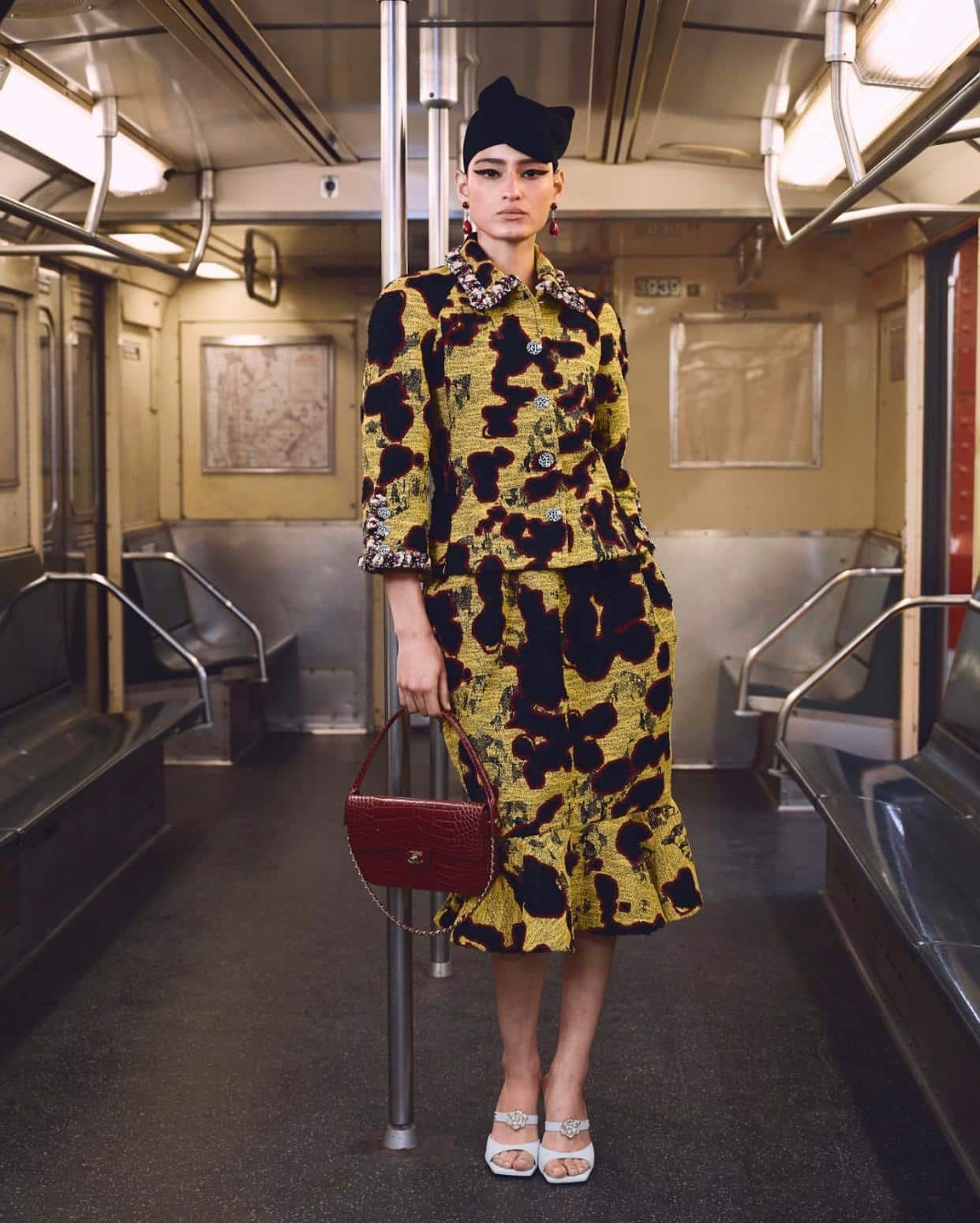
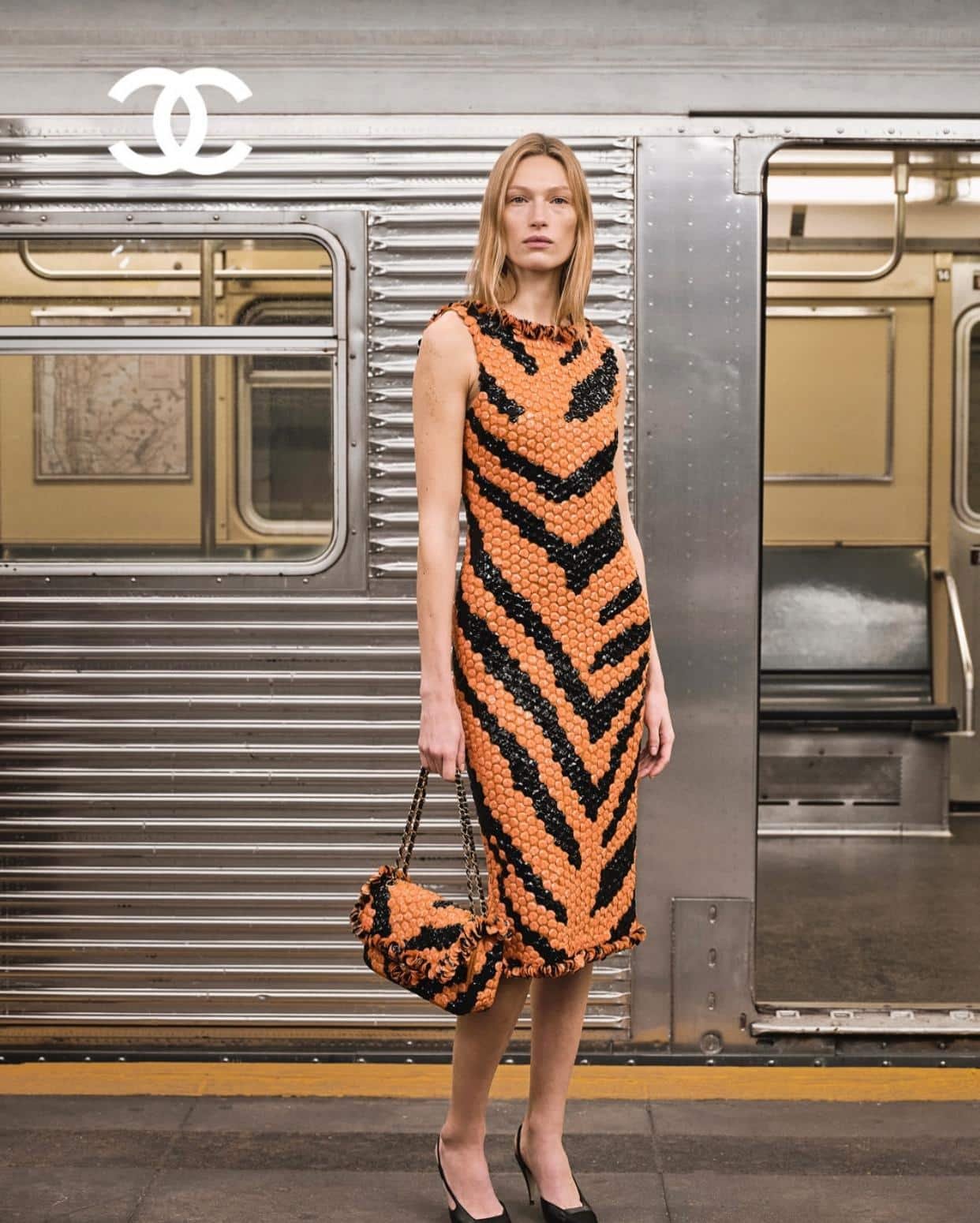
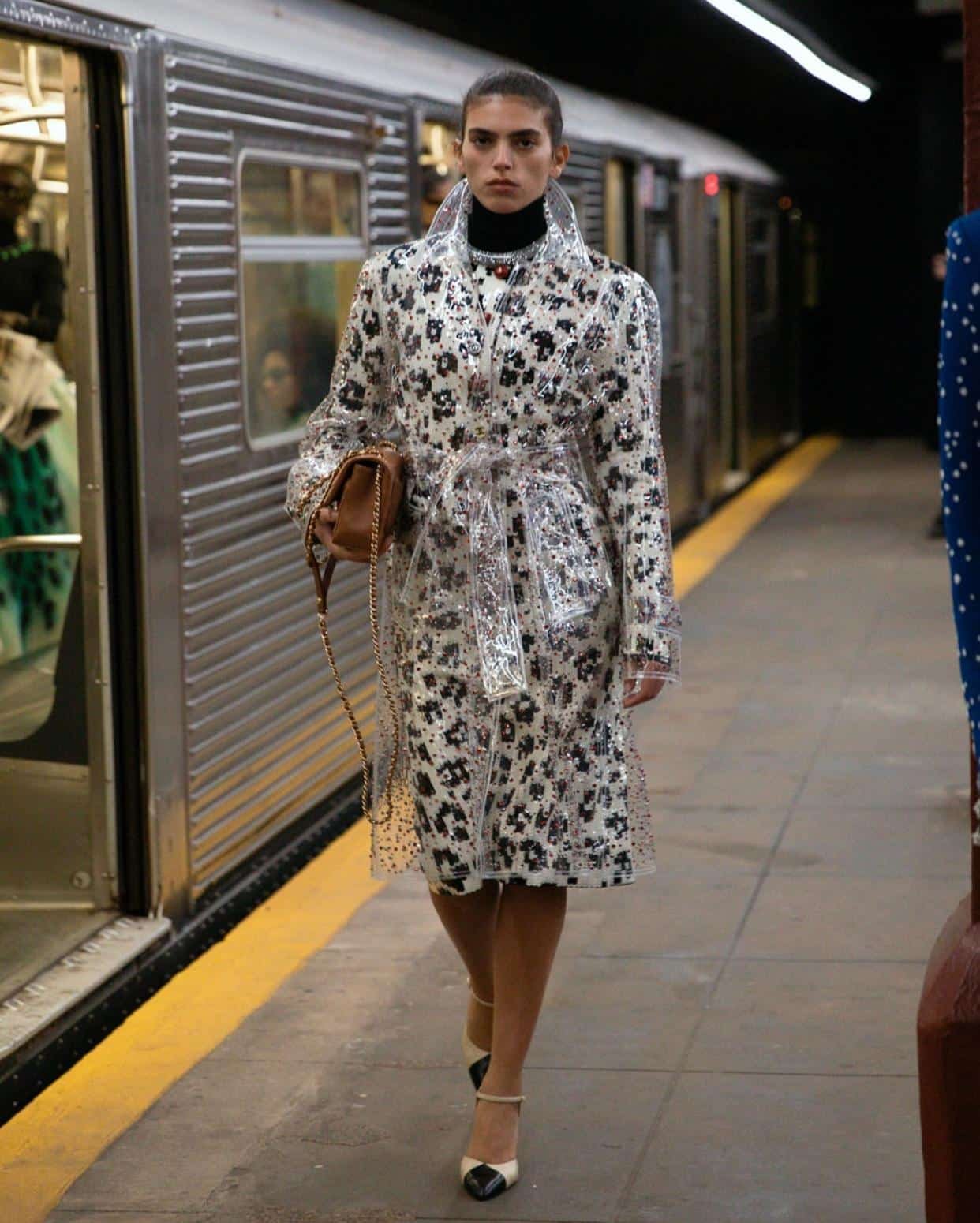
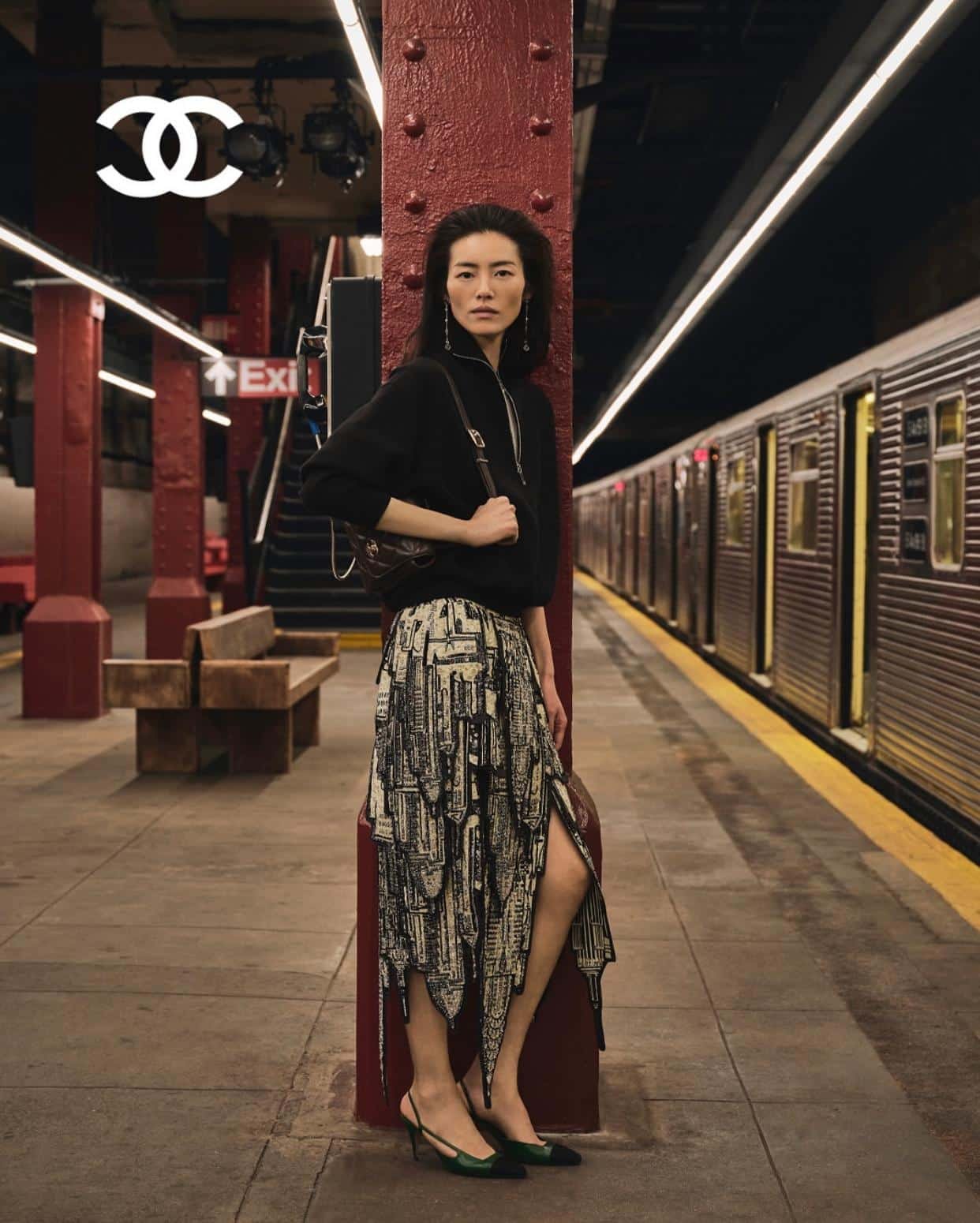
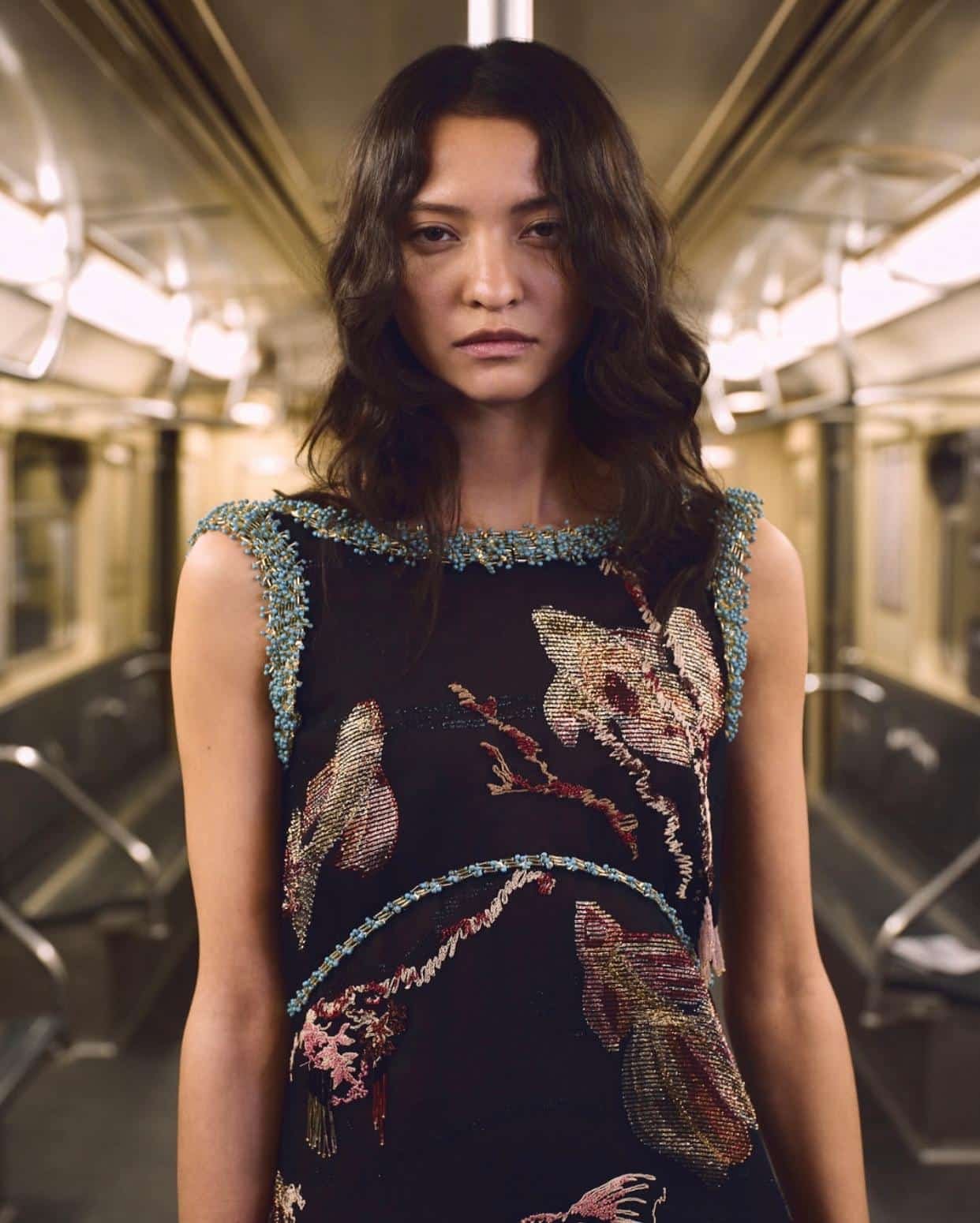
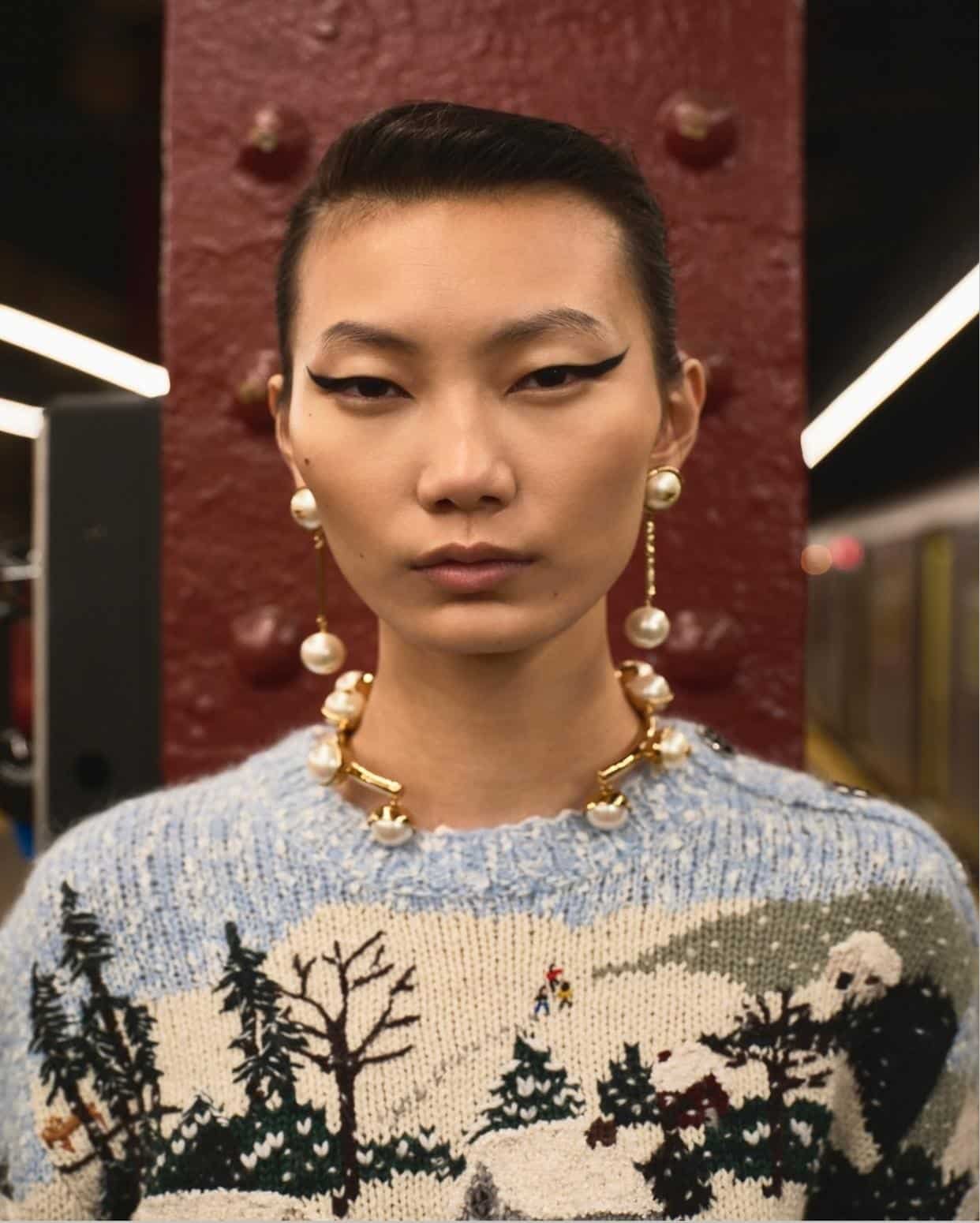
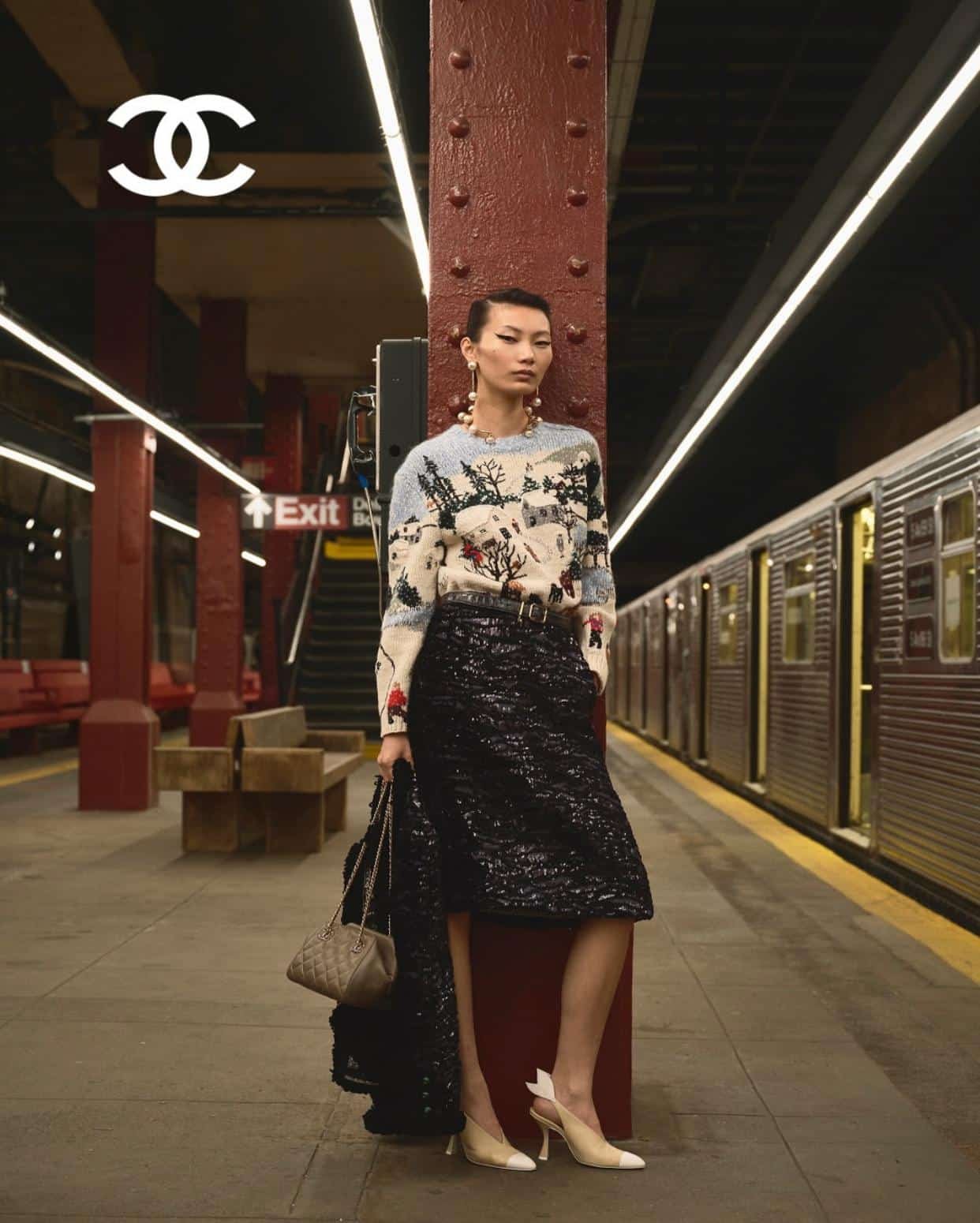
On December 3, 2025, Blazy presented his first Métiers d'Art collection — the annual showcase of Chanel's artisan houses — in the abandoned subway platform beneath 168 Bowery in New York's Lower East Side. Models emerged from a stationed C train car and walked the platform as any New Yorker would, while guests including A$AP Rocky, Tilda Swinton, Linda Evangelista, Dapper Dan, Jon Bon Jovi, and Kristen Stewart took their places on the platform. The collection — pinstripes, feathered gowns, neon animal-print skirt suits, coffee cup-accented handbags — was organized around Blazy's conviction that the New York subway is "one of the unique places in the world where you truly never know who you're going to meet." Singular personalities, crossing paths without hierarchy. A celebration of the city's democratic and improbable glamour. "This is my stop, the Chanel stop," said actress Jenny Slate, front row in a tweed jacket and khaki slacks. She was not wrong.
The signal of Blazy's debut collection arrived before the show: a David Bailey-lensed Instagram post of a classic collared shirt with pearl buttons and "Chanel" embroidered in the cursive script of the 1920s. The shirt was made in collaboration with Charvet — the historic French shirtmaker on the Place Vendôme — and was the house's first brand collaboration. Its origin: photographs of Gabrielle Chanel wearing the button-down shirts of Arthur "Boy" Capel, her great love, in the 1910s and 1920s. She borrowed his shirts, as many things. Blazy had Charvet remake them precisely. Then he showed them with cascading ball skirts and frayed tweed. The historical starting point was intimate and specific. The result was completely contemporary. This is the methodology — not archive-mining as nostalgia, but the past as a literal raw material for present-tense construction.
Blazy's relationship with Chanel's house codes is that of a craftsman who knows the material so thoroughly that he can improvise with it. The camellia appears — as a button on a cropped jacket, as a motif on a black tweed suit — without becoming a motif in the decorative sense. Pearls are whimsical, enameled, attached to unexpected surfaces. Quilting is present in the bags but departed from its strictest geometry. The chain strap Gabrielle Chanel introduced in 1929 to free women's hands appears on hemlines, woven into leather, used as a seam detail. Trompe l'œil — a technique Blazy mastered at Bottega Veneta and Maison Margiela — reappears: tweed patterns printed on silk jackets, one material performing as another. The codes are not illustrations of history. They are instruments of the present.
The Métiers d'Art collection is the annual demonstration of Chanel's most consequential institutional commitment: the ownership and operation of a network of specialist artisan houses — feather workers, embroiderers, flower-makers, goldsmiths, milliners, glove-makers, tanners, shoemakers — through the le19M creative hub. Lesage for embroidery. Lemarié for feathers and flowers. Maison Michel for hats. Massaro for shoes. These houses, which Chanel has been acquiring and protecting since 1985, represent forms of craftsmanship that the industrial market had no incentive to sustain. The Métiers d'Art collection is their annual proof of relevance — Blazy's Bowery show demonstrated their capacity by deploying them not in the service of formal grandeur but in the service of character, personality, and the particular energy of a woman boarding a downtown C train with a feathered coat and a coffee cup bag.
Matthieu Blazy built his first Chanel collection
from a photograph of Gabrielle Chanel
wearing Boy Capel's shirts from Charvet.
He called Charvet.
He had the shirts remade —
with "Chanel" embroidered in the cursive
the house used on its labels in the 1920s.
The past is not a reference.
It is a material.
The quality that distinguishes Matthieu Blazy's Chanel from what preceded it — and from the industry's broader tendency toward either nostalgic literalism or aggressive disruption — is what reviewers have consistently called nonchalance. Not the performance of ease, but the actual quality of a collection that has been considered with such depth that it no longer requires effort to carry itself. The bags are unclasped because the woman who carries them is not performing luxury. The tweeds are lighter because the woman who wears them does not need their architecture to hold her upright. The Charvet shirts are untucked because she is moving. Gabrielle Chanel spent her career designing for a woman in motion — the first woman who needed her hands free, her waist uncorseted, her coat pockets functional. Blazy is designing for the same woman, a century later, in a different city, on a different platform, boarding a different train. "Nothing is linear," he said after the Métiers d'Art show. "I wanted to create a kind of happenstance — what we see every morning when we go to work and you don't know what's gonna be at the corner."
15 East 57th Street · New York · The Chanel Boutique
Chanel's New York ready-to-wear is presented at 15 East 57th Street — the house's principal address on one of the most concentrated luxury blocks in the world, directly across Fifth Avenue from the Crown Building where Chanel's fine jewelry boutique opened in 2024. The spring 2026 collection arrived in New York boutiques with the same frenzy it had generated in Paris: fashion editors and stylists stopping in groups, clients requesting the sculptural tweed looks and accessories that are always the first commercial indicator of a collection's success. The spring jacket — lighter, freer, a tweed field of experimentation — emerged as the piece New York clients were most immediately drawn to. The crushed 2.55, in its worn-in leather, worn with the same practiced carelessness as the woman Blazy is dressing. New York received Blazy's Chanel not as a foreign importation but as a recognition — the city, its subway, its singular personalities crossing paths, its democratic glamour, had been the subject of his second show. He already knew the address. He just needed the collection to arrive.
15 East 57th Street · New York, NY 10022
Spring/Summer 2026 · Matthieu Blazy debut collection
Métiers d'Art 2026 — shown at Bowery subway platform, December 2025
Ready-to-Wear · Haute Couture · Accessories · Bags · Shoes
Matthieu Blazy — Artistic Director since 2025 · Fourth in the house's history
Founded Paris 1910 · chanel.com/us/fashion
Gabrielle Chanel freed women's hands with a chain strap in 1929.
She put pockets in their coats.
She gave them Boy Capel's shirts to wear.
Matthieu Blazy is the fourth person
entrusted with this inheritance.
He showed his first collection in a planetarium
and his second in a subway station.
The woman he is dressing
is the same woman she always was:
in motion, in a hurry,
and absolutely herself.
© Chanel
© Chanel Beauty
© Chanel
© Chanel
© Chanel
© Chanel
© Chanel
© Chanel
© Chanel
© Chanel
© Chanel
© Chanel
© Chanel
© Chanel
© Chanel
© Chanel
CHANEL
© Chanel