© Giorgio Armani
© Giorgio Armani
© Giorgio Armani
Giorgio Armani
In 1980, director Paul Schrader made a film called American Gigolo. He commissioned an Italian designer — five years in business, barely known in the United States — to dress Richard Gere. The scene in which Julian Kay lays his suits on the bed, matching ties and jackets, admiring himself in the mirror, became what Armani would later describe as "more penetrating and effective than a whole string of ads." It created, at an international level, the legend of Armani. Cinema had done what a decade of runway shows could not.
Milan · 1975 · The Suit Deconstructed
Giorgio Armani founded his house in Milan in 1975 — a former window dresser and Cerruti designer who understood, before anyone had named the idea, that the suit needed to be freed from itself. He removed the padding from the shoulders. He dispensed with the lining. He replaced tweed and flannel with softer fabrics — wool crêpe, linen, silk — that fell on the body the way a knitted cardigan falls, not the way a military jacket stands. The result was a silhouette that moved, that adapted to the person wearing it rather than imposing a shape. The Savile Row tradition changed practically overnight once American Gigolo reached screens in February 1980. Paul Schrader, the director, said it plainly in retrospect: "To me, the clothes and the character were the same." Film critic Christopher Laverty went further: "American Gigolo is not even about its protagonist. It is about what he wears. American Gigolo is about Armani." Barneys New York had been the first American stockist. Bergdorf Goodman followed — the first to carry the Giorgio Armani Men's Collection, a partnership that would endure for over forty years. The decade that followed was defined by the Armani silhouette: by the neutrals, the pastels, the unstructured jacket, the unpadded shoulder, the sense that a man could be elegant without being imprisoned.
760 Madison Avenue · The New Building · 2024
In October 2024, Giorgio Armani opened his new flagship on Madison Avenue — a twelve-story limestone and bronze building at the corner of East 65th Street, designed in partnership with SL Green Realty Corp. and COOKFOX Architects, inspired by the aesthetics of 1930s and 1940s New York. The building houses the Giorgio Armani and Armani/Casa boutiques across 9,000 square meters, the Armani/Ristorante on the ground floor opening directly onto Madison Avenue, and ten Giorgio Armani Residences — all sold out. The interior deploys sliding walls, spacious rooms, and Armani's own interior design collection. The opening coincided with two milestone anniversaries: fifty years of the house, and the designer's ninetieth birthday in July of the same year. To mark the occasion, Armani presented his Spring/Summer 2025 women's collection at the Park Avenue Armory — a destination show outside the Milan Fashion Calendar for the first time since 2013, the first in New York since "One Night Only" that year. "This project expresses a concept of luxury," Armani said, "that deeply respects the culture and spirit of the place, and is meant to be a lasting tribute to a city that has welcomed me and marked important moments in my career."
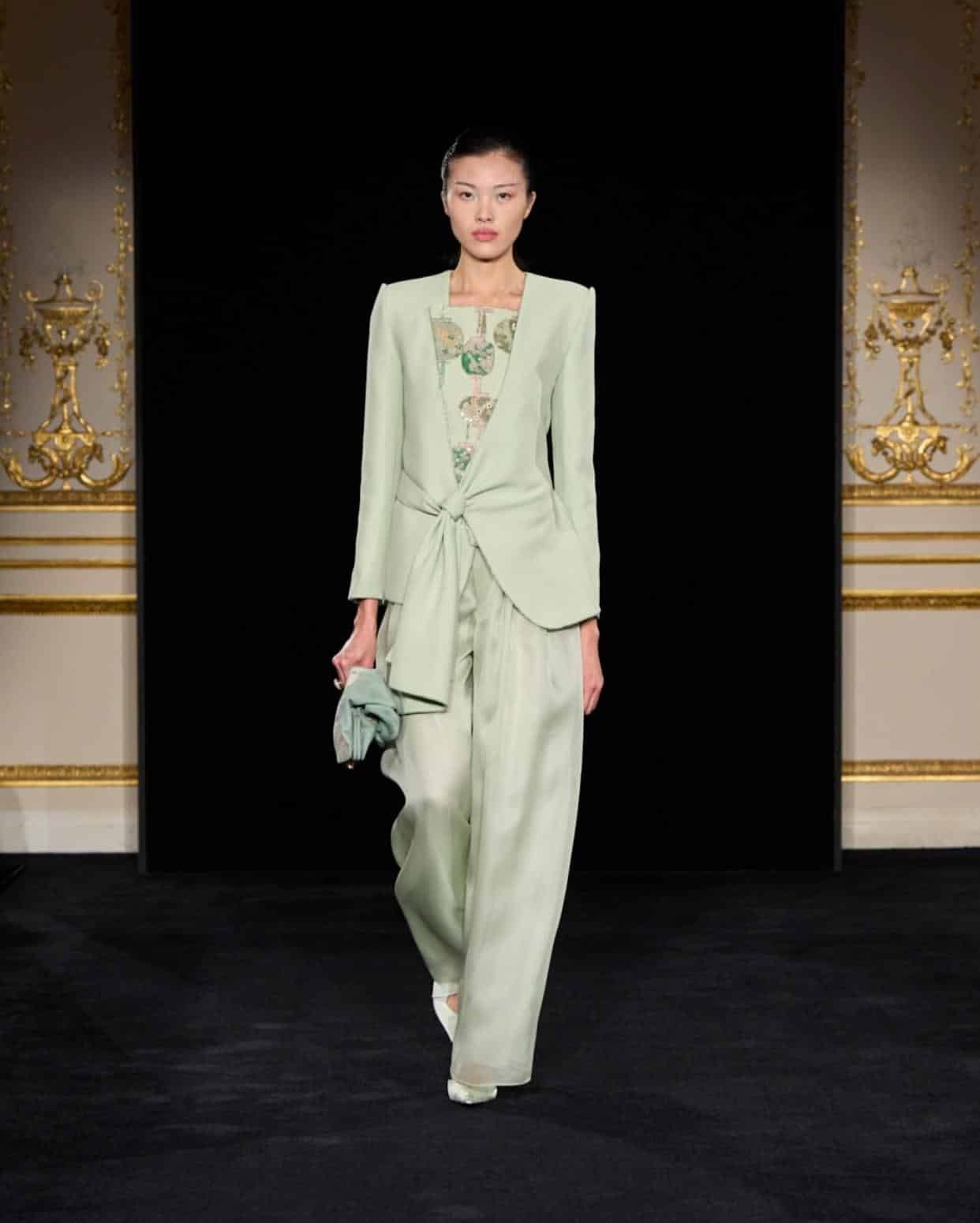
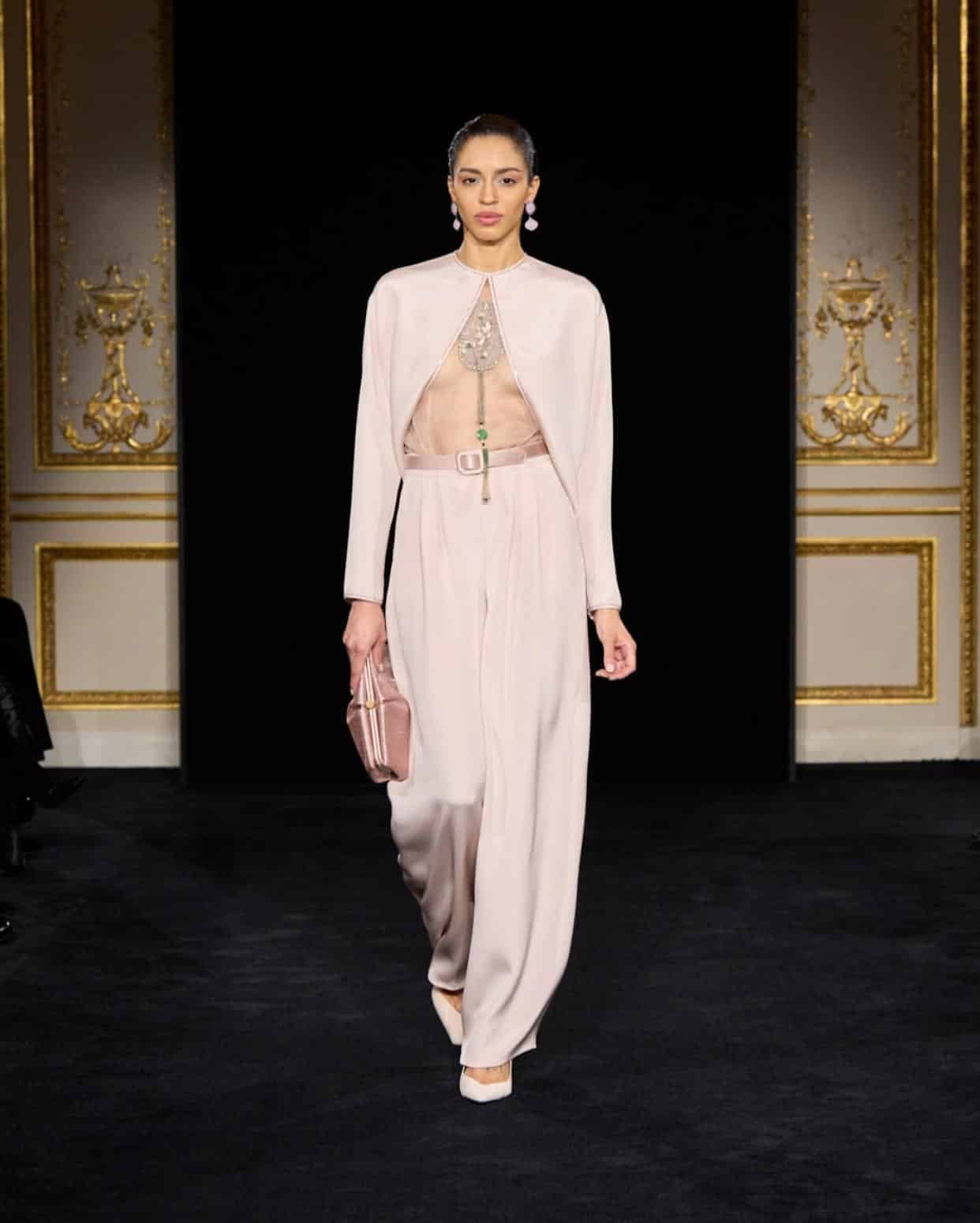
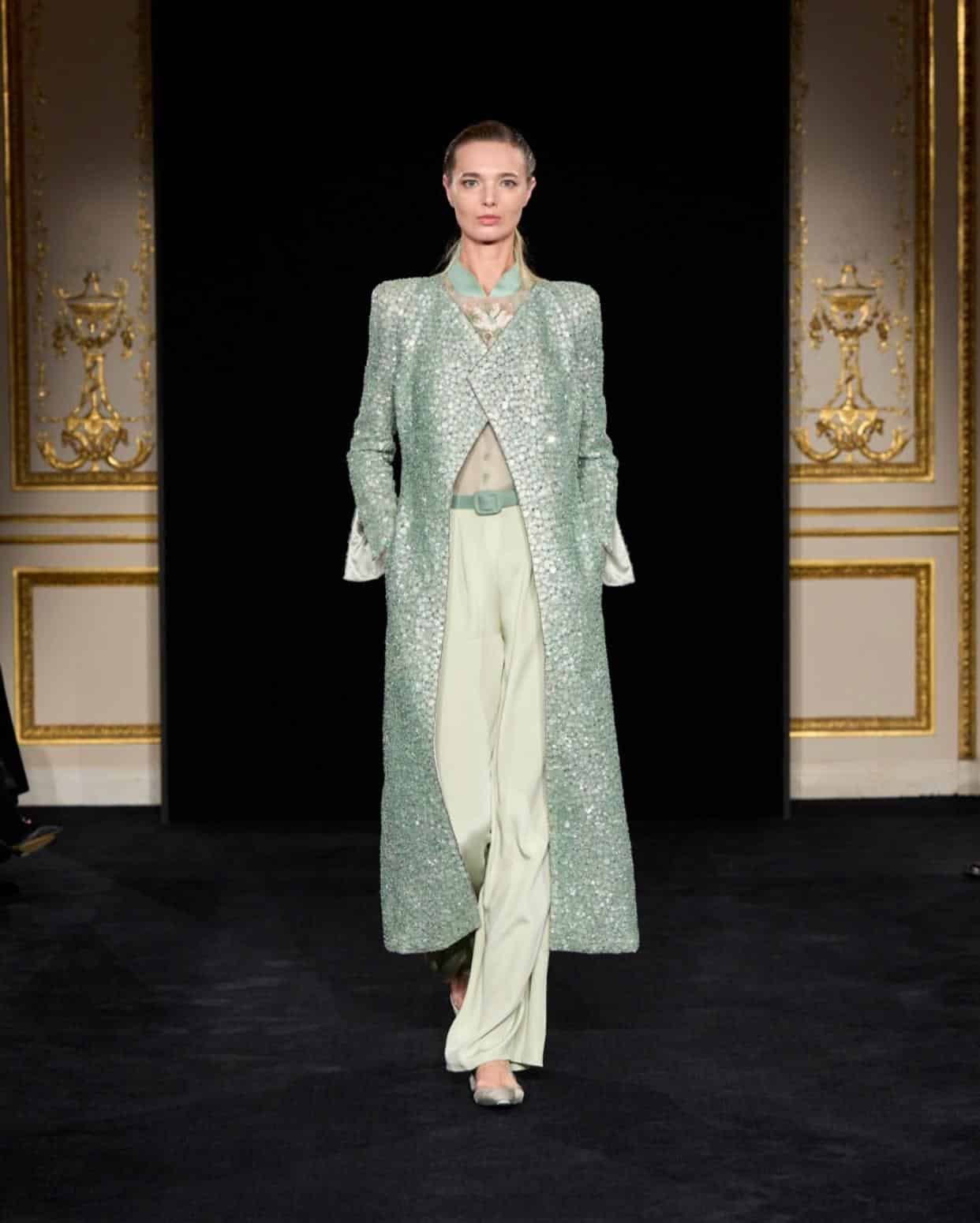
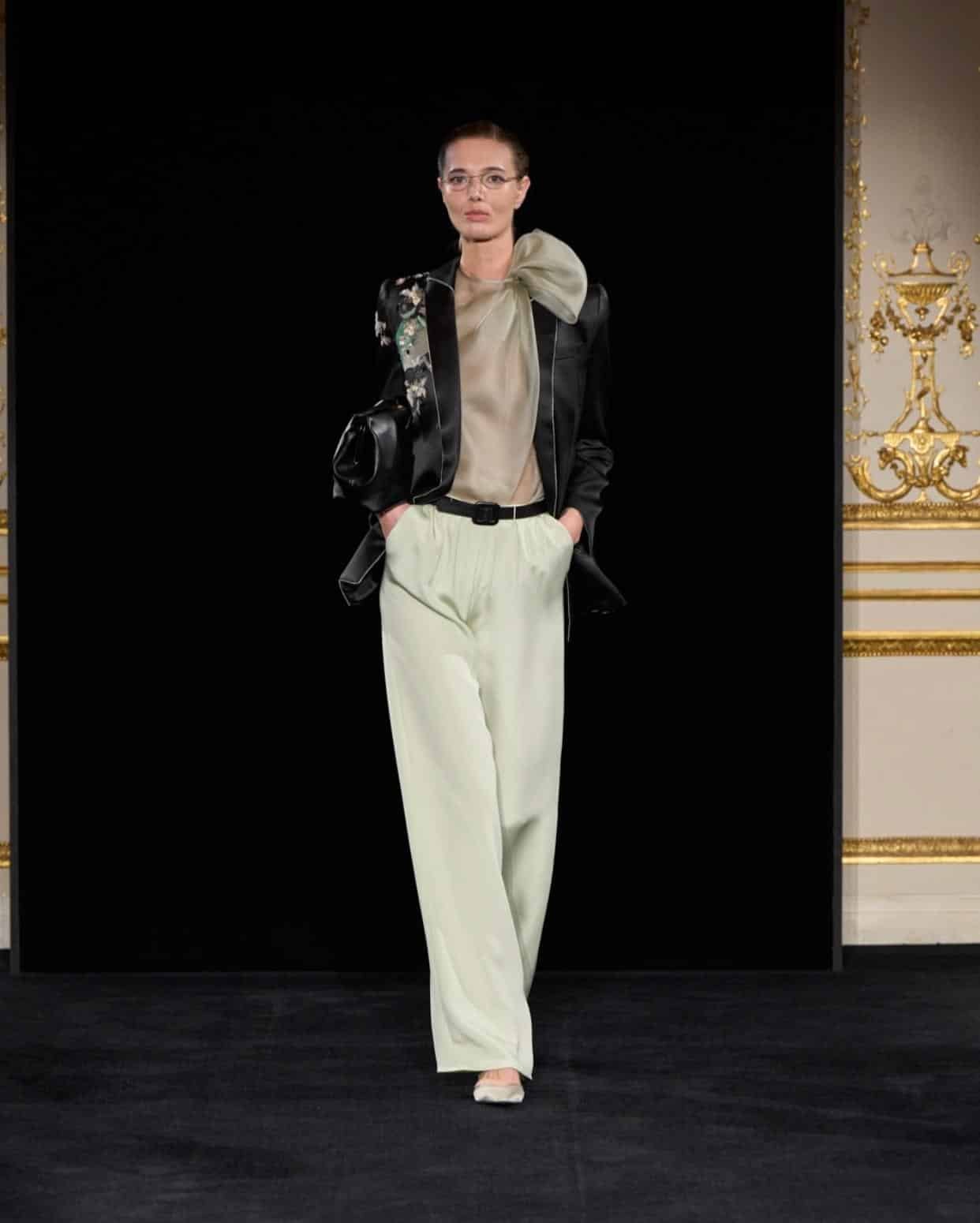
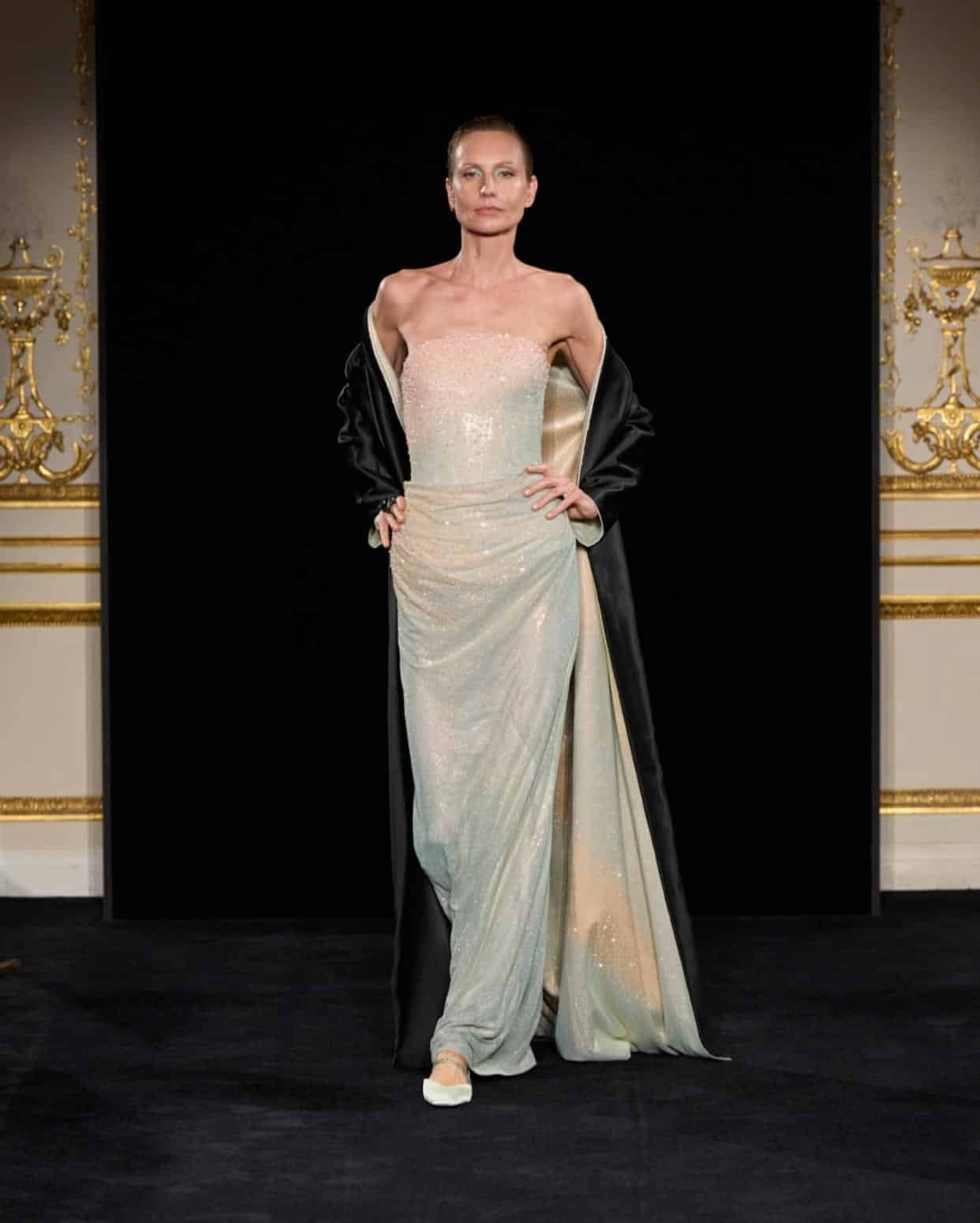
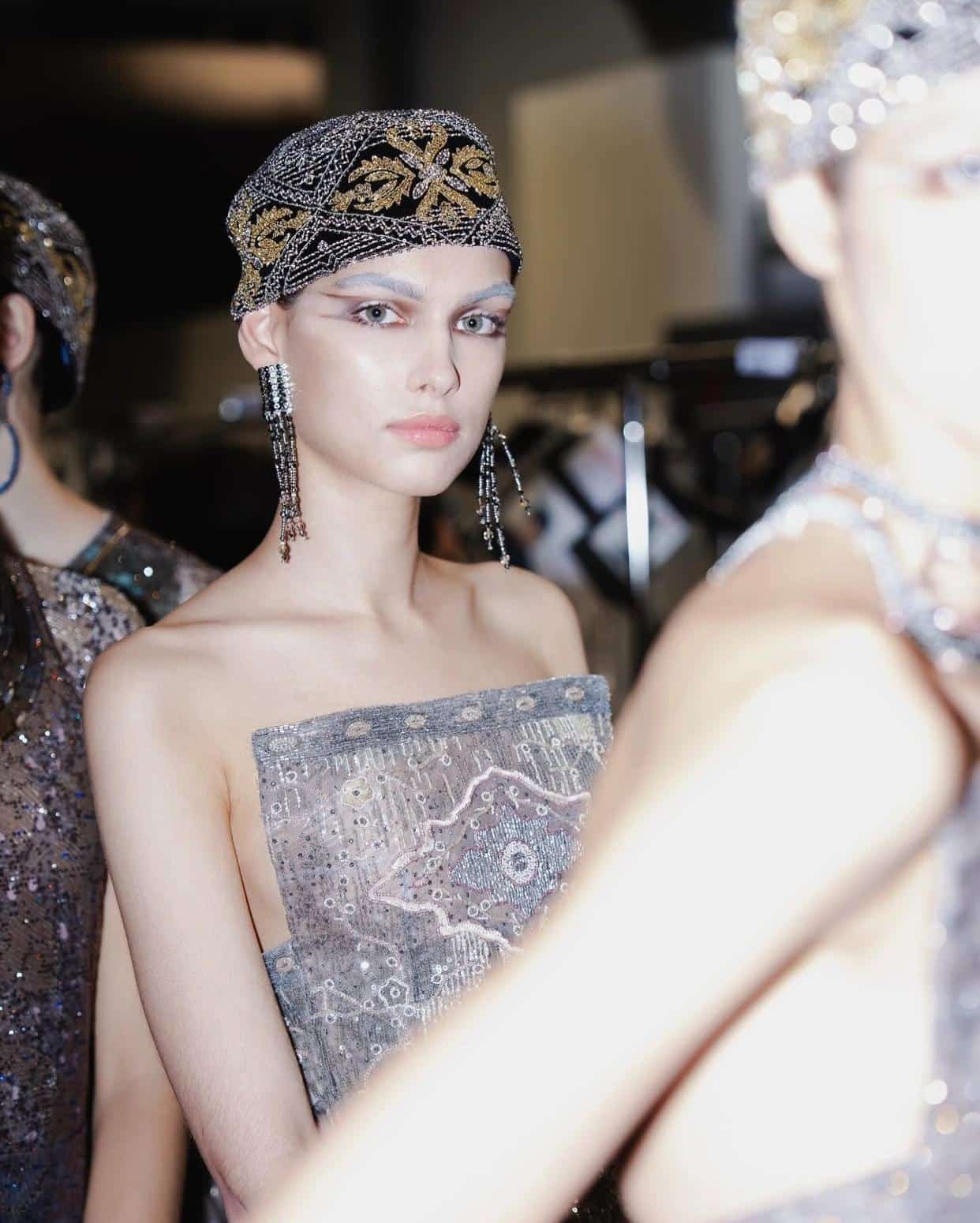
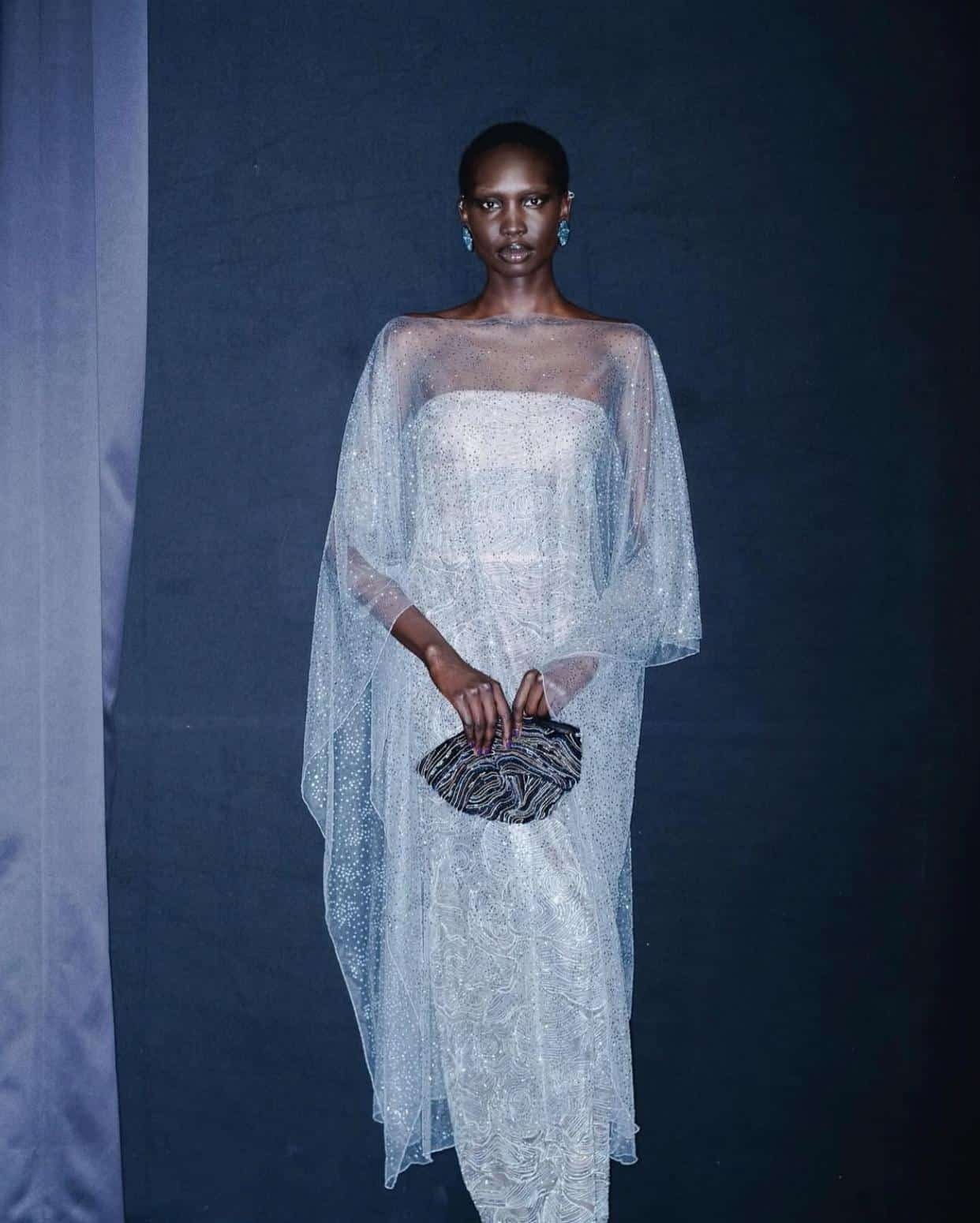
The Park Avenue Armory — a former nineteenth-century arsenal in the Upper East Side — was transformed for the Spring 2025 show into a 1930s Grand Central Terminal and jazz club. Six hundred and fifty guests in black tie. Long, soft silhouettes from the decade's opening. Bohemian layers — caftans, wraps, fringe, beaded embellishments. A palm motif on men's shirts. Perforated flat leather boots, wrapped tortoise bracelets, oversized knapsacks, headscarves. Fluid skirts in the house's signature neutrals transitioning to pastels. Sheer blouses. Embellished dresses with an easy femininity worn with flat sandals. The collection was titled "In Viaggio" — on a journey — and organized as a traverse through the Armani codes without nostalgia: "It is remembering without nostalgia," the designer said. "More vital and frenetic than ever, New York continues to look ahead, ever launching new models of life, style and socialising." The models remained on the runway at the end to let the moment settle. The party that followed drew every Armani A-list friend the city could summon.
The New York Exclusive Collection — created specifically for the Madison Avenue opening — was a direct homage to the relationship between Armani and New York's sartorial history: a palette of neutrals and black in deliberate reference to the power suit that defined his American breakthrough in the 1980s. Available at 760 Madison Avenue and at Bergdorf Goodman — the first store to carry his men's collection forty years earlier, whose ten windows were dressed for the occasion with looks from the Fall/Winter 2024-25 collections and the Exclusive Collection. At Bergdorf Goodman, Armani made a rare personal appearance, signing copies of his book Per Amore. The relationship between the designer and the department store — maintained without interruption since the early 1980s, when the Armani suit first arrived in America — was a history worth marking: Bergdorf had been present at the beginning of something.
The Giorgio Armani aesthetic has been defined, over fifty years, by a set of convictions that have never required revision — only continuous refinement. The unstructured jacket: no padding, no lining, a shoulder that follows the body rather than imposing its own shape. The neutral palette: beige, greige, taupe, ivory, black, navy — colors that allow the cut and the fabric to be the subject. The fluid silhouette: clothes that move with the person wearing them, that suggest ease rather than effort, that look as natural as possible on the widest range of bodies. The cinematic reference: Armani's imagination was always shaped by Old Hollywood, by the particular glamour of men and women who dressed to be seen and photographed, who understood that clothes are never simply functional. He removed the rigidity of traditional tailoring and replaced it with what he described as a political act: the advocacy of a change to the status quo. Fifty years later, that act has become the baseline of luxury ready-to-wear.
The 760 Madison Avenue building is the most complete expression of the Armani world outside Milan: not simply a flagship boutique but a full environment in which the Giorgio Armani collections exist alongside Armani/Casa — the home design line — and the Armani/Ristorante, whose interior deploys green lacquer surfaces, eucalyptus wood inserts, large slabs of marble aggregate with champagne metal borders, polished birch ceilings, and mirrored walls. A Champagne bar with a counter and high stools opens to a double-height space. A private room for forty guests on the mezzanine level is accessed by a gold-colored metal staircase. The ten residences above — all sold out — apply the Armani/Casa aesthetic to private apartments, each one designed to the same standard of material quality and spatial refinement as the boutiques below. In the Armani system, fashion, home, hospitality, and residence are not separate categories. They are expressions of a single sensibility.
Armani's relationship with cinema was not a marketing strategy. It was the source material. He grew up watching Old Hollywood — its particular glamour, its "power of seduction" that "enmeshed and surprised" him as a young man. When Paul Schrader called in 1980, the assignment was to dress a character whose entire identity was constructed from clothes. Julian Kay's wardrobe in American Gigolo became, Armani said, "the almost fetishistic sequence in which Richard as Julian Kay chooses what to wear from a closet filled with my creations — more penetrating and effective than a whole string of ads." In 2000, the Guggenheim Museum in New York hosted a retrospective of Giorgio Armani's work — Michelle Pfeiffer, Jeremy Irons, Isabella Rossellini, Patti Smith in attendance. Richard Gere walked in alone, encountered a looped screen showing the American Gigolo wardrobe scene, watched it for a moment, met a journalist's eye, broke into "a wide, slightly embarrassed grin, shrugged his shoulders and quickly turned and walked out." Twenty years after the film. Still, unmistakably, the same clothes. Still, unmistakably, the same legend.
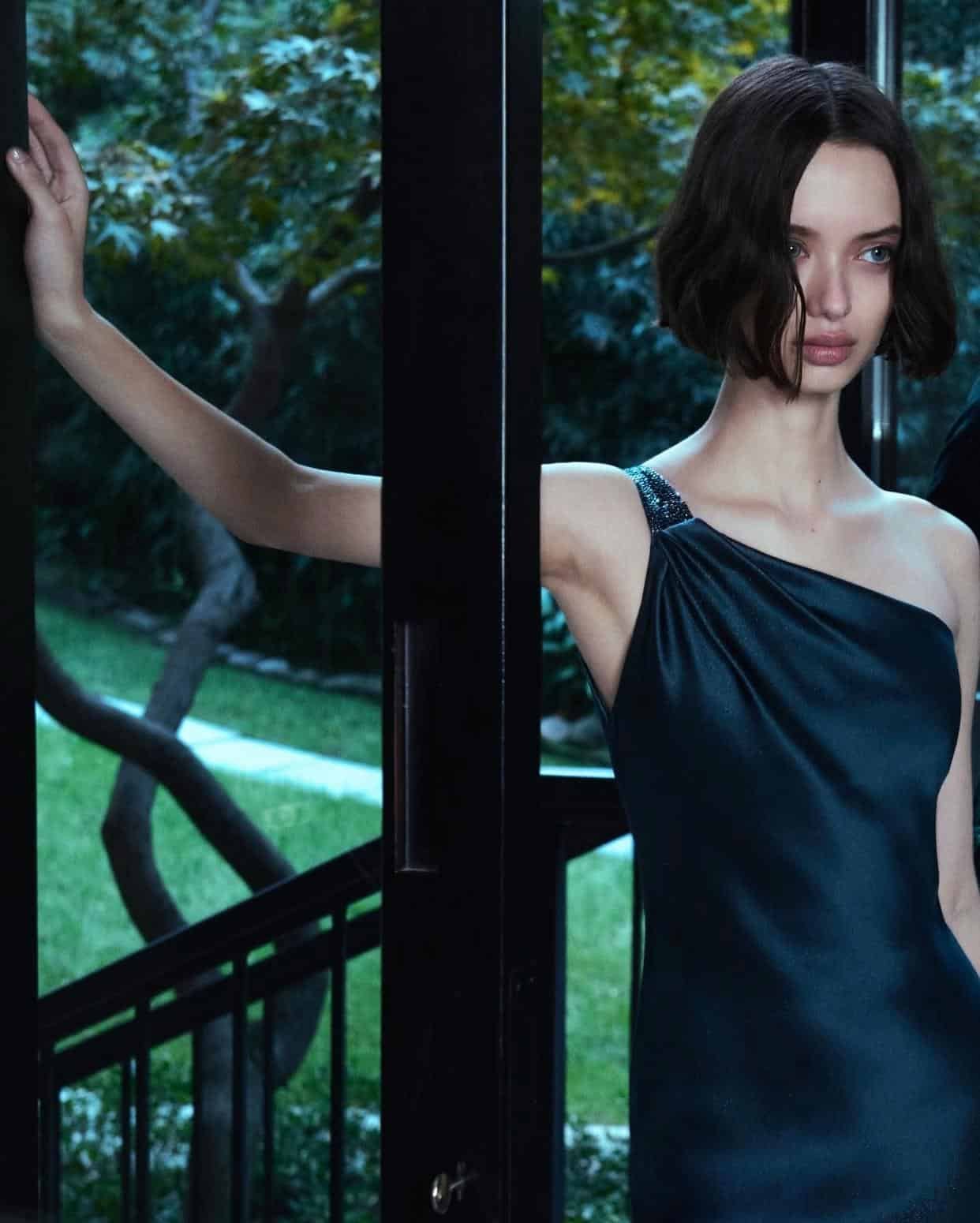
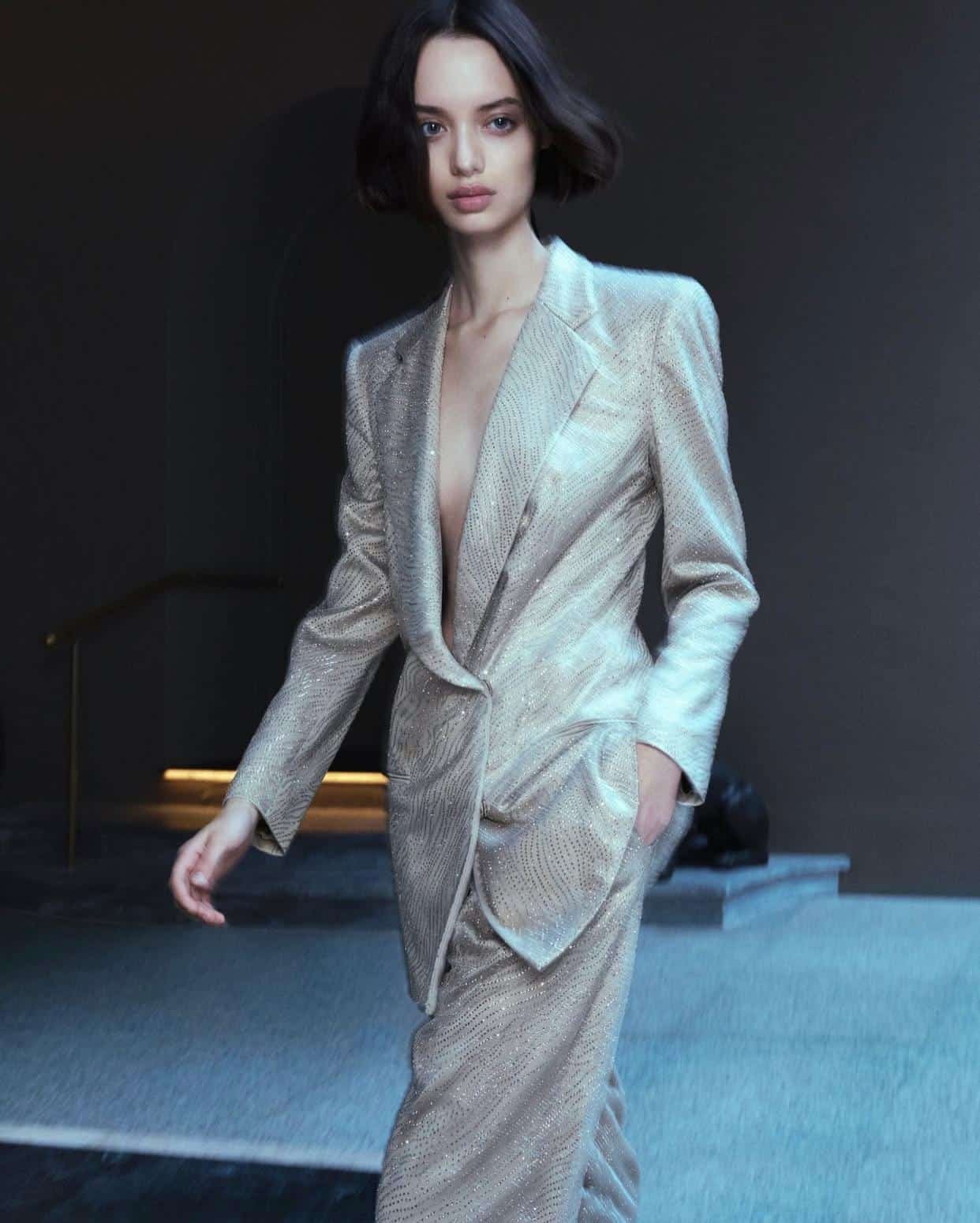
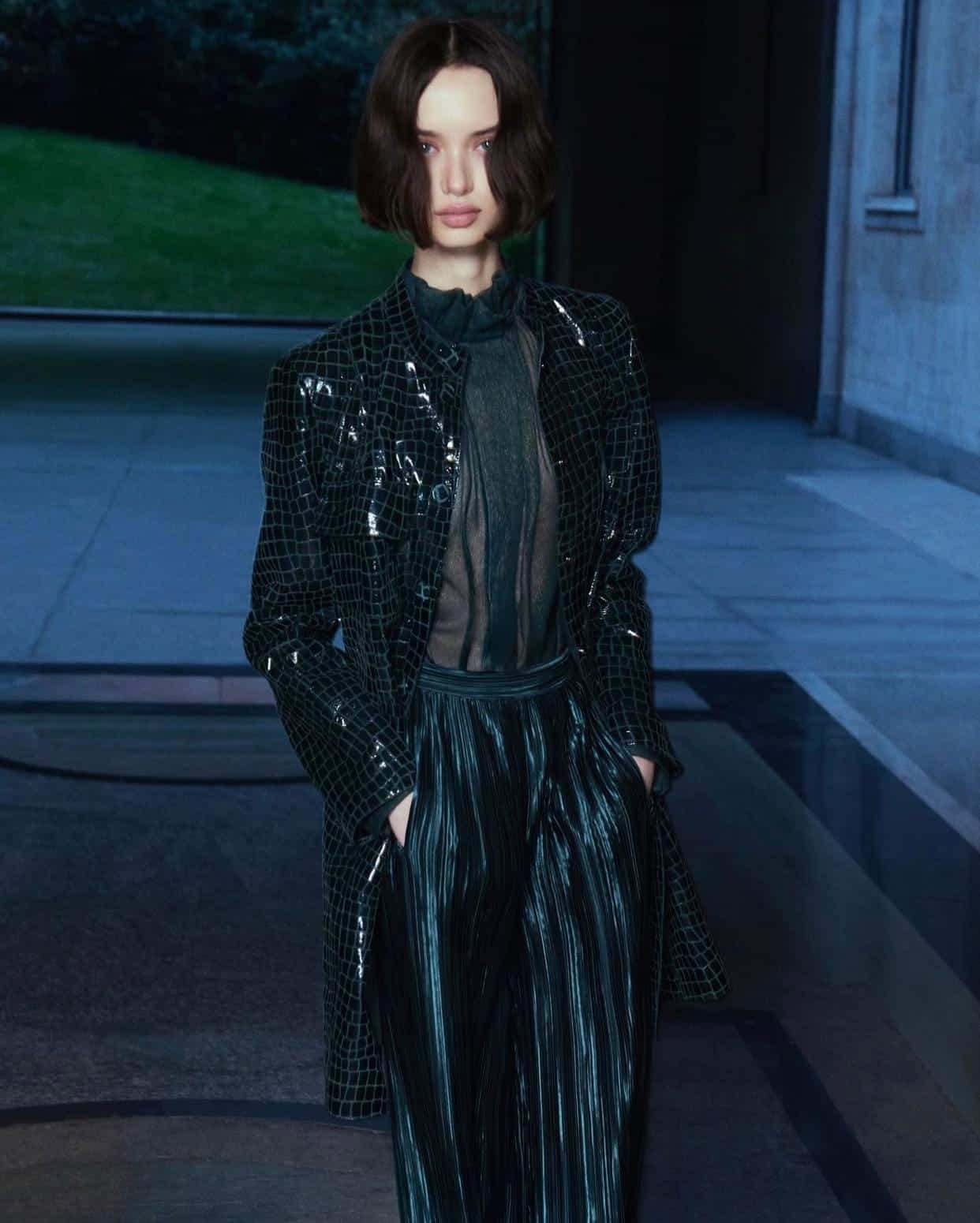
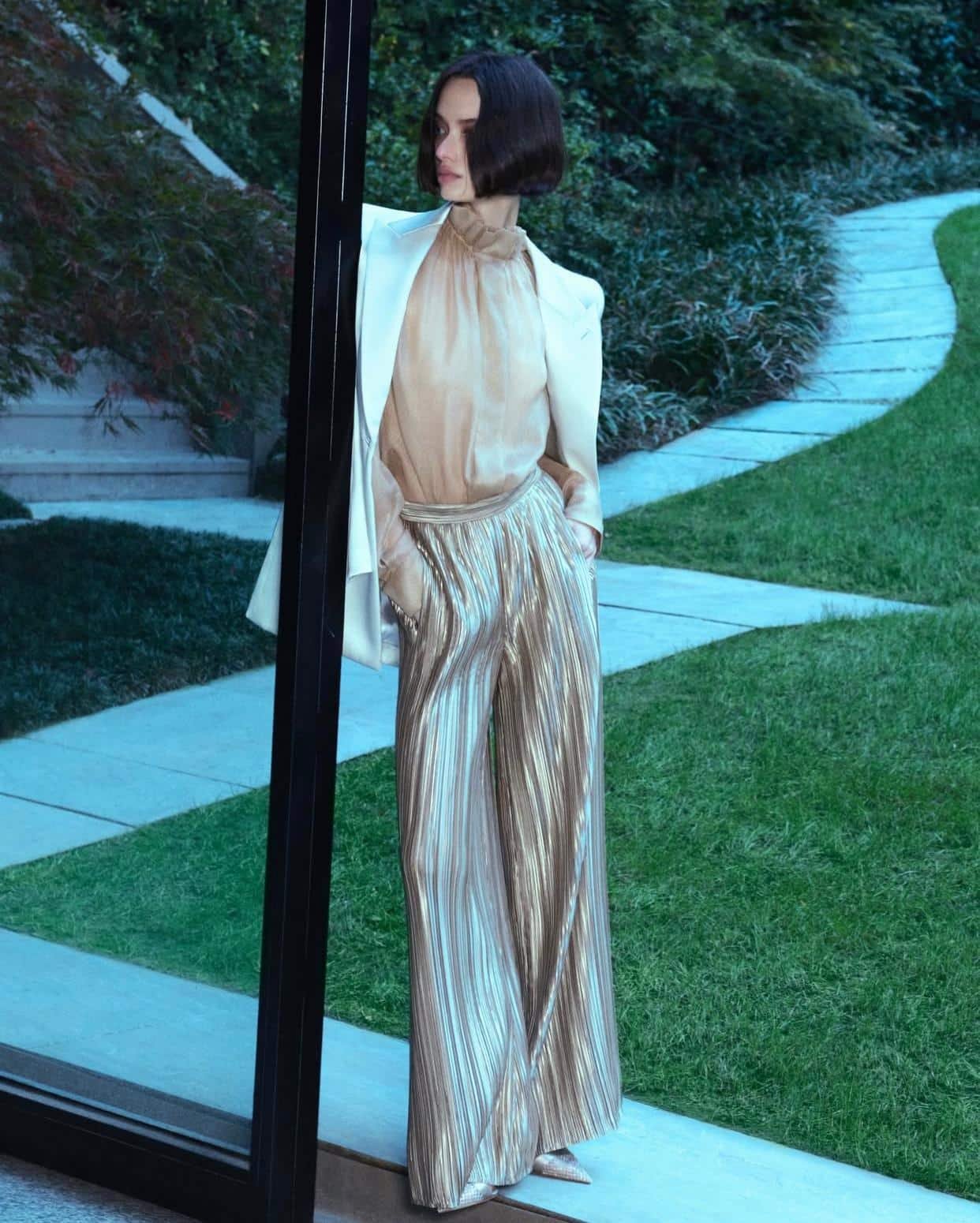
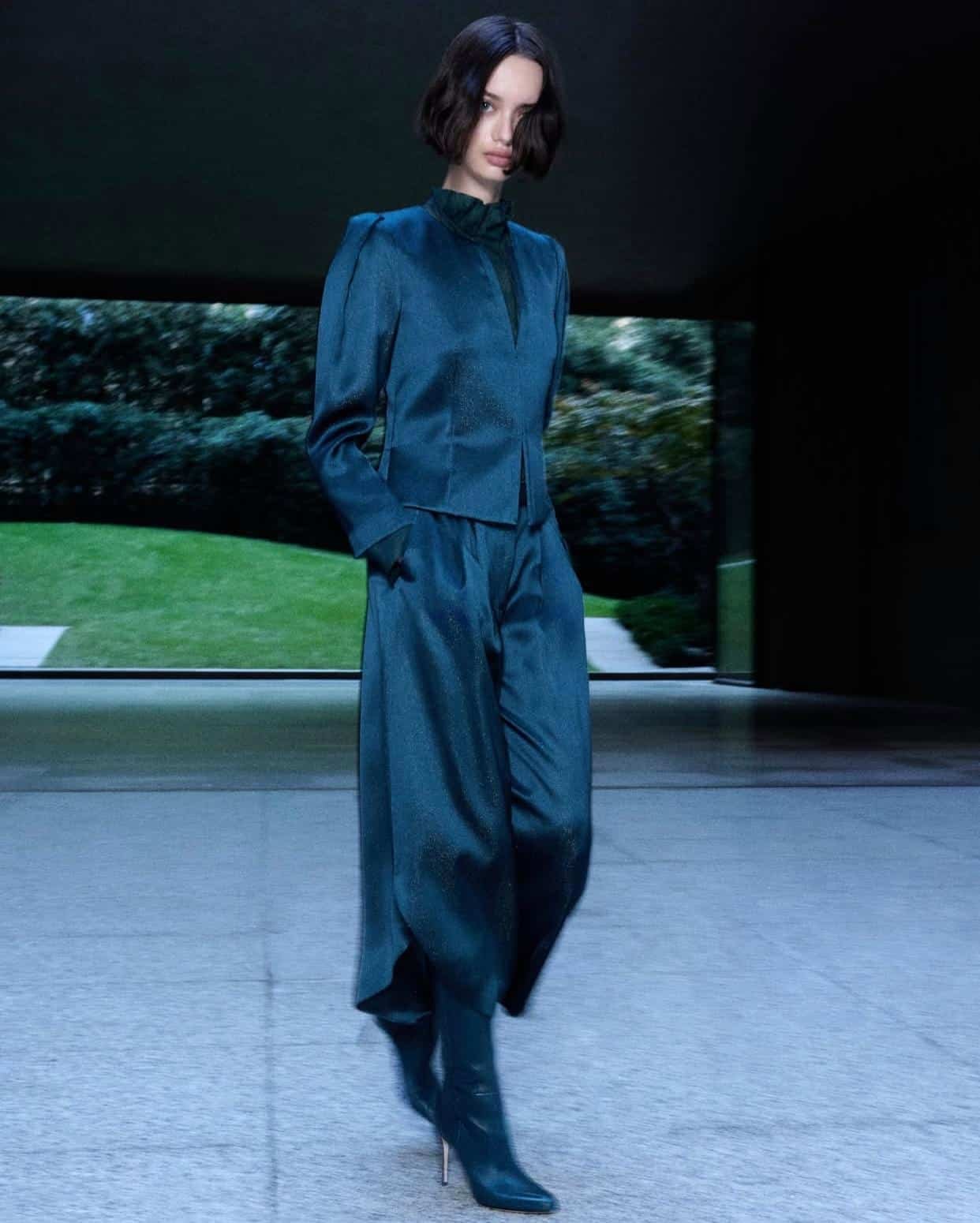
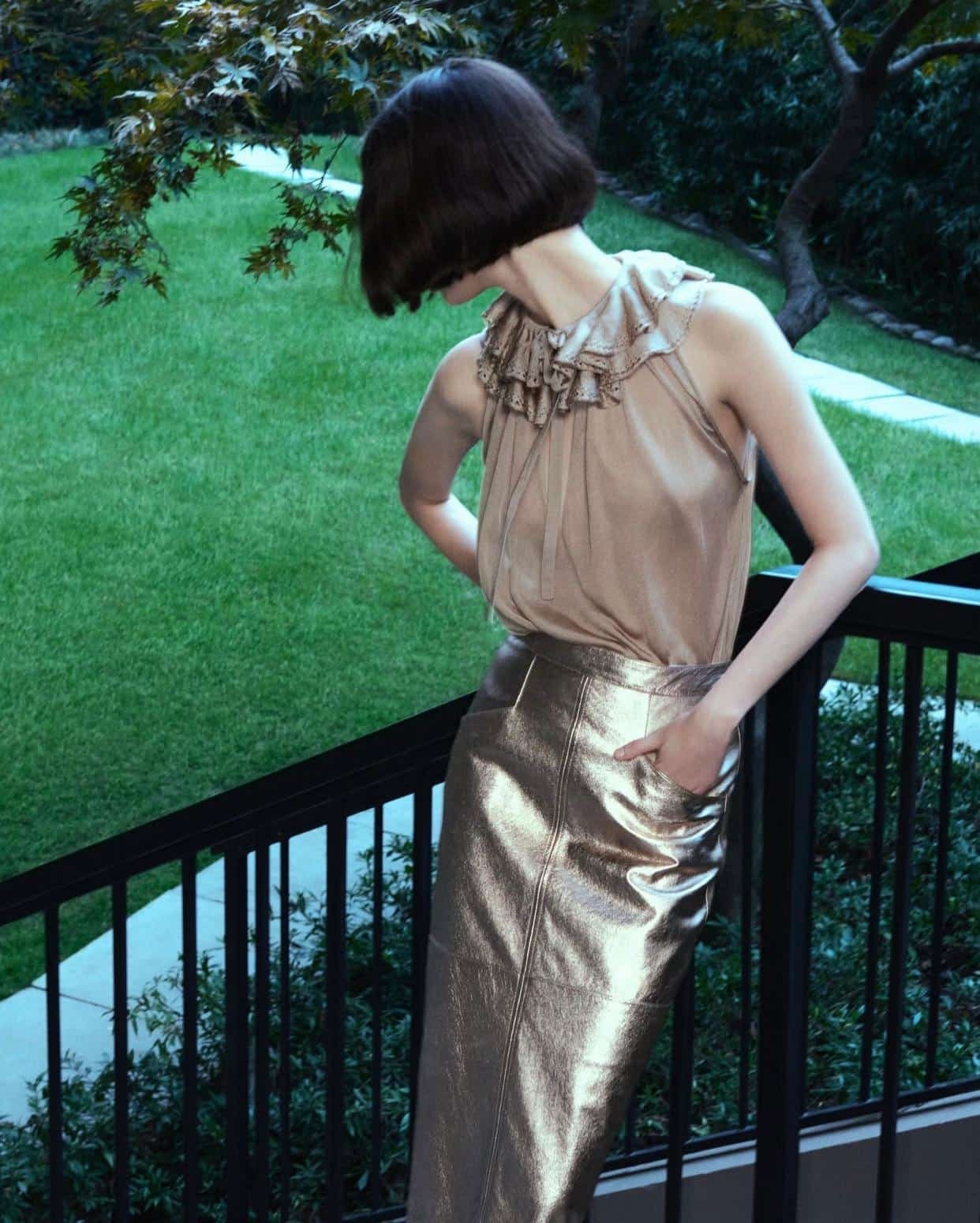
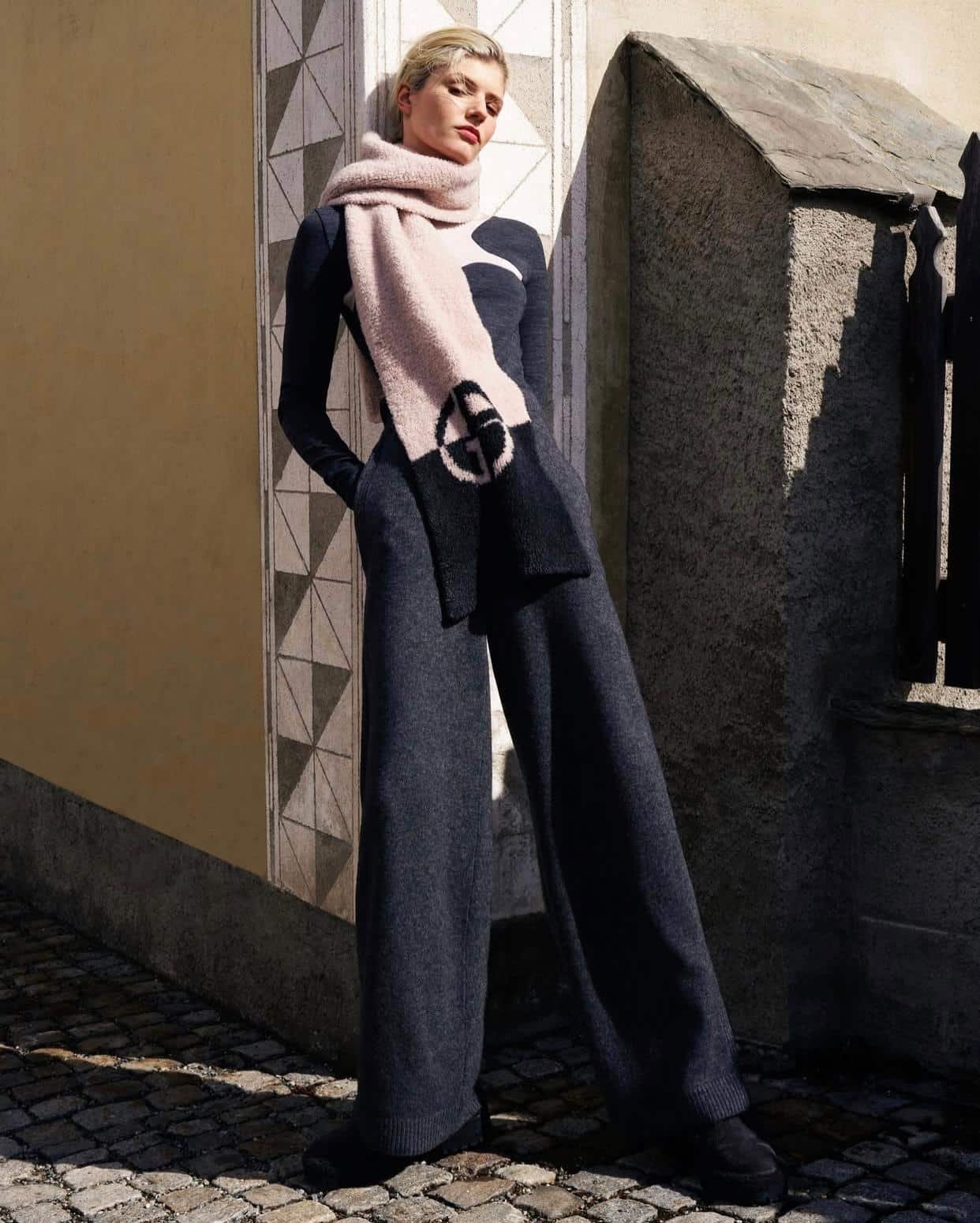
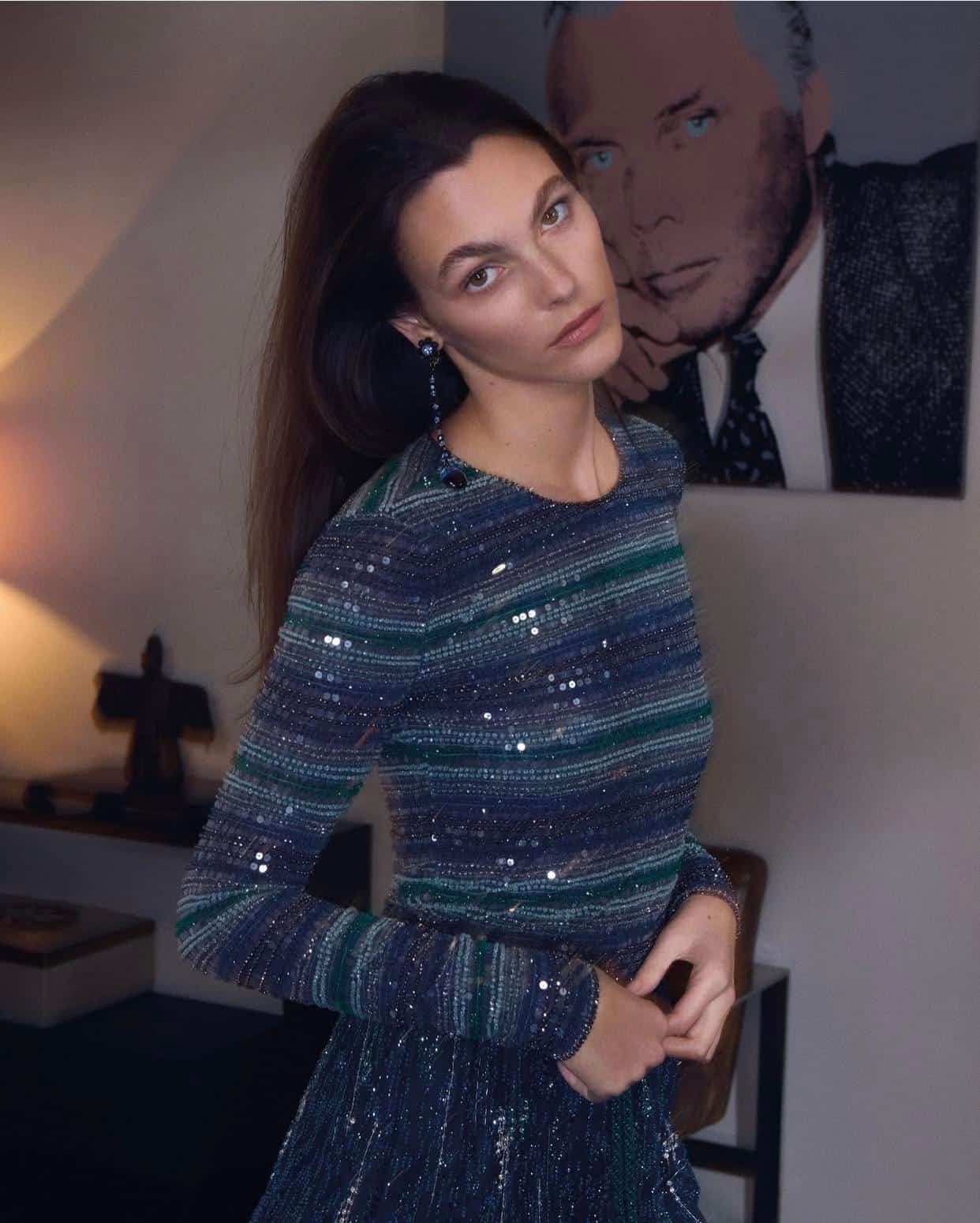
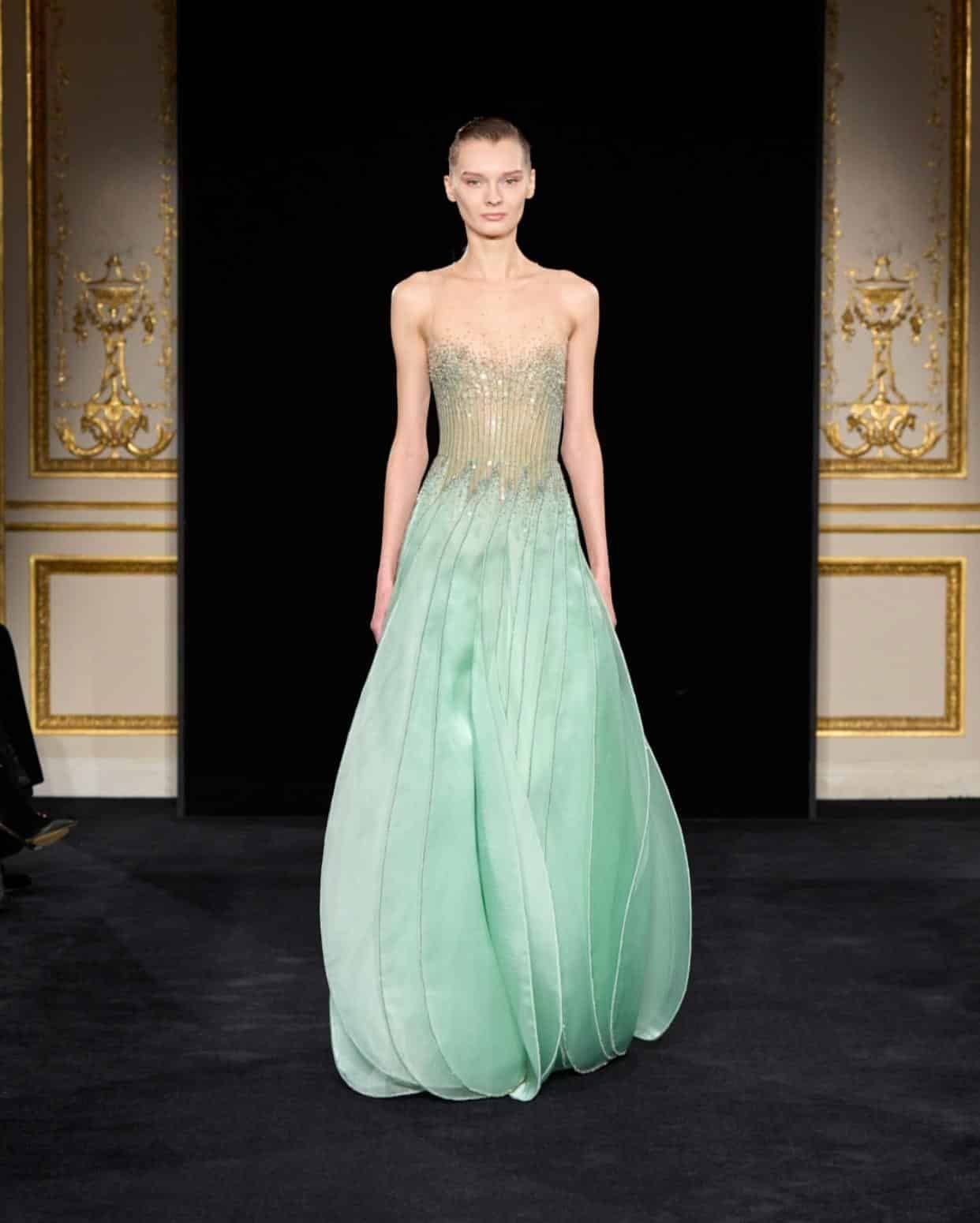
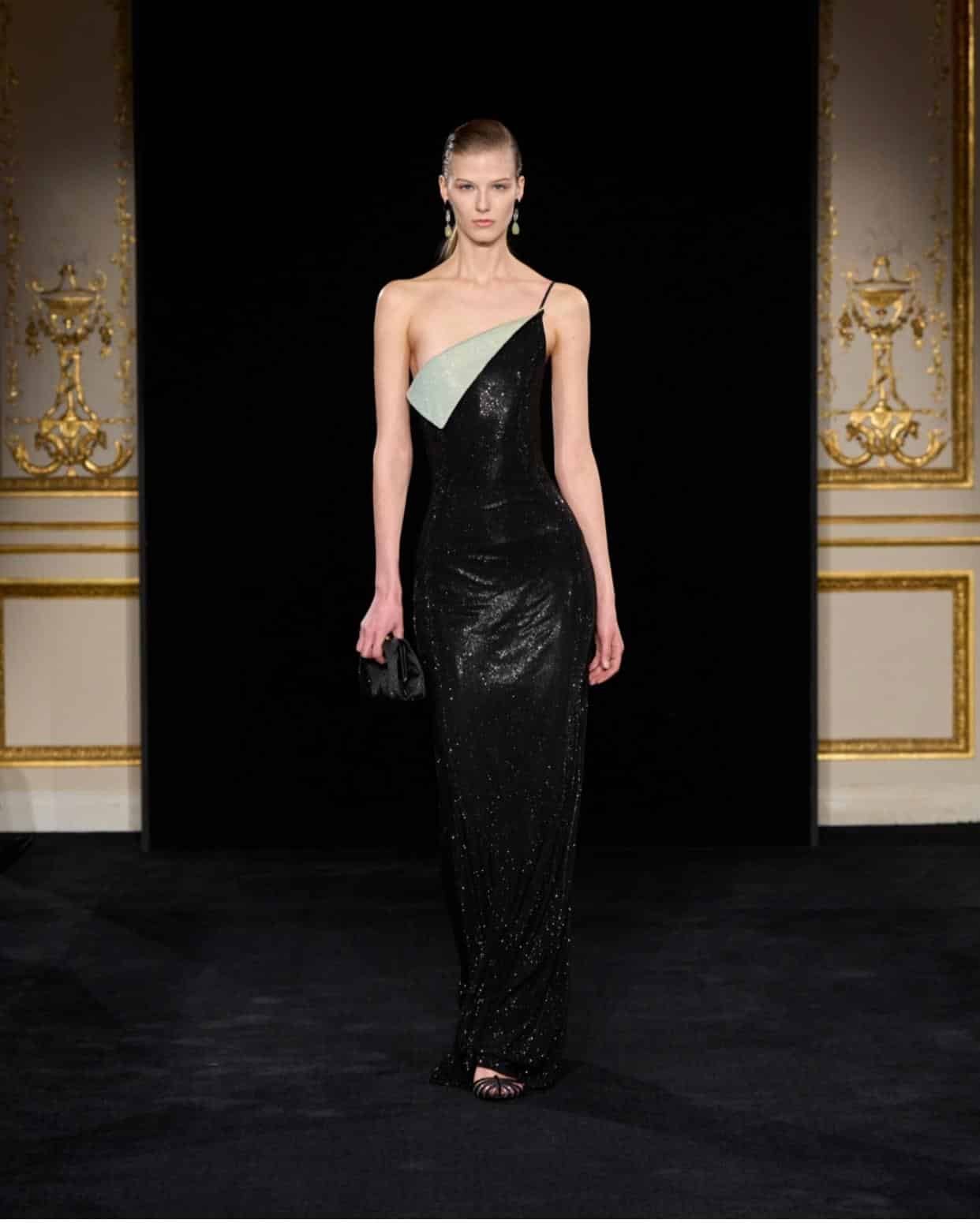
The Giorgio Armani ready-to-wear collection presents women's and men's clothing in the full register of the house's vocabulary — tailoring, daywear, evening, accessories, and the new Giorgio Armani jewelry line launched alongside the Madison Avenue opening. Each season is organized around the same convictions: the neutral palette, the unstructured silhouette, the fabric that does the work without advertising itself. The women's collection brings to ready-to-wear the same formal intelligence that Armani applied to his first suit in 1975: that the most sophisticated garment is the one that allows its wearer to feel completely at ease. Fluid evening dresses, cinematic embellished silhouettes, soft tailoring that crosses between day and evening without effort — all of it grounded in the material quality and the precise construction that have been the constants of this house across five decades and three continents.
Richard Gere laid the suits on the bed.
He matched the ties to the jackets.
He sang along to Smokey Robinson.
The camera loved every second of it.
Giorgio Armani said later:
"That sequence was more penetrating and effective
than a whole string of ads.
It created, at an international level,
the legend of Armani."
Paul Schrader said it more simply:
"American Gigolo is about Armani."
Giorgio Armani died on September 4, 2025, at the age of 91. He had turned ninety in July 2024 — the same month he opened the Madison Avenue building, the same year he marked fifty years of his house. He had spent those fifty years doing one thing with exceptional consistency: making clothes that gave people ease, that removed the rigidity from their bodies, that allowed them to move through their lives with the particular confidence that comes from wearing something that fits not just the body but the moment. "Starting with American Gigolo," he wrote, "these men and women turned to me with a kind of intuitive understanding of how the natural, essential elegance of my styles would help them maintain their status." The house he built — its collections, its boutiques, its restaurants, its residences — is the most complete personal fashion universe of the Italian twentieth century. It continues. The silhouette he invented continues to define how men and women understand the dressed body. Some legends do not require a living author. They require only the clothes.
760 Madison Avenue · New York · Corner of East 65th Street
The Giorgio Armani flagship at 760 Madison Avenue presents the full women's and men's ready-to-wear collections alongside the Armani/Casa home design line, the new Giorgio Armani jewelry collection, and access to the Armani/Ristorante on the ground floor. The building is the house's most significant New York address since its first partnership with Bergdorf Goodman in the early 1980s — a permanent home on the Upper East Side that brings together, for the first time in New York, every dimension of the Armani world under one roof and one address. New York was the city that American Gigolo made Armani's. It is now also the city where his building stands.
760 Madison Avenue · Corner East 65th Street · New York, NY 10065
Giorgio Armani Ready-to-Wear · Armani/Casa · Armani/Ristorante
Giorgio Armani Residences · New York Exclusive Collection
Also available at Bergdorf Goodman · 754 Fifth Avenue
Founded Milan 1975 · Giorgio Armani 1934–2025 · armani.com
In 1980, Paul Schrader made the camera
linger on a closet full of suits
and changed the history of menswear.
Giorgio Armani was five years in business.
Forty-five years later,
he opened a twelve-story building on Madison Avenue
and showed his collection at the Park Avenue Armory
for six hundred and fifty friends.
He died that September, at ninety-one.
The building stands.
The suits are still on the bed.
© Giorgio Armani
© Giorgio Armani
© Giorgio Armani
© Giorgio Armani
© Giorgio Armani
© Giorgio Armani
© Giorgio Armani
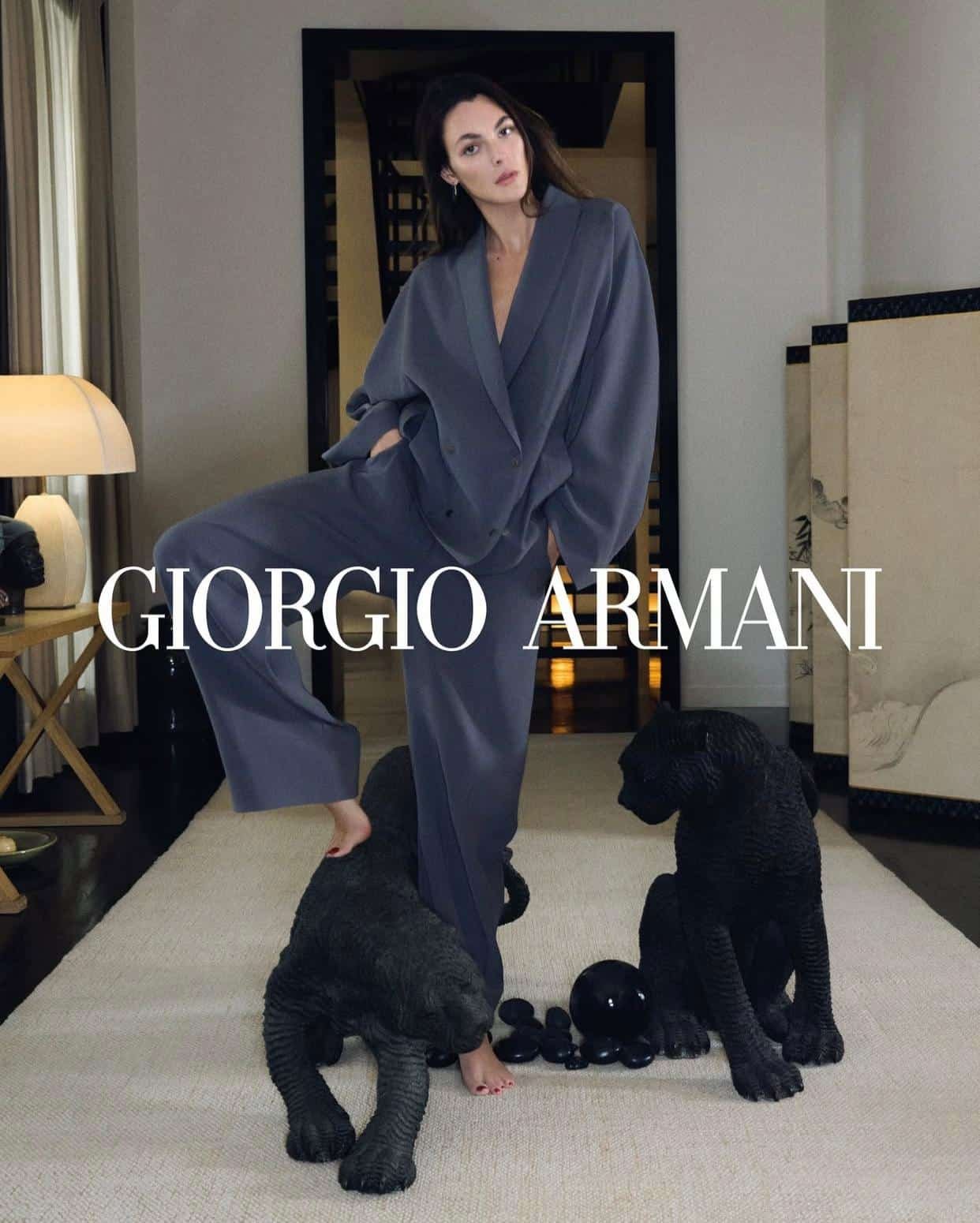
© Giorgio Armani
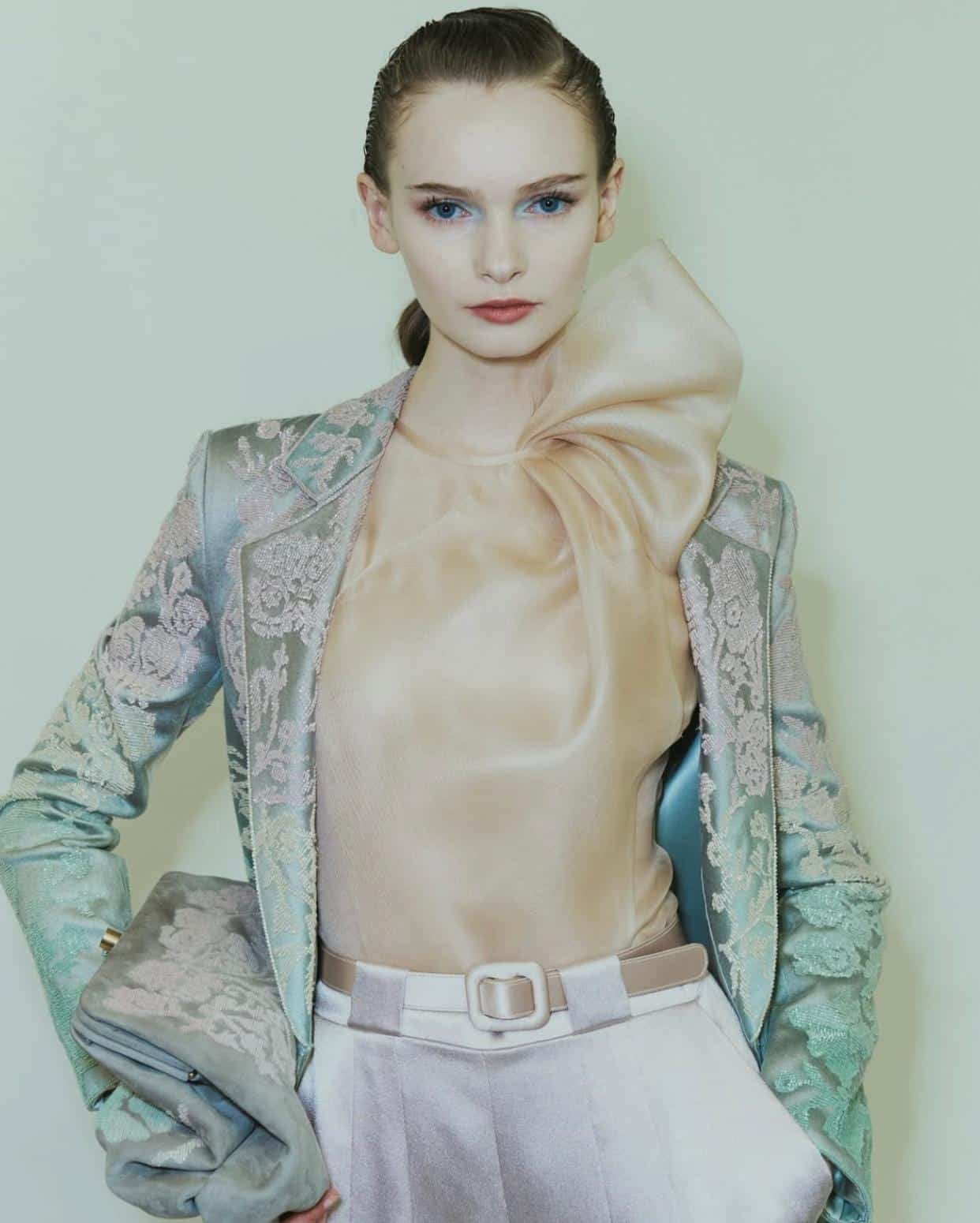
© Giorgio Armani
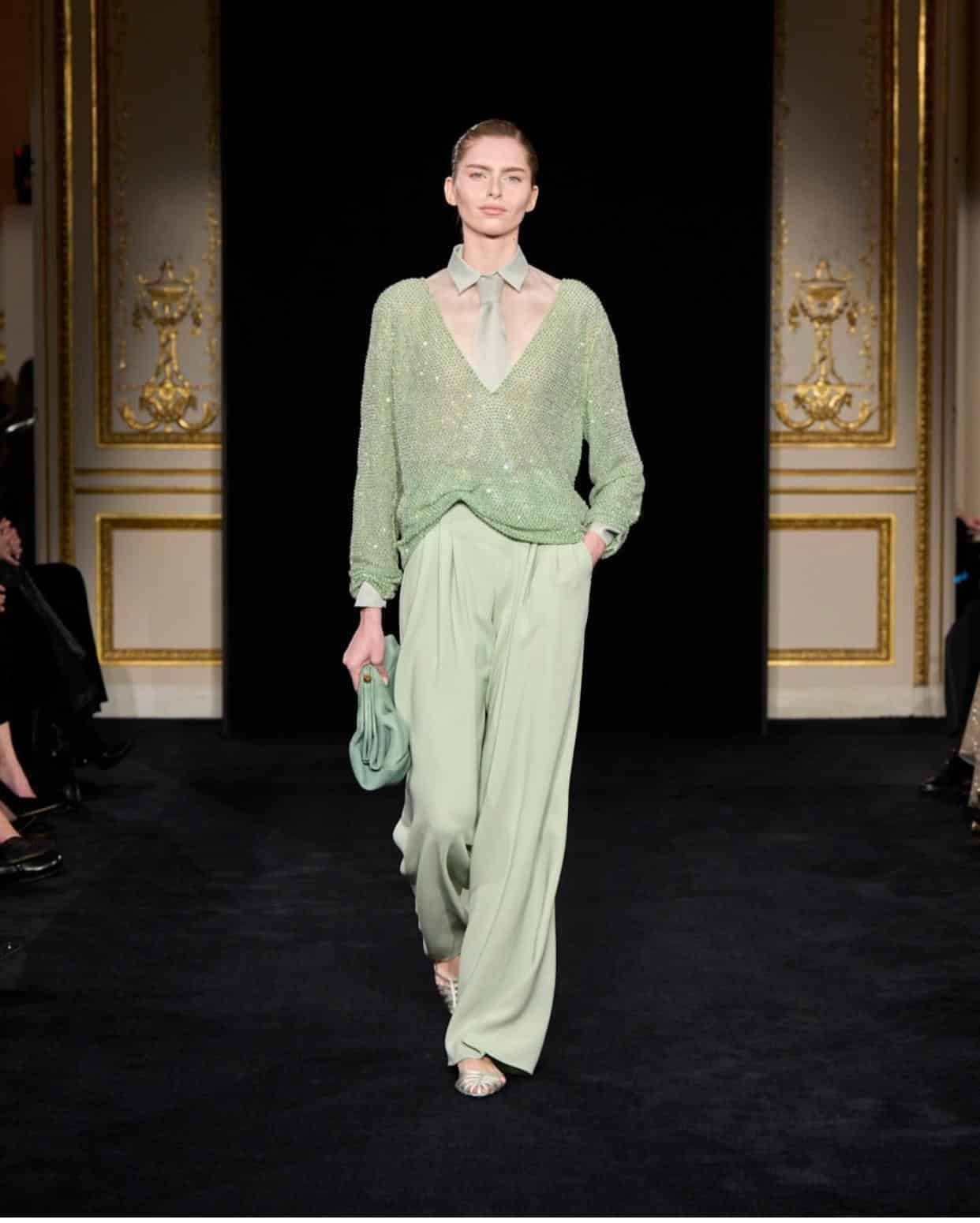
© Giorgio Armani
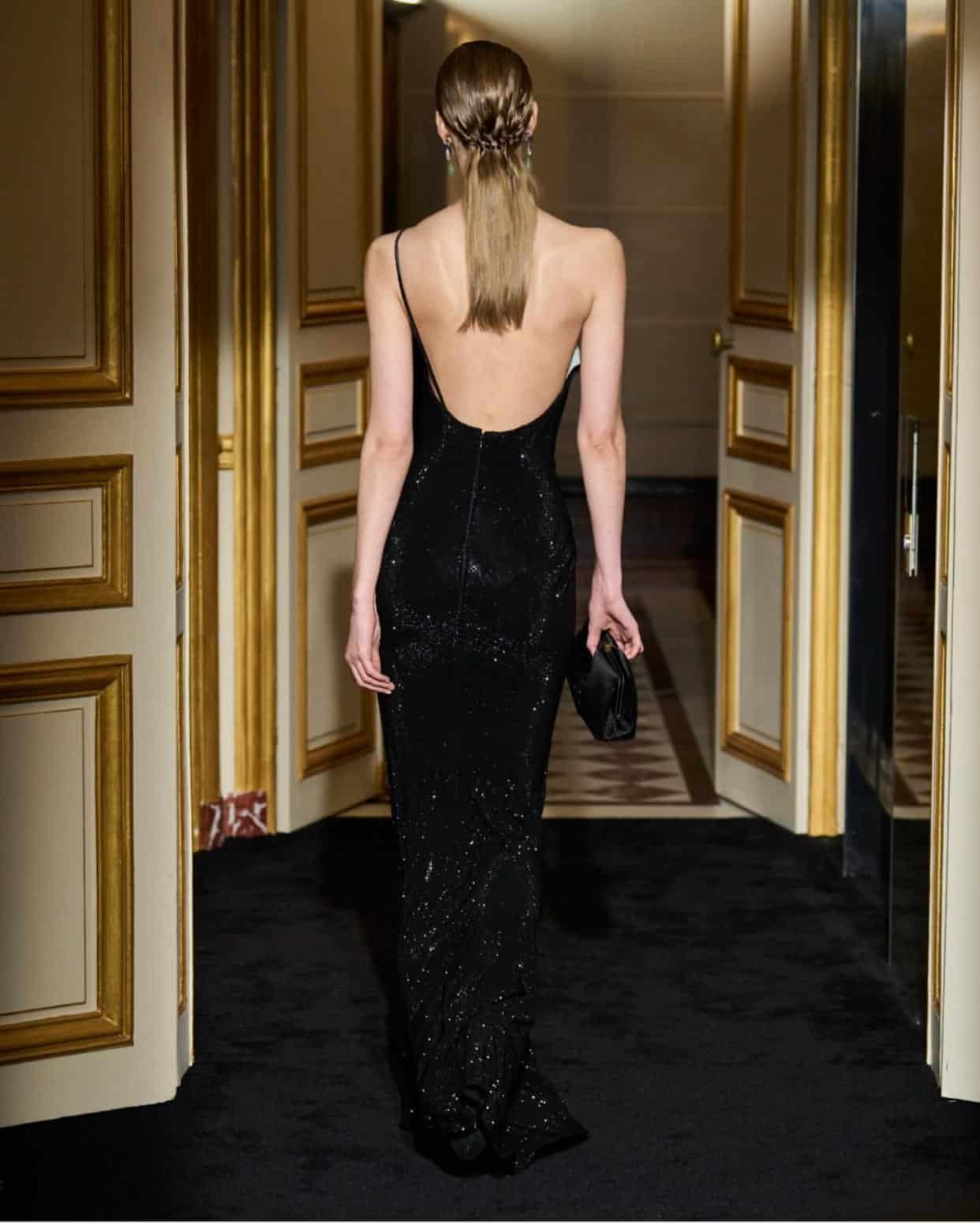
© Giorgio Armani
© Giorgio Armani
© Giorgio Armani
© Giorgio Armani
© Giorgio Armani
© Giorgio Armani
© Giorgio Armani
© Giorgio Armani

© Giorgio Armani

© Giorgio Armani

© Giorgio Armani

© Giorgio Armani

© Giorgio Armani

© Giorgio Armani

© Giorgio Armani

© Giorgio Armani
© Giorgio Armani
© Giorgio Armani
GIORGIO ARMANI
© Giorgio Armani