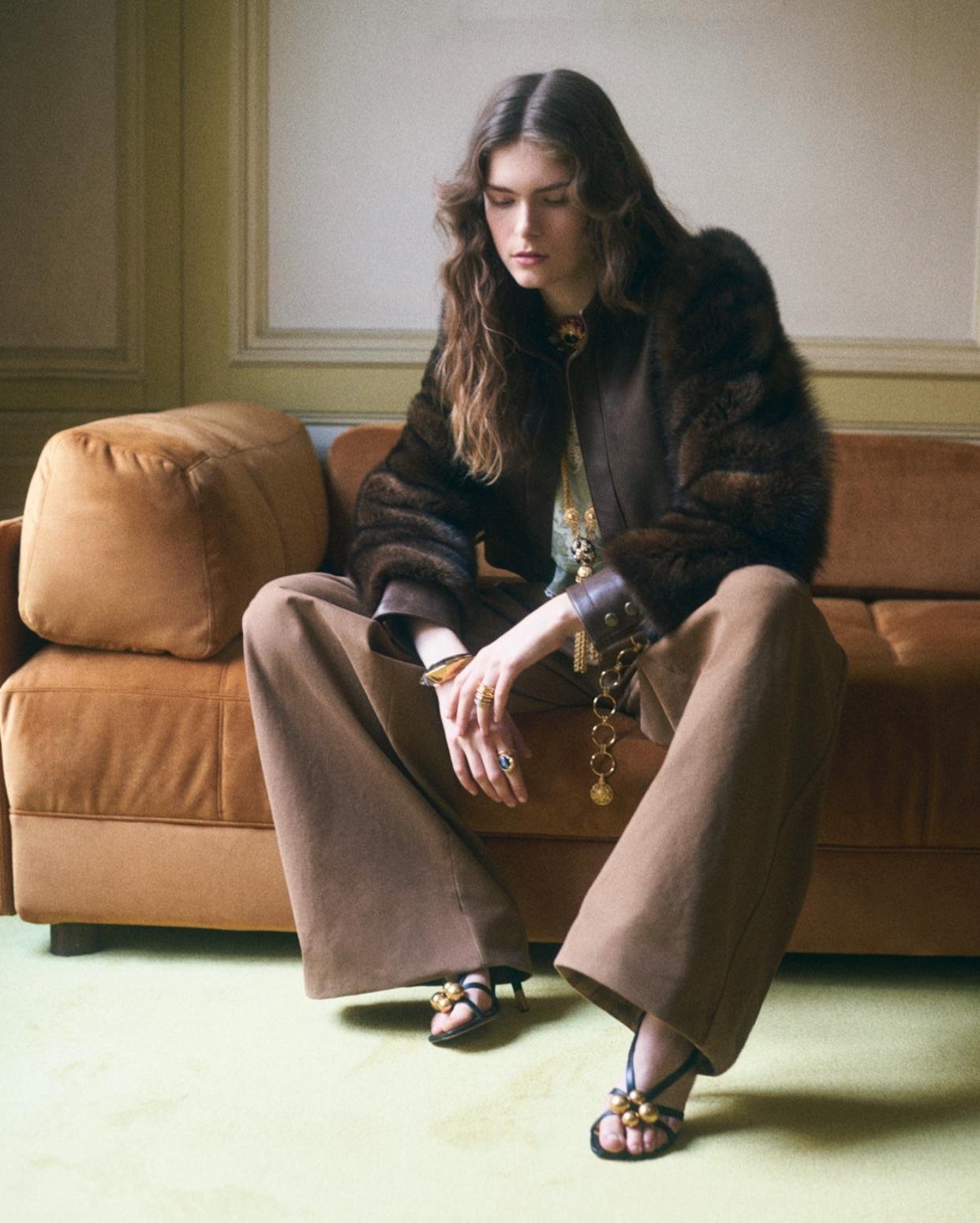
© Chloé
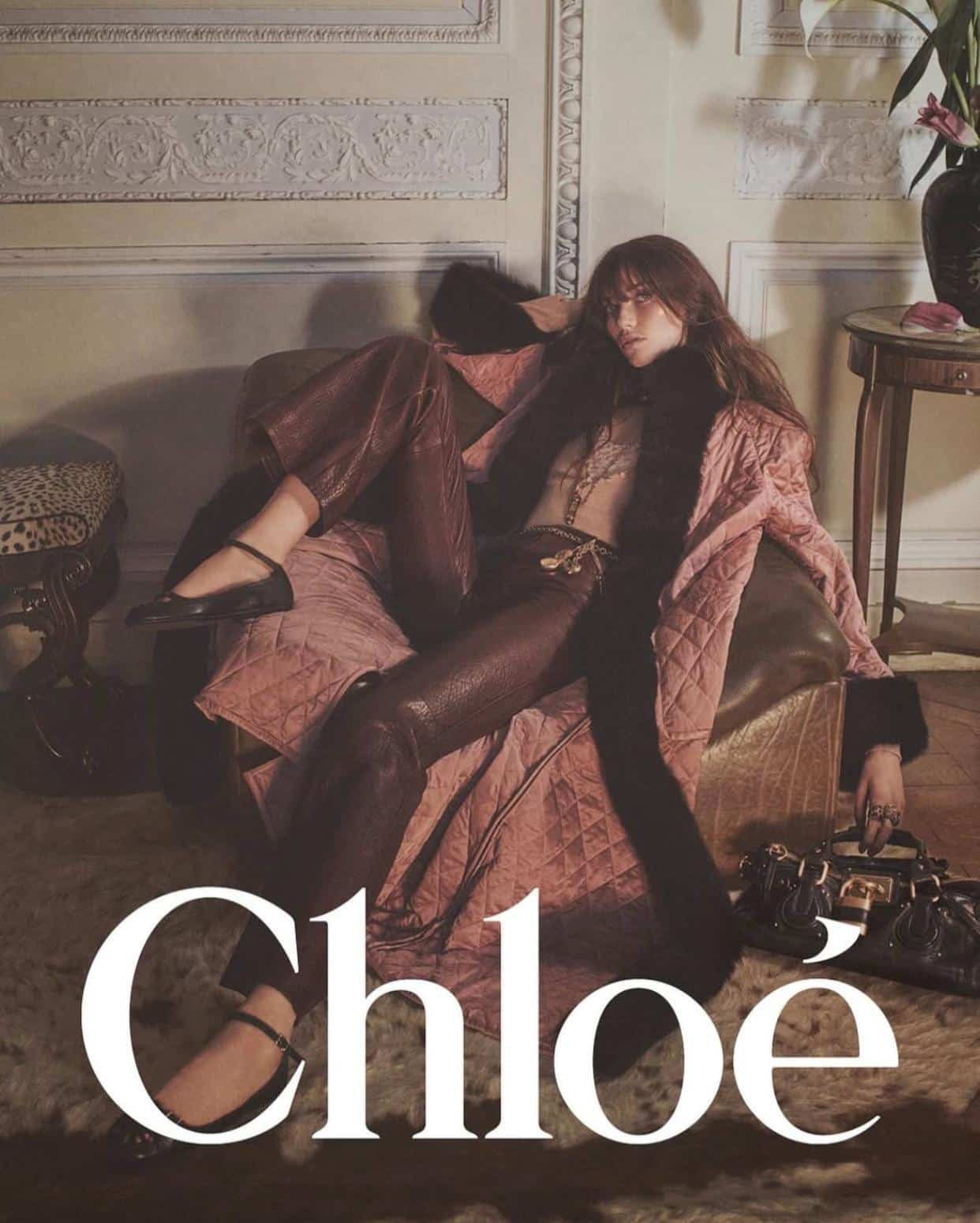
© Chloé
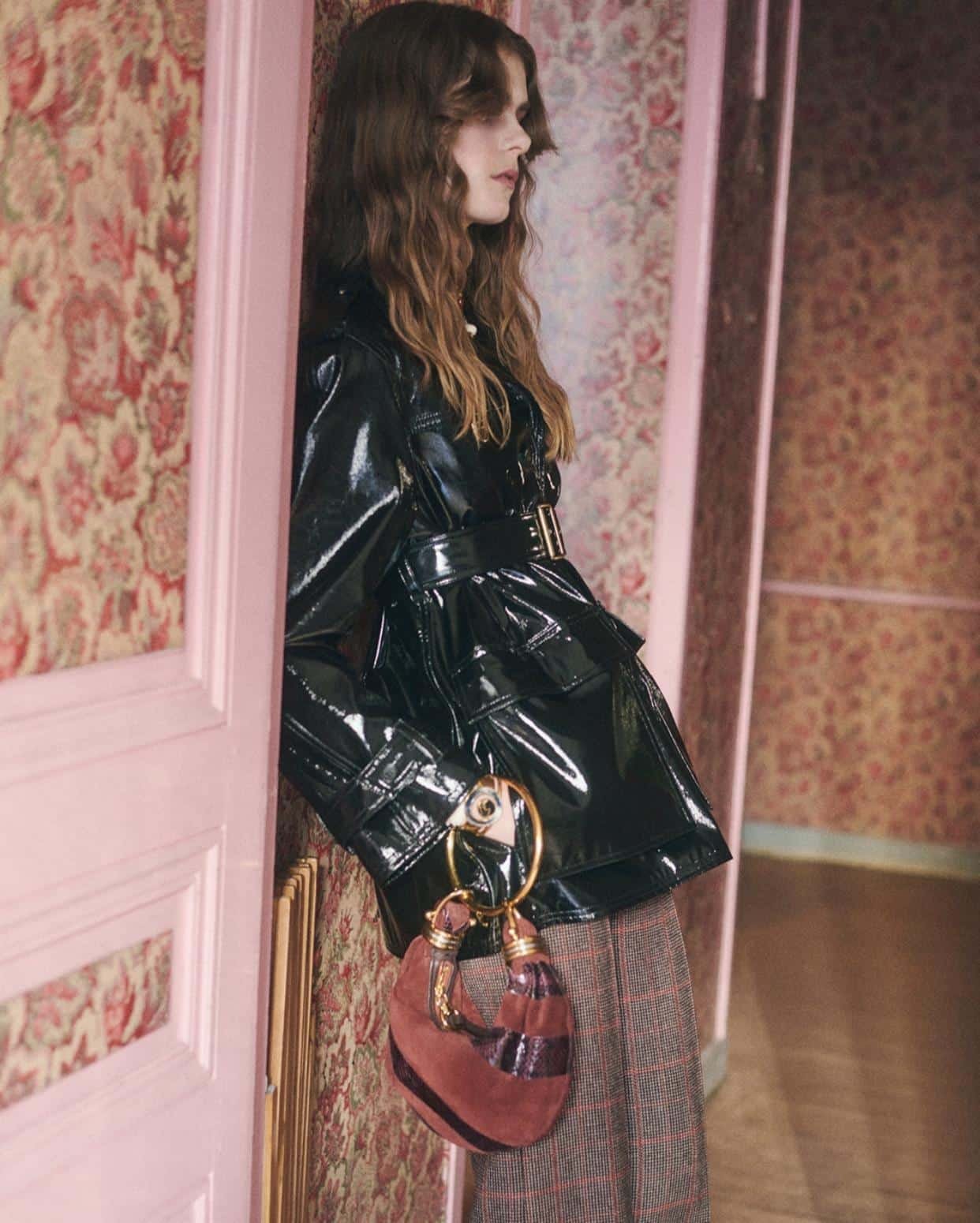
© Chloé
Chloé
Chemena Kamali owns nearly 1,500 vintage blouses. She believes that sleeve volumes, shoulder padding, and yoke placements evolve with societal changes — that the history of the blouse is the history of women's freedom, recorded in silk. This conviction is the foundation of every collection she makes for Chloé.
Paris · 1952 · The House That Dresses Women
Chloé was founded in 1952 by Gaby Aghion — an Egyptian-born Parisian who wanted to free women from the rigidity of haute couture and dress them in something lighter, more real, more alive. She called it "luxury prêt-à-porter" at a time when the two words had never been placed together. Karl Lagerfeld joined the house in 1966 and shaped its most definitive visual language: the silk blouse, the fluid trouser, the particular sensuality of fabric in motion. He left in 1983, returned in 1992, and left again in 1997. Phoebe Philo took the creative direction in 2001 and established the other pole of Chloé's identity — a cooler, more architectural femininity that produced the Paddington bag with its padlock hardware and its six-month waiting list. The house has been led, since then, by a succession of women: Hannah MacGibbon, Clare Waight Keller, Natacha Ramsay-Levi, Gabriela Hearst. And since 2024, Chemena Kamali — who began her career at Chloé as a student intern under Phoebe Philo, over twenty years ago.
Chemena Kamali · The Return · A Personal History
Chemena Kamali was born in 1981 in Dortmund, Germany — daughter of an Iranian architect and a German hairdresser — and named, by her parents, after the character Sophia Loren played in El Cid. At eleven, the family moved to Laguna Beach, California; she eventually returned to Germany, studied garment-making in Trier, and did her first internship at Chloé under Phoebe Philo. She graduated from Central Saint Martins with distinction in 2007, under Professor Louise Wilson. She returned to Chloé as design director under Clare Waight Keller in 2013, then moved to Saint Laurent in 2016 as women's ready-to-wear design director for Anthony Vaccarello — a position she held until 2022. When she was named creative director of Chloé in 2023, her statement was precise: "My heart has always been Chloé's. It has been since I stepped through its doors more than 20 years ago. Returning feels natural and very personal." She presented her first collection — the Intuition Collection, Fall 2024 — in February 2024, to a front row that included Jerry Hall, Sienna Miller, Pat Cleveland, and Doutzen Kroes.
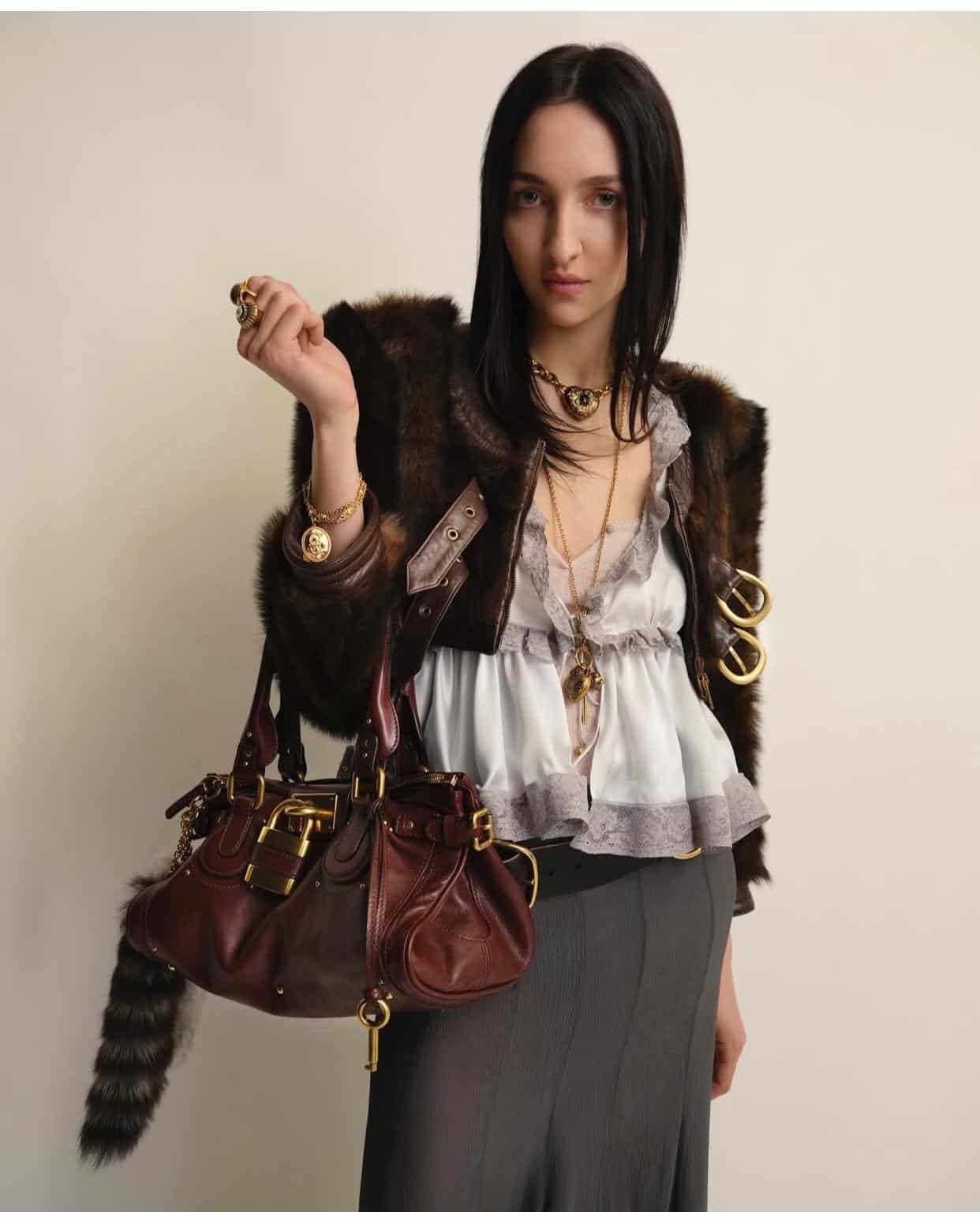
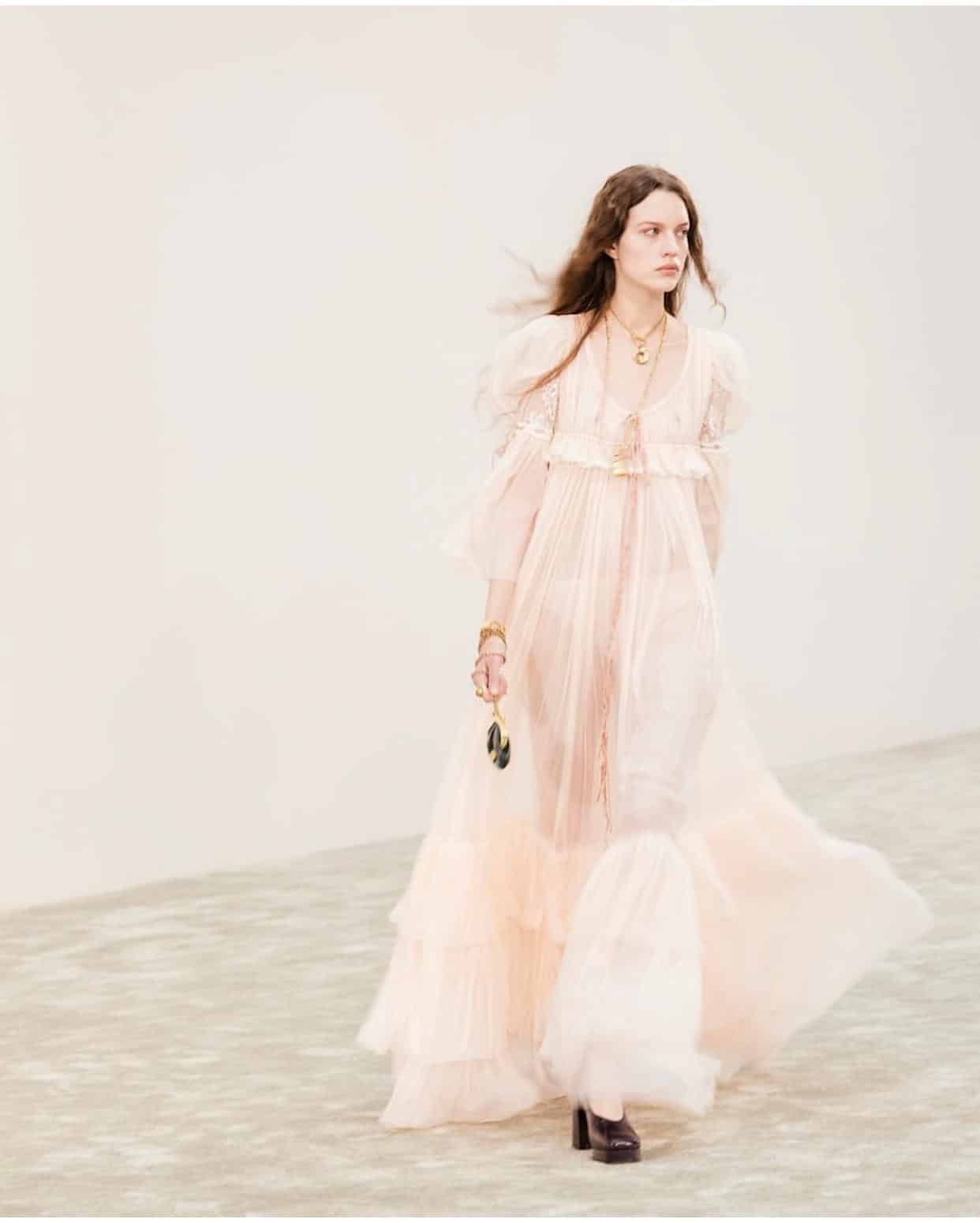
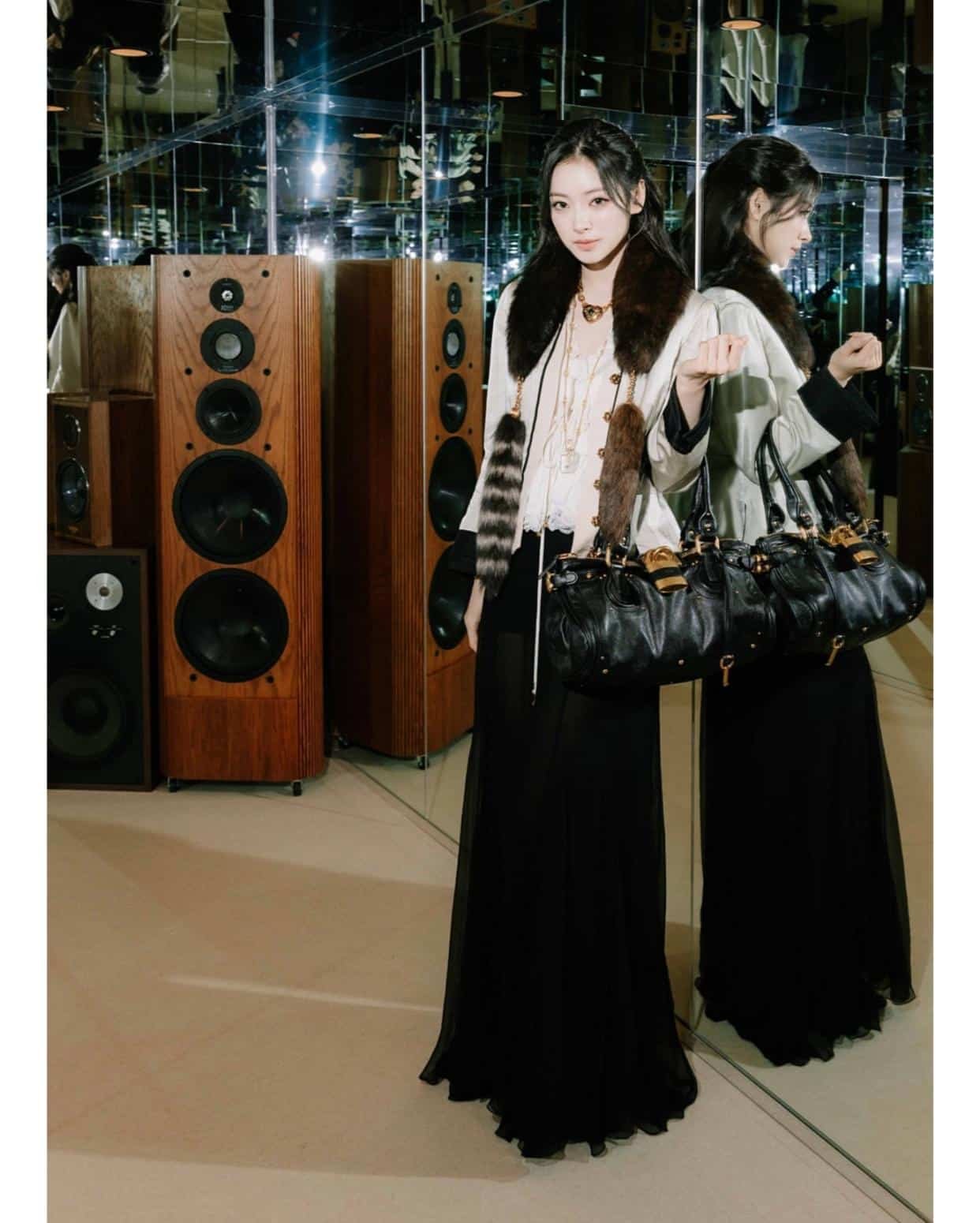
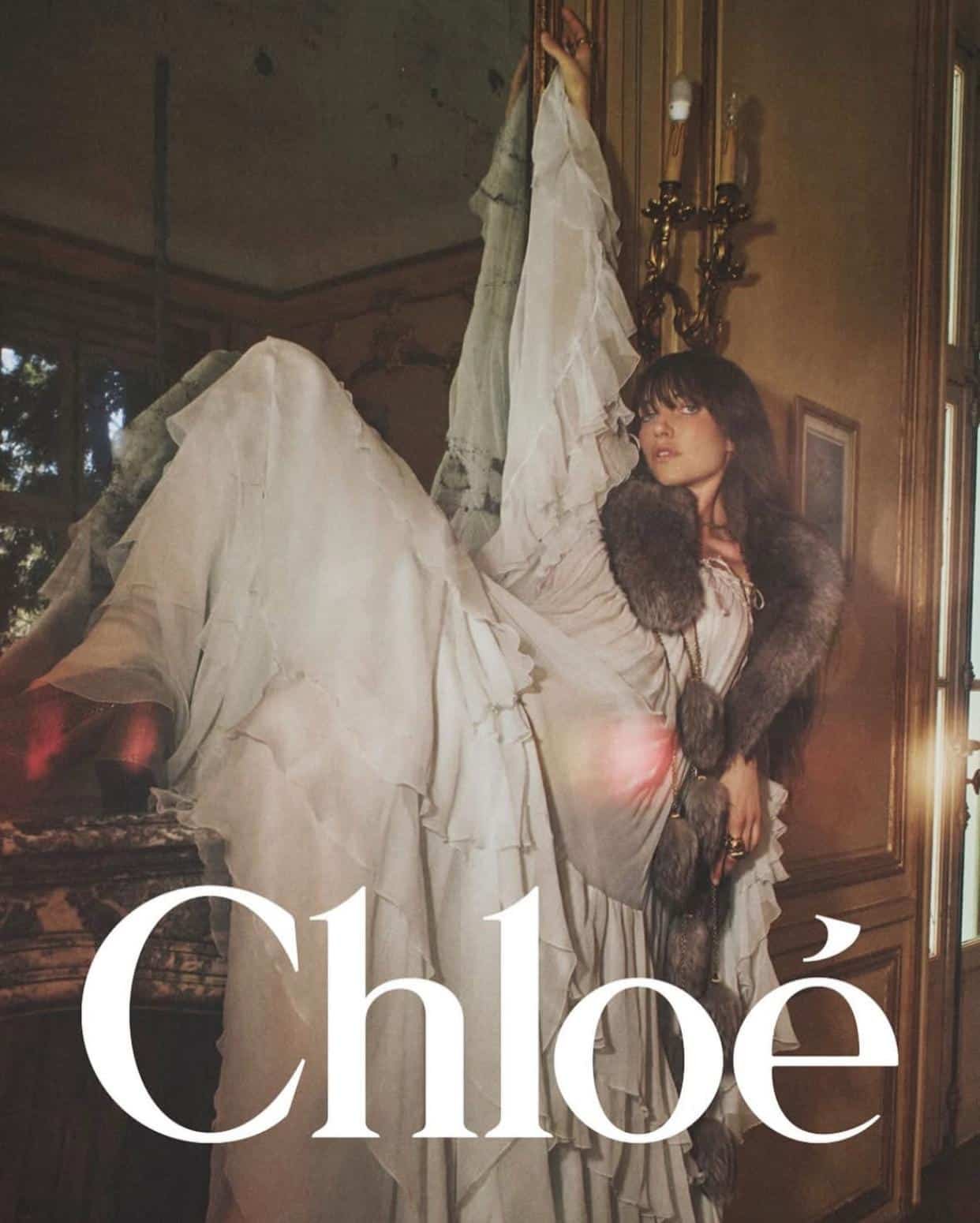
Kamali's debut collection — titled Intuition — was a homecoming in both professional and emotional terms. She drew from the Lagerfeld years, from the fluid silhouettes and silk blouses that defined the house's most beloved decade, and from the Philo era's iconic bags — reviving the Paraty, a MacGibbon-era shape whose structural sensibility echoed the collection's own balance between romance and rigidity. Romantic blouses with ruffles and flounces, sheer maxi dresses, baby-doll silhouettes worn with cape coats and over-the-knee boots. The Chloé girl was back — not as a nostalgic exercise but as a genuine conviction that the women who had fallen in love with this house over the decades were still there, still wanting those feelings. "I strongly believe that there are a lot of women out there who have this longing, who remember those days and want to feel it again," Kamali said. "Because Chloé really is an emotional brand."
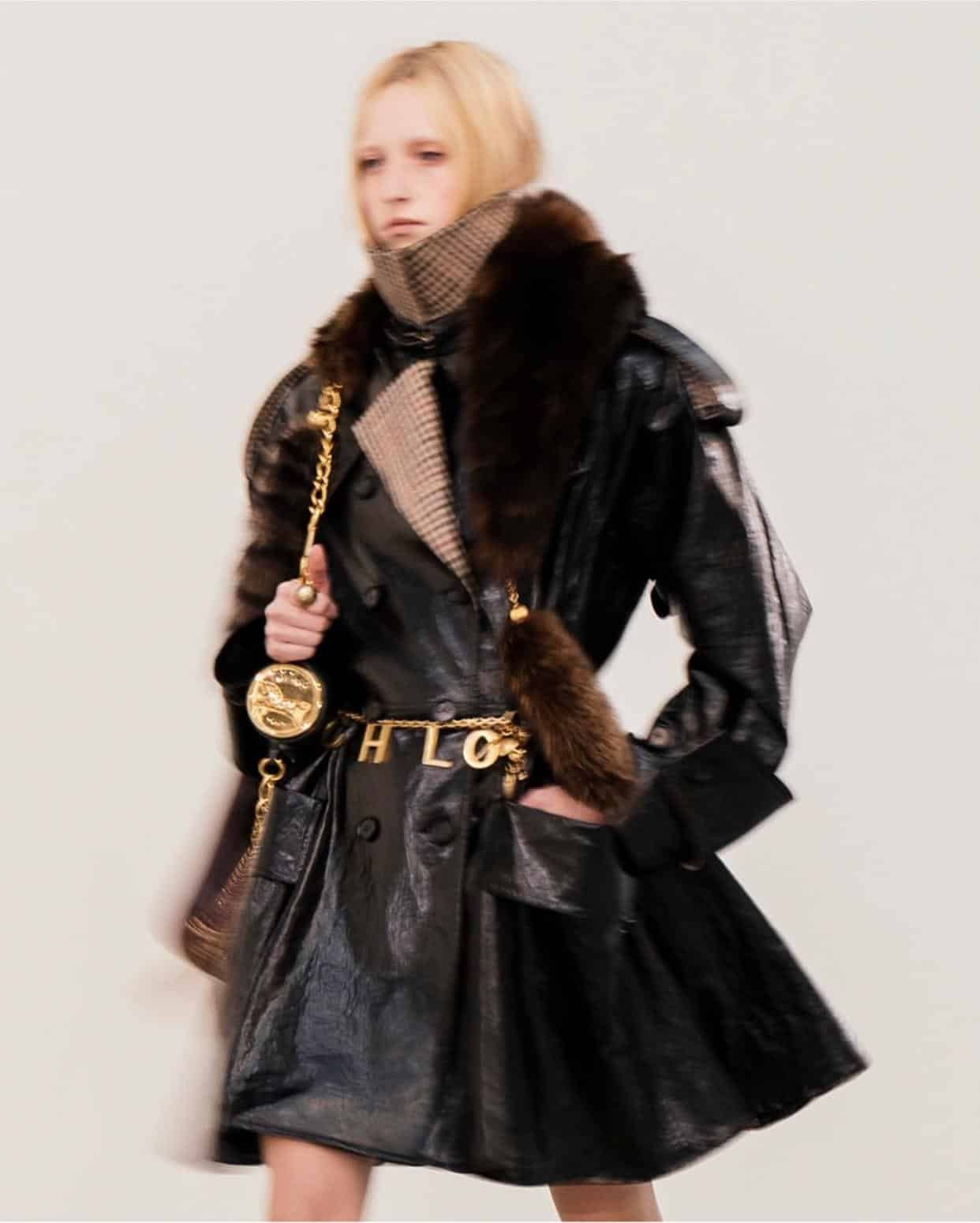
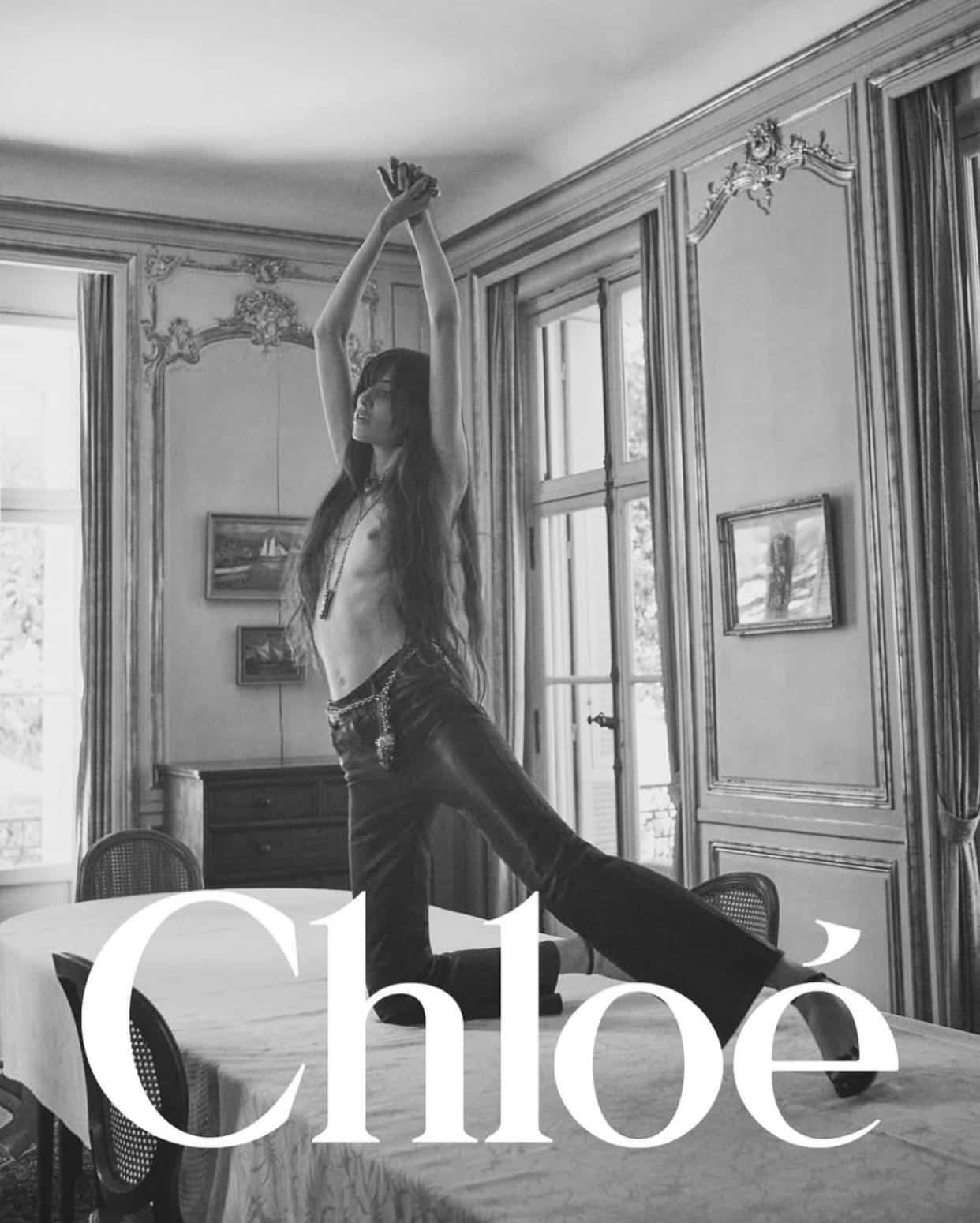
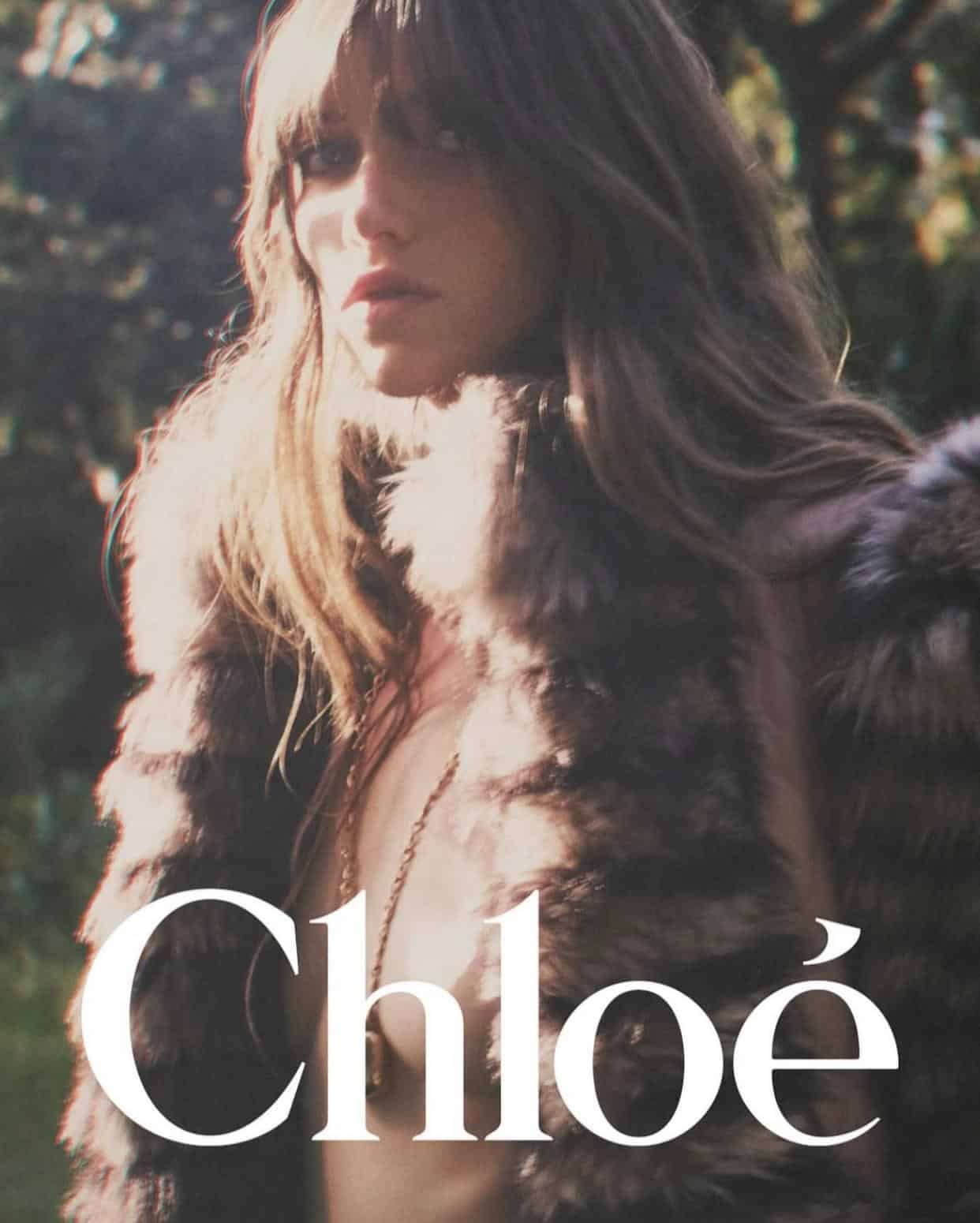
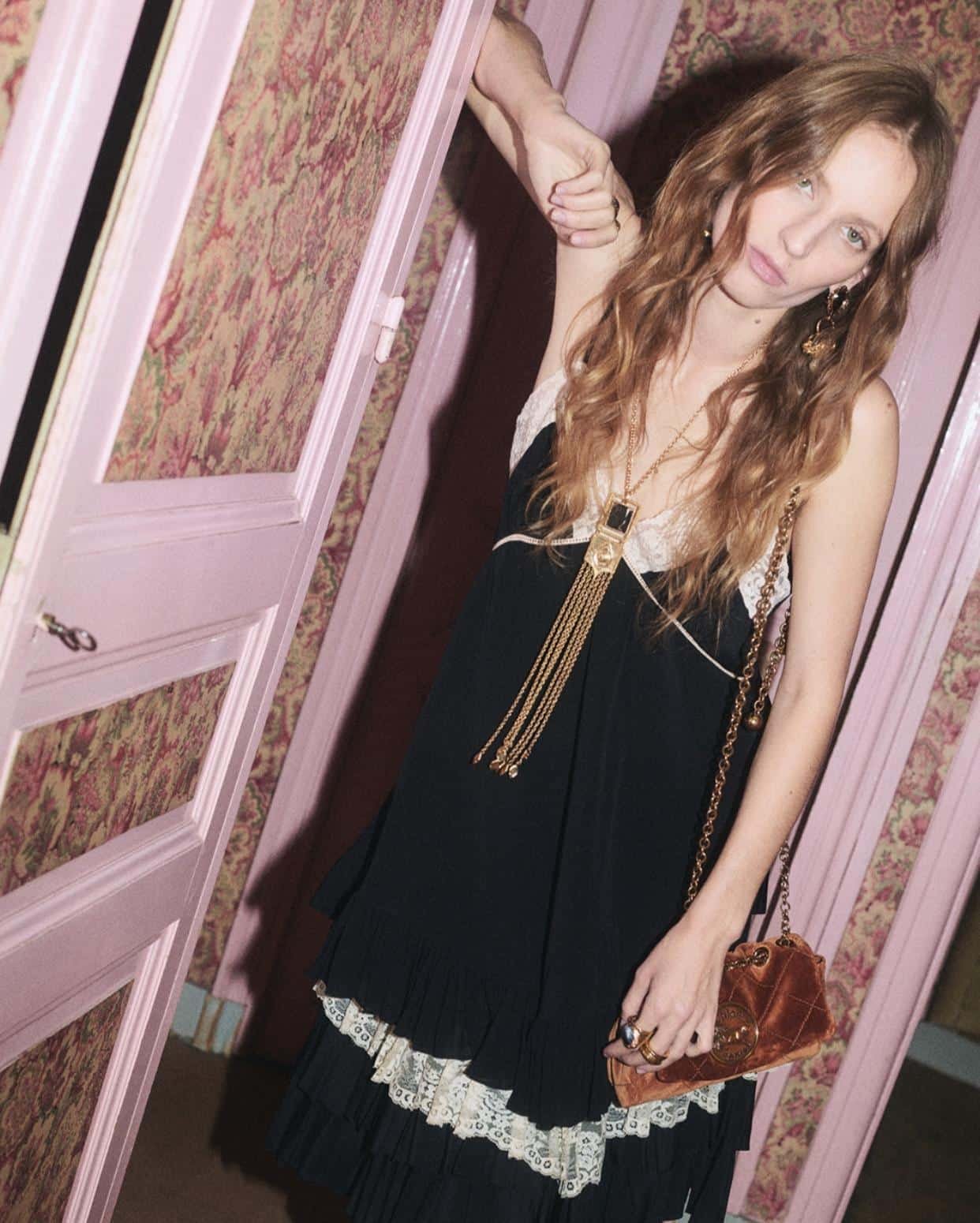
Kamali's third collection was drawn from New York's artistic orbits of the late 1970s — the opulence and freedom of the Factory parties, the Art Deco geometry of downtown Manhattan, the particular glamour of women who dressed for themselves rather than for anyone else. Slouching silhouettes, long bell sleeves, silk ruffles, cropped houndstooth blazers. A black billowing summer dress with a tiered frame and cinched bishop sleeves, adorned with a gold fil de coupé pattern that moved with the body. The gold scaffolding of Karl Lagerfeld's 1970s Paris apartment echoed in the fringe, the gold accents, the black lace. The collection confirmed what Intuition had proposed: that Kamali's Chloé is not about a single aesthetic but about a spirit — the particular electricity of a woman in full possession of her own style.
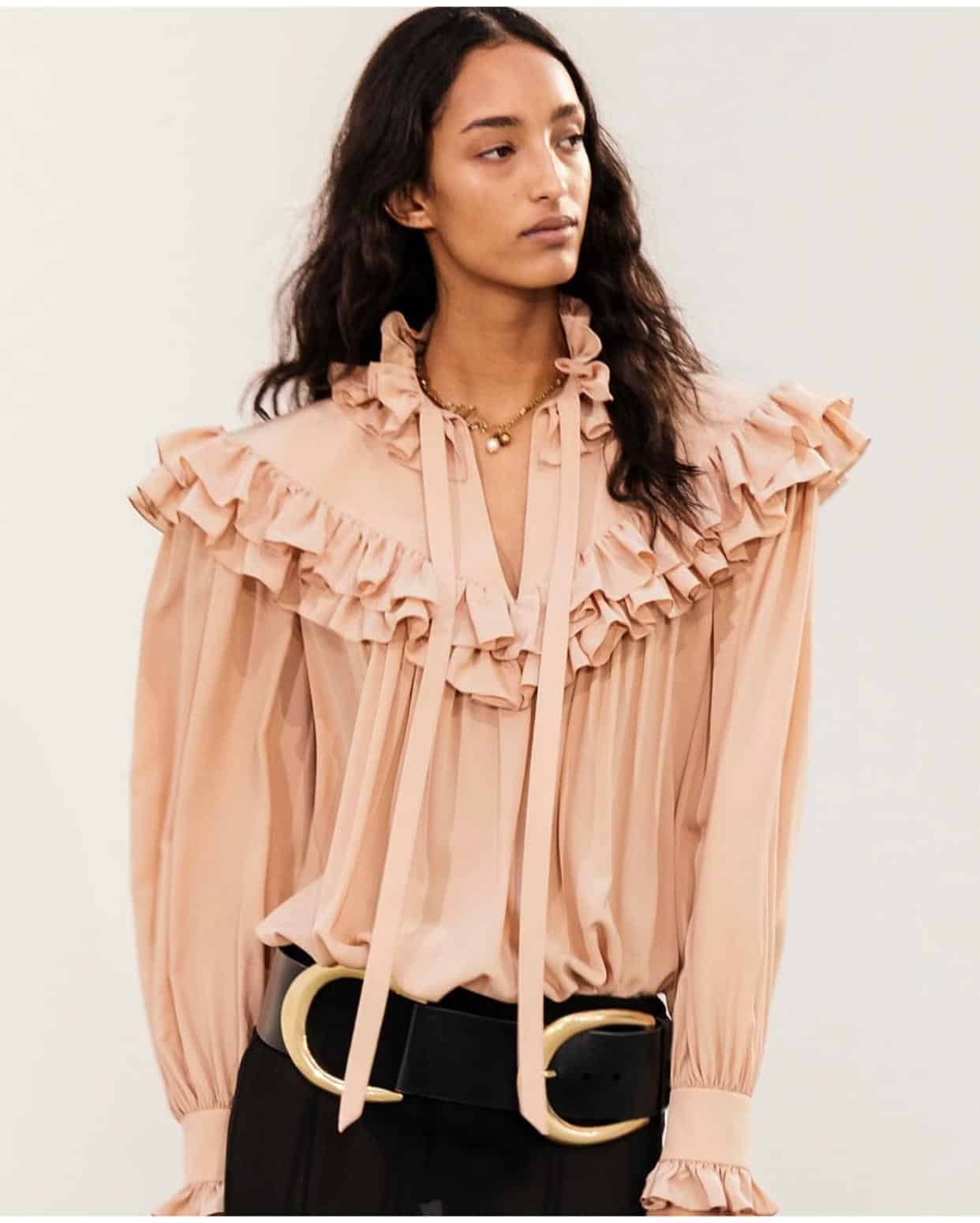
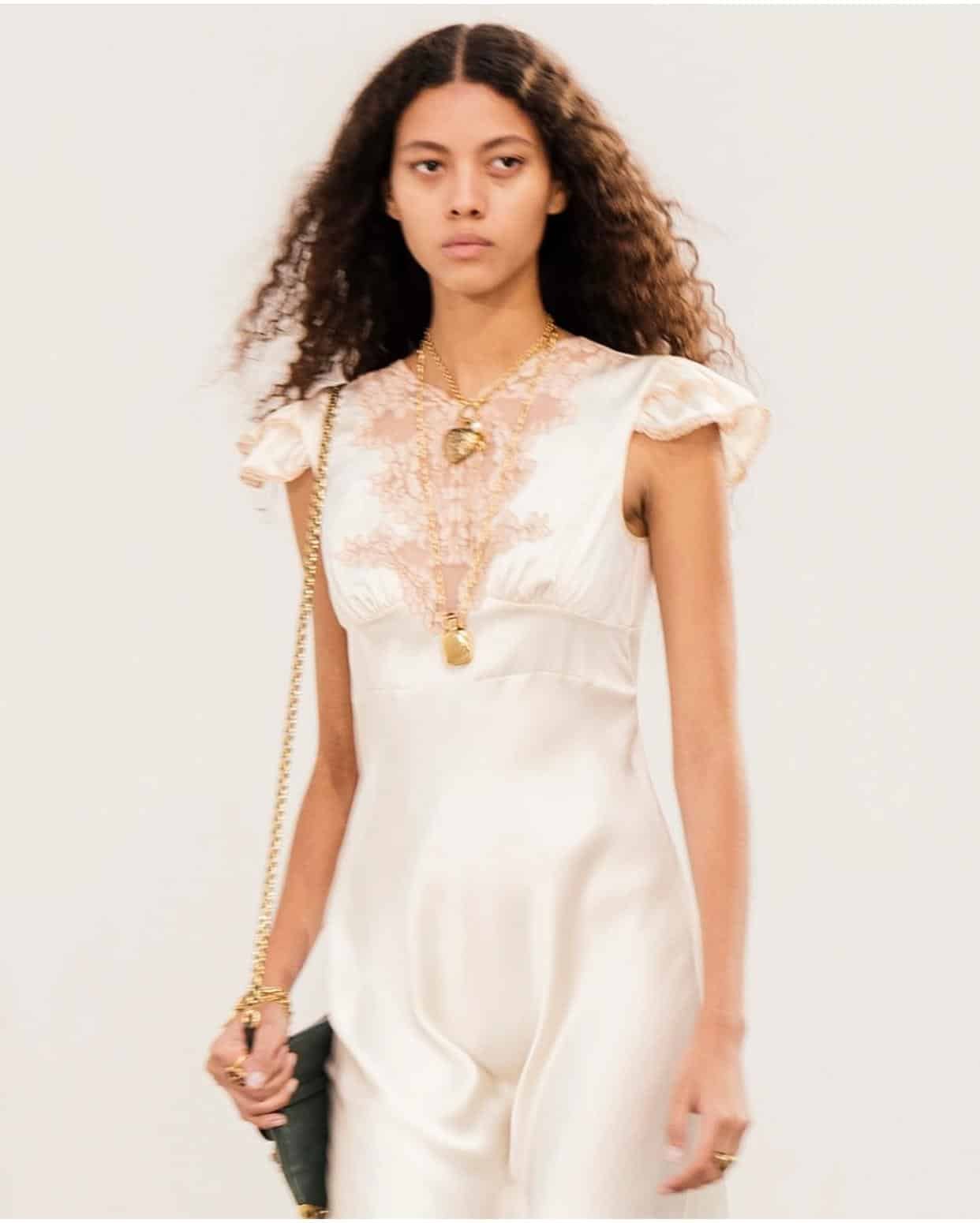
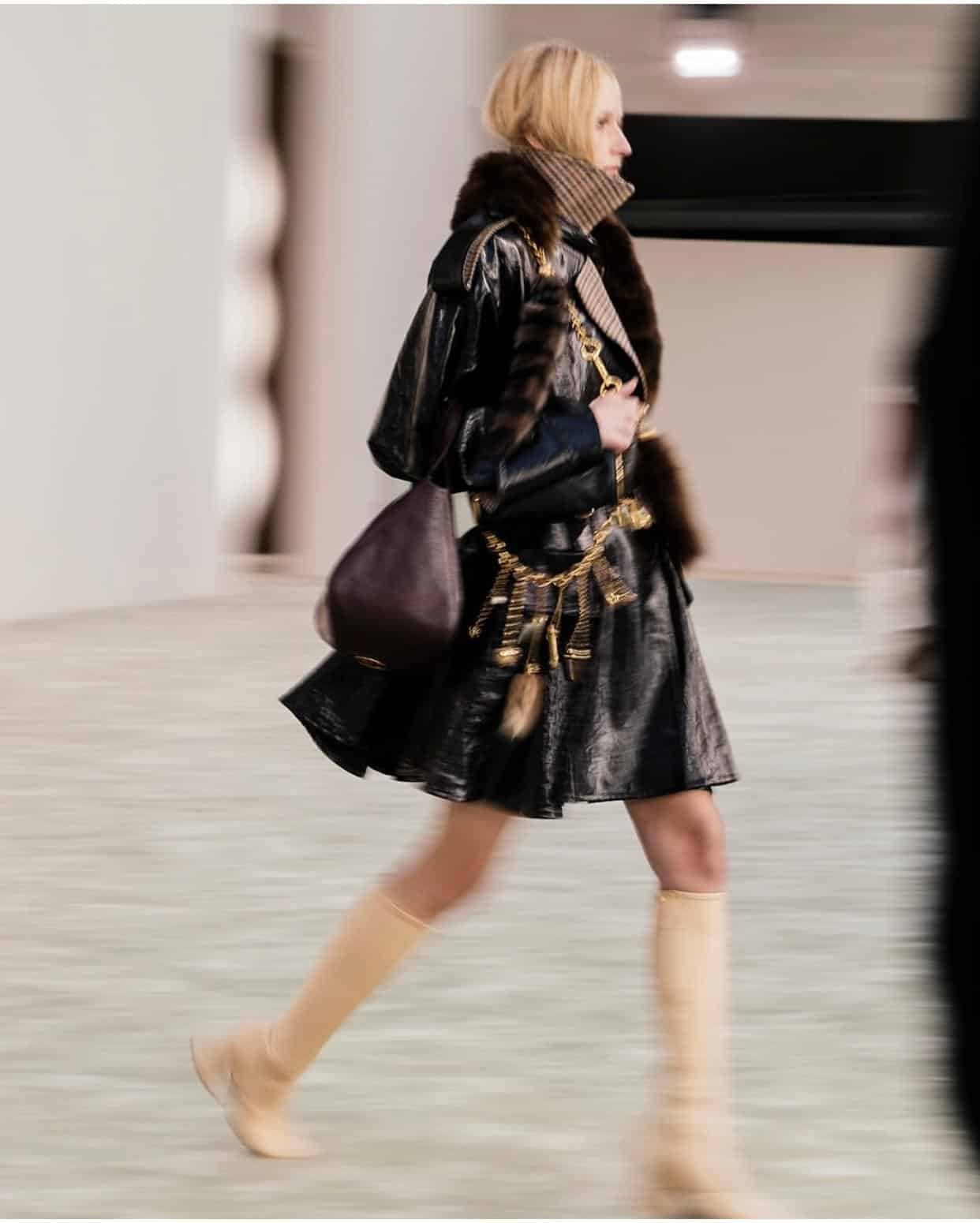
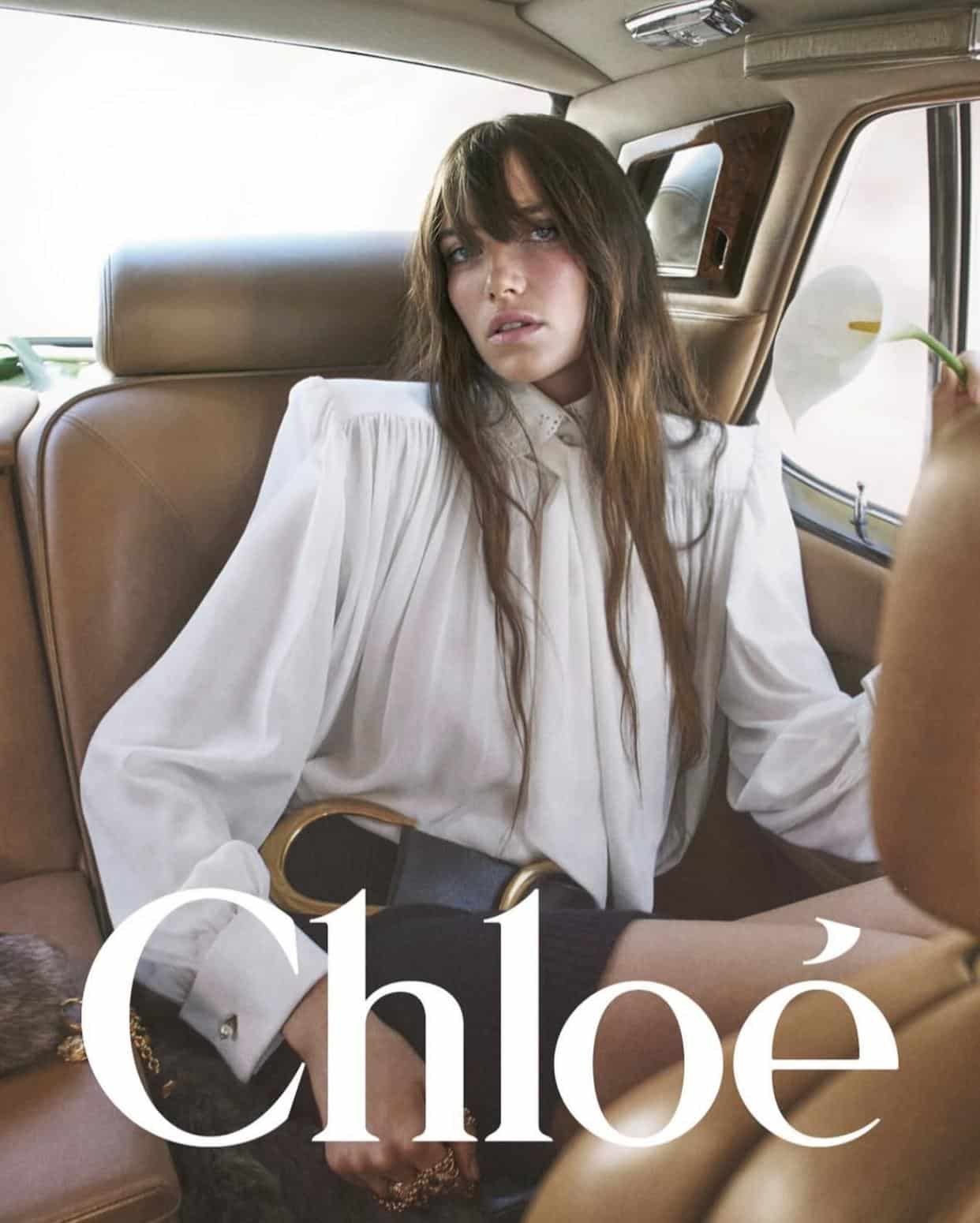
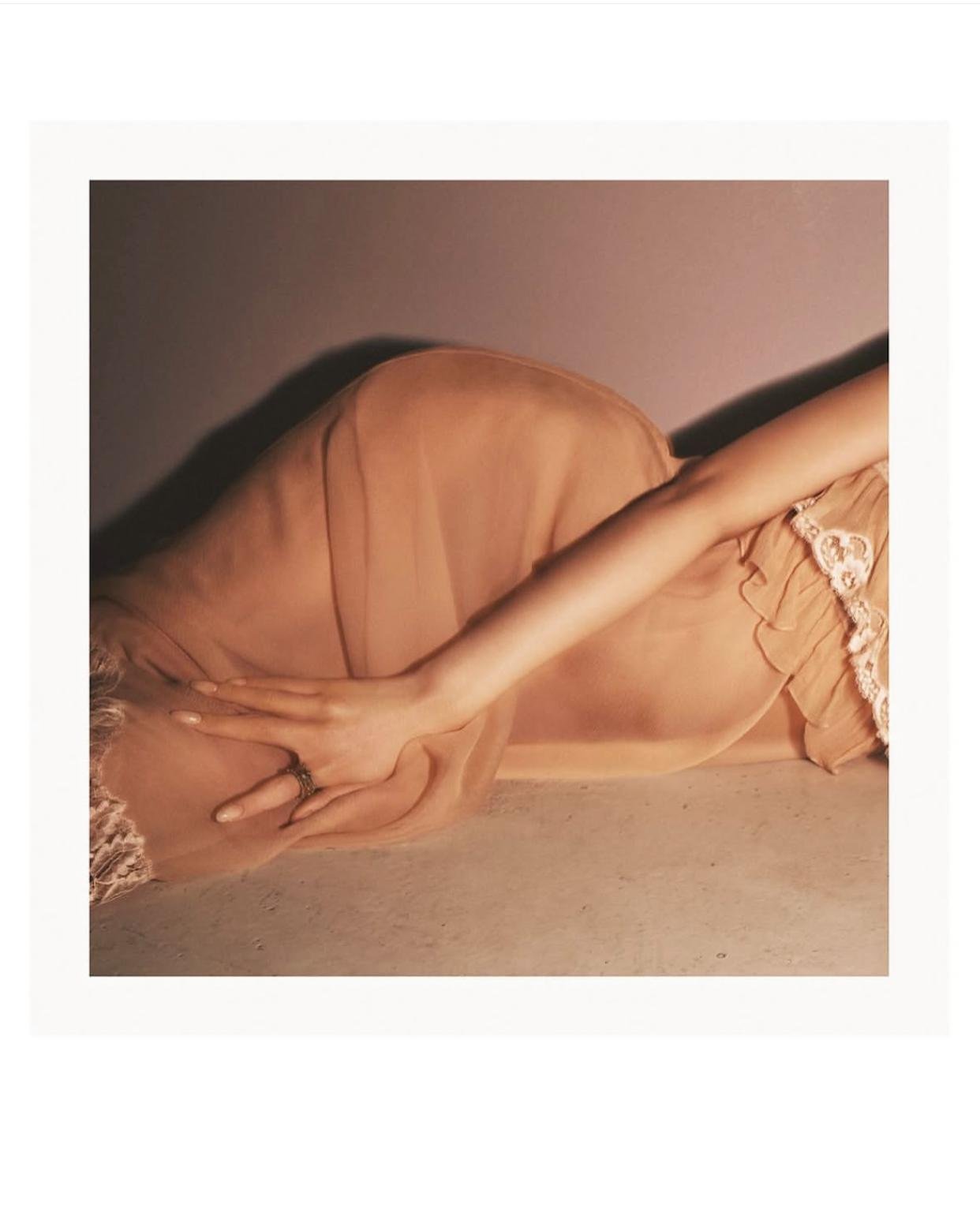
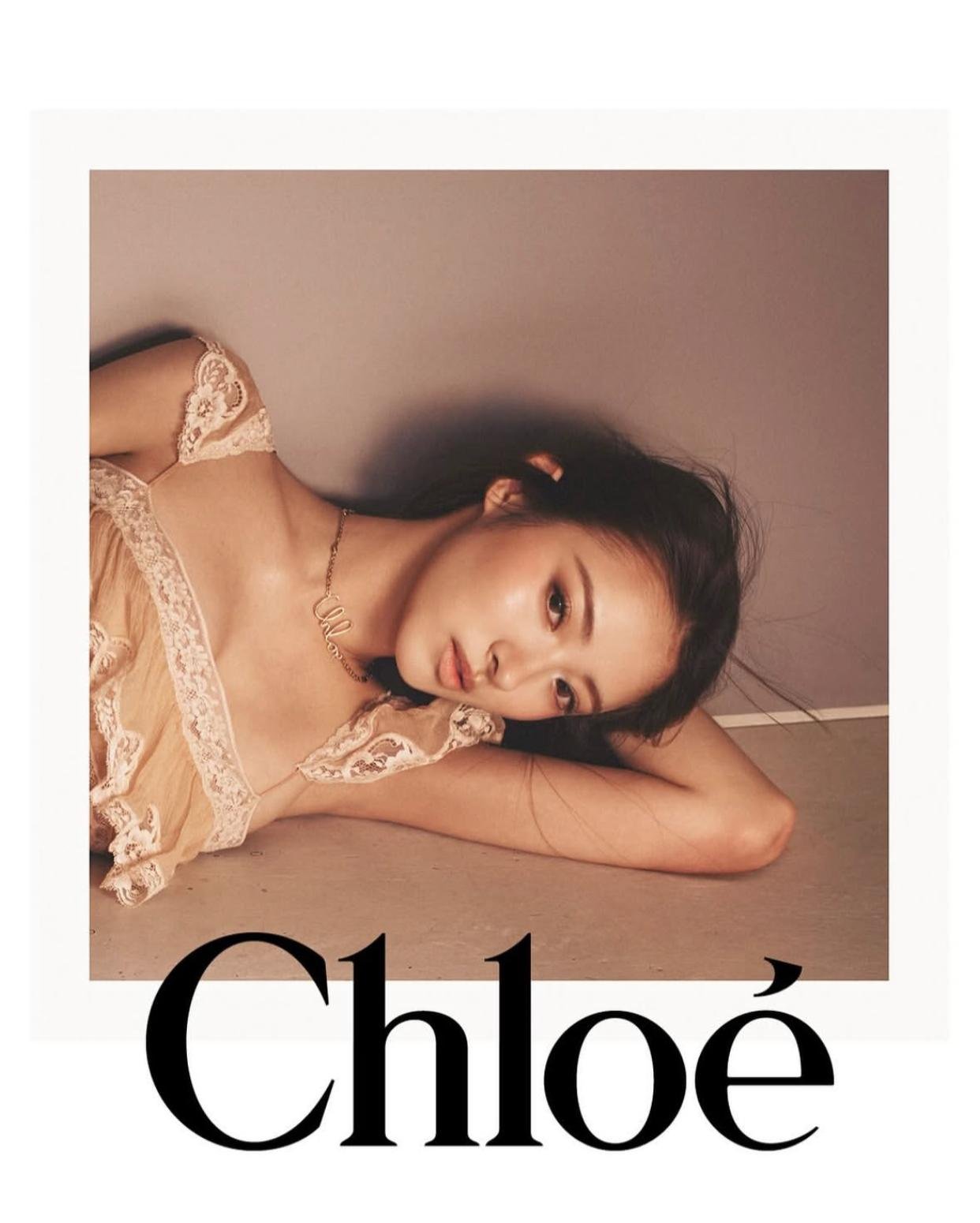
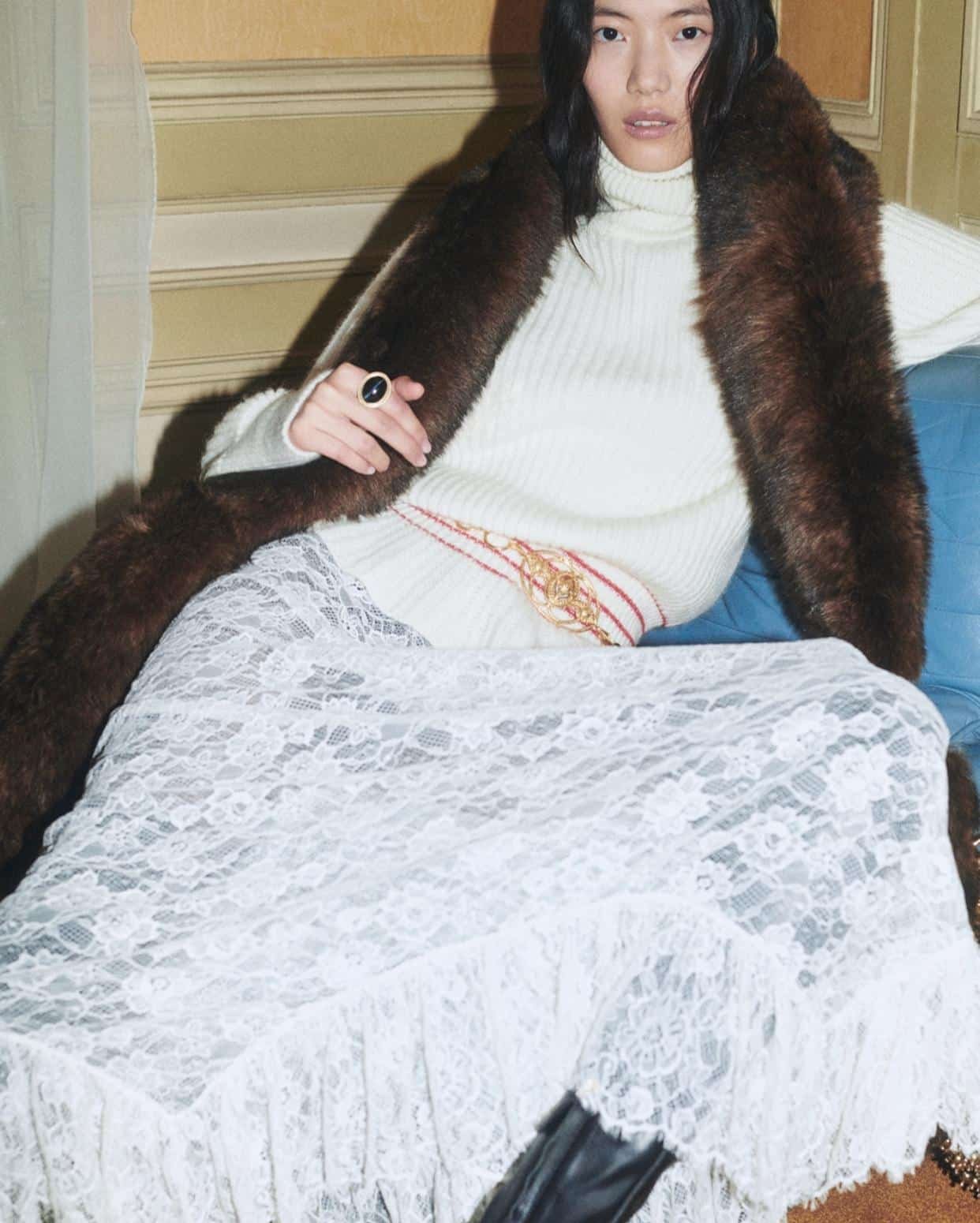
For Fall 2025, the blouse arrived with a new authority. Ivory and peach silk, broad don't-mess-with-me shoulders, commanding sleeves with gathers and meaty cuffs — blouses with the oomph of jackets, structured enough to stand alone. Kamali's mood board was dense with Guy Bourdin images from the late 1970s, a shift from the Lagerfeld archive references of earlier collections toward something more photographic, more cinematic. Alongside the power blouses: delicate lace dresses with frothy peplums pivoting at the hip. The collection also marked the return of the Paddington bag — the Philo-era piece with its padlock hardware — resurrection as a statement about continuity and desire. Jerry Hall and Georgia May Jagger sat front row, two generations of Chloé cool side by side, as if the house were demonstrating, in person, that its identity spans time without being trapped in it.
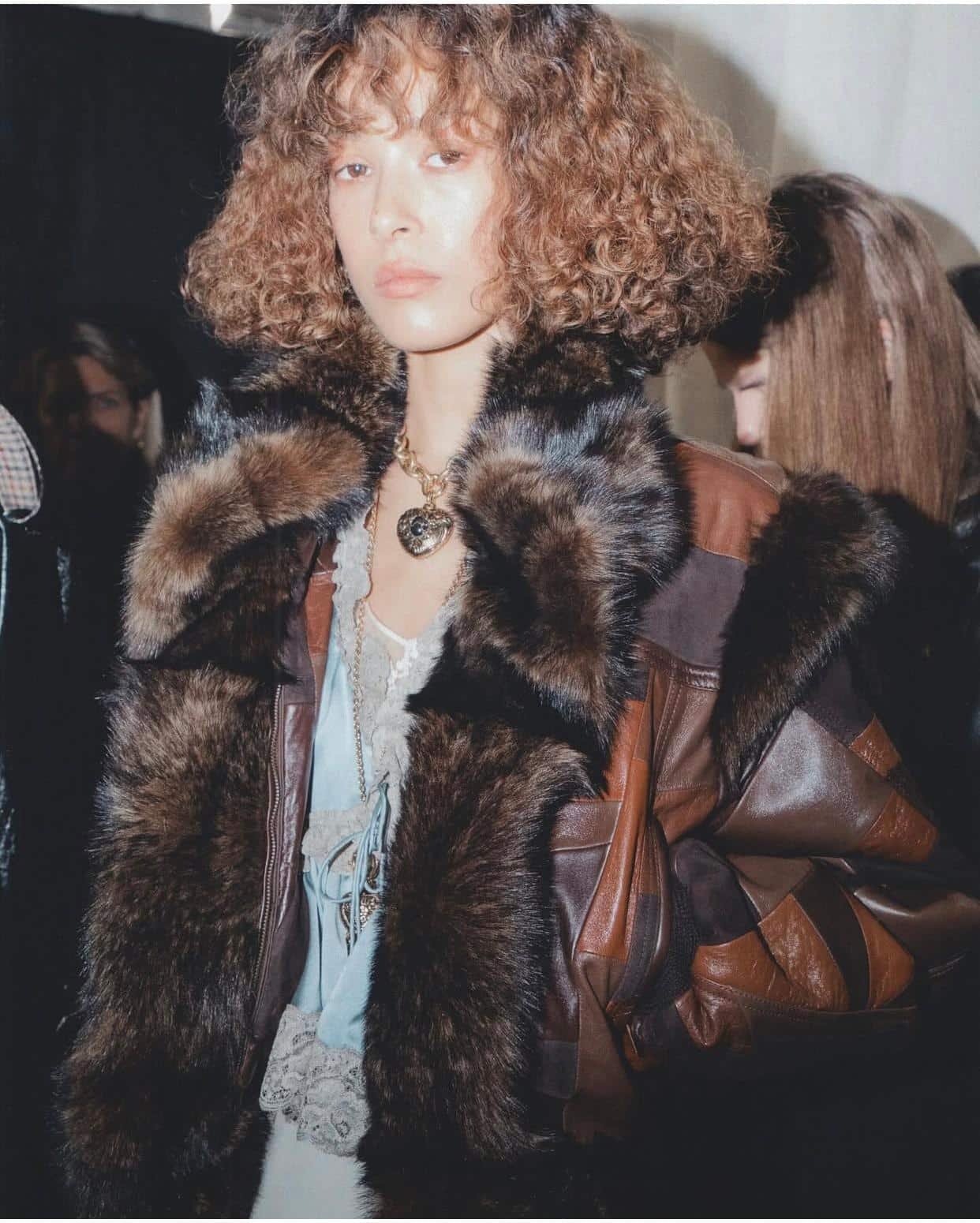
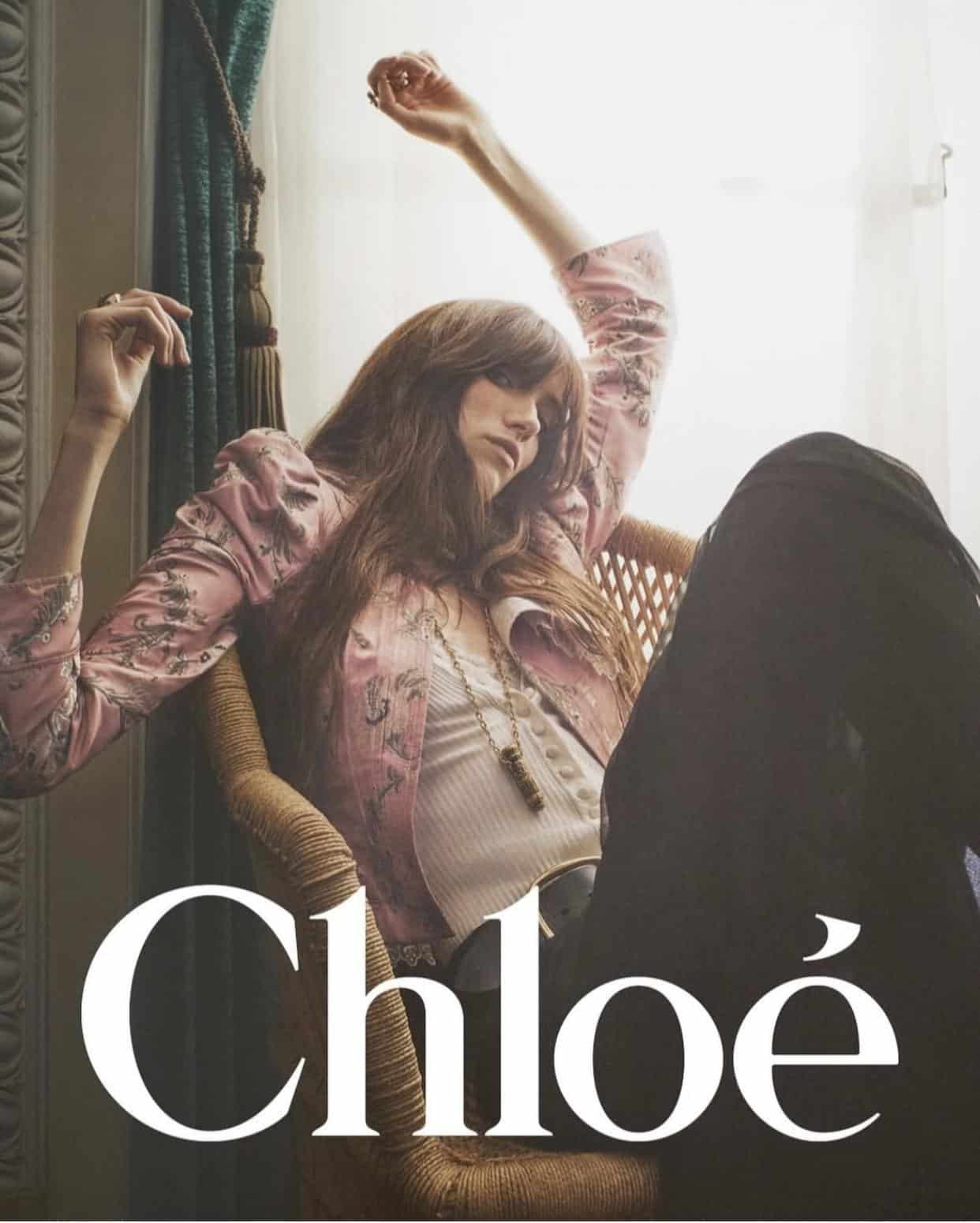
Kamali titled her Fall 2026 collection "Devotion" — a word that named her research method as much as her emotional intention. She found a direct line between a 1978 Chloé collection by Lagerfeld — knitted jackets with detached shoulder yokes — and the kraplap, a traditional Dutch garment of stiffened cotton. She added such yokes to the wool blazers that opened her show, shown at the Maison de l'UNESCO in Paris, where models moved through fog in checkered prairie skirts. Hand-knits, patchwork jackets, embroidered blouses, crochet details — each piece carrying the subtle irregularities of handmade work. Kamali deployed 25 meters of silk chiffon into a single frothy underskirt; she decorated blouses with tiny floral motifs imperceptible on a phone screen. "Every embroidery, knitted thread, and printed motif reveals both the maker's hand and their devotion," she wrote in the show notes. "They were never identical, they had unique irregularities that made them feel human."
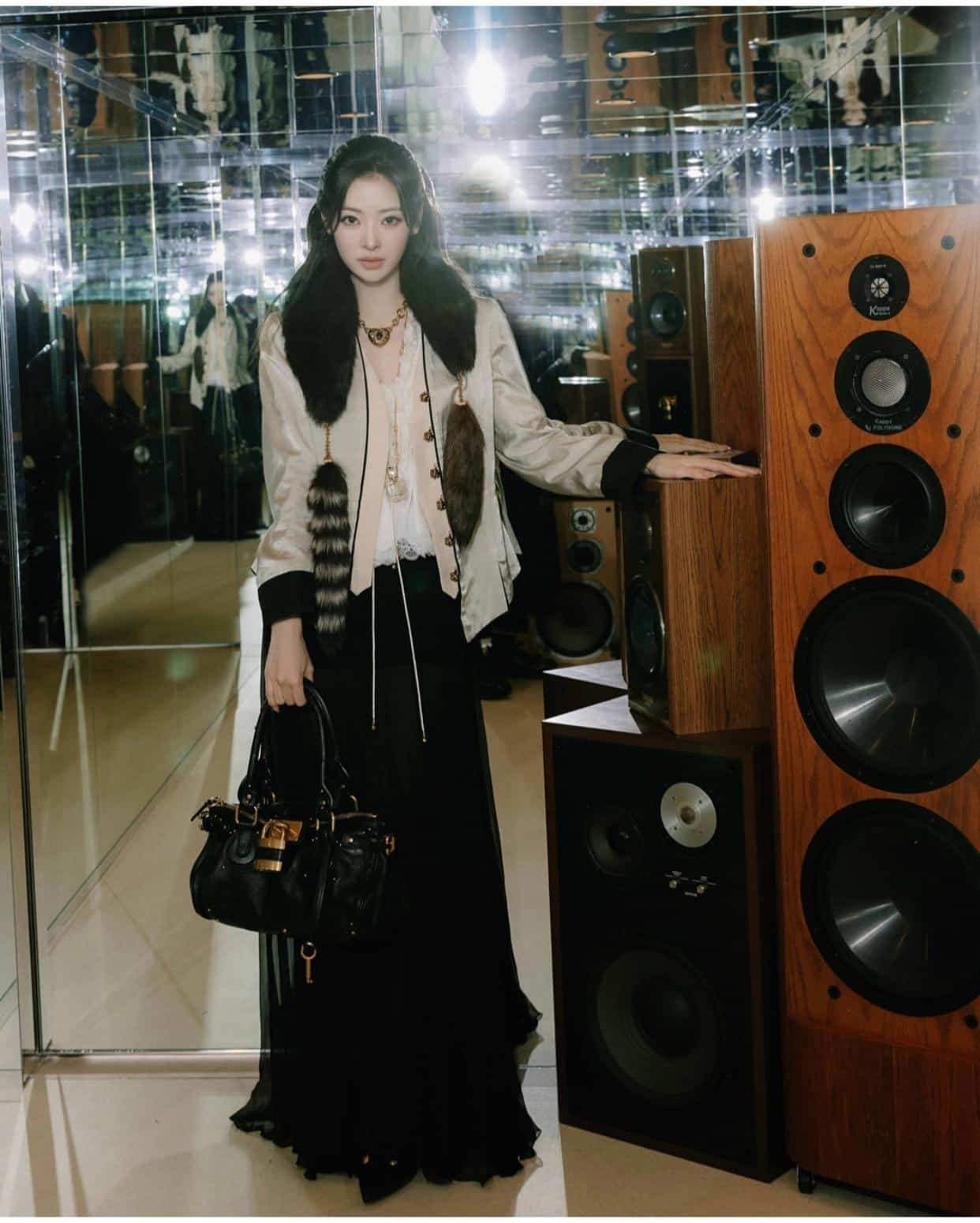
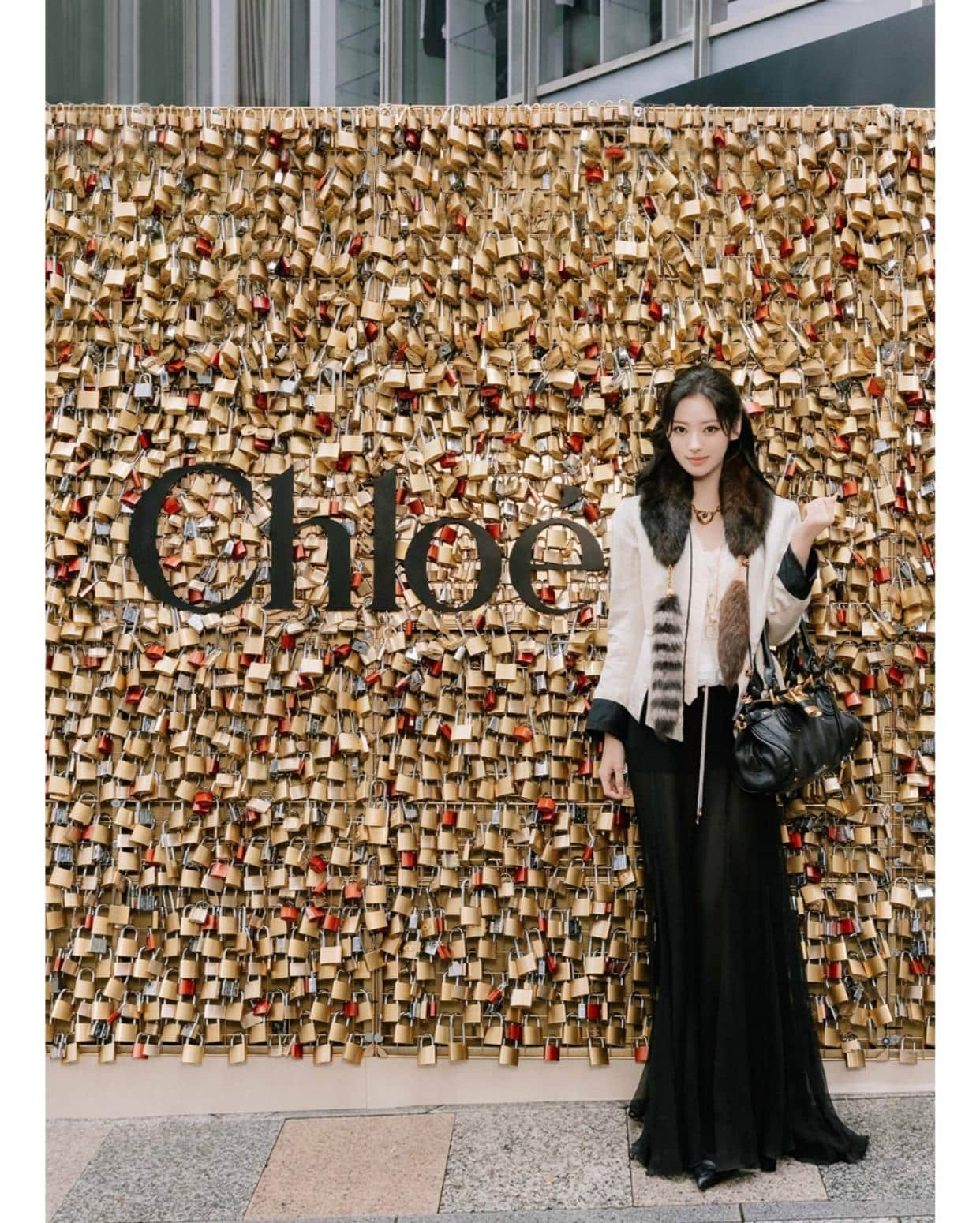
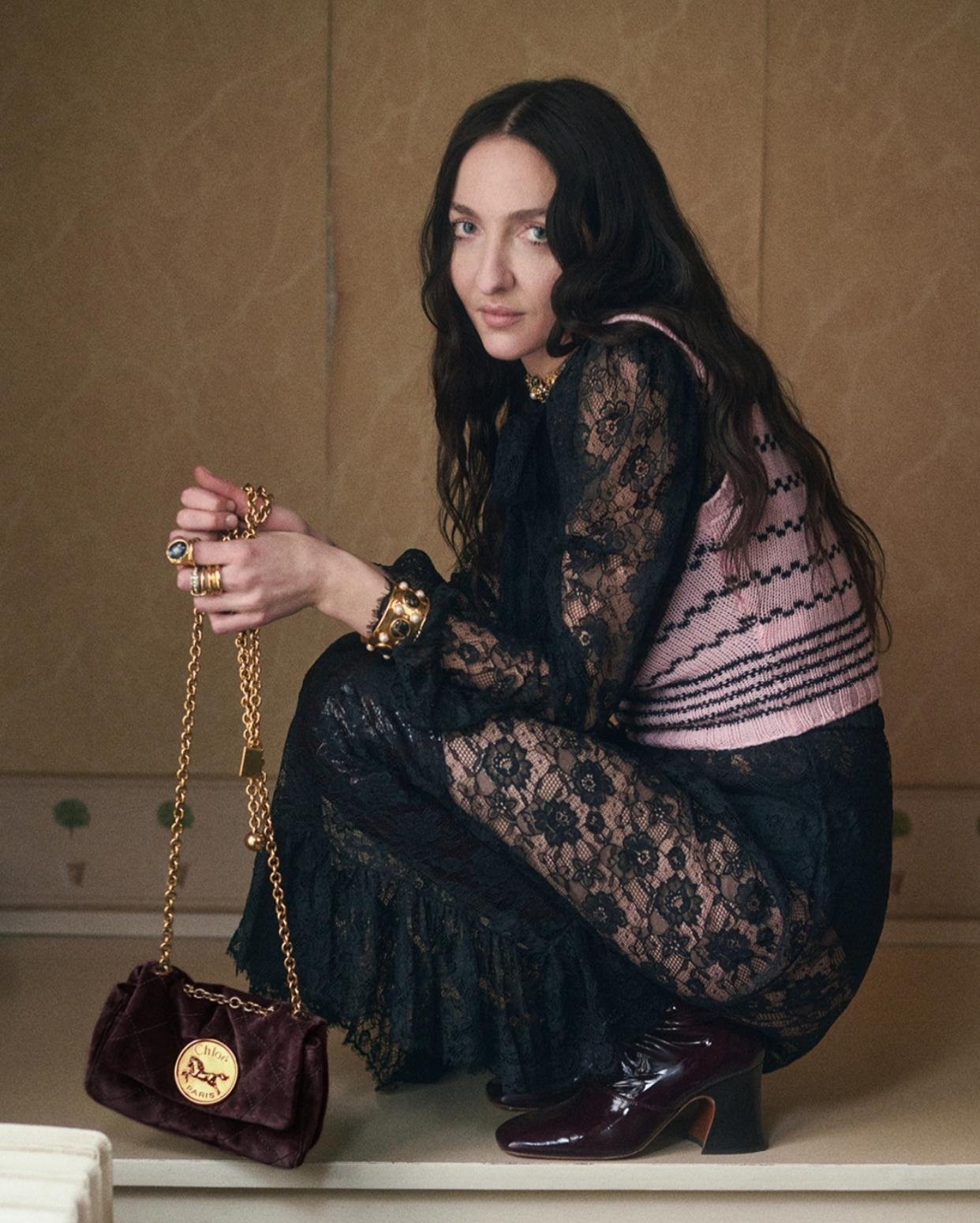
Chloé has produced more enduring bag shapes per creative director than almost any other French house. The Paddington — with its heavy padlock hardware and waiting-list mythology from the Philo era. The Marcie hobo — from the MacGibbon years, defined by its saddle-stitched flap and its particular casual elegance. The Paraty — also MacGibbon — with its architectural construction. The Edith from the early Philo period, structured and serious. Under Kamali, the bags have evolved toward a more sculptural vocabulary — oversized totes, bowling shapes, updated takes on the house's existing shapes with refined proportions — while the charms and accessories that hang from them have been a consistent element of her visual language, their scale carefully modulated collection to collection. The bags are the house's most immediately legible commercial statement. Kamali is redefining what the Chloé girl carries without disrupting the fundamental proposition of why she carries it.
Chloé holds B Corp certification — one of the few luxury fashion houses to have done so — committing to the highest verified standards of social and environmental performance, transparency, and accountability. The commitment to sustainability is not incidental to Kamali's creative vision but intrinsic to it: her obsession with the blouse is an obsession with the garment that lasts, that can be worn across decades, that has been worn across decades in her own archive of 1,500 pieces. The Fall 2026 "Devotion" collection made this argument most directly — garments built by hand, with time, with the subtle irregularities of craft. "Fashion is not escape but connection," Kamali wrote. In a luxury market increasingly organized around spectacle and turnover, Chloé under Kamali is making a quieter and more durable argument: that the most radical act is to make something that is worth keeping.
Chemena Kamali owns nearly 1,500 vintage blouses.
She believes the history of the blouse
is the history of women's freedom —
recorded in sleeve volume,
shoulder padding, and yoke placement.
Every season at Chloé,
she reads this history forward.
Not as nostalgia.
As a living argument about what women want now.
The Chloé woman has been defined and redefined across seven decades without ever fundamentally changing her nature. She is romantic without being sentimental. She is free without being careless. She wears silk blouses and padlocked bags. She sat front row in 1970 when Karl Lagerfeld showed fluid trousers, and she stood in line in 2005 to buy the Paddington. She wore the Marcie on her shoulder through the 2010s and she wears Kamali's power blouses now, with their broad shoulders and their commanding sleeves, because she is that kind of woman. Kamali described her ambition in her first season: "My aim is to speak to women and answer their desire for clothes that are sincere and personal, silhouettes that play with fluidity and structure, full of movement and with a sense of un-doneness." Three collections later, the fashion industry's consensus is that she has done exactly that. The Financial Times named Kamali among its 25 most influential women of 2024. In the same year, Kamala Harris wore Chloé to the Democratic National Convention. The house had found its moment, and its woman, again.
93 Greene Street, SoHo · 715 Madison Avenue · New York
Chloé presents its ready-to-wear in New York at two addresses: 93 Greene Street in SoHo — the 2,100-square-foot flagship in the neighborhood that has always been the city's most permeable border between art and fashion — and 715 Madison Avenue on the Upper East Side, the historic address that has served New York's Chloé clients for over a decade. Both boutiques present the full ready-to-wear and accessories collections, the complete bag range, and the seasonal shoes and jewelry. SoHo receives the collection in the spirit closest to Chloé's own — bohemian, urban, unexpected. Madison Avenue presents it in the register of considered luxury, where the Paddington and the Paraty and the latest power blouses find their most natural audience. Two New York addresses, one Chloé woman, always herself.
93 Greene Street · SoHo, New York, NY 10012 · Flagship boutique
715 Madison Avenue · New York, NY 10065 · Upper East Side
Ready-to-Wear · Bags · Shoes · Jewelry · Accessories
Chemena Kamali — Creative Director since 2024
Richemont Group · B Corp certified · Founded Paris 1952
chloe.com/en-us
Gaby Aghion founded Chloé in 1952
to dress women in something lighter than couture.
Karl Lagerfeld gave them the silk blouse.
Phoebe Philo gave them the padlocked bag.
Chemena Kamali — who began here as an intern,
twenty years ago — came back
with 1,500 vintage blouses in her archive
and a conviction that sleeve volumes
tell the history of women's freedom.
She is not wrong.
She has always known this house.
© Chloé
© Chloé
© Chloé

© Chloé

© Chloé
© Chloé
© Chloé
© Chloé
© Chloé
© Chloé
© Chloé
© Chloé
© Chloé
© Chloé
© Chloé
© Chloé
© Chloé
© Chloé
© Chloé
© Chloé
© Chloé
© Chloé
© Chloé
© Chloé
CHLOÉ
© Chloé