© Cartier
© Cartier
© Cartier
Cartier
In 1969, Aldo Cipullo designed the Love bracelet in New York — a gold oval that could only be opened and closed with a small screwdriver, intended to be locked onto the wrist by the person one loved. The screw is still there. So is the idea behind it.
Paris · 1847 · The Jeweler Of Kings
Louis-François Cartier founded the house in Paris in 1847. His grandson Louis Cartier established the design language that still governs the house's most enduring pieces — a preference for geometric form over organic ornament, for the relationship between different metals and stones over the single spectacular stone, for the wearable object over the archival trophy. The patrons he cultivated were not passive clients. Edward VII called Cartier "the jeweler of kings and the king of jewelers." Jeanne Toussaint, appointed artistic director in 1933, gave the house the Panthère — both as motif and as spirit. Her own nickname within the house was La Panthère. The animal and the woman are inseparable from what Cartier became.
The house's New York presence began with the acquisition of the Fifth Avenue mansion in 1917 — Pierre Cartier exchanged it for a natural pearl necklace valued at one million dollars. The building has remained in the house's possession since. New York, over the following decades, became not merely a market but a source of design. The Love bracelet was conceived here. Juste un Clou was born here. The city's particular combination of industrial boldness and social aspiration shaped two of the house's most enduring jewelry propositions.
Love · 1969 · The Bracelet That Cannot Be Removed Alone
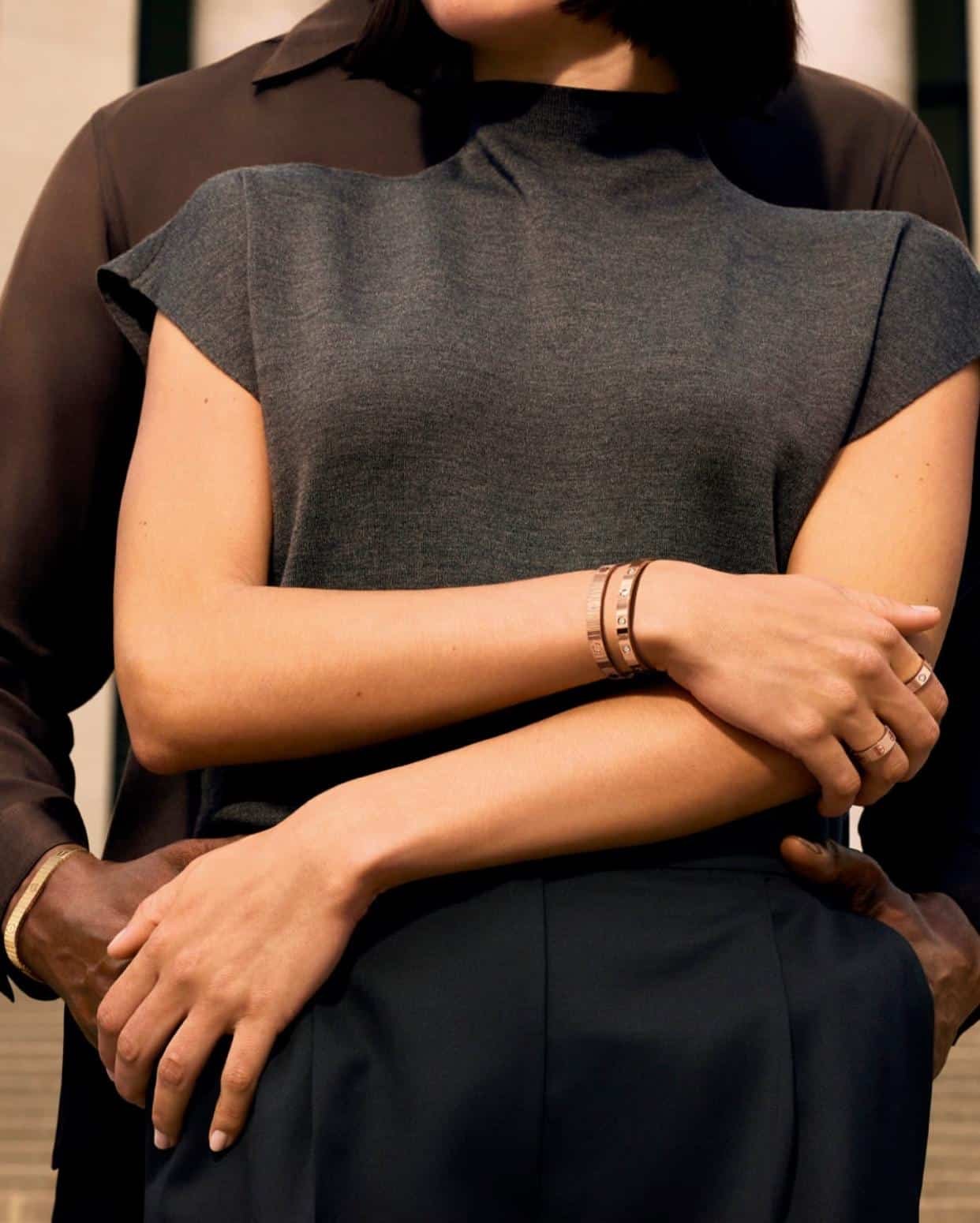
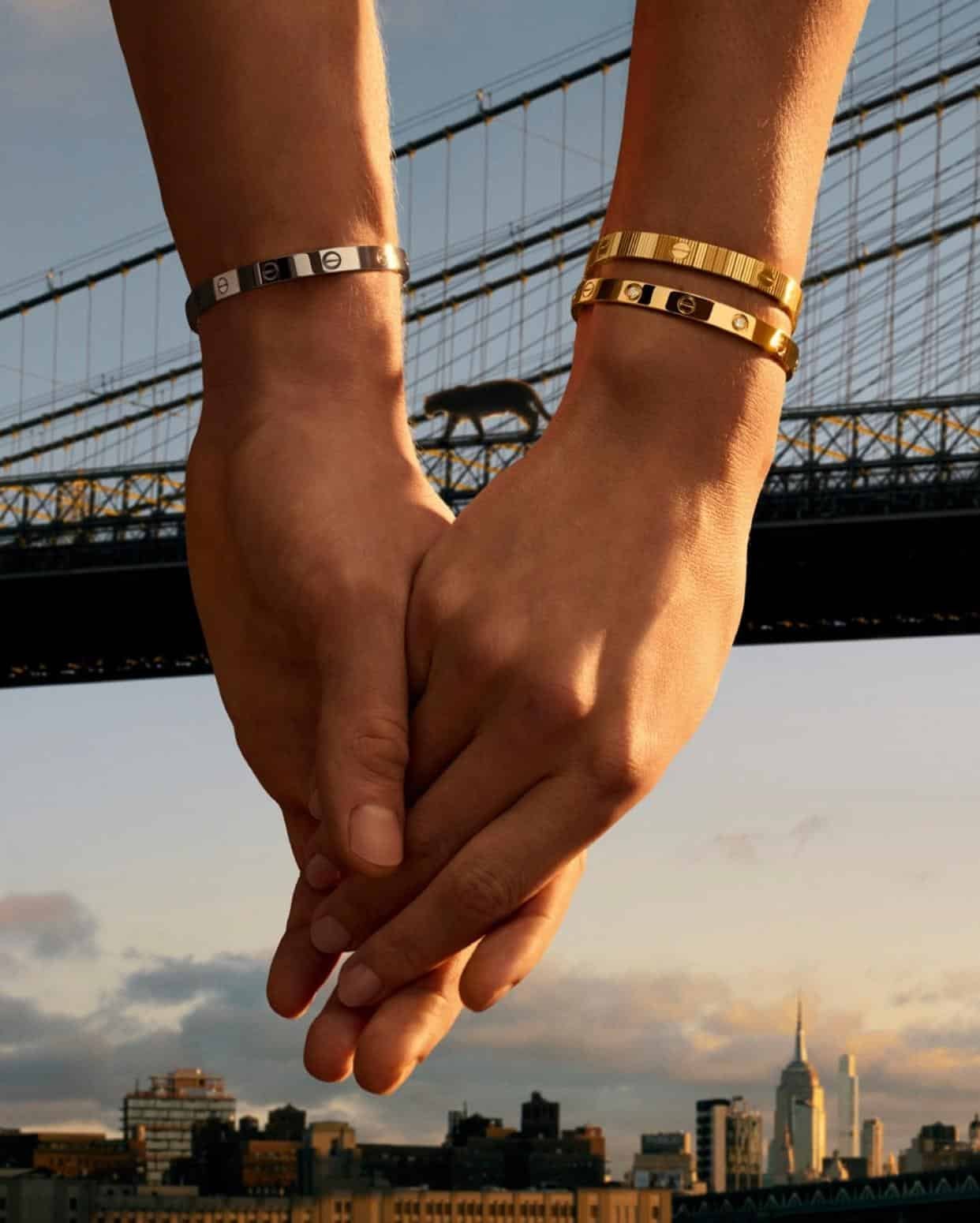
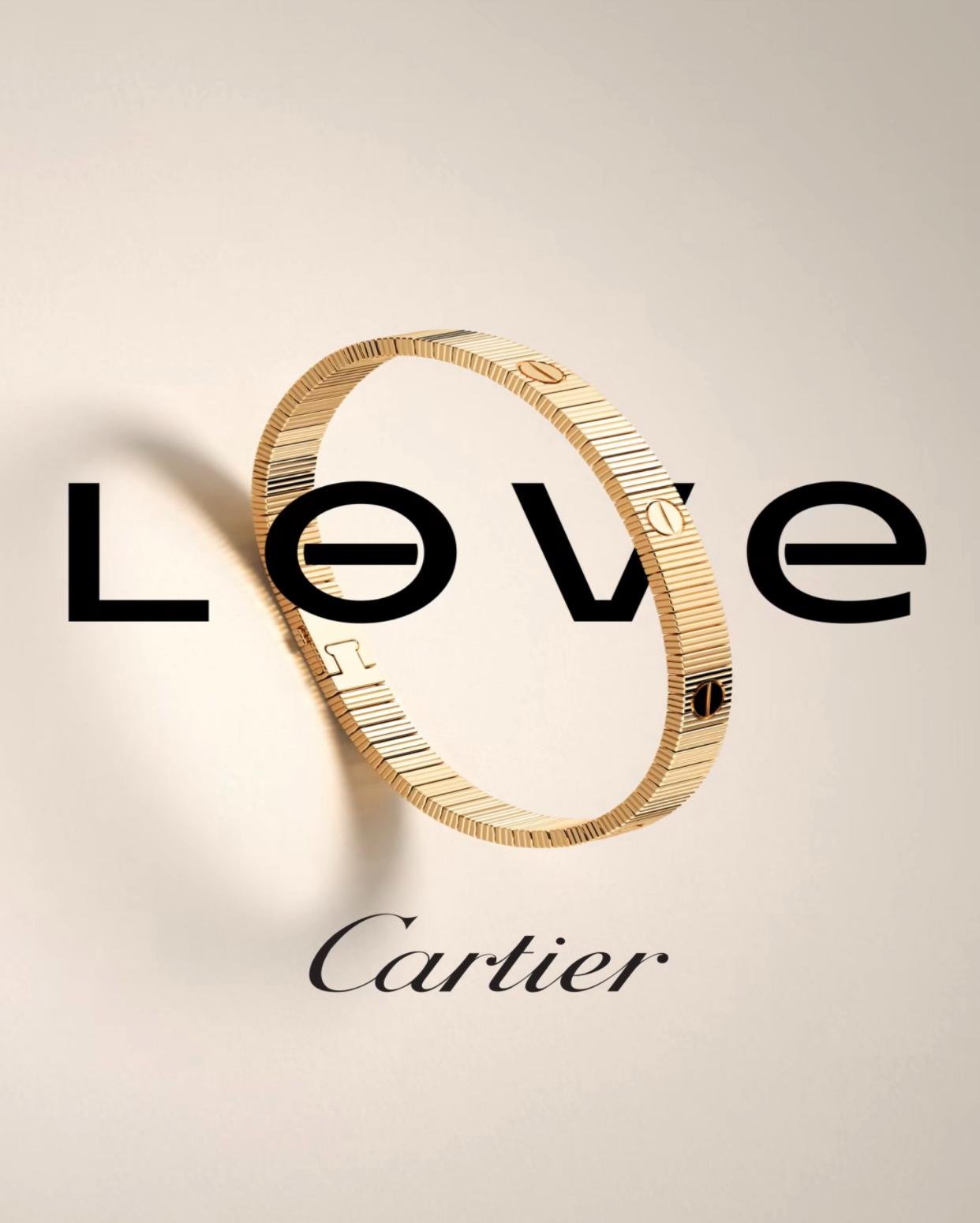
Aldo Cipullo designed the Love bracelet in New York in 1969 — a smooth gold oval with six Allen-head screws inlaid along its exterior, requiring a small proprietary screwdriver to open and close. The design logic was explicit: the bracelet was meant to be locked onto the wrist by another person, and removed only with their participation. A piece of jewelry as a statement of mutual commitment, expressed in industrial hardware. The screwdriver was included with purchase. Pairs were sold at reduced price — one for each member of the couple. Elizabeth Taylor and Richard Burton received an early pair. The design has not changed since 1969. The screw remains the motif. The lock remains the concept.
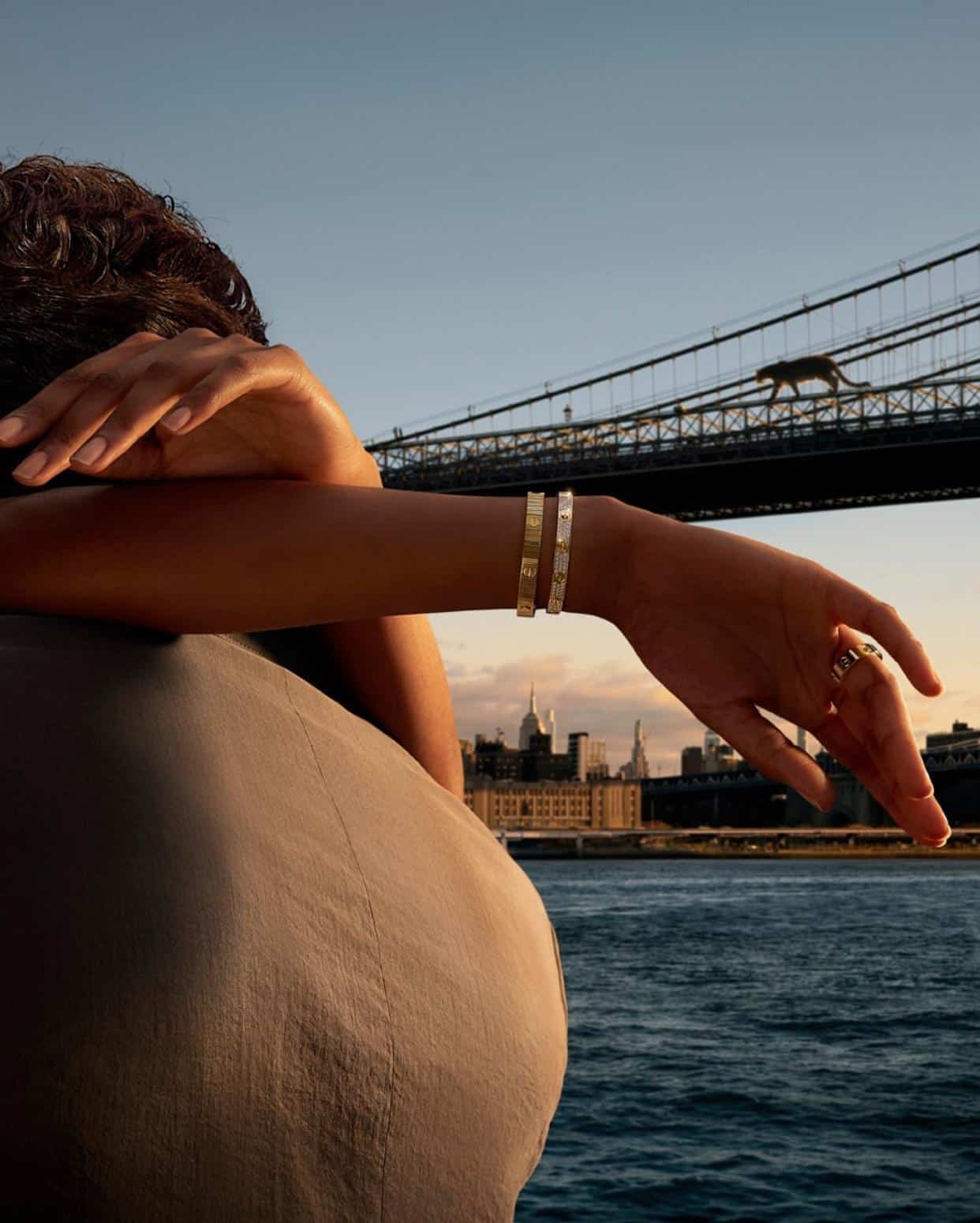
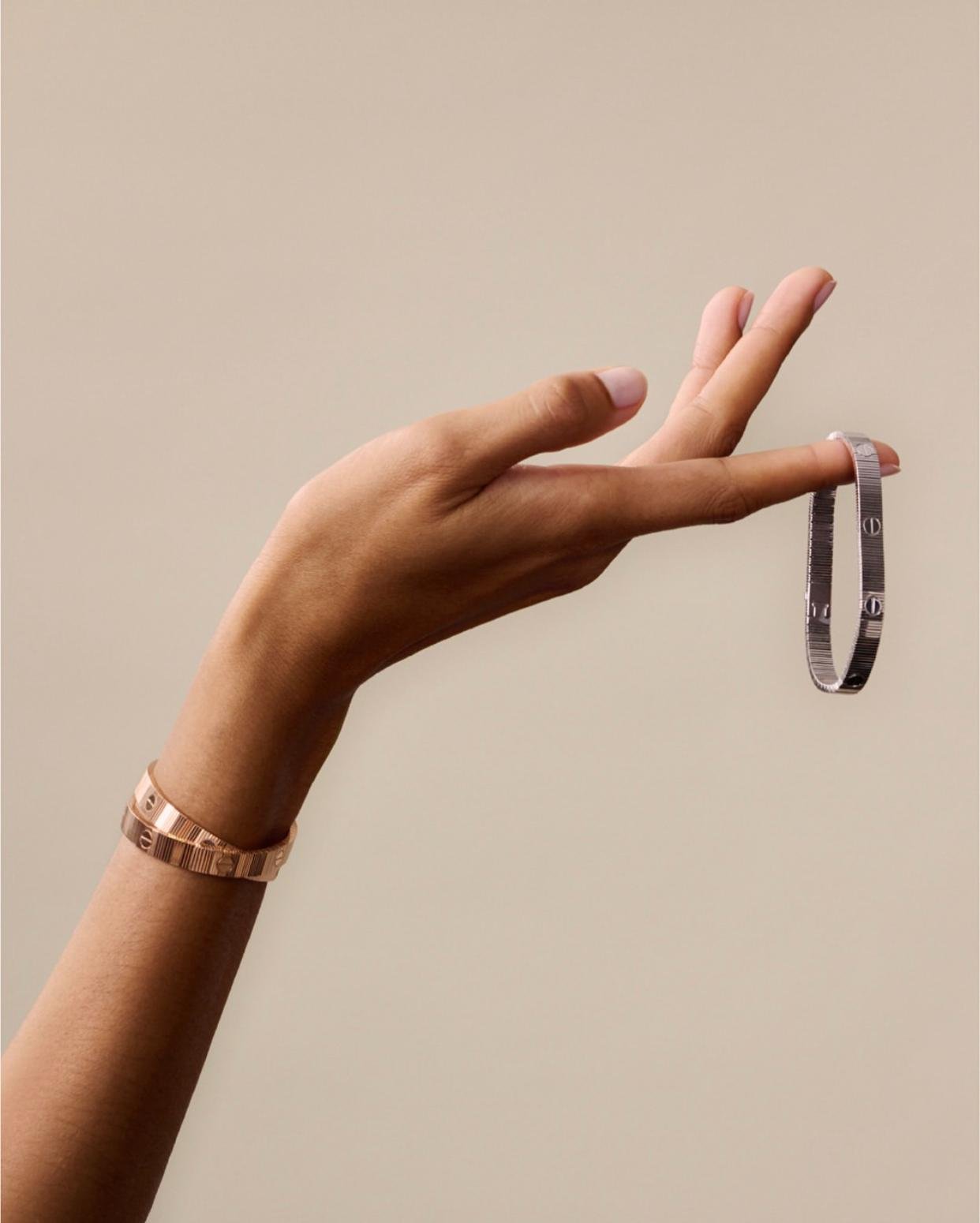
The Love bracelet is among the most recognized jewelry objects in the world — and among the most consistently worn. Its oval ergonomics are sized professionally for fit. The screw motif appears along the exterior in six points. It is available in yellow, white, and rose gold, with and without diamond pavé. The Love ring carries the same screw detail in a more compact format. Both pieces are designed to be worn without removal — daily, indefinitely, as a permanent statement rather than an occasional one.
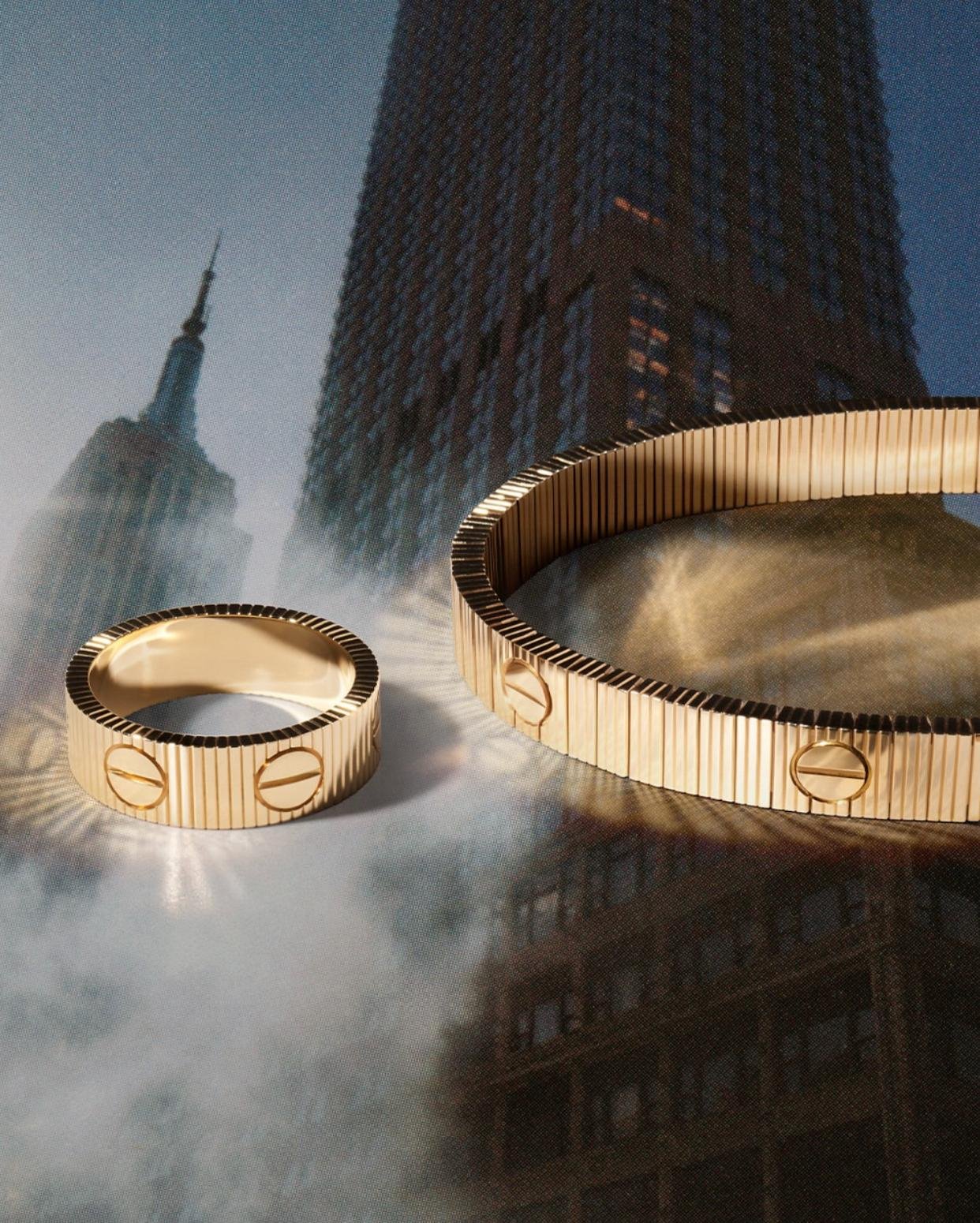
Juste un Clou — just a nail. A construction nail, bent into an oval, rendered in 18-karat gold with optional diamond pavé, worn as a bracelet or ring. The concept was born in New York in the 1970s — the same city that produced the Love bracelet, the same decade that transformed industrial hardware into the vocabulary of luxury. The collection was relaunched in 2012. The design logic has not changed: the most ordinary object, executed with extraordinary precision, becomes something else entirely. The nail is still recognizable. That is the point.
Trinity was created in 1924 by Louis Cartier for the poet and filmmaker Jean Cocteau — three interlaced bands in yellow, white, and rose gold, each moving independently, catching light differently as the hand turns. Yellow gold for fidelity, white gold for friendship, rose gold for love: the symbolism was always embedded in the structure. A century later, Trinity has become Cartier's most poetic collection — the one that communicates its meaning through movement rather than motif, through the interplay of three distinct metals worn as a single, inseparable form.
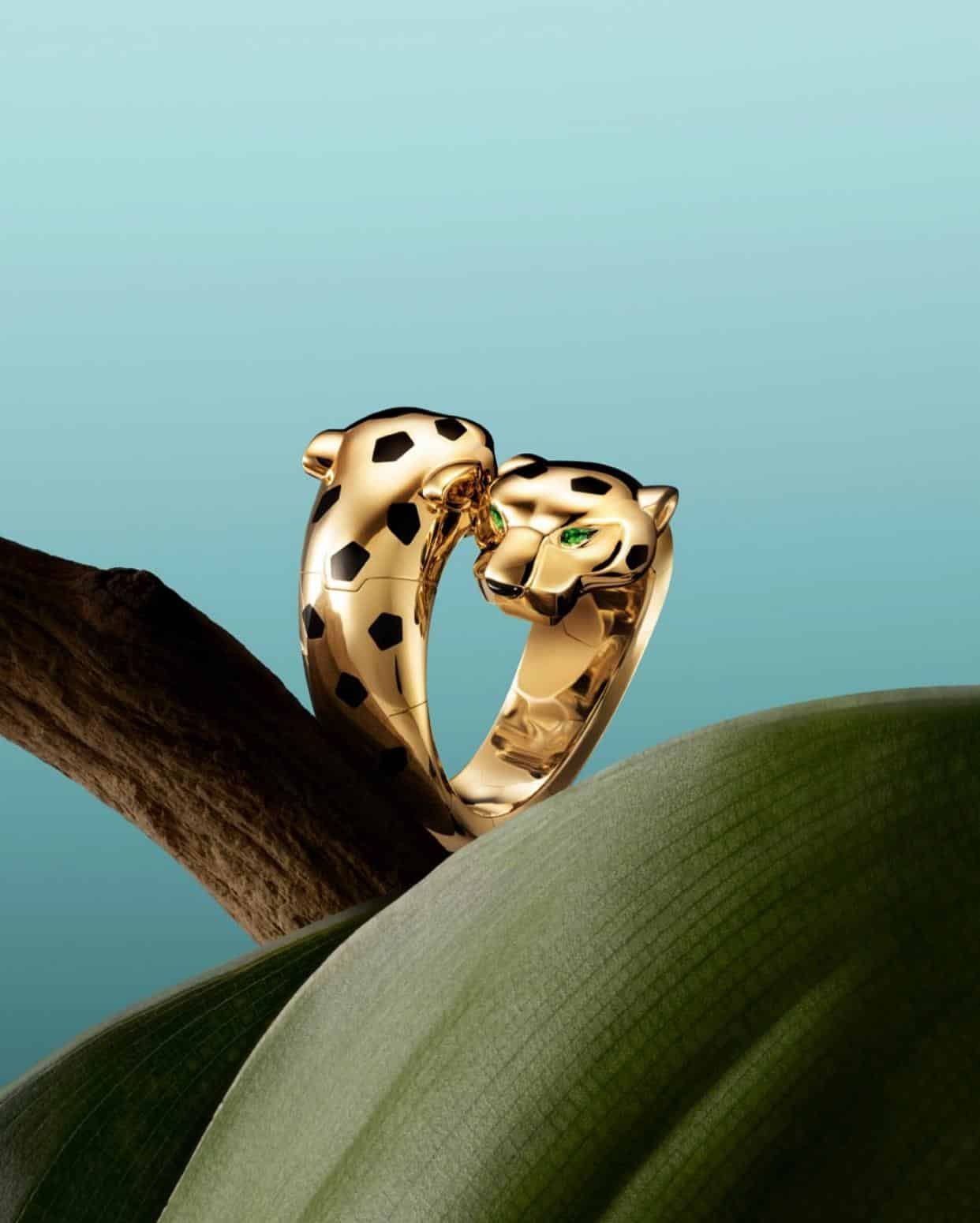
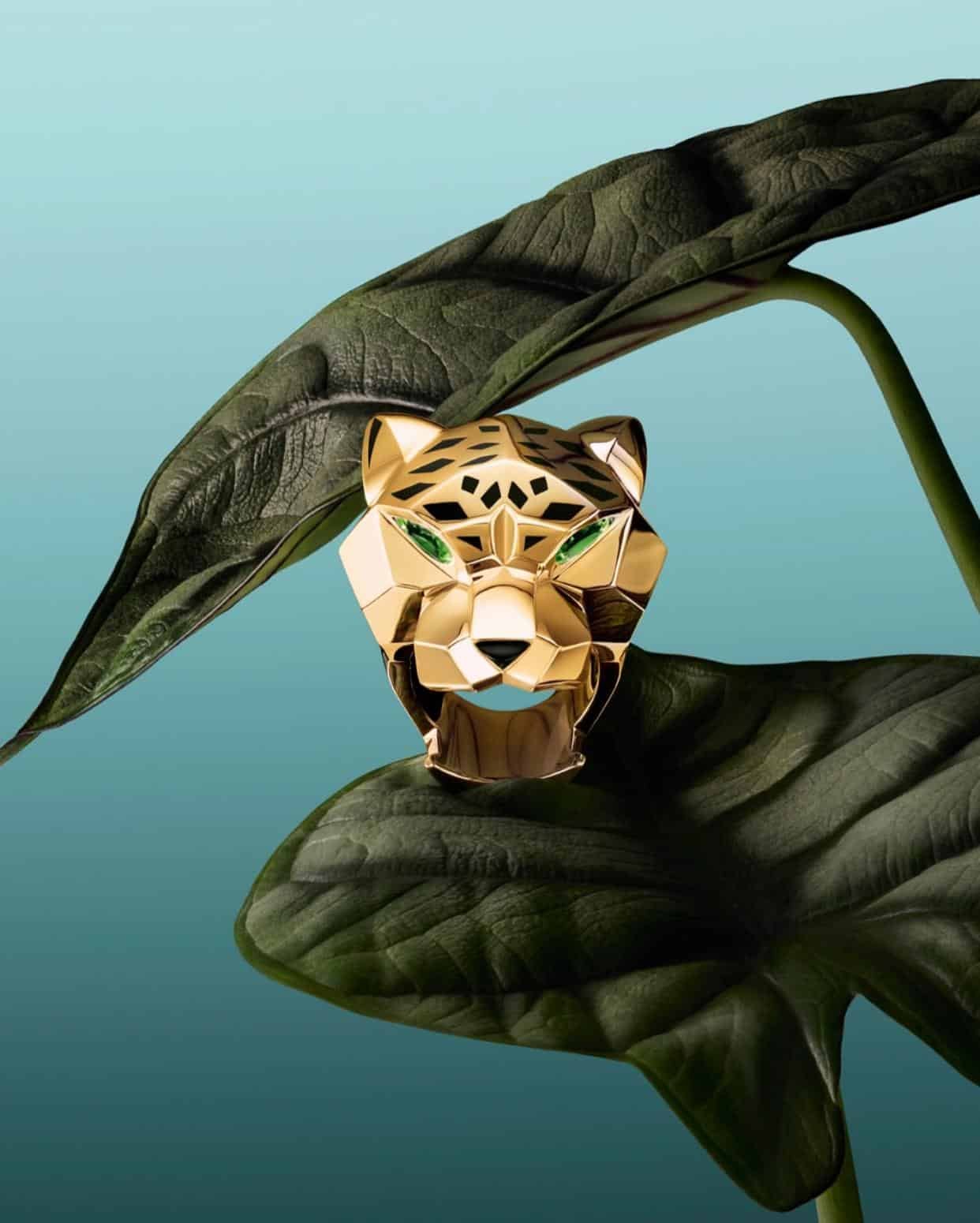
The Panthère entered Cartier's vocabulary in the 1910s and was transformed into the house's defining animal motif by Jeanne Toussaint — herself nicknamed La Panthère within the house. The animal appears across the full range of the collection: as a fully articulated high jewelry sculpture crouching on the wrist, as a pavé diamond and onyx stud with emerald eyes, as a silhouette on a pendant or ring. Onyx spots. Tsavorite or emerald eyes. Diamond pavé body. The same construction logic governs every scale — from the most accessible ring to the most elaborate high jewelry commission. It is feline elegance expressed as craft conviction.
Clash de Cartier takes its name from its design principle — a deliberate collision of Cartier's jewelry codes, expressed through a studded surface that references both the screw of the Love collection and the architectural texture of the house's decorative vocabulary. Bolder in register than Trinity, more graphic than Love, Clash occupies the space between the house's modernist heritage and a contemporary appetite for pieces with presence. Available across the full range of jewelry categories in yellow, white, and rose gold with diamond and colored stone variations.
Cartier's high jewelry collections represent the house at its most unconstrained — compositions built around exceptional diamonds and colored stones sourced through the house's own procurement network, set by artisans whose specific skills have been developed over decades. The Pluie de Cartier collection, the annual Haute Joaillerie presentations, the bespoke commissions — each occupies a category beyond the principal collections. The Fifth Avenue mansion handles high jewelry by appointment. The conversation begins with the stone. The piece follows from there.
Aldo Cipullo designed a bracelet in 1969
that could only be removed with a screwdriver.
He included the screwdriver with the purchase.
Pairs were sold at a reduced price.
One for each person. To be locked on by the other.
The house has been designing commitment ever since.
What distinguishes Cartier from every other house of comparable historical importance is a consistent conviction that jewelry exists to be worn — daily, durably, as a permanent companion rather than an occasional display. The Love bracelet is not removed. The Trinity ring moves with the hand. The Juste un Clou nail wraps the wrist in the manner of something that has always been there. Even the Panthère, in its more contained formats, is a piece designed for daily life rather than the vault. This is the Cartier position: that the most luxurious jewelry is the piece that becomes invisible through familiarity — so integrated into the wearer's daily presence that its absence would be felt more than its presence. The house has held this position since 1847. The collections change. The conviction does not.
653 Fifth Avenue · The Cartier Mansion · New York
The Cartier mansion at 653 Fifth Avenue — acquired by Pierre Cartier in 1917 in exchange for a natural pearl necklace — remains the house's New York address, on the corner of 52nd Street. The five-story Renaissance Revival townhouse has never been sold. Inside, the full range of fine jewelry collections is presented across dedicated spaces, with high jewelry available by appointment on the upper floors. The mansion is one of the few remaining private townhouses on Fifth Avenue still operating in its original residential form — a building that communicates, in its own architecture, the same thing the jewelry communicates: that permanence is not a constraint, but an achievement.
653 Fifth Avenue · New York, NY 10022 · Corner of 52nd Street
Love · Juste Un Clou · Trinity · Panthère de Cartier · Clash de Cartier
Reflection de Cartier · Cartier D'Amour · Bvlgari Destinée · High Jewelry
High Jewelry by appointment · Pluie de Cartier · Cartier Libre
The Cartier Mansion — acquired 1917 · Founded Paris 1847
cartier.com/en-us/jewelry
Pierre Cartier acquired the Fifth Avenue mansion
in exchange for a pearl necklace in 1917.
The building has never been sold since.
The jewelry designed inside it —
the Love, the Trinity, the Juste un Clou —
has never needed to be explained.
That is the Cartier standard.
© Cartier
© Cartier
© Cartier
© Cartier

© Cartier
© Cartier
© Cartier
© Cartier
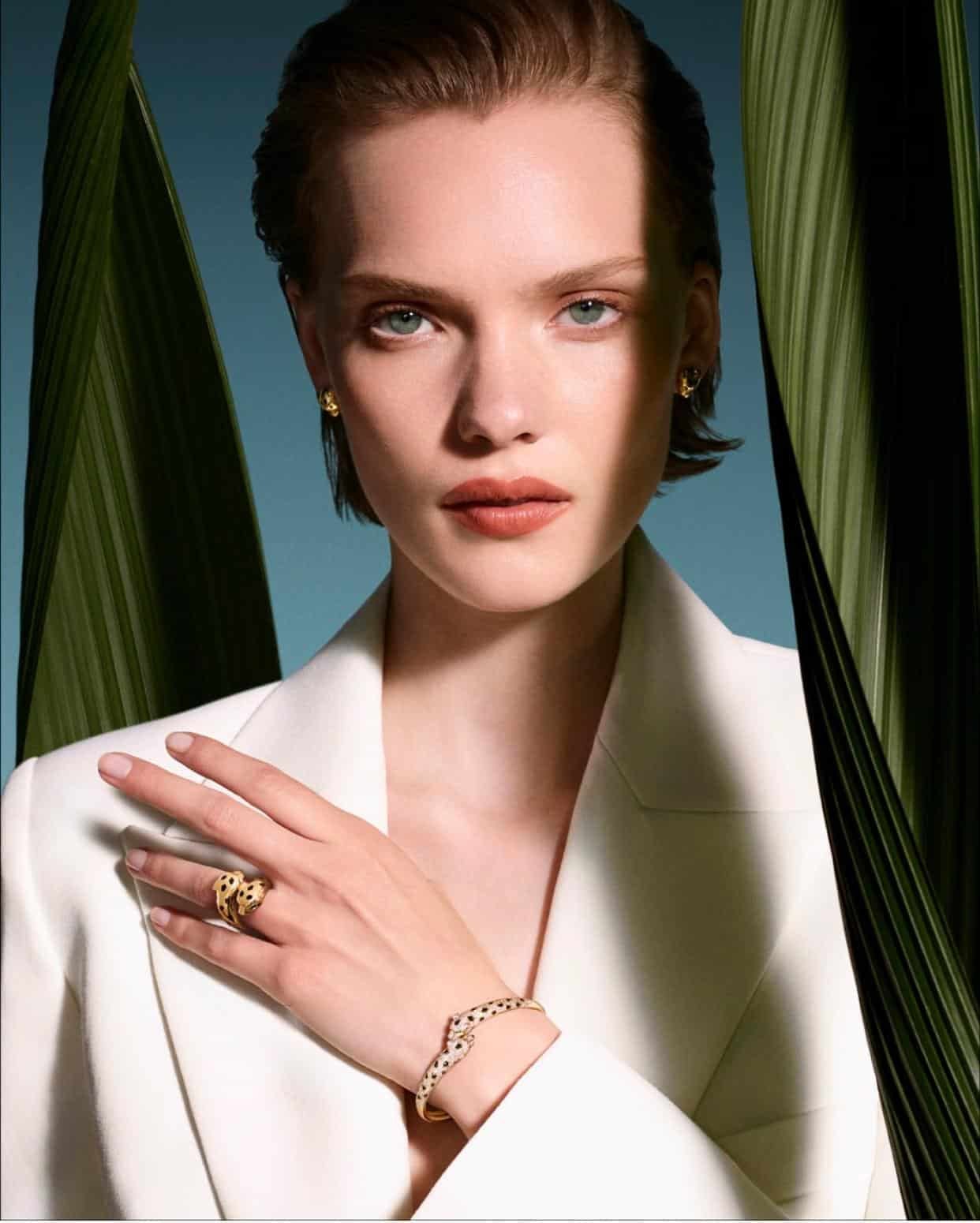
© Cartier

© Cartier
CARTIER
© Cartier