© Cartier
© Cartier
© Cartier
Cartier
Women's Watchmaking
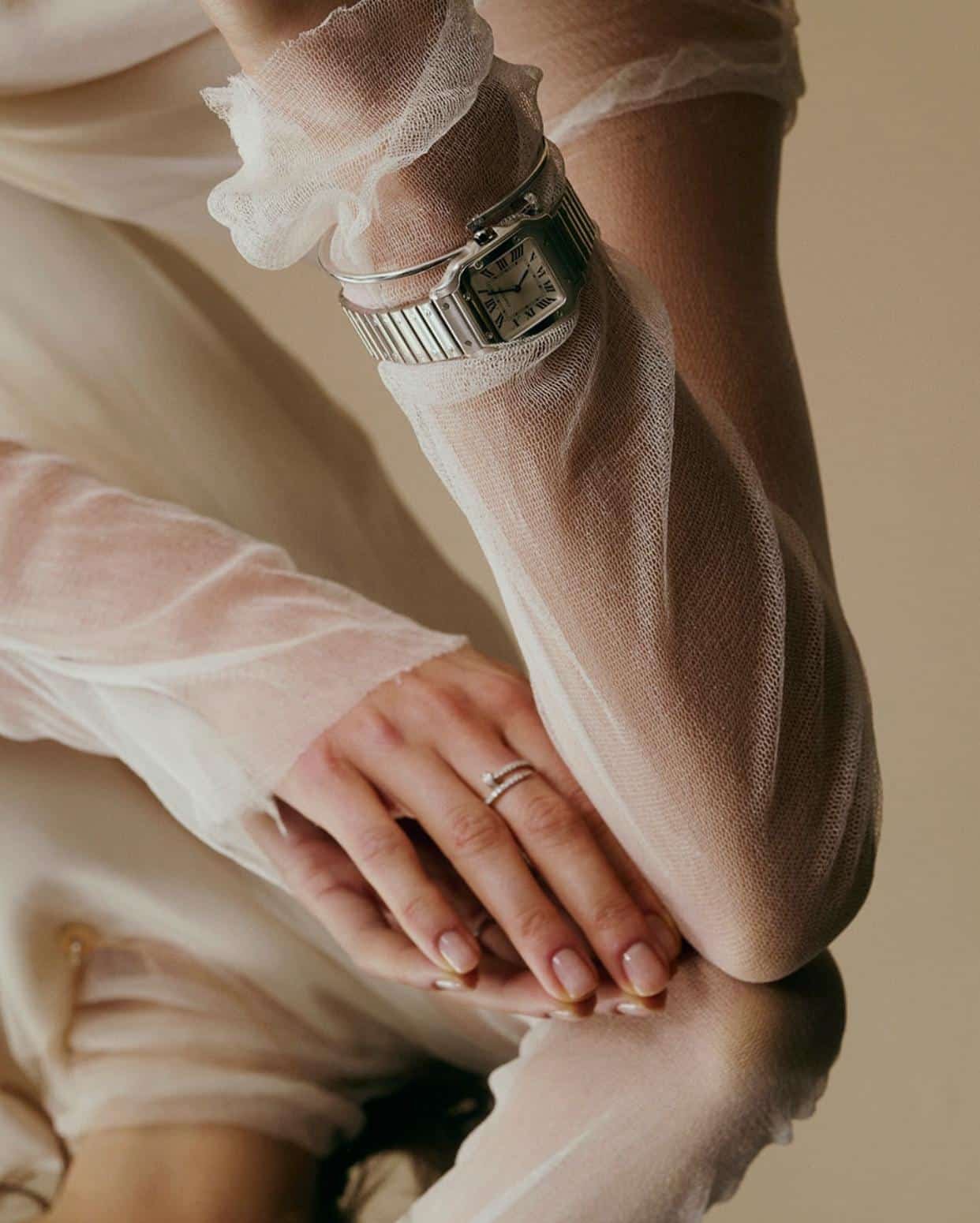
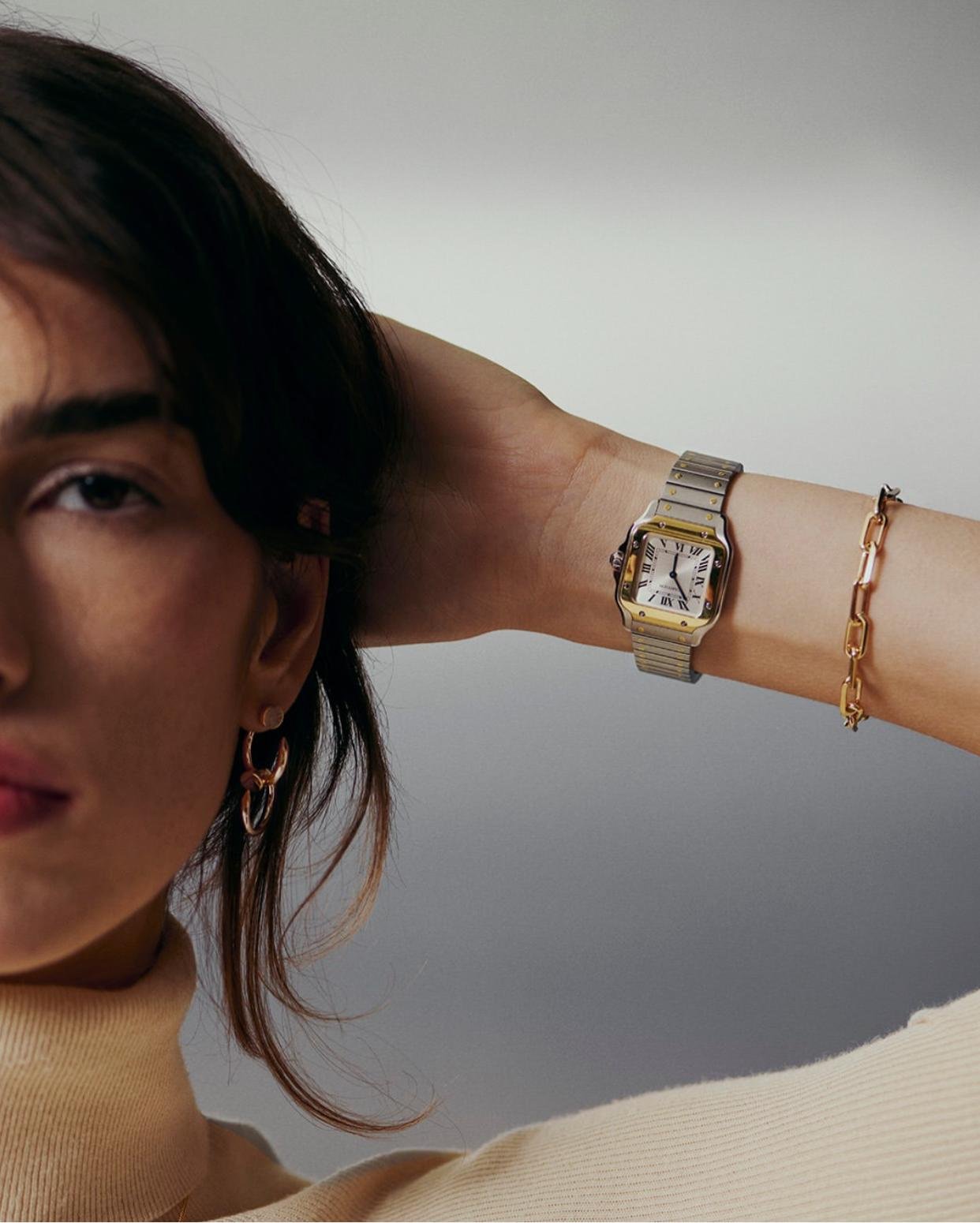
Andy Warhol wore a Cartier Tank and never wound it. Never used it to tell the time. "I wear a Tank because it is the watch to wear," he said. Truman Capote interrupted interviews to force his own Tank onto the wrists of journalists he found unworthy of their timepieces. Jacqueline Kennedy wore hers from 1963 until the end of her life. The Tank is the watch that transcends watchmaking — and Cartier has produced it since 1917.
Paris · 1917 · A Tank Born From A Tank
Louis Cartier — grandson of the founder — designed the Tank in 1917, at the height of the First World War, drawing from the aerial silhouette of the Renault FT-17 military tank. Seen from above, the armored vehicle's rectangular body, its parallel treads running along either side, its rotating turret — these suggested a watch case of radical clarity: a rectangle flanked by two parallel brancards, the chemin de fer minute track echoing the tracks pressed into the mud of the Western Front. The first prototype was given to American General John Pershing in 1918, at the armistice. Commercial production began in 1919. The watch has been in production, without interruption, for over a century.
The Tank's formal logic — the rectangle, the Roman numerals, the blue cabochon crown, the chemin de fer — predated and in some ways predicted the Art Deco movement that would define the 1920s. It was worn by Rudolph Valentino, Jackie Kennedy, Princess Diana, Muhammad Ali, Warren Beatty, Yves Saint Laurent, Andy Warhol, and Truman Capote. It has been the second-highest-earning watch brand in the world behind Rolex, according to the Morgan Stanley Watch Industry Report of February 2025. The Tank did not follow trends. It created them, and then watched for a century as others followed.
The Tank · One Hundred Years Of Variations On A Rectangle
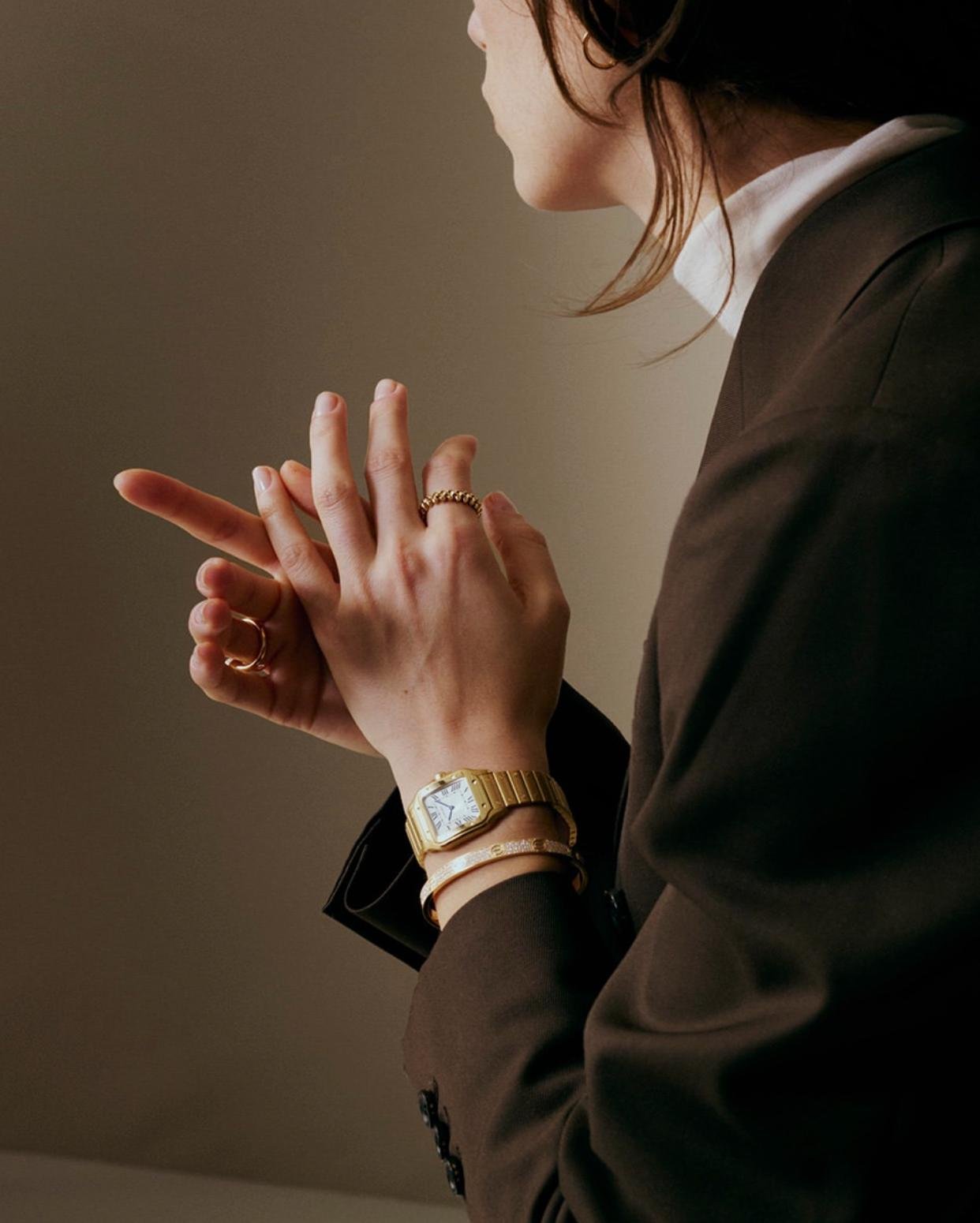
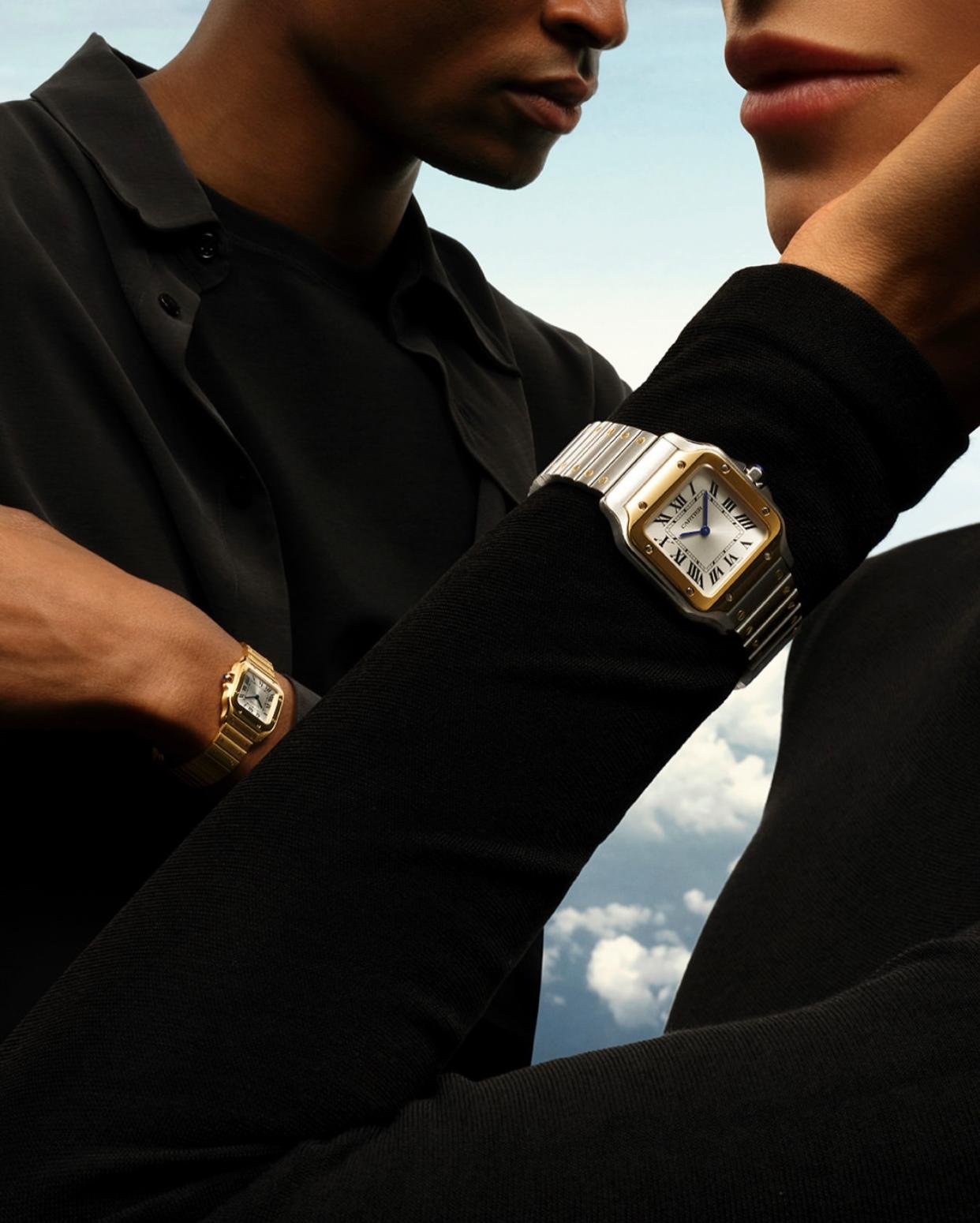
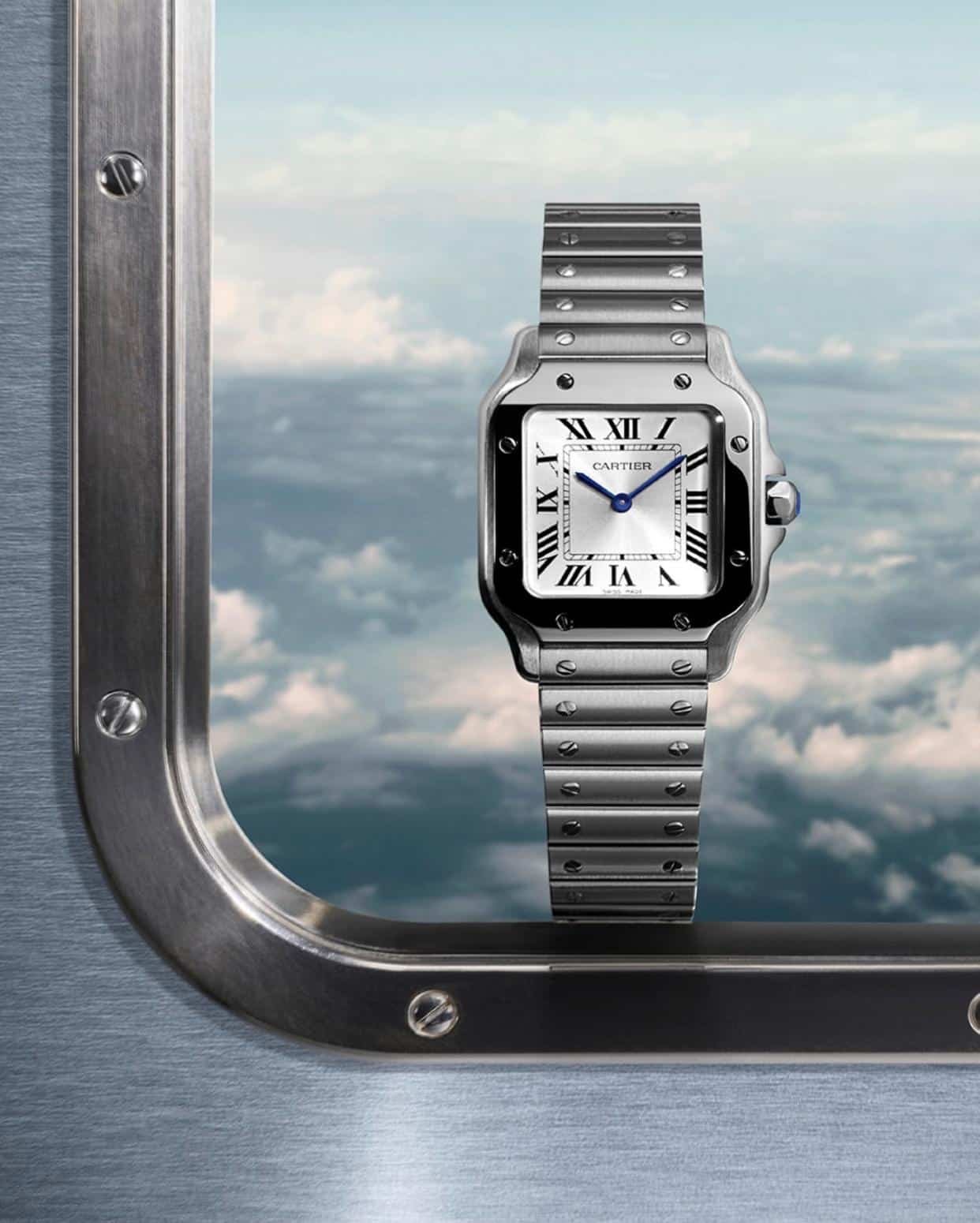
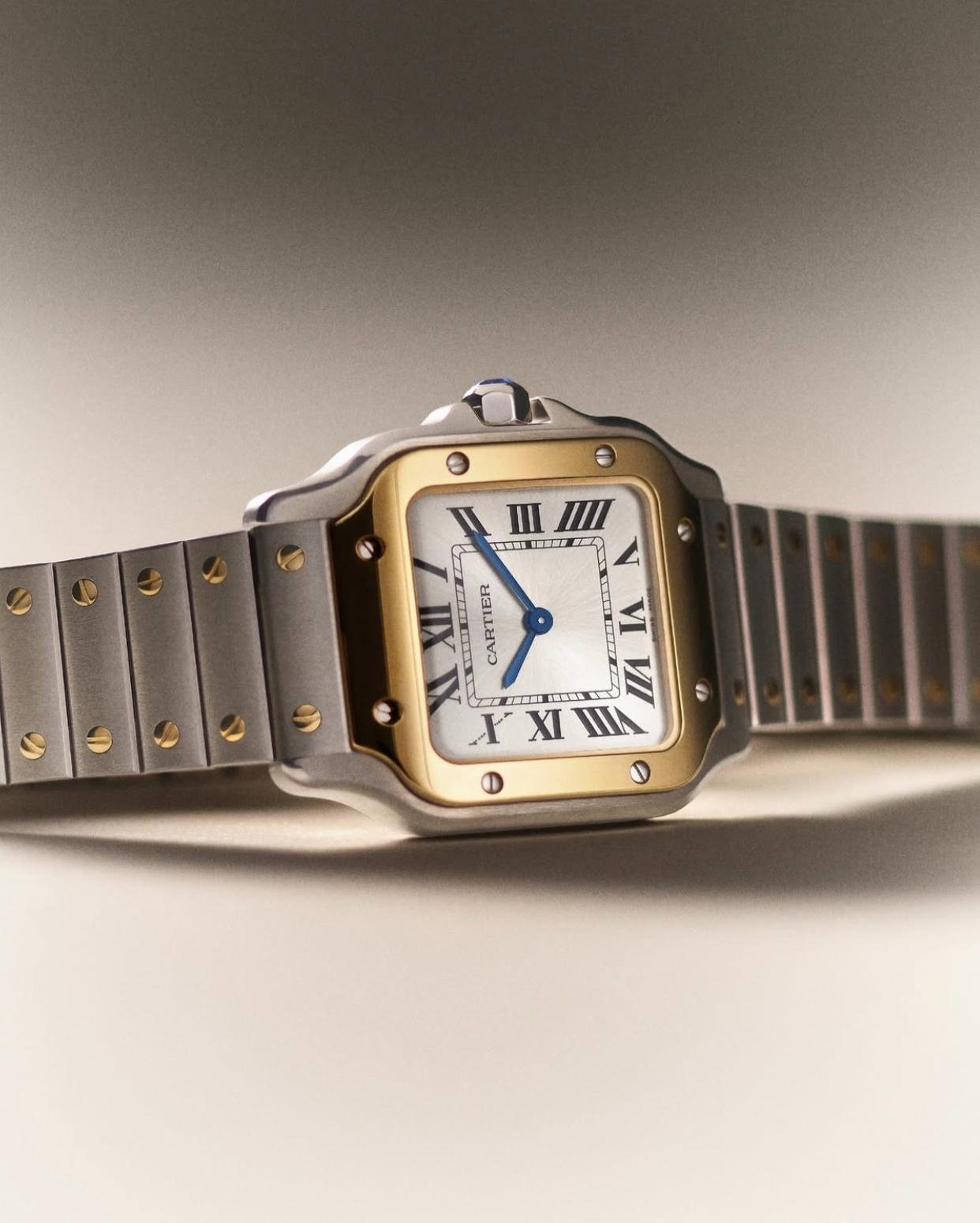
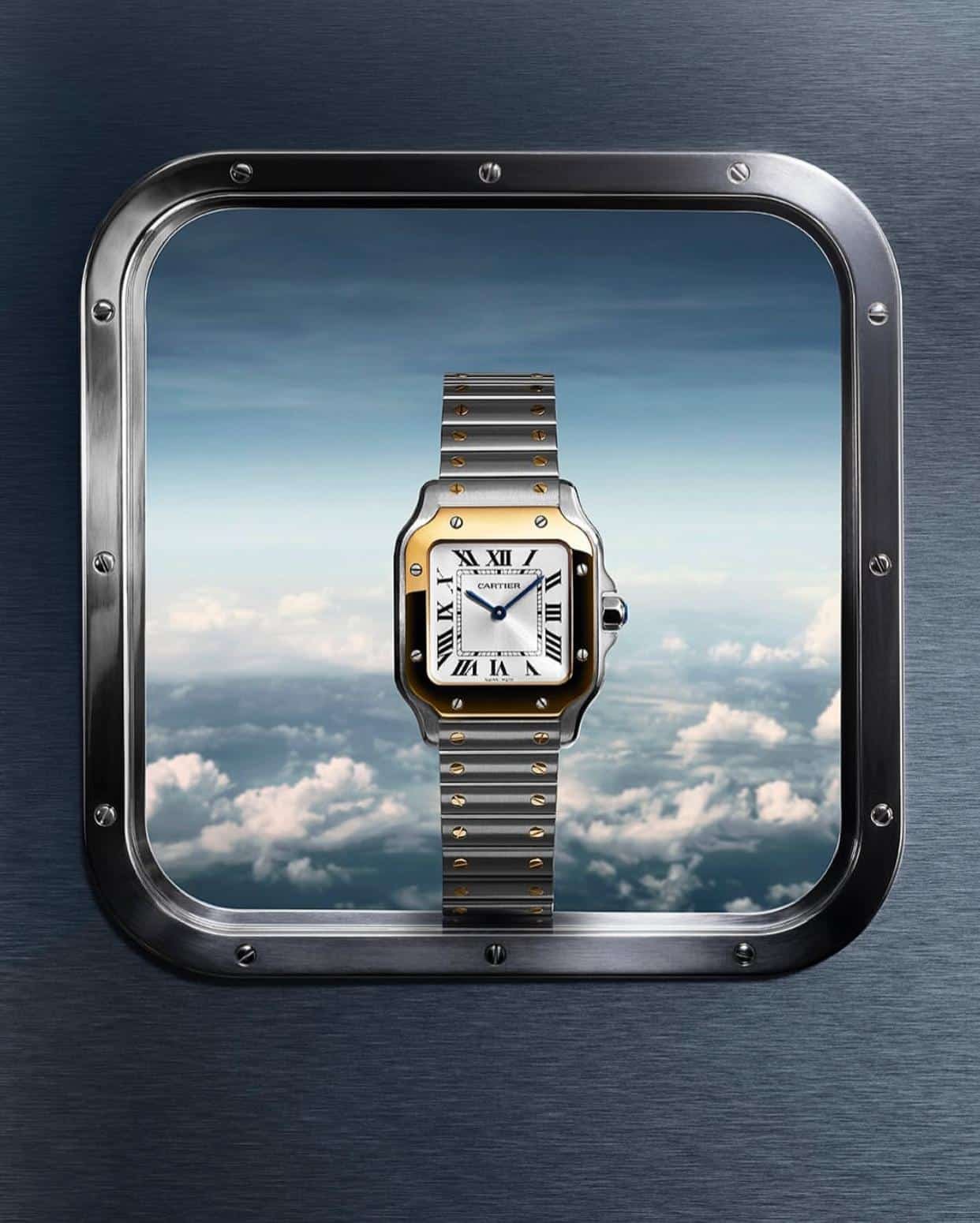
The Tank family is not a single watch but a sustained meditation on the rectangle and its possibilities — a design conversation that has been ongoing since 1917 and shows no sign of conclusion. The Tank Louis Cartier is the most classic expression: rounded edges, precious metal case, blue cabochon crown. The Tank Française is squarer, sportier, with an integrated metal bracelet. The Tank Américaine elongates and curves the case into something more ergonomic, more present on the wrist. The Tank Asymétrique — from 1936, intermittently revived — tilts the dial at an angle, unsettling every expectation the rectangular case has established. At Watches & Wonders 2025, the house presented the Tank à Guichets: a jump-hour version of the Tank that dispenses with hands entirely, displaying the time digitally through two windows. The Tank à Guichets first appeared in 1928. It became the most discussed watch of 2025. Every decade, the rectangle reveals something it had not shown before.
The Tank Louis Cartier — the most direct descendant of Louis Cartier's original 1917 design, refined in 1922 with more rounded edges and a more elegant integration of case and dial — is the purest expression of the collection's formal logic. Always produced in precious metal. Always carrying Roman numerals and the blue cabochon crown. The in-house Caliber 1917 MC, named for the year of the watch's birth, now powers the larger models. The Jackie Kennedy Tank — a gift from her brother-in-law, worn from 1963 until her death — sold at auction for $379,500, the most expensive Cartier Tank ever sold. The watch's value was not in its metal. It was in a century of meaning accumulated by a single, unchanged design.
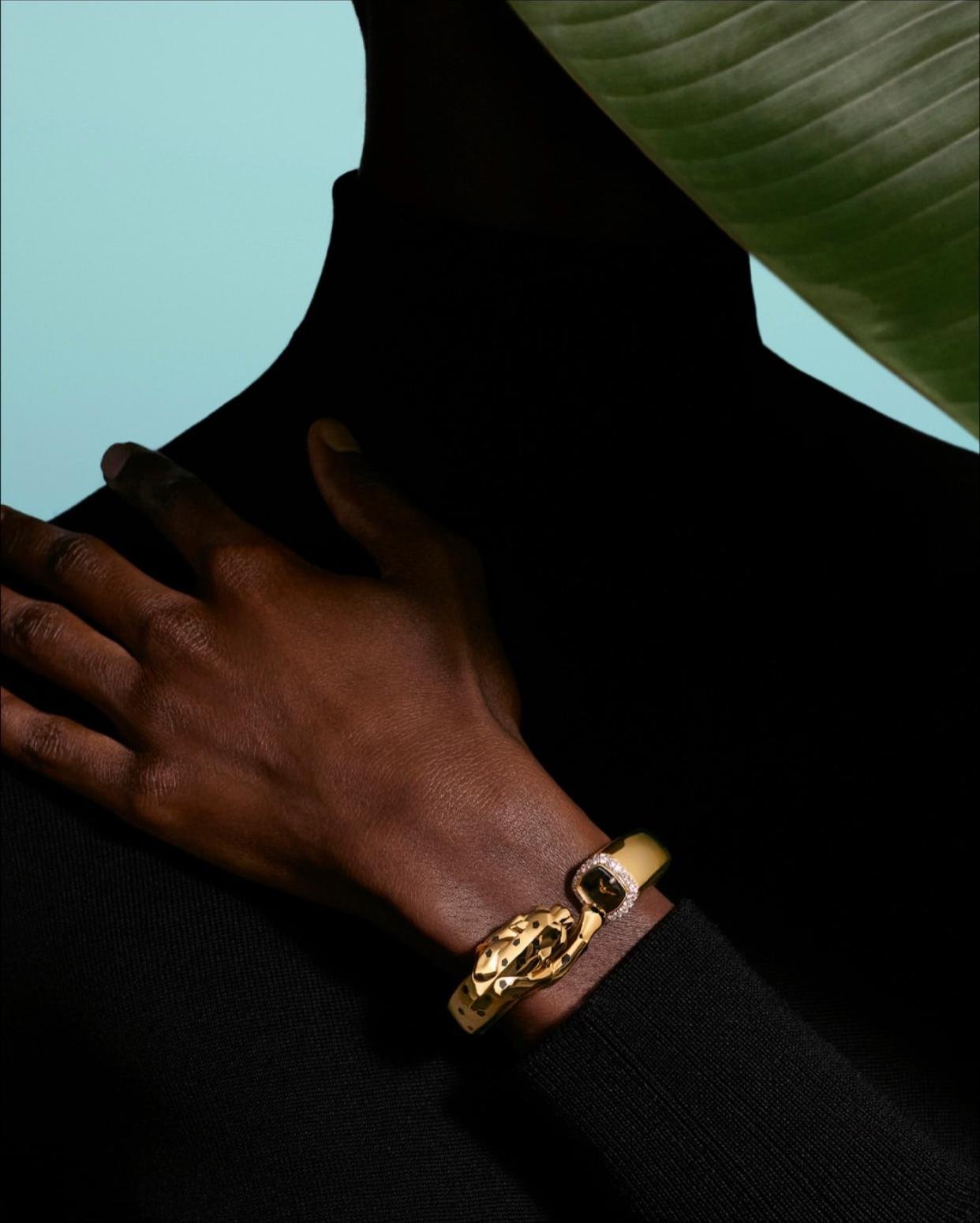
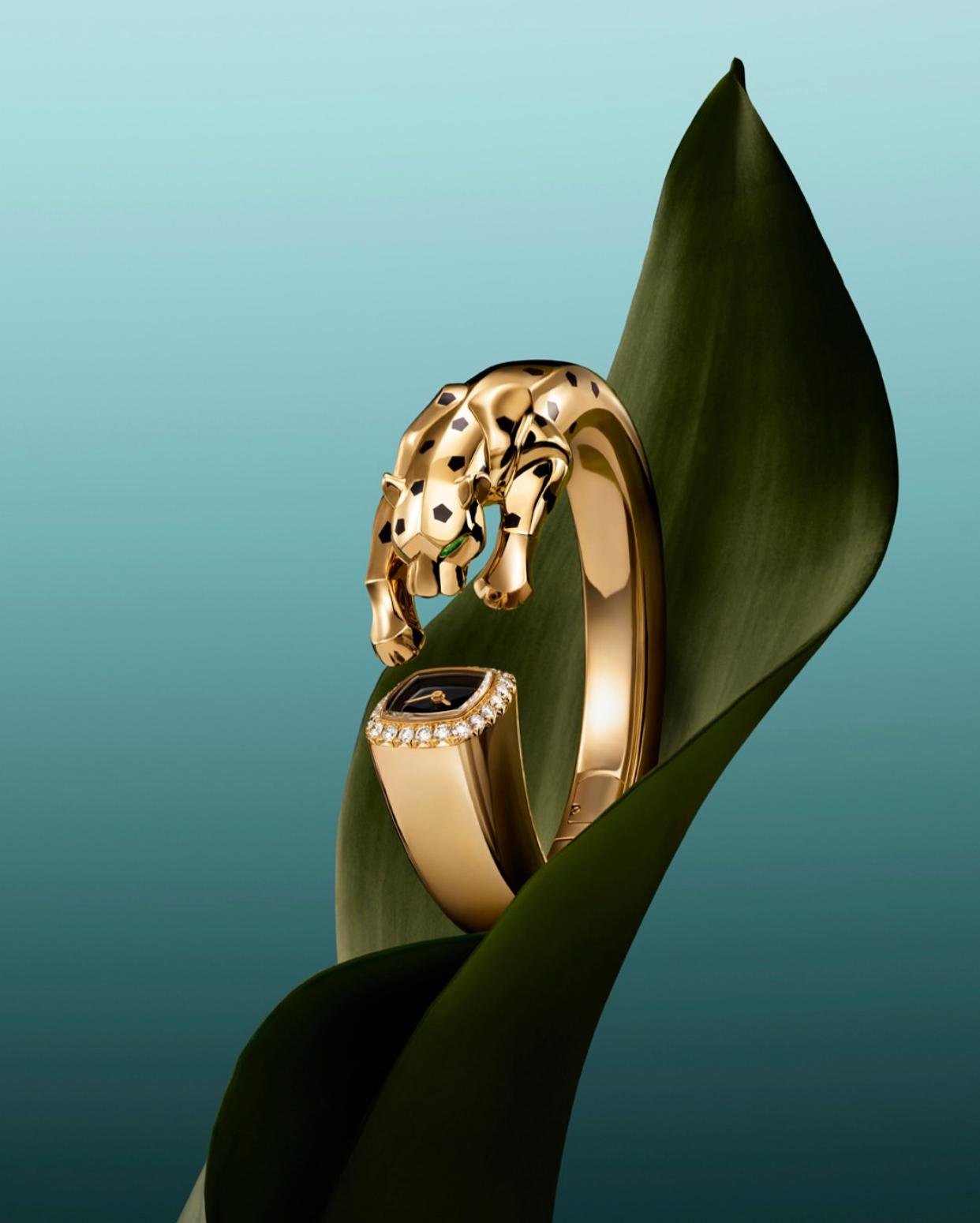
The Panthère de Cartier is the house's most explicitly jewelry-derived watch — a square case suspended from a supple brick-link bracelet that moves with the wrist like a piece of fine jewelry, not a watch strap. The bracelet is the design: flexible, precise, composed of individually polished links that catch light at every angle. Available in yellow, white, and rose gold, with and without diamond settings. At Watches & Wonders 2025, a new Panthère edition set with more than 540 diamonds and garnets was presented alongside a series of La Panthère high jewelry watches. The Panthère does not need to announce itself. It is recognized immediately by those who know what they are looking for, and by those who don't, it is simply a beautiful piece of gold on a wrist.
The Crash was born in Cartier's London boutique on Bond Street in 1967, when Jean-Jacques Cartier — who ran the London branch with creative autonomy unusual even within Cartier — encountered a Baignoire that had allegedly been deformed in an automobile accident and brought to the boutique for repair. Whether the car crash story is true or invented, Jean-Jacques Cartier chose to respond to the distorted case not with repair but with design: he produced a watch whose case appeared to have been melted from without, its lines pinched at the ends, its center kinked, its dial bent at an angle that suggests both Dalí and catastrophe simultaneously. Only twelve were initially produced, considered a commercial failure. Today the Crash is among the most actively collected and most financially appreciated Cartier watches on the secondary market. The accident — real or imagined — produced one of watchmaking's most enduring objects.
The Baignoire — named for the French word for bathtub, a reference to its gently oval case — was designed in 1912, five years before the Tank, making it one of Cartier's oldest watch shapes. Its oval silhouette, slim and elongated, describes the gentle curve of its name without announcing it. Available in yellow and rose gold, with and without diamond bezels and bracelets, in proportions calibrated specifically for the female wrist. The Baignoire was the starting point for the Crash — Jean-Jacques Cartier began with the oval and deformed it into something entirely new. The original, undistorted version remains in production. It is the quiet one. The Crash gets the attention. The Baignoire gets the wrist.
The Ballon Bleu — the blue balloon — is the most recent of Cartier's major women's watch families, introduced in 2007. Its round case, convex sapphire crystal, and blue stone-set winding crown that appears to float within the case at the four o'clock position gave it an immediately distinctive silhouette unlike anything in the collection's existing vocabulary. Guilloché dial details, blue sword-shaped hands, Roman numerals — the Cartier design language applied to an entirely new case form. Available across a wide range of metals, sizes, and movements, with quartz and automatic options. In less than two decades, the Ballon Bleu has become the house's most accessible women's watch entry point — the piece that introduces Cartier to a new generation of collectors before the Tank and the Panthère claim their permanent place.
The Cartier Privé collection is the house's most exclusive annual exercise — limited-production capsule watches drawn from the deepest layers of the archive, revived with new movements and occasional new materials, produced in quantities small enough to make each edition genuinely scarce. The Tank à Guichets 2025 — a jump-hour version of the Tank that dispenses entirely with hands, displaying the hour and minute digitally through two apertures cut into the dial — was the most discussed watch of Watches & Wonders 2025 and triggered a renewed appetite across the industry for jump-hour complications. Available in yellow gold, rose gold, and platinum. The Privé collection demonstrates that Cartier's archive is not a museum. It is a working tool, continuously generating objects that the present did not know it needed.
Andy Warhol wore a Cartier Tank
and never wound it, never used it to tell the time.
"I wear a Tank because it is the watch to wear."
Truman Capote interrupted interviews
to force his Tank onto journalists' wrists.
Jackie Kennedy wore hers from 1963 until the end.
The Tank is the watch that watches outlive their wearers.
Cartier's position in watchmaking is singular — and deliberately distinct from the Swiss tradition that has dominated the industry for two centuries. Where the great Geneva and Vallée de Joux houses built their reputations on mechanical complications — perpetual calendars, minute repeaters, tourbillons — Cartier built its reputation on shapes. The rectangle of the Tank. The oval of the Baignoire. The distortion of the Crash. The pebble of the Ballon Bleu. Each is a formal proposition about what a watch case can be, argued with the conviction of a house that trained first as a jeweler and approaches watchmaking with a jeweler's understanding of the relationship between object and body. Cartier is, in the words of its own communications, a "watchmaker of shapes" — and in this category, it has no credible competition. The shapes it invented between 1904 and 1967 are still being worn, still being sold, still being discussed. That is the definition of a design position that does not require defense.
653 Fifth Avenue · The Cartier Mansion · New York
Cartier's women's watchmaking is presented across the full Fifth Avenue mansion — the Tank and Panthère on the lower floors alongside the fine jewelry collections, the Privé pieces and high jewelry watches by appointment on the upper levels. New York has a particular relationship with the Tank: Pierre Cartier ran the New York house from 1917, the same year his cousin Louis created the watch in Paris. The first Tank watches arrived in New York in 1919, introduced to a city whose appetite for French elegance and formal clarity made it the house's most immediately receptive American market. Over a century later, the Tank is still arriving at 653 Fifth Avenue — each year, in a new configuration, with a new movement, or in the case of 2025, with no hands at all.
653 Fifth Avenue · New York, NY 10022 · Corner of 52nd Street
Tank Louis Cartier · Tank Française · Tank Américaine · Tank à Guichets
Panthère de Cartier · Ballon Bleu · Baignoire · Crash
Cartier Privé — annual limited editions · High jewelry watches by appointment
The Cartier Mansion — acquired 1917 · Founded Paris 1847
cartier.com/en-us/watches/collections
Louis Cartier designed a watch in 1917
by looking at a tank from above
and seeing elegance in its treads.
Jean-Jacques Cartier designed a watch in 1967
by looking at a deformed Baignoire
and seeing freedom in its accident.
Cartier has been finding watches
in unexpected places ever since.
The shapes have not changed.
The discovery has not stopped.
© Cartier
© Cartier
© Cartier
© Cartier
© Cartier
© Cartier
© Cartier
© Cartier

© Cartier
© Cartier
© Cartier
© Cartier
CARTIER
© Cartier