© Tiffany & Co
© Tiffany & Co
© Tiffany & Co
Tiffany & Co.
Haute Joaillerie
Jean Schlumberger said he tried to make everything look as if it were growing — uneven, at random, organic, in motion. He joined Tiffany in 1956 and spent thirty years building a design language that no other jeweler has equaled. Nathalie Verdeille is continuing that sentence. The Blue Book is where both voices meet.
Jean Schlumberger · 1956 · The Architect Of Fantasy
Jean Schlumberger was born in Alsace in 1907, into a family whose history in the textile industry — their looms producing the ribbons that appear, decades later, as recurring motifs in his jewelry — shaped his sense of material and surface before he ever held a gemstone. He arrived in New York in the 1940s after establishing himself in Paris in the circles of Elsa Schiaparelli and Millicent Rogers, producing costume jewelry of surrealist imagination that attracted the most discerning collectors of the mid-century. Walter Hoving, then president of Tiffany & Co., offered him his own salon within the Fifth Avenue flagship in 1956. Schlumberger accepted, on the condition that his name appear independently within the house — a condition Tiffany granted, the only time in its history it has done so for a single designer.
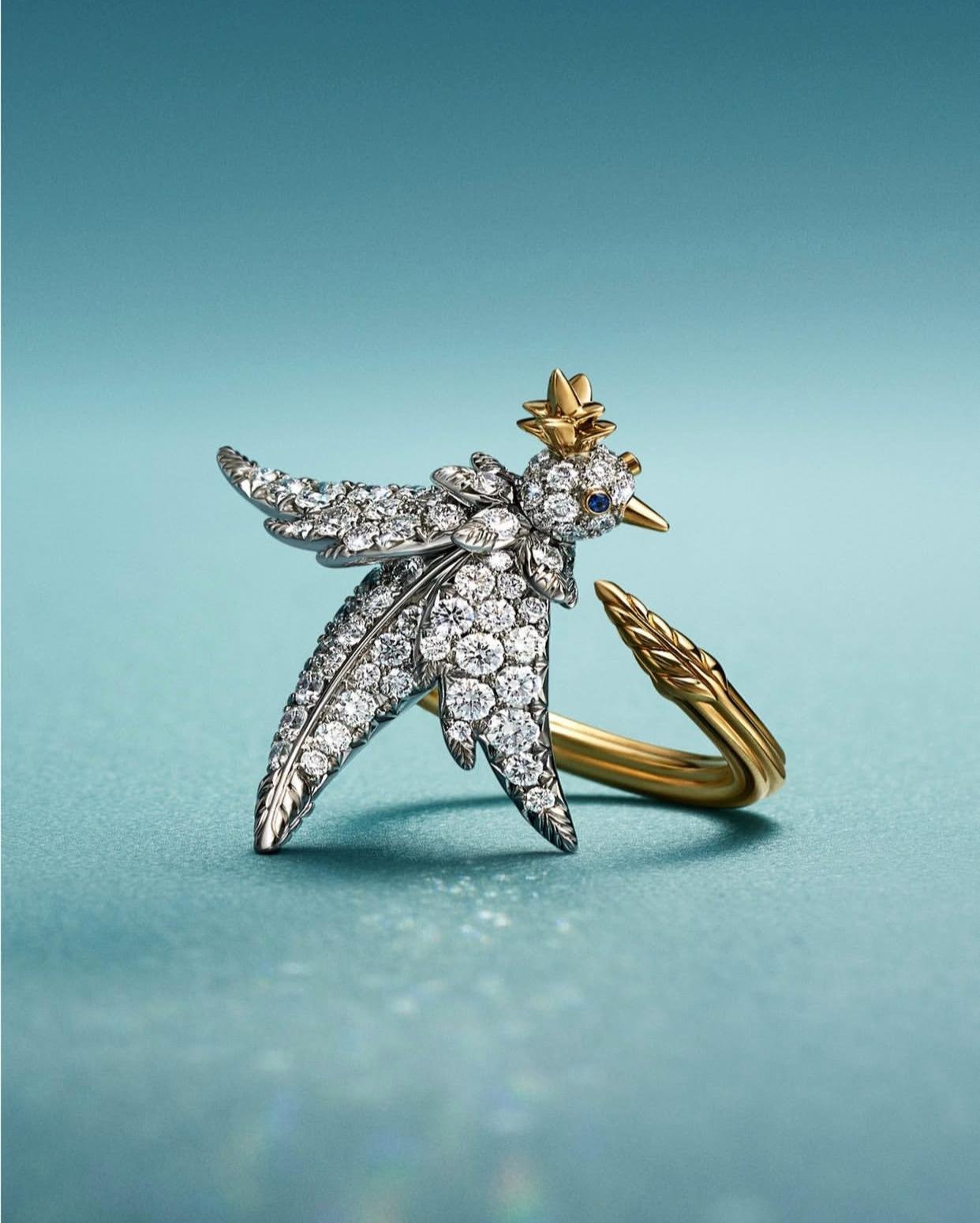
What Schlumberger built at Tiffany between 1956 and his death in 1987 was not a collection but a vocabulary — a set of formal convictions about what jewelry could be. He believed that a piece of jewelry should look as though it had grown rather than been made, that organic forms were always superior to geometric ones, that gold should be worked to suggest the softness of flesh, that diamonds and colored stones should appear to float within their settings rather than be held by them. His Bird on a Rock design — a sculptural gold bird perched atop an exceptional gemstone — became one of the most recognized and most coveted pieces in American jewelry history. It remains a commercial anchor of Tiffany's current collections. He built the palace, in the words of the house's chief gemologist Victoria Reynolds. Nathalie Verdeille is opening the windows.
Nathalie Verdeille · Chief Artistic Officer · The Inheritance
Nathalie Verdeille arrived at Tiffany in 2021, after sixteen years as creative director for jewelry at Cartier and a prior tenure leading high jewelry design at Chaumet. Her mandate was explicit: to understand Schlumberger's archive at its deepest level and to produce, from that understanding, new haute joaillerie that neither reproduces the original nor abandons it. The Blue Book collections she has produced since — Out of the Blue 2023, Tiffany Céleste 2024, Sea of Wonder 2025 — represent a sustained dialogue with a designer who died four decades before she joined the house. Each collection begins with Schlumberger: with his sketches, his archival pieces, his stated convictions about organic form and movement. Each one then departs into territory he never reached, using materials and techniques — 3D printing for prototype development, new feather setting methods, the revived paillonné enamel technique — that were unavailable to him. "Before you join the brand you discover it," Verdeille has said. "But when you meet the pieces for the first time, it's very different — you win maturity, confidence."
Out of the Blue was Nathalie Verdeille's first Blue Book — her opening statement as chief artistic officer, organized around the ocean that Schlumberger had explored throughout his career. The collection descended into the depths: sea creatures, coral formations, bioluminescent forms rendered in exceptional diamonds and colored stones. Verdeille described it as an act of "contemplation, admission, respect" — a first encounter with the archive of a designer whose formal language she was still discovering. It established the methodology that the Blue Book collections would follow: begin with Schlumberger, immerse in the source, then produce something he could not have made, with the tools and confidence that the twenty-first century provides.
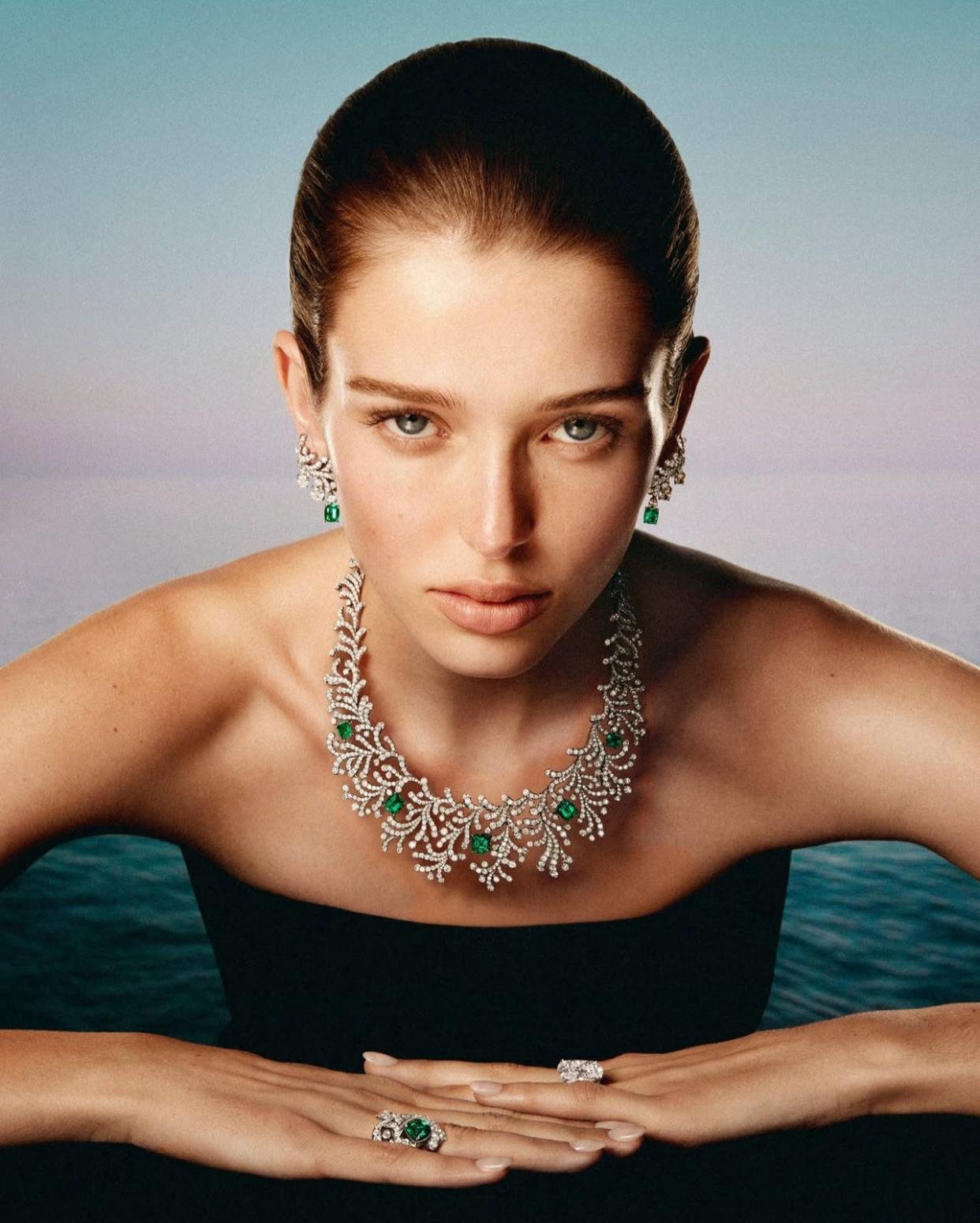
Tiffany Céleste — presented in 2024 — traveled in the opposite direction from Out of the Blue: from the ocean floor to the cosmos. Six chapters, each organized around a specific celestial reference from Schlumberger's repertoire. The Arrow chapter featured custom-cut stones mimicking the triangular formation of an arrowhead, around unenhanced Colombian emeralds of exceptional quality. The Apollo chapter reinterpreted Schlumberger's 1941 Trophée de Vaillance brooch with gold spikes apparently floating through continuous pavé diamonds — a new setting technique developed specifically for this piece. The collection's centerpiece was a winged Pegasus necklace in platinum and yellow gold centered on a diamond exceeding twenty carats, its feathers realized through a new feather-setting method that Verdeille's ateliers had never previously attempted. Each piece modeled up to four times in prototype before the final execution.
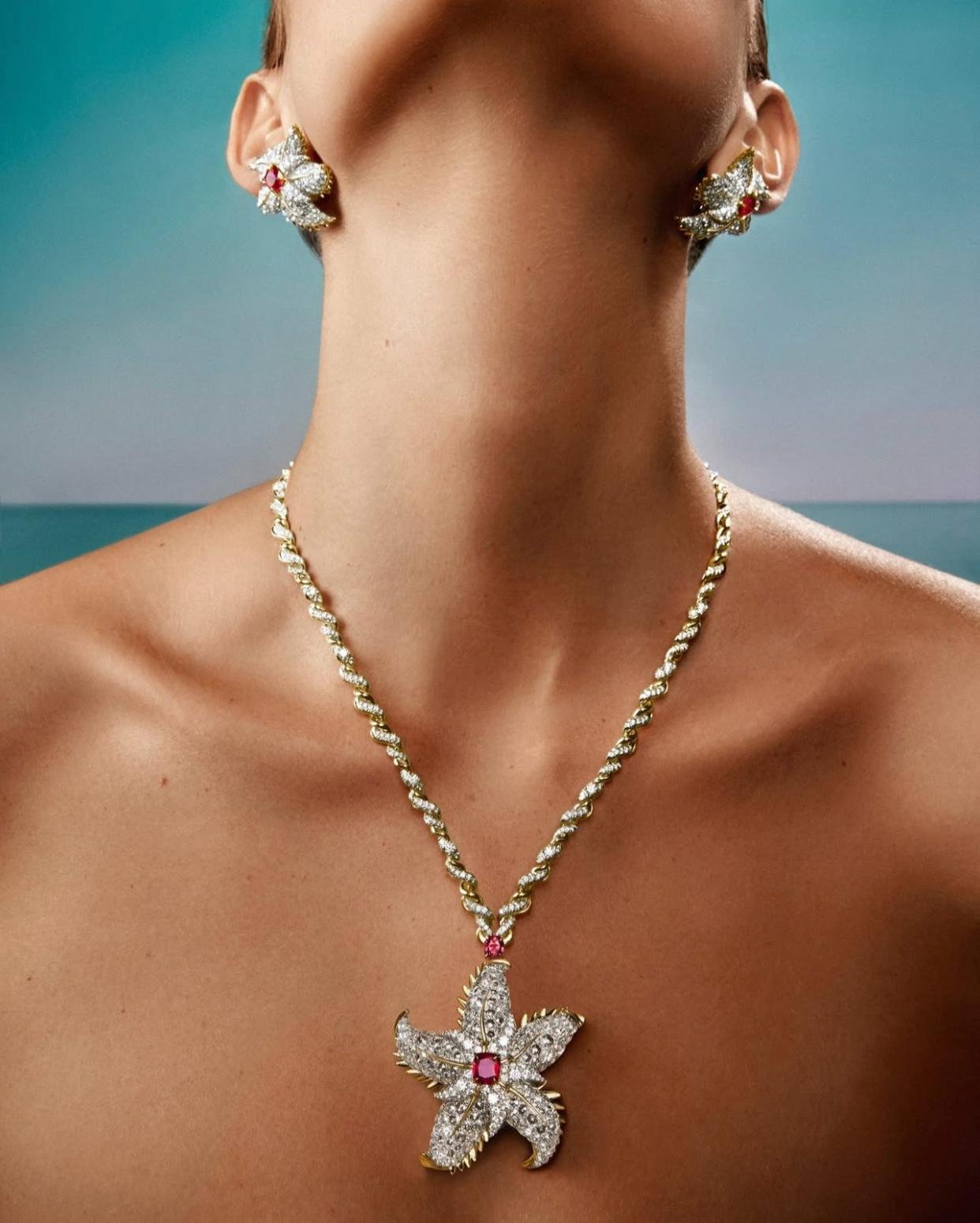
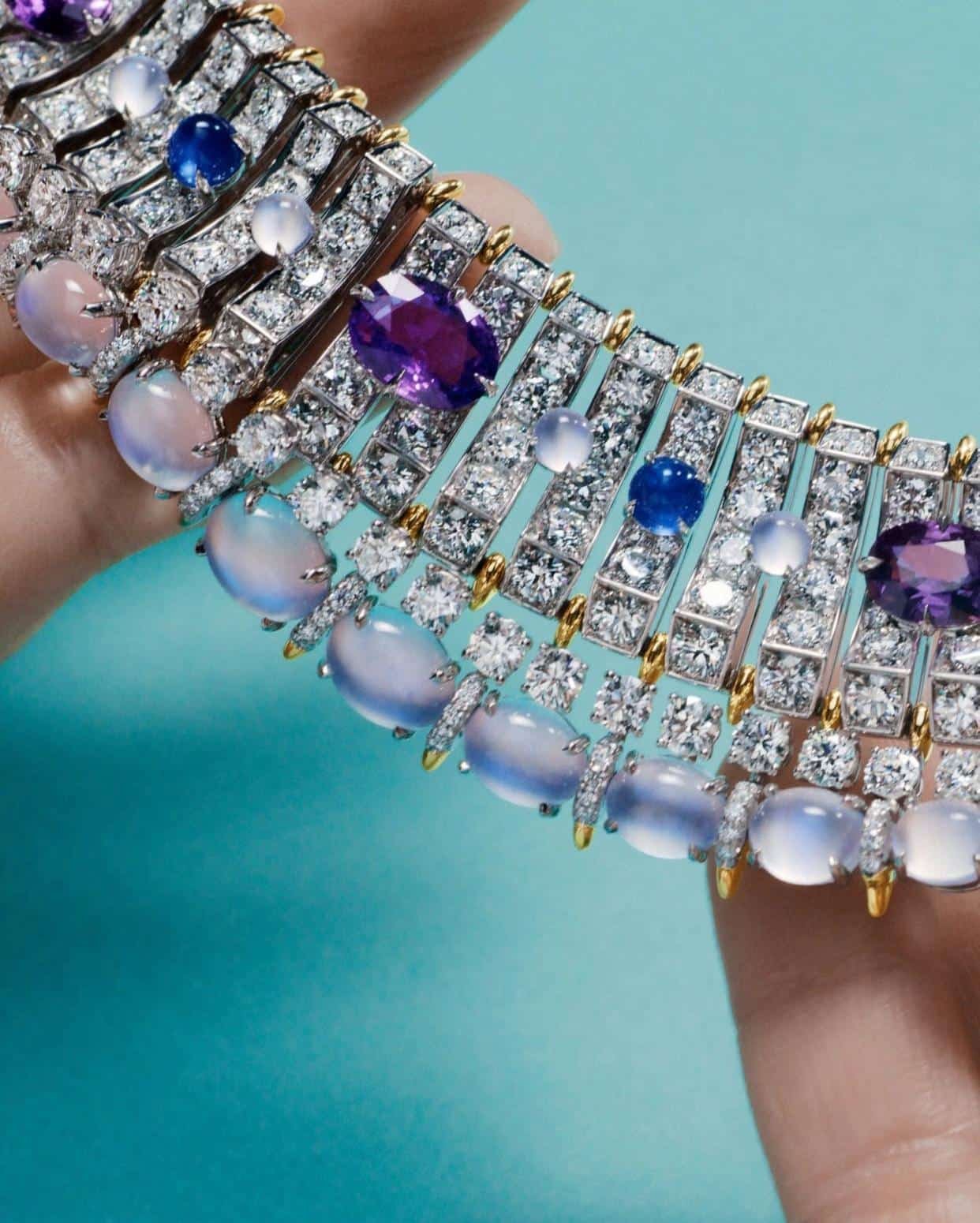
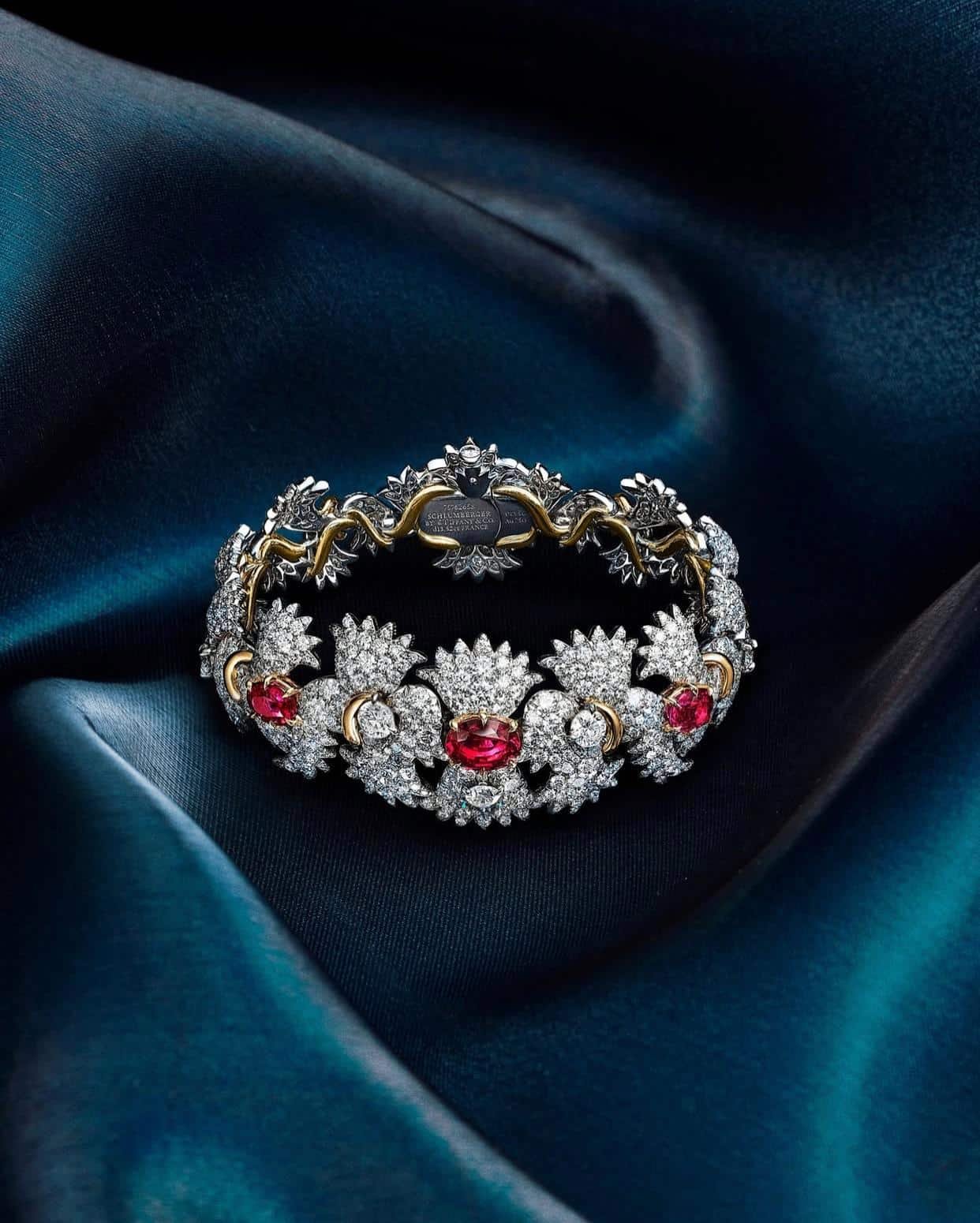
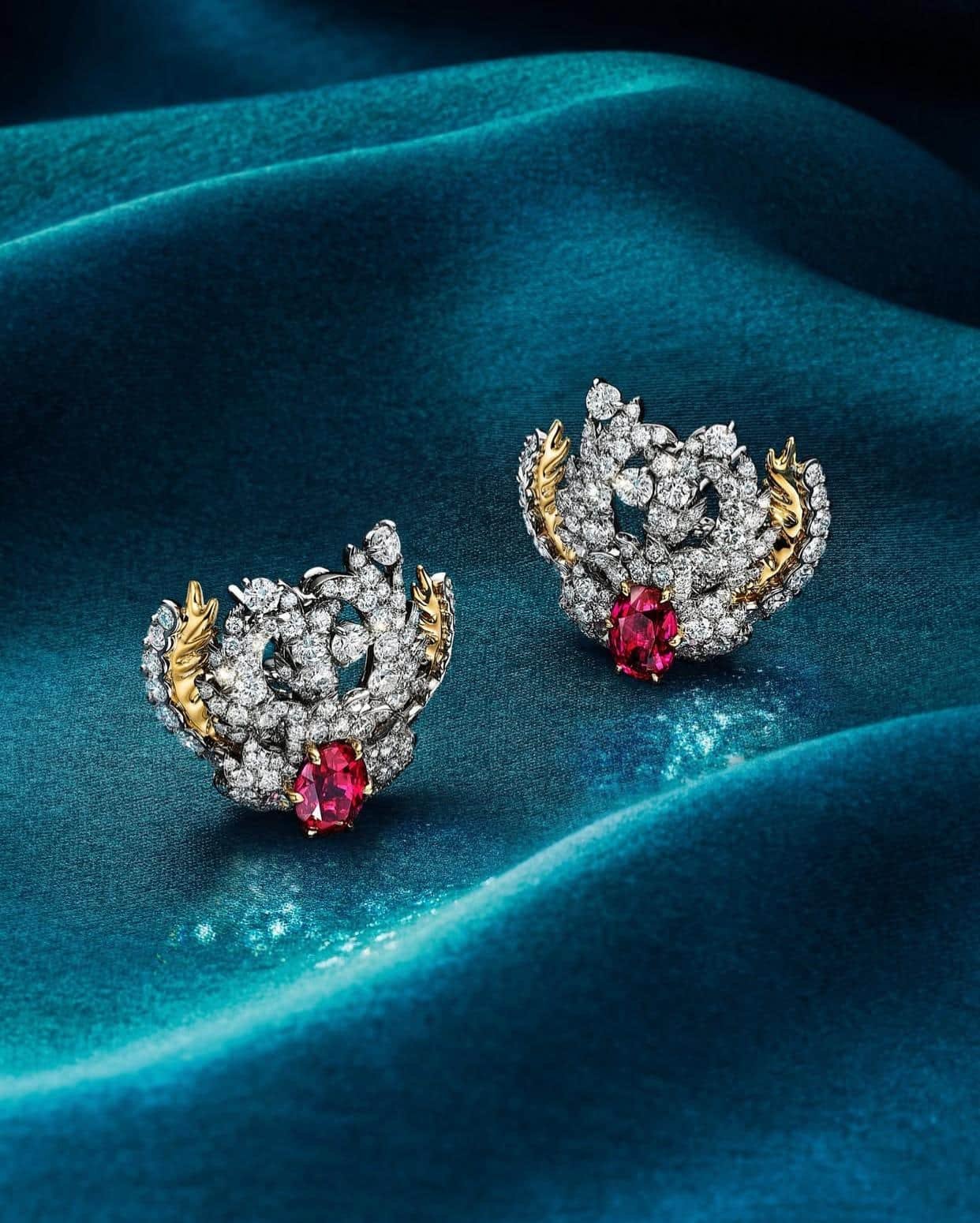
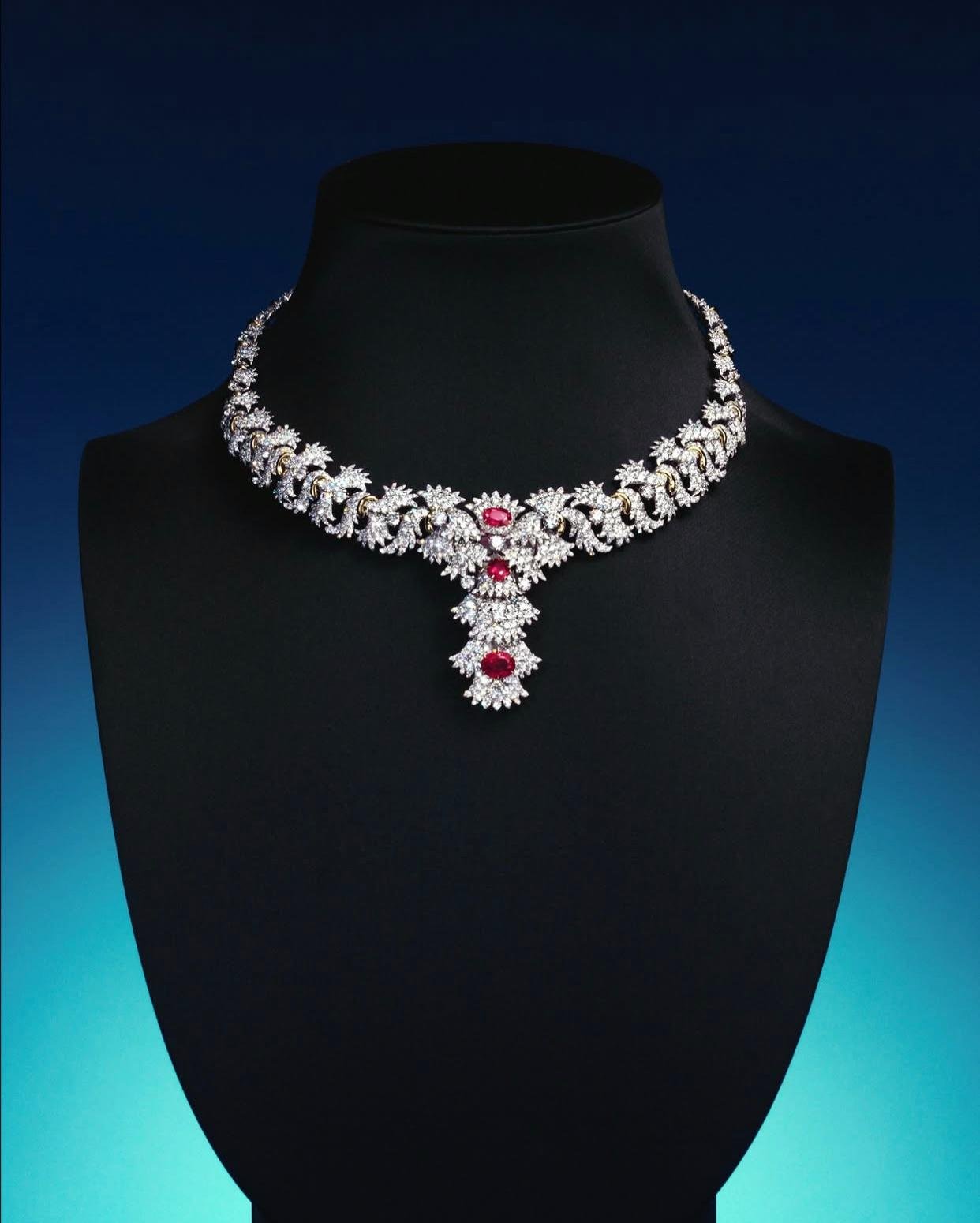
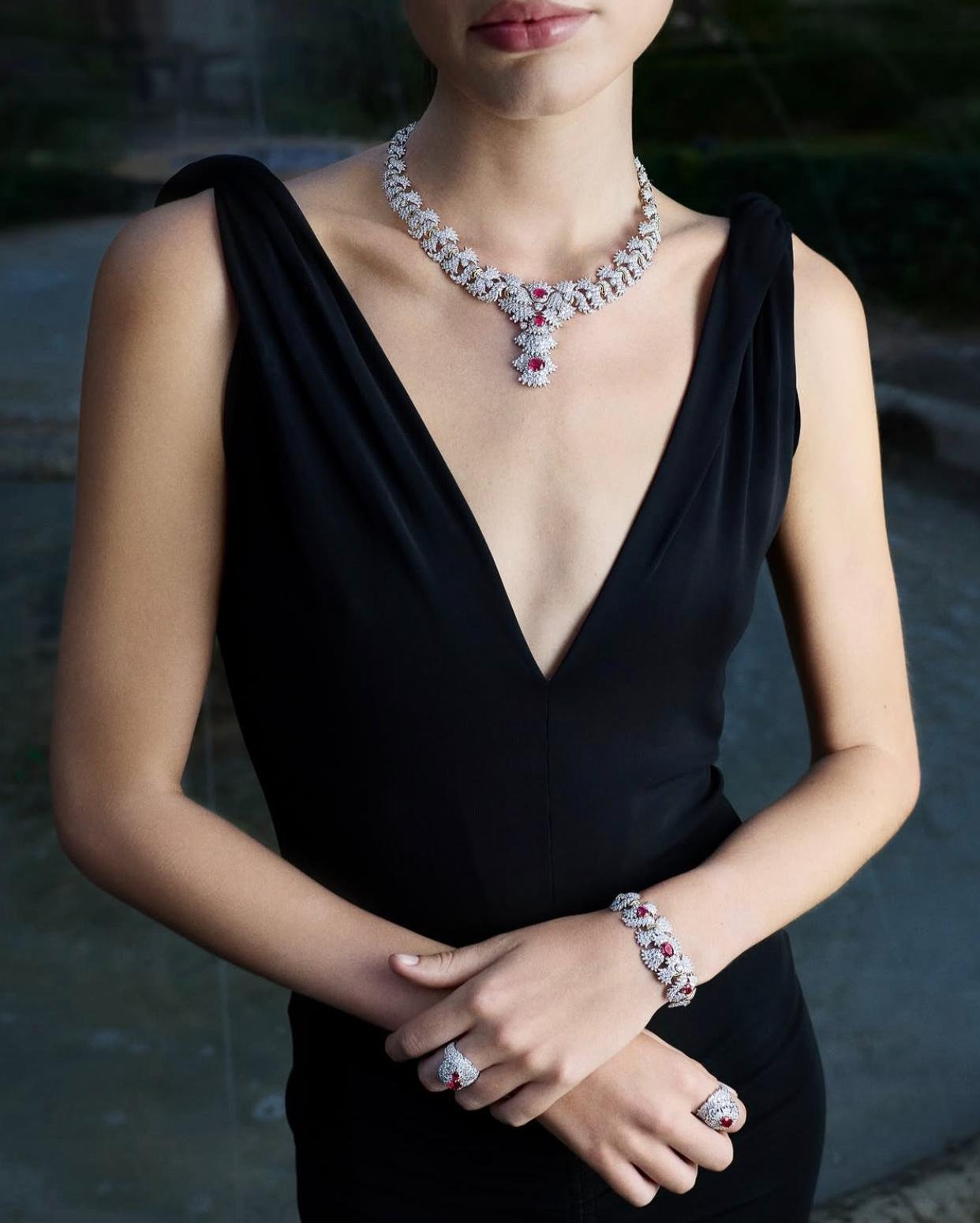
Sea of Wonder — presented in New York in April 2025 — returned to the ocean, but with the maturity that three years inside the Schlumberger archive had produced. Where Out of the Blue was contemplative, Sea of Wonder was technically decisive. The Urchin suite deployed paillonné enameling — a 19th-century technique that Schlumberger revitalized in the 1960s — encapsulating thin curved silver leaves between layers of enamel to create volume, texture, and new shades of color that respond to light as the ocean responds to it. The Anemone necklace centered three unenhanced Mozambican rubies totaling nearly five carats within sculptural gold accents and diamonds. The Wave necklace evoked a crashing wave through blue cuprian elbaite tourmalines of over seventeen carats. The Mermaid brooch placed a black opal exceeding ten carats at the fin of a figure in motion. Sea of Wonder's fall expression debuted in Milan in September 2025 — closing a full year of Blue Book presentation across two hemispheres.
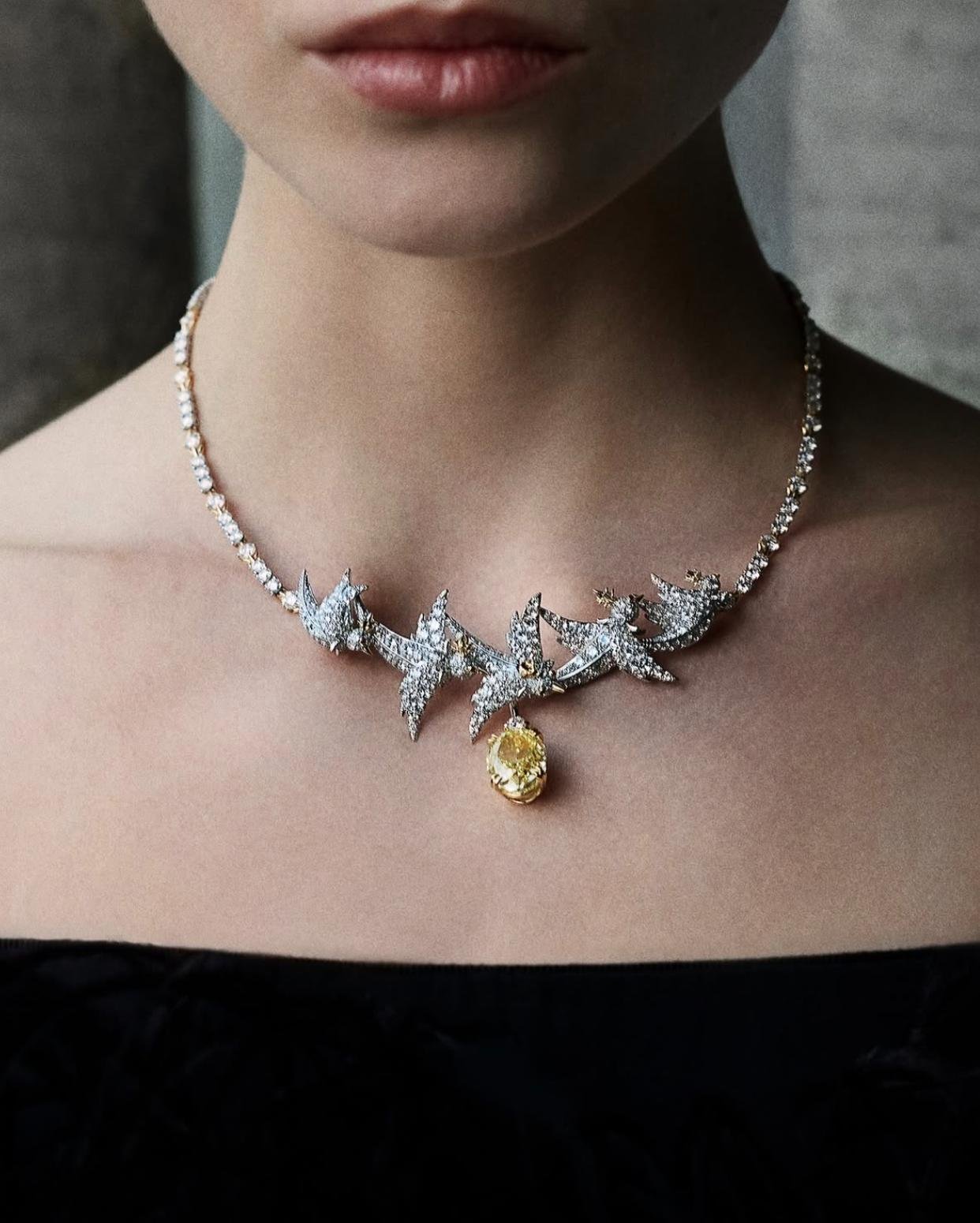
Bird on a Rock — Schlumberger's 1965 design, in which a sculptural gold bird perches atop an exceptional gemstone as though it has landed there between one moment and the next — is the piece that most completely captures his conviction about what jewelry should be. Organic. Unpredictable. As though it had happened, rather than been made. The design has been reinterpreted in emeralds, rubellites, sapphires, and opals in the current Blue Book collections — each stone a different character, each bird a different posture, each piece a singular encounter between a craftsman and a gemstone of sufficient presence to deserve a companion. Robert Downey Jr. wore an archival Schlumberger brooch to the 2025 Academy Awards. The gesture confirmed what Tiffany has always known: the Schlumberger vocabulary is not restricted to a single generation, a single gender, or a single occasion.
The Tiffany Yellow Diamond — 128.54 carats, discovered in the Kimberley mines of South Africa in 1877 and purchased the following year by Charles Lewis Tiffany — is the fixed point around which the entire Tiffany haute joaillerie identity orbits. It has been worn publicly by four women in its history: Mary Whitehouse in 1957, Audrey Hepburn during the Breakfast at Tiffany's promotion in 1961, Lady Gaga at the 2019 Academy Awards, and Beyoncé in the 2021 campaign. It is kept on permanent display at The Landmark. It is not for sale. Its presence in the building is not a commercial proposition. It is a statement about what diamonds can be — and about the house's conviction that the most significant stone it has ever held should remain accessible to anyone who walks through the revolving doors.
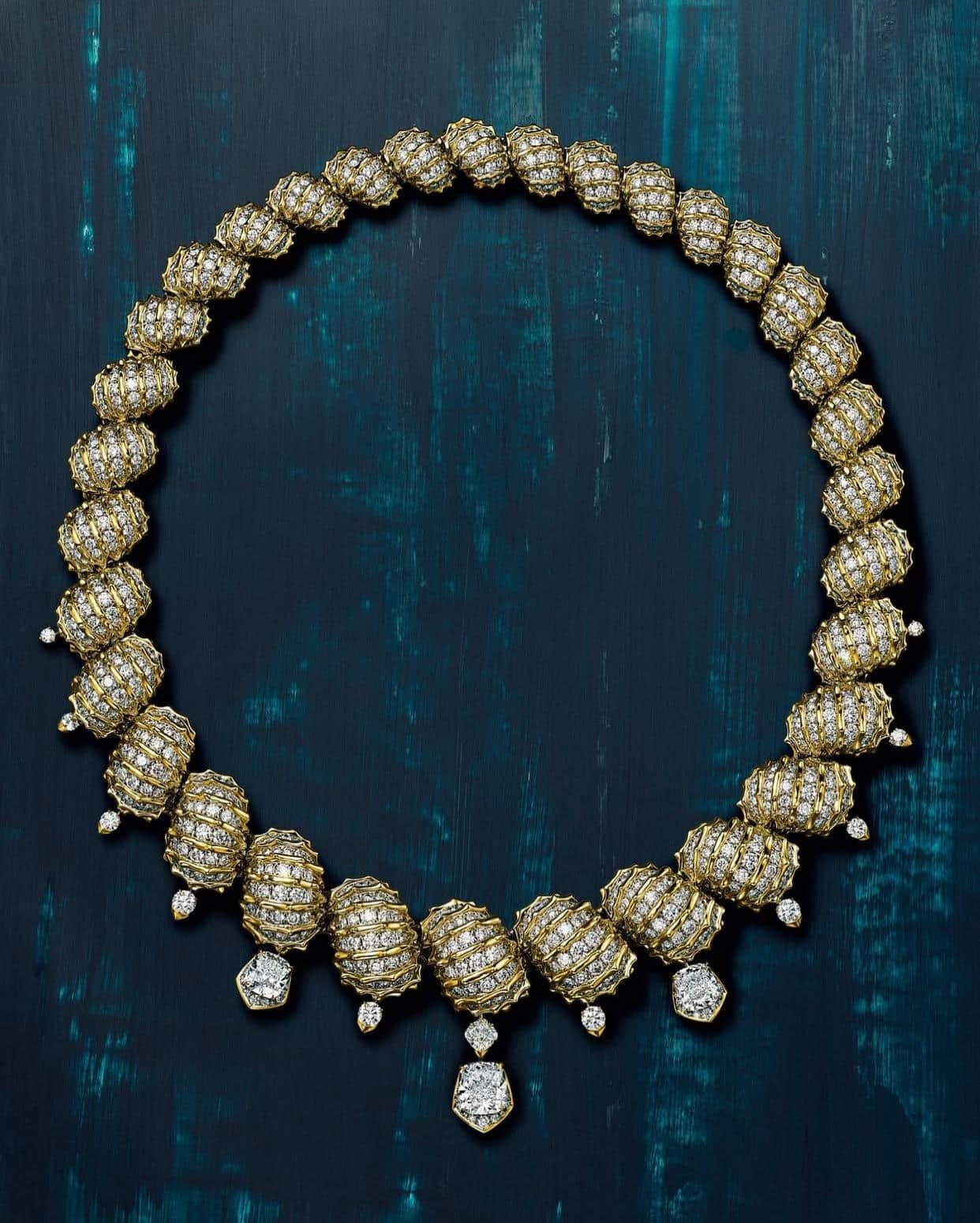
Tiffany's diamond portfolio is the foundation of its haute joaillerie — an inventory of white, yellow, and fancy-color diamonds that the house describes as unlike any other in the industry. Nearly five thousand skilled artisans cut Tiffany diamonds and craft jewelry in the house's own workshops, maintaining the standard of quality that Charles Lewis Tiffany established in the 1870s when he published the first systematic guide to diamond grading — a document that preceded the GIA's standardized system by decades. Each Blue Book collection is built from this portfolio outward: Verdeille begins with the stones available, identifies which are exceptional enough to anchor a chapter, and designs from the stone's particular character rather than toward a predetermined formal result. The approach mirrors Schlumberger's own: the stone first, always the stone, with the design following from what the stone already is.
"I try to make everything look as if it were growing,
uneven, at random, organic, in motion."
— Jean Schlumberger
He built the vocabulary in 1956.
Nathalie Verdeille is completing the sentences
he left unfinished.
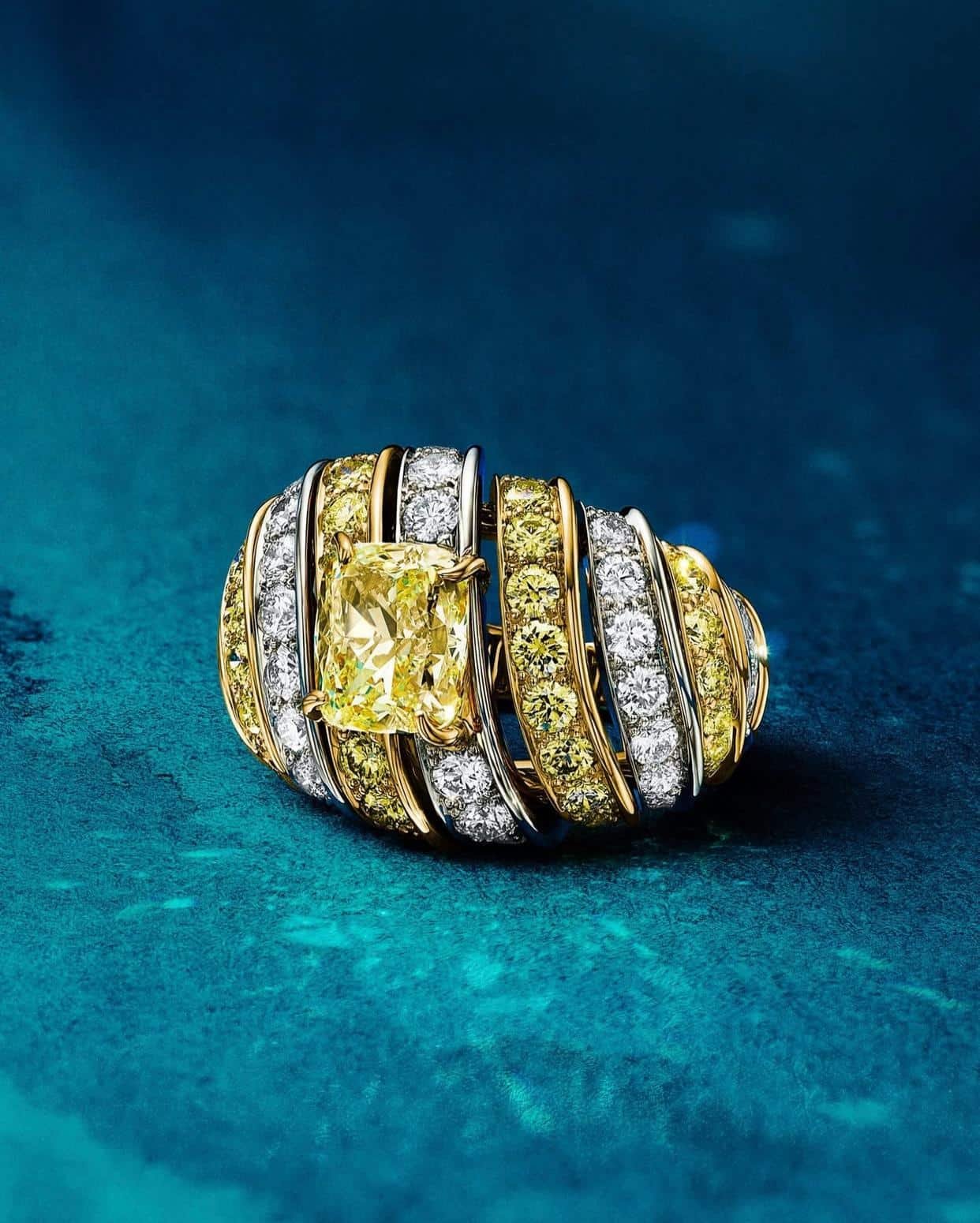
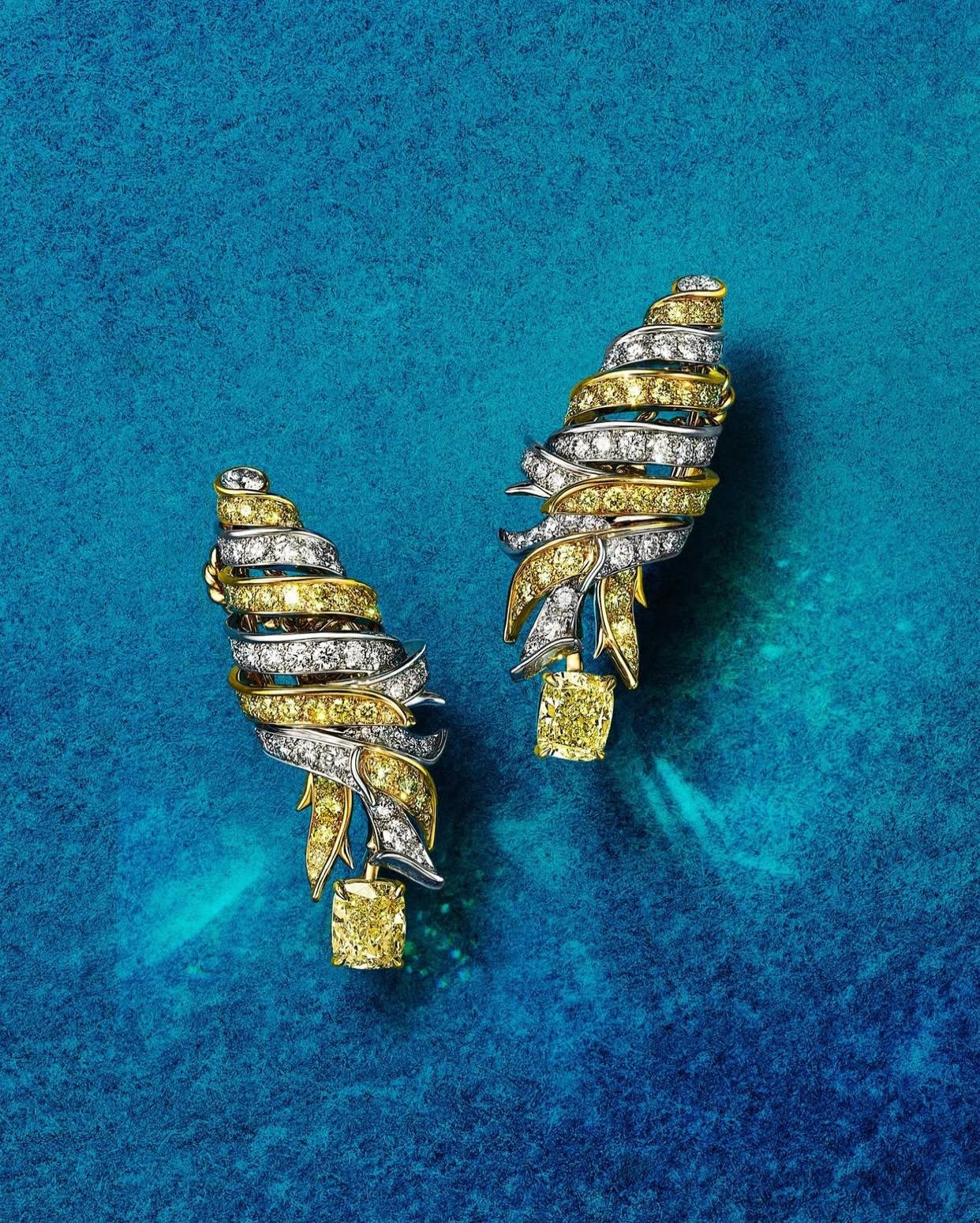
The paillonné enameling technique — one of the oldest in fine jewelry, fashionable during the Renaissance and thought by subsequent generations too demanding to sustain at scale — was revived by Jean Schlumberger in the 1960s, who recognized in it a capacity for color and surface texture that no other jewelry technique could produce. The method encapsulates thin curved silver leaves between layers of enamel: the light penetrates the colored enamel, reflects off the delicate silver leaves beneath, and emerges altered — with a luminescence that mimics the way light behaves underwater, or against the iridescent surface of a sea creature's shell. Schlumberger understood this intuitively. Verdeille, in the Sea of Wonder Blue Book, deployed the technique in the Urchin suite with a precision and confidence that the house has described as technically unprecedented in the collection's current production. A Renaissance method, revived by a mid-century designer, extended by a 21st-century artistic director. The craft endures because the problem it solves — how to give jewelry the quality of living light — has not changed.
The Landmark · Seventh Floor · High Jewelry · New York
Tiffany's haute joaillerie is presented on the seventh floor of The Landmark at 727 Fifth Avenue — the highest-selling floor of the building, entirely open to the public, with views on clear days stretching to Central Park West. "Dreamers are welcome," is how Victoria Reynolds, the house's chief gemologist, has described the space's accessibility. The Blue Book pieces — the most significant haute joaillerie the house produces each year — are shown here, alongside the Schlumberger archive and exceptional stones from the house's diamond portfolio. The seventh floor does not require an appointment. It requires only the willingness to walk through the revolving doors and take the spiral staircase — inspired by Elsa Peretti's love of organic form — to the level where the Blue Book lives. For a house whose founding conviction is that the extraordinary should be accessible, this is the most direct expression of that belief the building contains.
727 Fifth Avenue · New York, NY 10022 · Seventh Floor
Blue Book 2025: Sea of Wonder · Blue Book 2024: Tiffany Céleste
Jean Schlumberger archive · Bird on a Rock · Tiffany Yellow Diamond
Nathalie Verdeille — Chief Artistic Officer, Jewelry and High Jewelry
Open to the public · High jewelry by appointment on upper floors
Founded New York 1837 · LVMH Group · tiffany.com/high-jewelry
Jean Schlumberger wanted his jewelry to look
as though it were growing — uneven, organic, in motion.
He spent thirty years at Tiffany making that argument
in gold and exceptional stones.
Nathalie Verdeille has spent three years
descending into oceans and ascending into the cosmos
to find the places where his argument
still has something left to say.
© Tiffany & Co
© Tiffany & Co
© Tiffany & Co
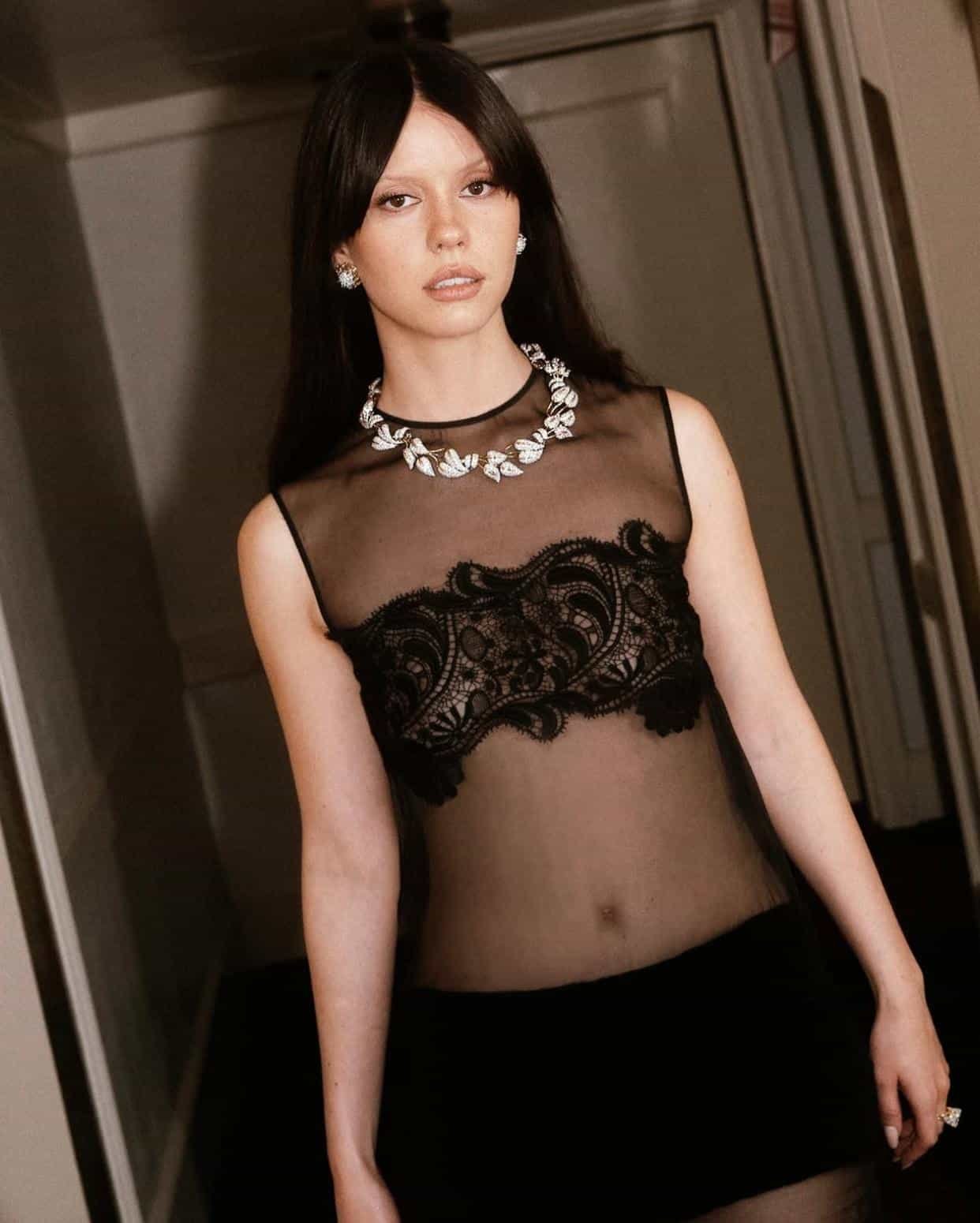
© Tiffany & Co
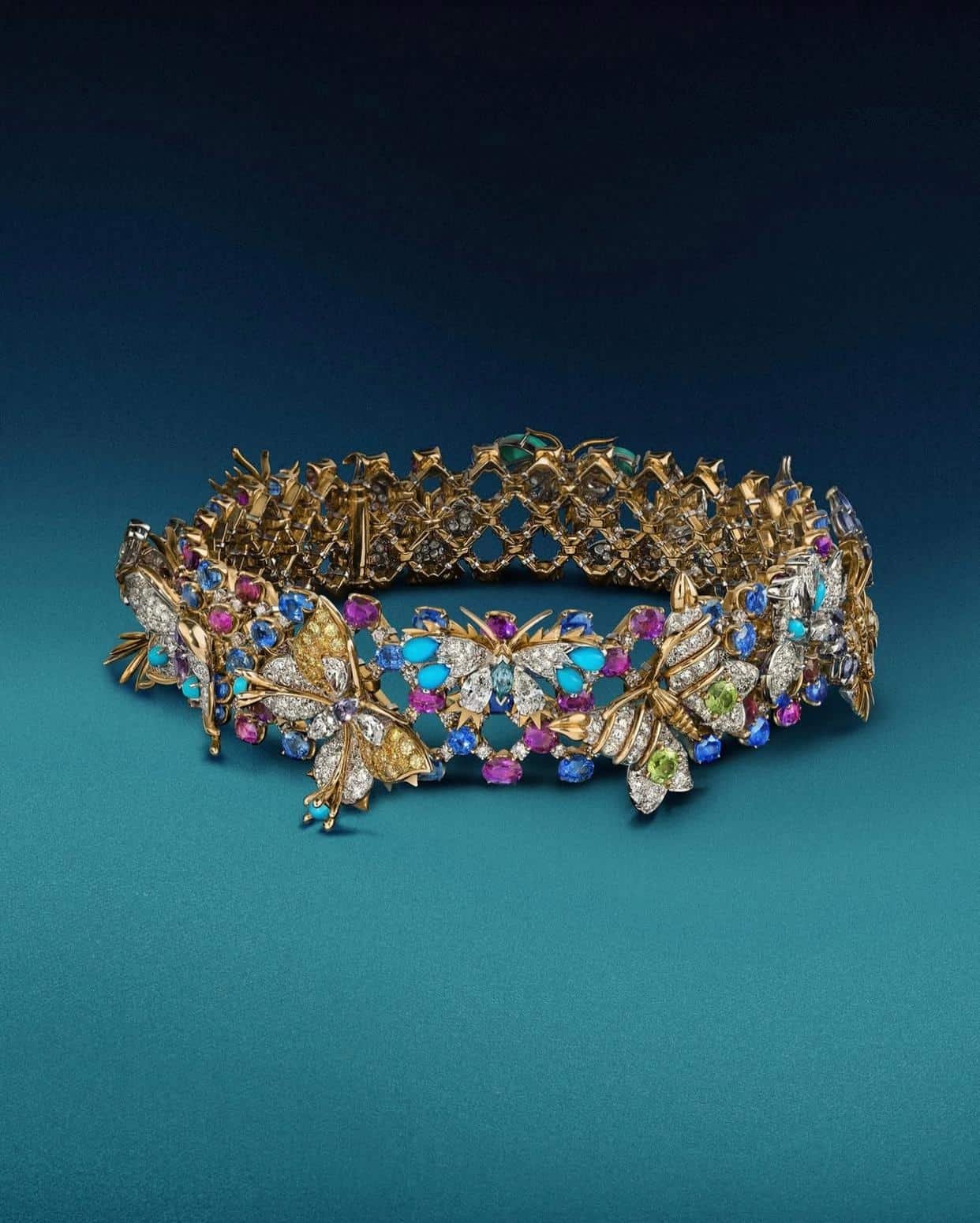
© Tiffany & Co
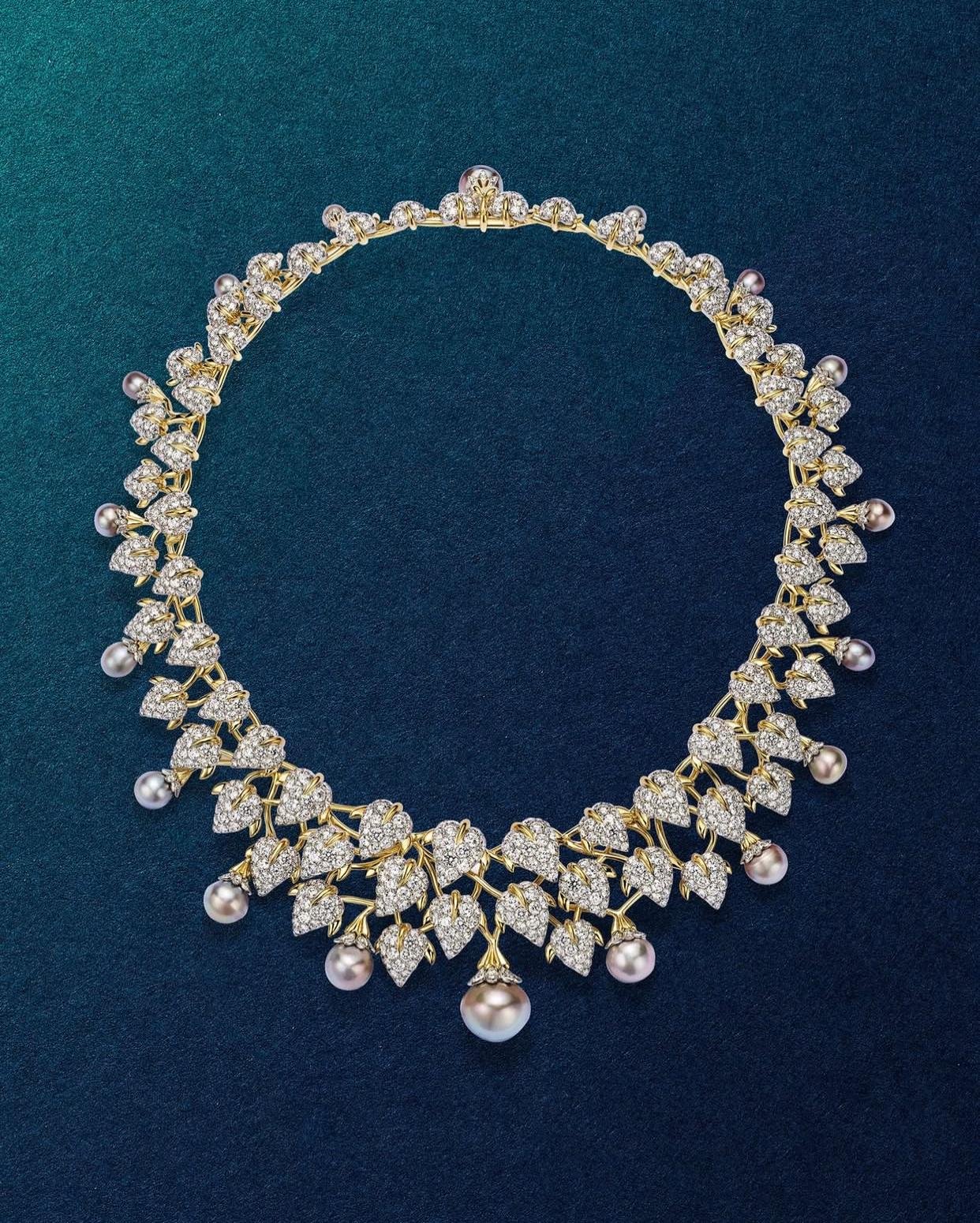
© Tiffany & Co
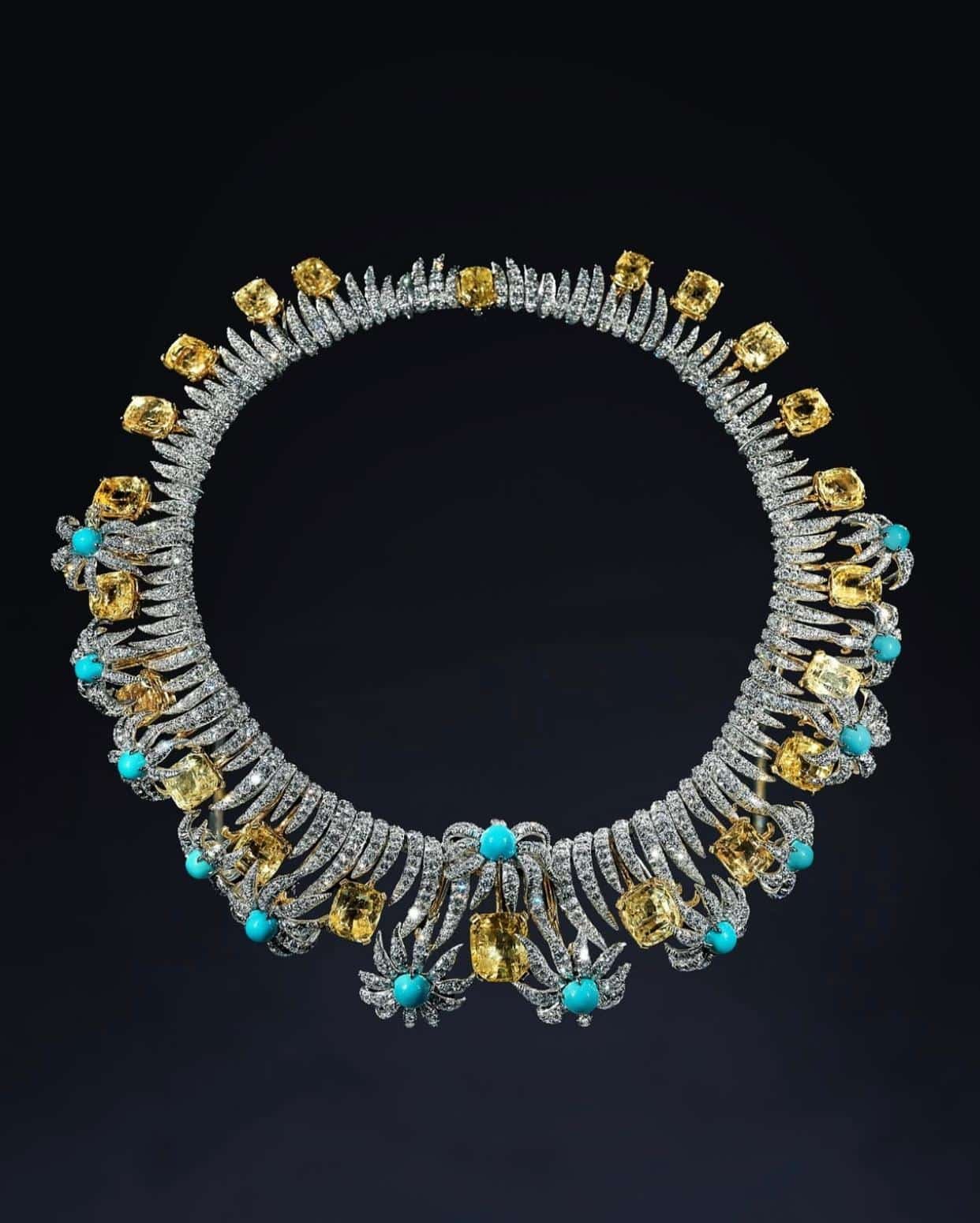
© Tiffany & Co

© Tiffany & Co

© Tiffany & Co
© Tiffany & Co
© Tiffany & Co
© Tiffany & Co
© Tiffany & Co
© Tiffany & Co
© Tiffany & Co
© Tiffany & Co
© Tiffany & Co
© Tiffany & Co
TIFFANY & CO
© Tiffany & Co