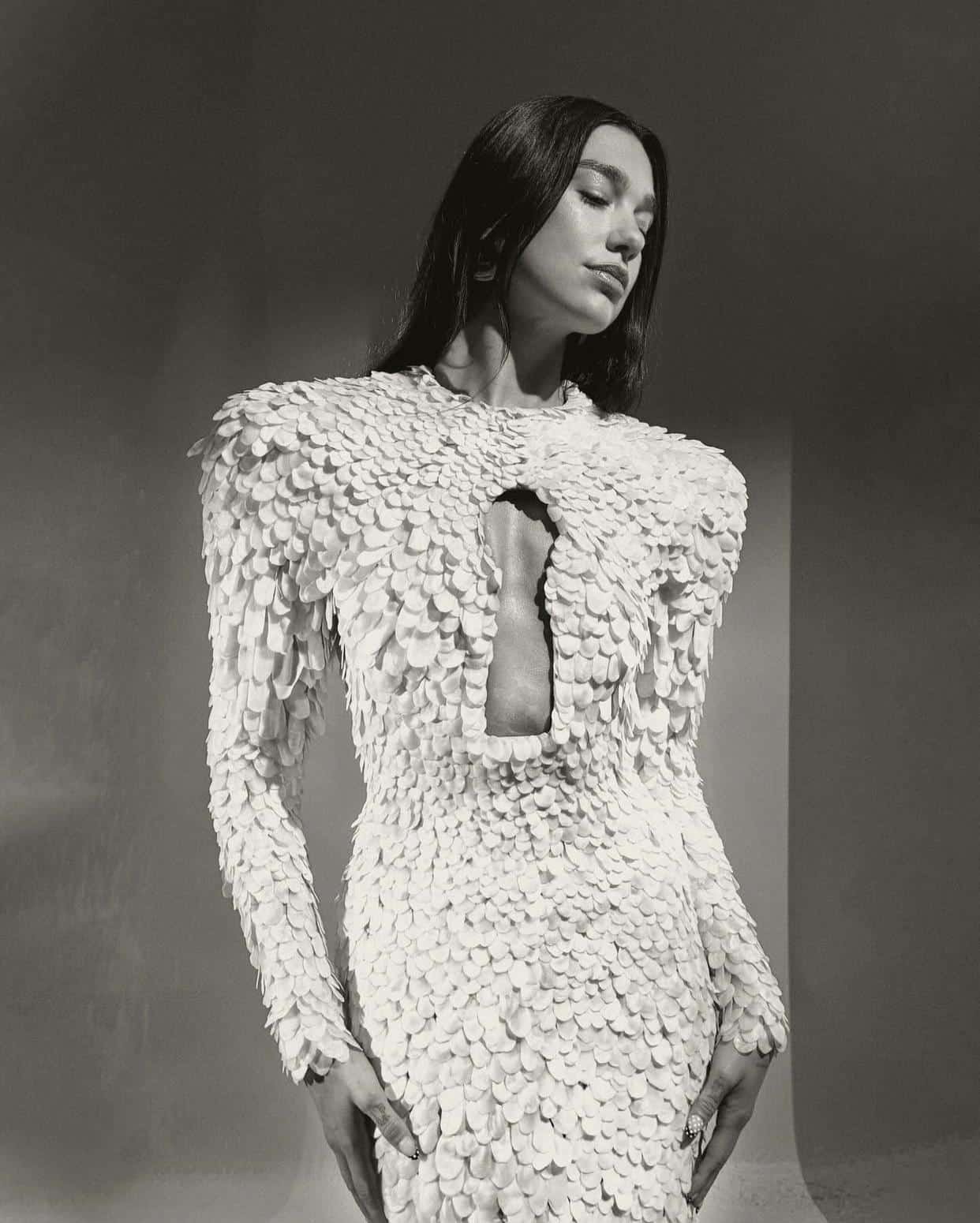
© Schiaparelli
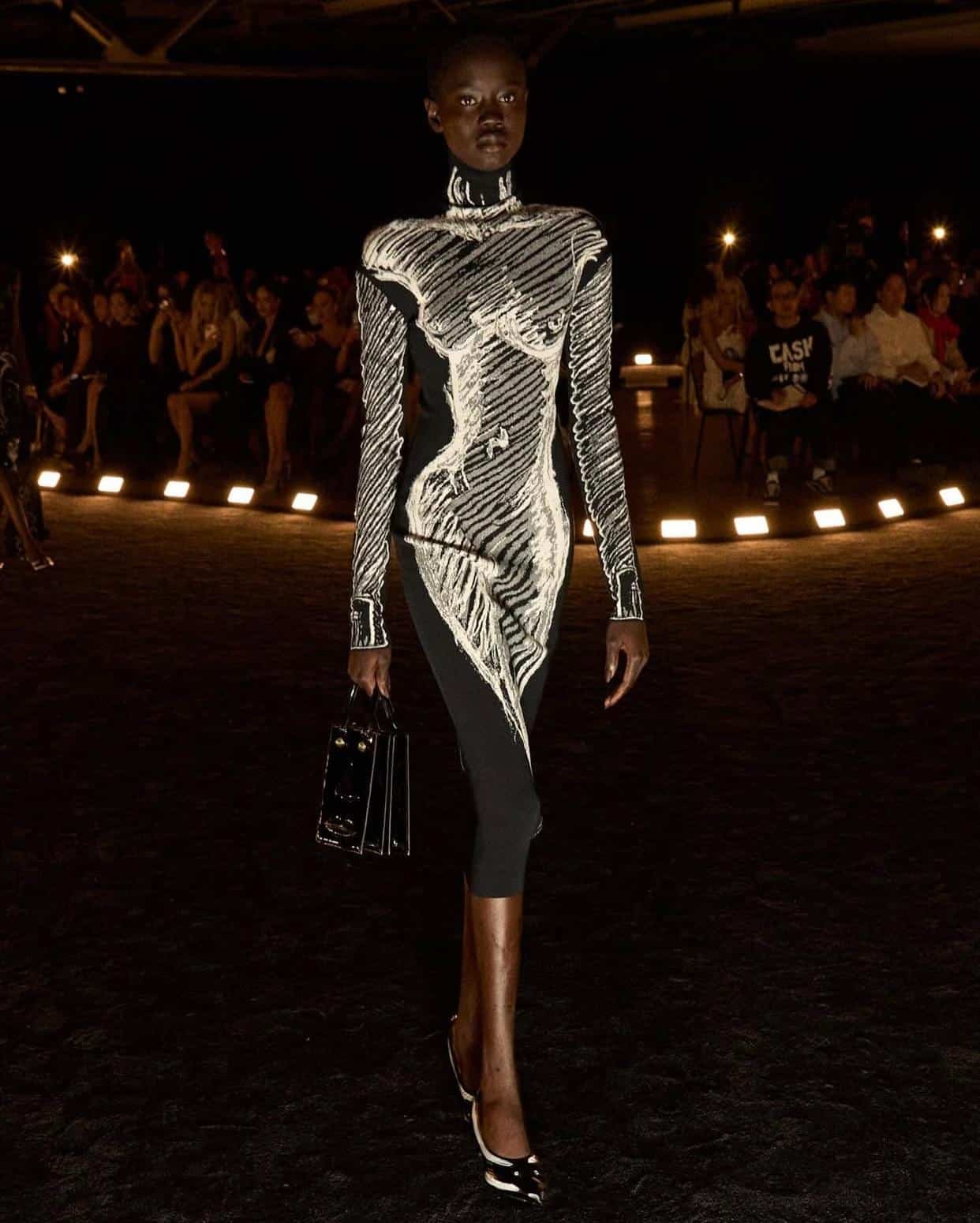
© Schiaparelli
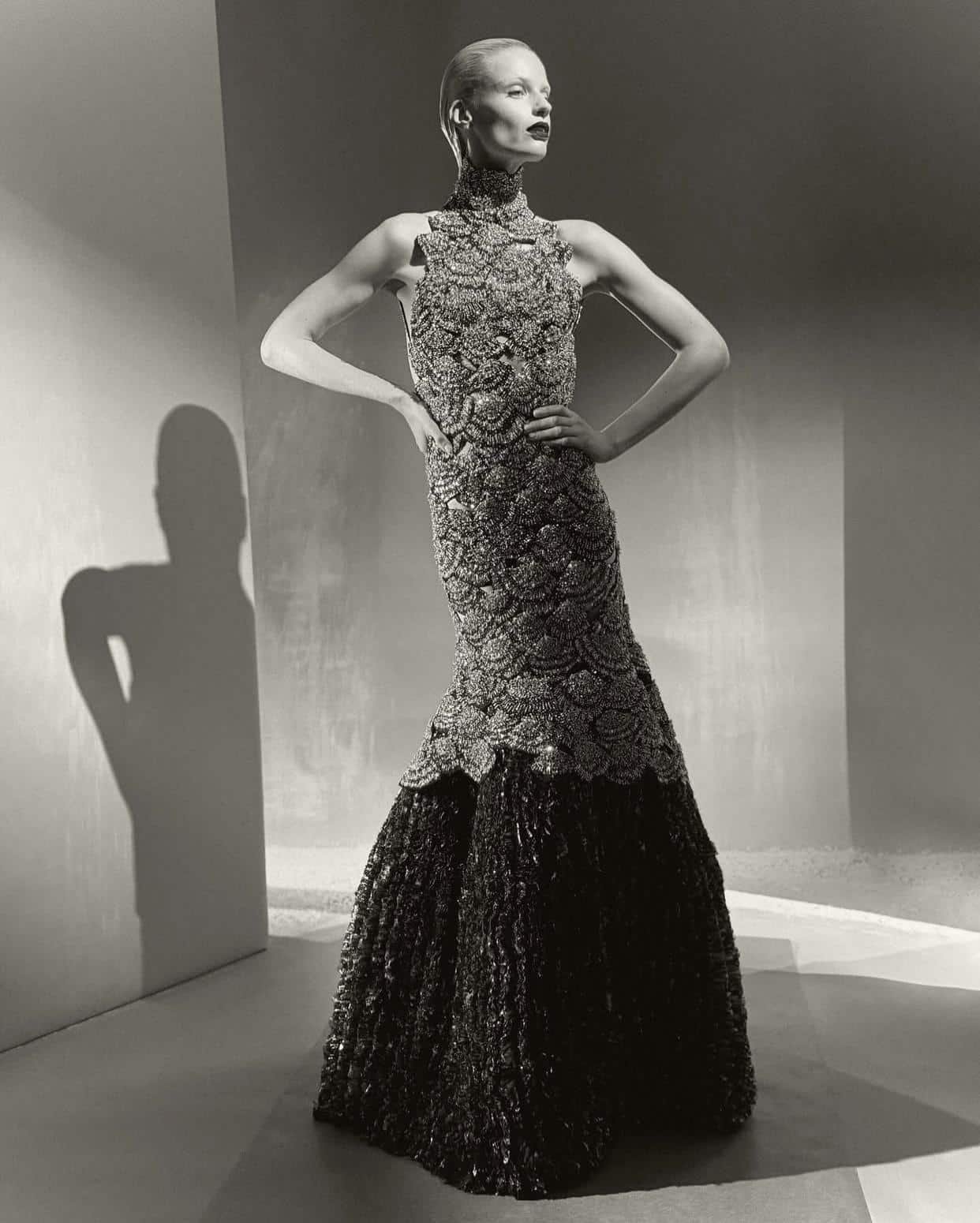
© Schiaparelli
Schiaparelli
In 1937, Salvador Dalí proposed adding real mayonnaise to the lobster he had painted on Elsa Schiaparelli's most famous dress. She refused. Schiaparelli understood where surrealism ended and dinner began. It is the same intelligence that has governed this house across a century: the capacity to be genuinely shocking without losing formal control of what is being made.
Rome · 1890 · A Trompe-L'Œil Sweater That Changed Everything
Elsa Schiaparelli was born on September 10, 1890, in a Roman palazzo to an aristocratic family of academics and intellectuals. She studied philosophy at the University of Rome, wrote poetry, and eventually arrived in Paris — by way of London, where she had worked as a nanny, and New York, where she spent the 1920s. She had no formal fashion training. Her first significant garment was a sweater she made for herself: black and white, with a trompe l'œil bow knitted directly into the design so that it appeared to be tied around the neck, not printed on the fabric. She wore it to a luncheon attended by fashion industry leaders. A buyer from Lord & Taylor in New York ordered forty copies on the spot. The house of Schiaparelli was effectively founded by a knitwear illusion — by the discovery that fashion could lie to the eye in the same way that Surrealist art lied to the mind. From this starting point, she built a decade of the most inventive haute couture in the history of the form: the lobster dress with Dalí in 1937, the shoe hat with Dalí the same year, the Tears dress, the Skeleton dress, the Zodiac collection, the Circus collection. She launched Shocking Pink as a color and a perfume simultaneously in 1937 — the perfume bottle shaped like a dressmaker's bust that reproduced the curves of Mae West, around whose neck a measuring tape was coiled like a necklace. Yves Saint Laurent, who admired her without reservation, summarized her contribution precisely: "She slapped Paris. She smacked it. She tortured it. She bewitched it. And it fell madly in love with her."
Daniel Roseberry · Creative Director Since 2019 · From Plano To Place Vendôme
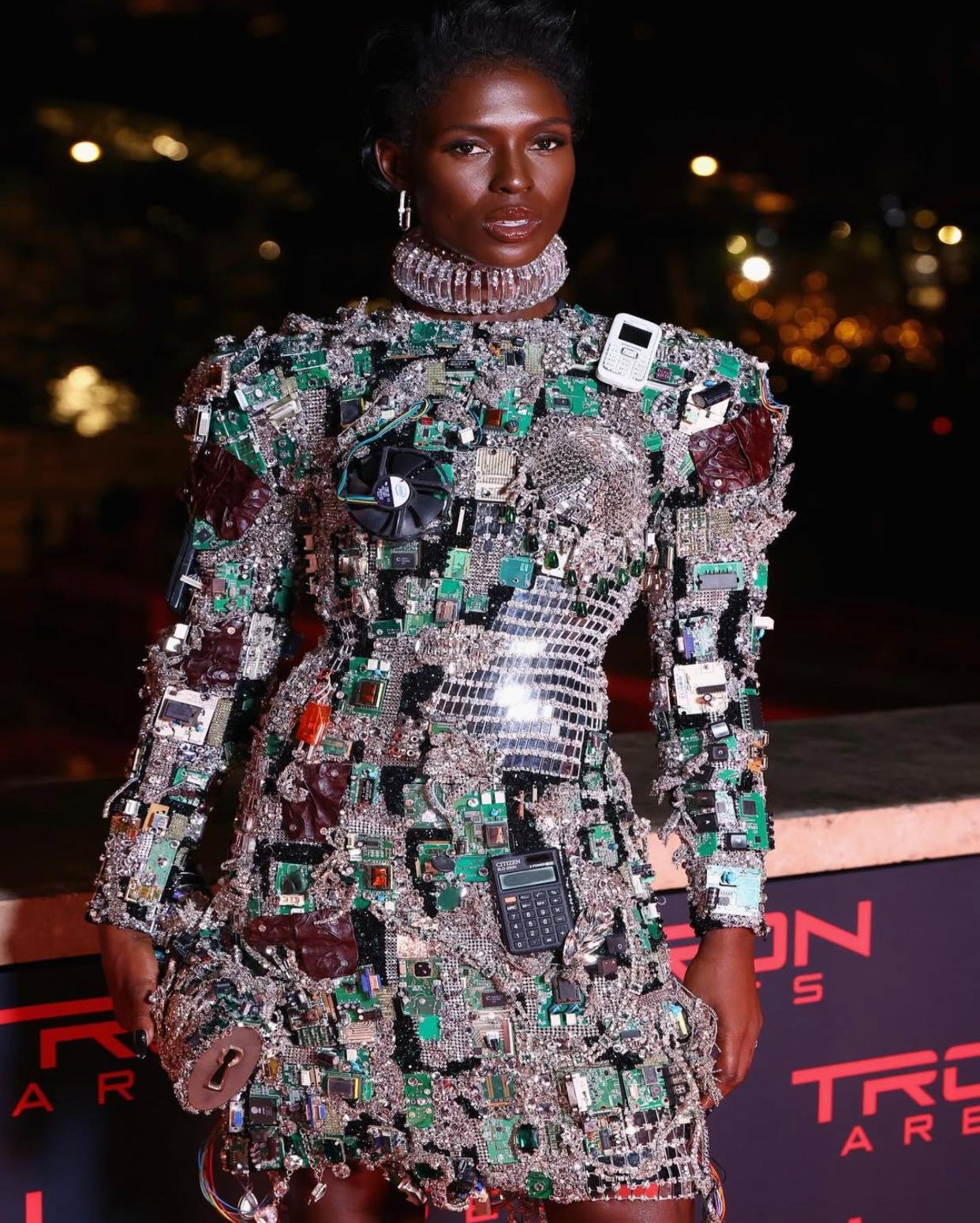
Daniel Roseberry was born in 1985 in Plano, Texas. His father is an Anglican minister, his mother an artist. He considered entering the seminary. Instead, after high school, he traveled the world on Christian missions — to Hawaii, Jordan, Pakistan, Israel — before returning to New York and enrolling at the Fashion Institute of Technology. He left FIT after two years to begin working at Thom Browne, the New York tailoring house, where he spent ten years and rose to head of design. In 2019, Schiaparelli appointed him creative director — a man who had never worked in a couture atelier, trained at a New York fashion school, raised in a deeply religious Texas household, and had no obvious biographical connection to the world of Elsa, Salvador, Jean Cocteau, and Man Ray. He has described the appointment as requiring him to ask a fundamental question of the archives: "What would Elsa have done to reach a younger audience?" His answer has been to preserve the house's surrealist intelligence while rebuilding its formal vocabulary — gold anatomical jewelry, molded leather breastplates, upcycled denim, unexpected material combinations — and to expand the Schiaparelli universe into both ready-to-wear and the most watched haute couture shows in Paris. He designed, in collaboration with Lady Gaga, the bulletproof ensemble she wore at the inauguration of Joe Biden: a red voluminous ballgown beneath a fitted navy blue jacket, anchored by a large golden dove of peace brooch. The image was seen by every person on earth who watched that ceremony.
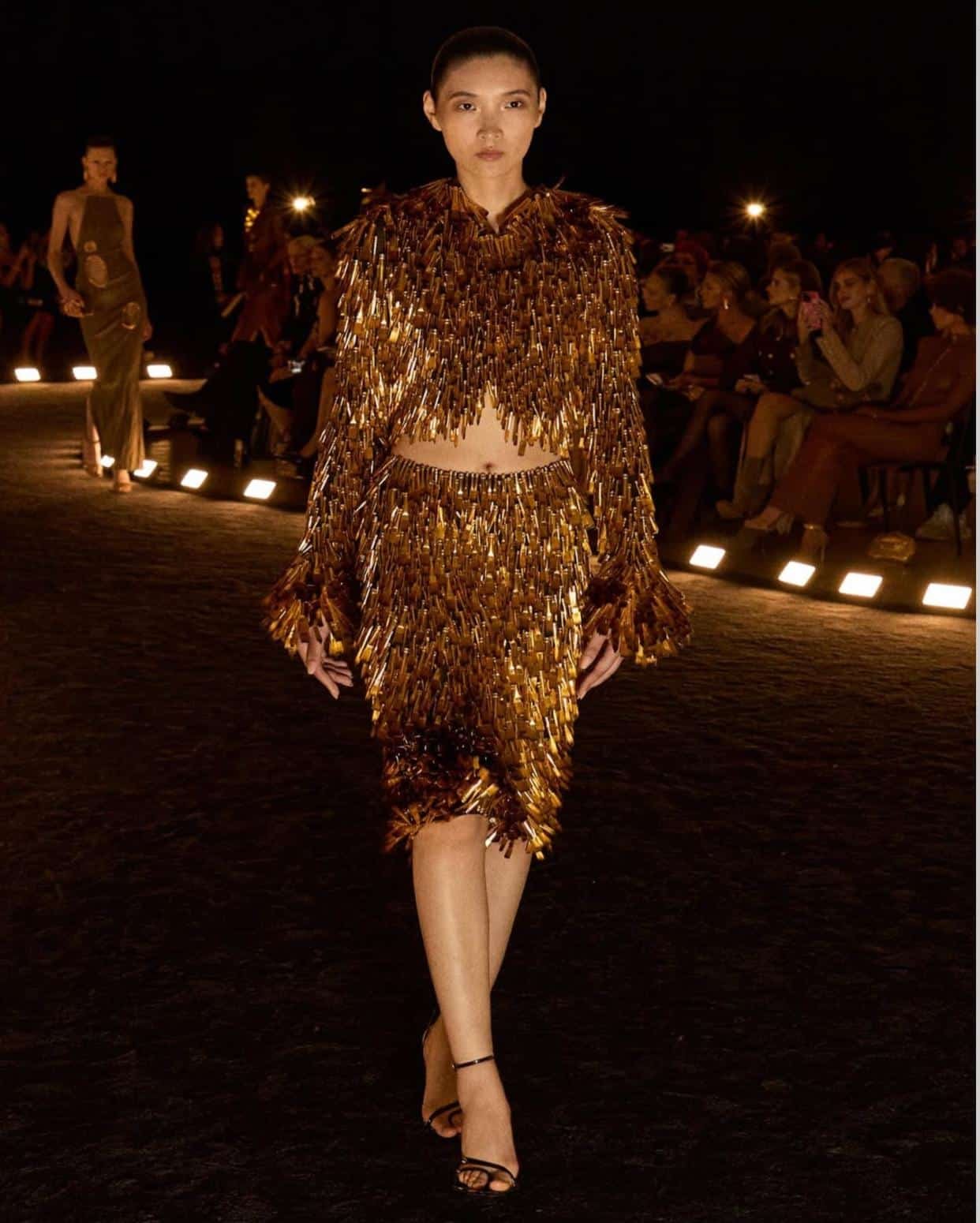
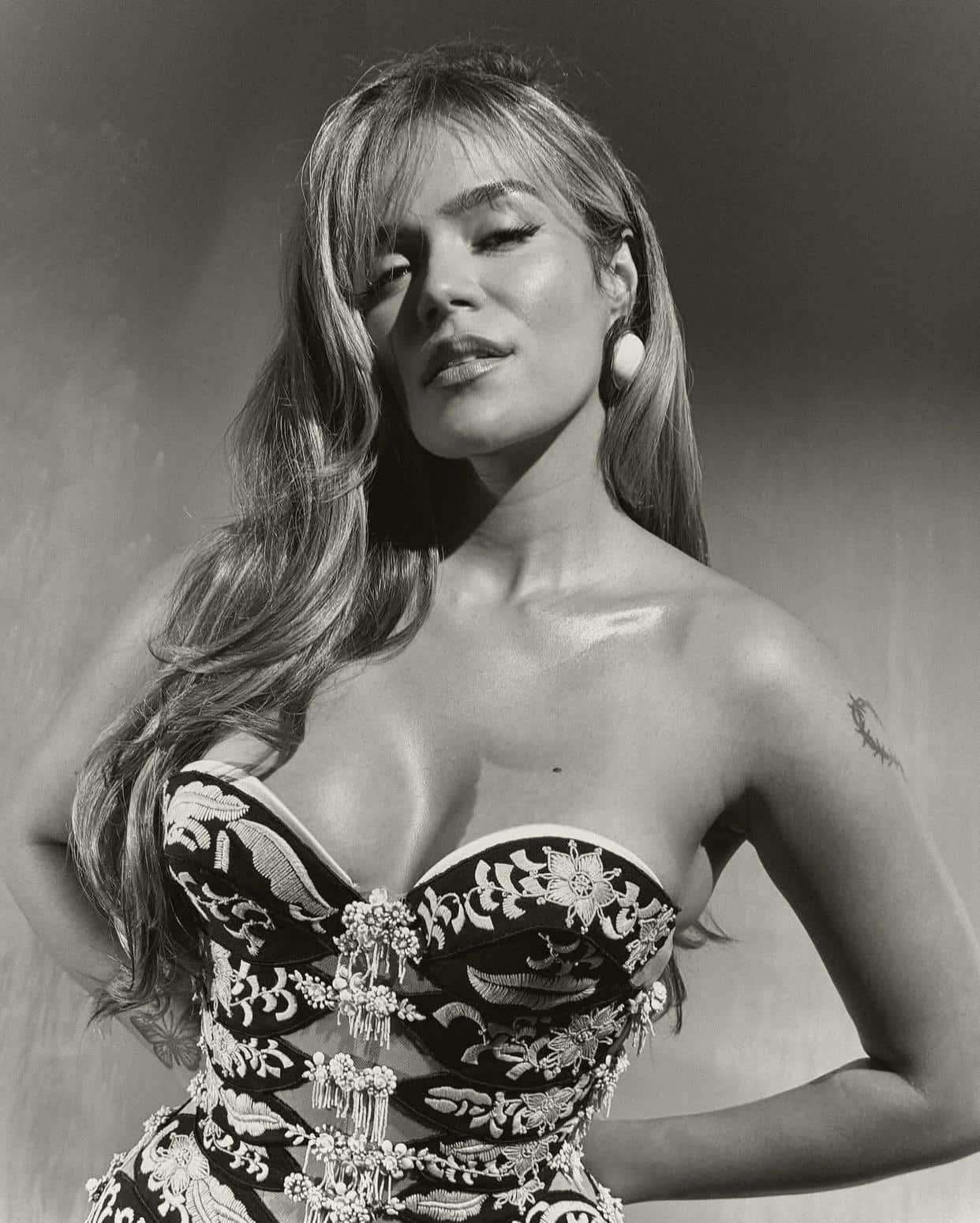
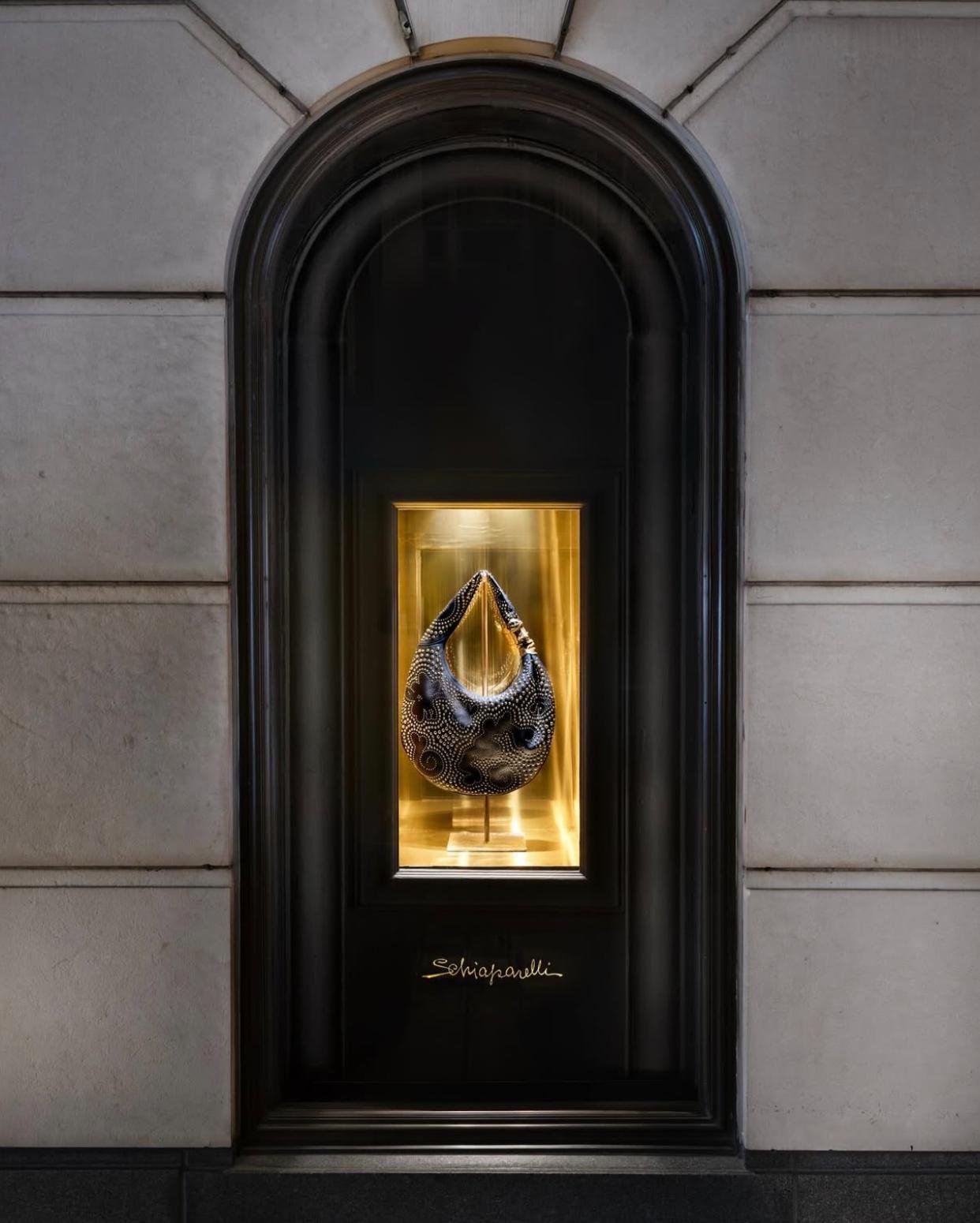
The Schiaparelli codes are unlike any other house's codes in luxury fashion — not because they are older or more numerous, but because they are by nature surrealist rather than classical. Shocking Pink: the color Elsa launched with the Mae West perfume bottle in 1937, still the house's most immediate identification. The Keyhole: originally designed by Elsa as a clasp on a handbag "to bring an aura of mystery to this everyday object" — now present as a motif throughout Roseberry's collections on bags, bijoux, shoes, buttons, and embroideries. The anatomical gold: Roseberry's own contribution to the vocabulary — golden nipples, golden lips, golden noses, golden ears, golden hands deployed as jewelry and embellishment with the same formal logic as Elsa's lobster. The measuring tape that encircled the Shocking perfume bottle appears as a decorative element on shoes and accessories. The trompe l'œil that launched the house returns in every generation of Schiaparelli, because it is not a technique — it is a philosophy: the conviction that what you see is not what is there.
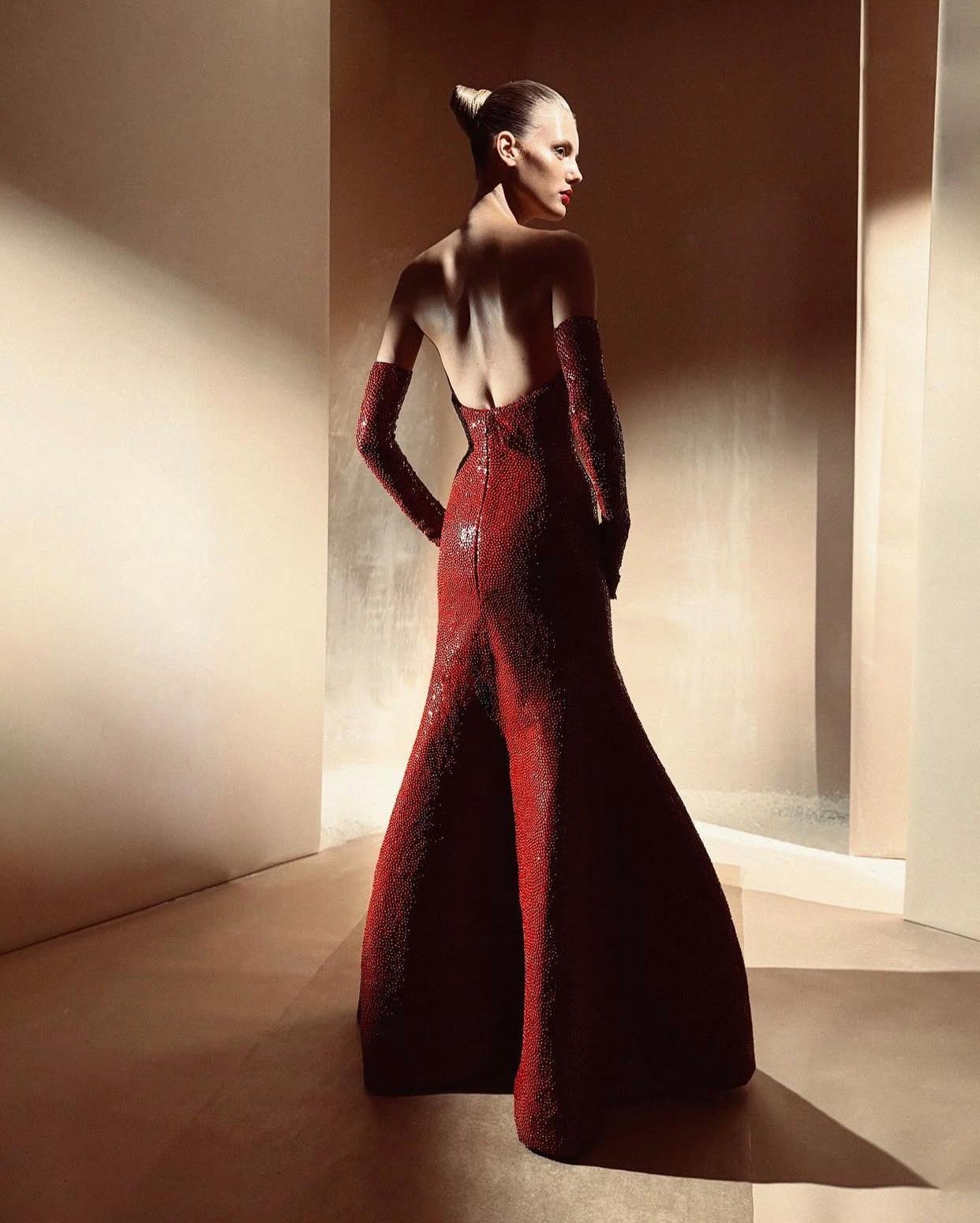
Spring 2025 — titled "Future Vintage" — was described as simultaneously contemporary and classic, built on the conviction that the most durable fashion is always the fashion that feels both of its moment and ahead of it. The closing three looks walked in vibrant shades of yellow, blue, and green, covered with hundreds of hand-painted buttons: a detail more reminiscent of haute couture than ready-to-wear, applied to garments that were technically prêt-à-porter. Braids were held by models like whips, recalling the velvet ropes outside nightclubs. A knit skirt in sea foam green and bright blue carried dual textures — shellacked fabric fading into suede — invisible to any eye that was not looking directly for it. The keyhole appeared on belts, on shoes, on chokers. The gold surrealist details were present throughout — but discerningly deployed, as Roseberry has learned is the Schiaparelli method: the detail that surprises rather than overwhelms, the joke that lands because it was not announced.
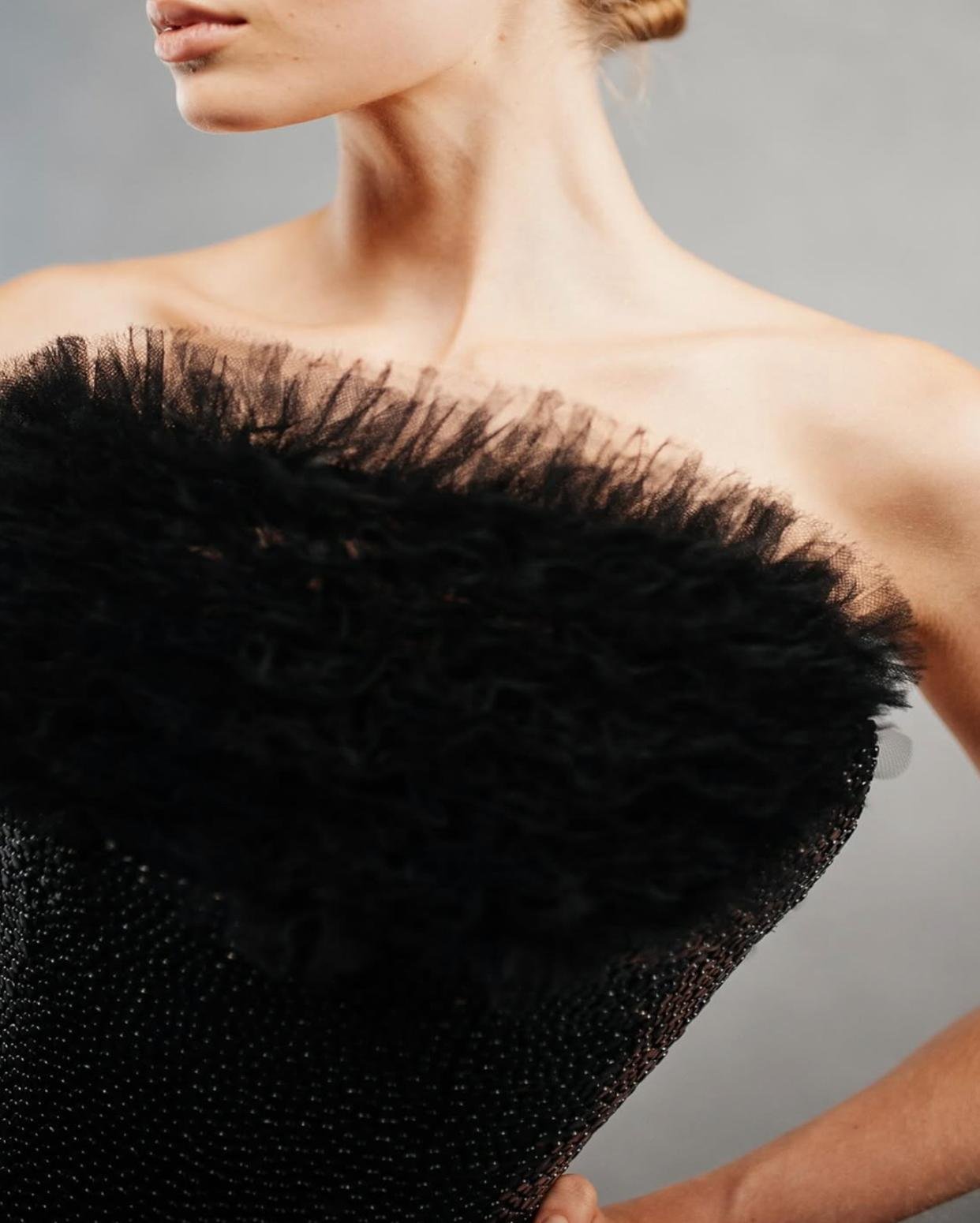
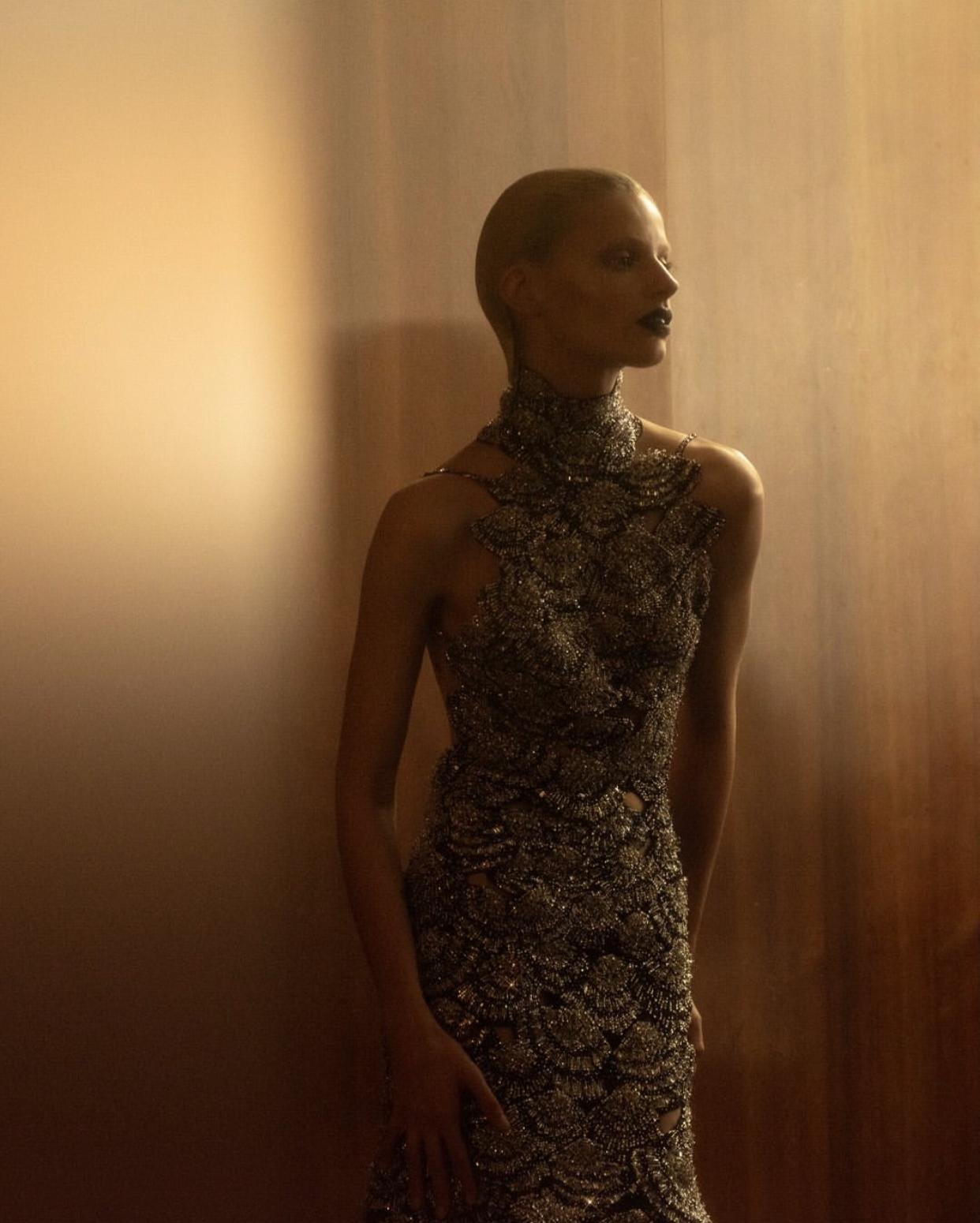
For Fall 2025 couture, Roseberry organized the entire collection around one historical moment: June 1940, when Elsa Schiaparelli left Paris — the city she loved and had come to call home — and boarded a ship for New York as the German occupation began. It was the end of a revolutionary period in fashion and the beginning of something uncertain. "Conceived entirely in black-and-white," Roseberry wrote in his collection notes, "I wanted to ask whether we can blur the line between past and future: if I deprived these pieces of color, or any notion of modernity, if I focused obsessively on the past, could I actually make a collection that looks as if it was born in the future?" The answer — presented in black and white garments of extraordinary technical precision — was yes. The collection was a meditation on what is lost when a house closes and what survives it, applied to the moment when Elsa herself crossed an ocean and wondered what would remain of everything she had built.
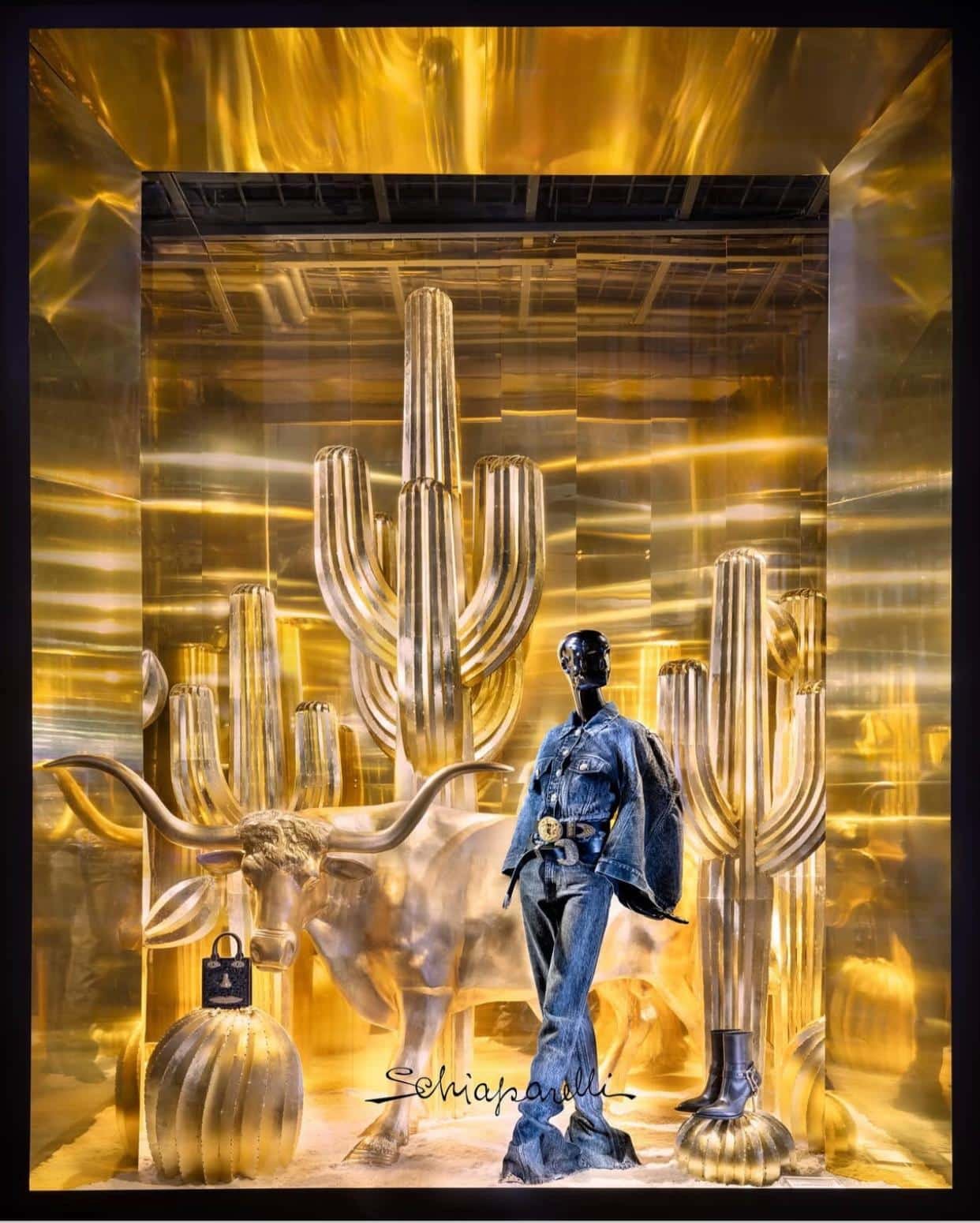
Schiaparelli's ready-to-wear applies to daily life the same surrealist formal intelligence that governs the haute couture — translated into wearable silhouettes without surrendering the precision or the conceptual charge. Roseberry's ready-to-wear vocabulary includes structured tailoring with anatomical curves, the gold jewelry and metalwork that he has established as the house's contemporary signature, upcycled denim treated as a luxury material, and the material experimentation — unexpected fabric combinations, trompe l'œil surfaces, dual-texture constructions — that connects his practice to Elsa's own interest in what fabrics could be made to pretend to be. A client told Roseberry recently: "People don't buy Schiaparelli, they collect it." He sees this not as a commercial observation but as a description of what couture-level intention produces — objects that exceed the category of clothing and become, over time, something that requires the word collection to describe.
Elsa Schiaparelli's relationship with the Surrealist artists was not a marketing strategy — it was the creative method itself. Dalí brought the lobster, the shoe, the tears. Cocteau contributed a jacket with embroidered faces whose profiles formed a vase in negative space. Man Ray photographed her and made her his model. Giacometti designed jewelry. Together they produced garments that were simultaneously fashion objects and Surrealist works — a category that had not existed before and has not been occupied with the same conviction since. The shoe hat was inspired by a photograph Dalí's wife Gala took of her husband with a woman's shoe balanced on his head. The lobster dress was worn by Wallis Simpson on her honeymoon and photographed by Cecil Beaton for American Vogue in an eight-page article. When Dalí proposed adding real mayonnaise to the lobster, Schiaparelli said no. She understood the distinction between art and food.
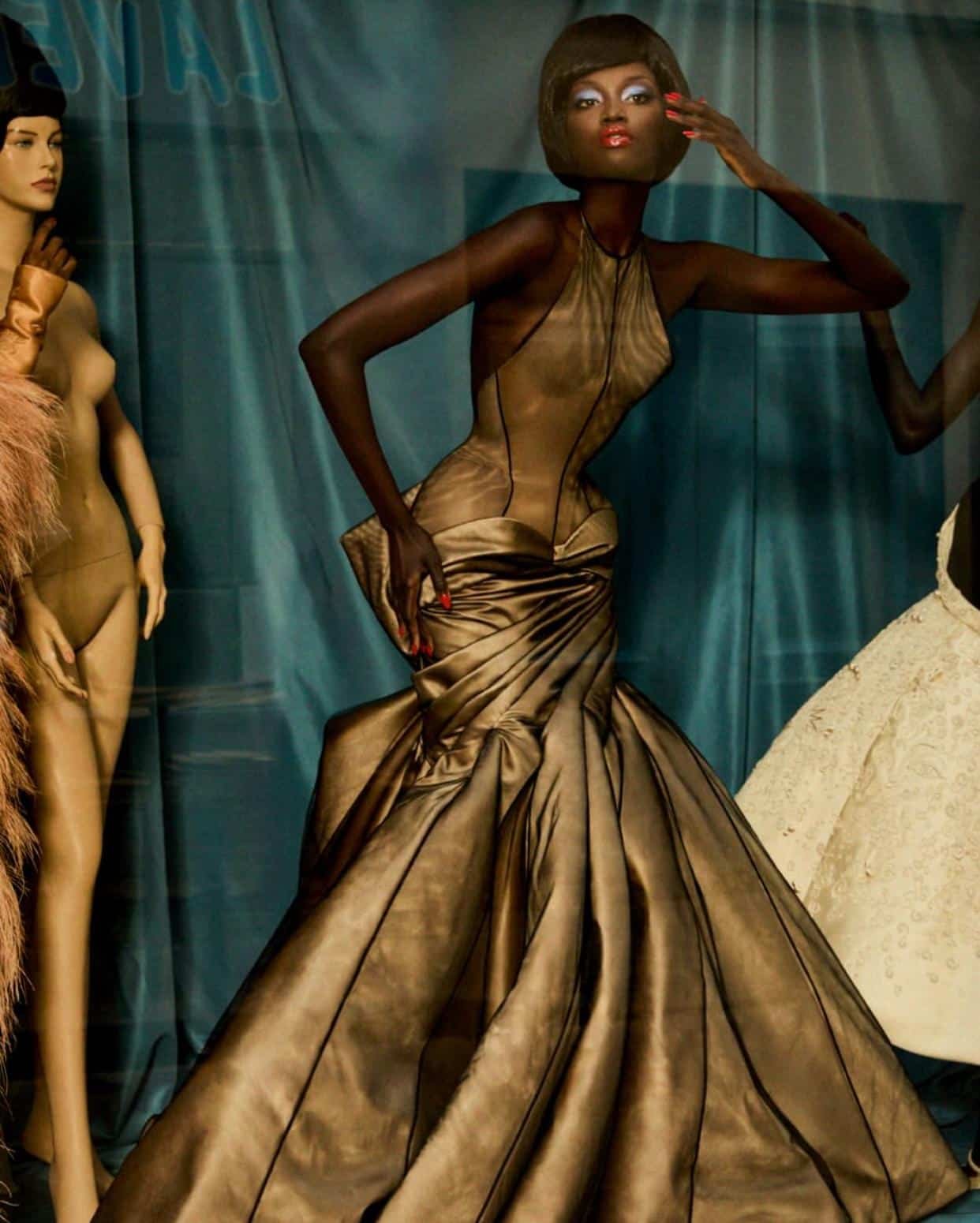
Schiaparelli's haute couture is presented each January and July in Paris and has become, under Roseberry, one of the most attended and most discussed shows of the couture calendar. Fall 2024 — titled "The Phoenix" — opened Paris Couture Week with a collection organized around Elsa's own capacity for transformation: the phoenix as the figure who reinvents herself repeatedly without losing what she was. Archive references were embedded throughout: a "shoe corset" calling back to the Dalí collaboration, embroidery borrowing from the 1938 Zodiac collection's Apollo of Versailles cape. The models moved slowly, hips punctuating each step, expressions "unreadable save for a sense of confidence" — the Schiaparelli walk, which is not a model's walk but an artist's walk, the pace of someone carrying something that requires attention. "Each piece is clear in its silhouette and its technique," Roseberry wrote. "Each design seeks to catch the eye and hold it."
Salvador Dalí proposed adding real mayonnaise
to the lobster he had painted on the dress.
Elsa Schiaparelli said no.
She understood where surrealism ended
and dinner began.
Daniel Roseberry, a minister's son from Plano, Texas,
has inherited this same judgment:
to be genuinely shocking
without losing formal control of what is being made.
Every season at Schiaparelli is an answer
to the same question Elsa asked first:
what can a dress be
that it has never been before?
Daniel Roseberry has said that what Elsa Schiaparelli created was not a style but a method — the method of applying artistic intelligence to a garment with the same rigor and ambition that a painter or sculptor applies to their medium. The lobster was not a decorative choice. It was a formal argument about what an evening dress could be when freed from the requirement to be merely beautiful. Roseberry applies the same method from Plano, Texas, via Thom Browne's New York tailoring studio — different geography, different formation, the same conviction that fashion is freest when it accepts that it is not merely fashion. "Like Elsa herself," his biography states, "Roseberry is particularly interested in experimenting with new and unexpected fabrics and continually pushes the boundaries of what couture can — or should — be." The couture is the laboratory. The ready-to-wear is where the experiments become available to wear into the world. The gold anatomical jewelry connects both. The Shocking Pink connects both. The keyhole connects both. A house founded on a knitwear trompe l'œil in 1927, which turned into the most surrealist decade in fashion history, is now being rebuilt from the same first principles by someone who never imagined, leaving seminary studies for a mission to Pakistan, that he would one day be the person asking Elsa's question.
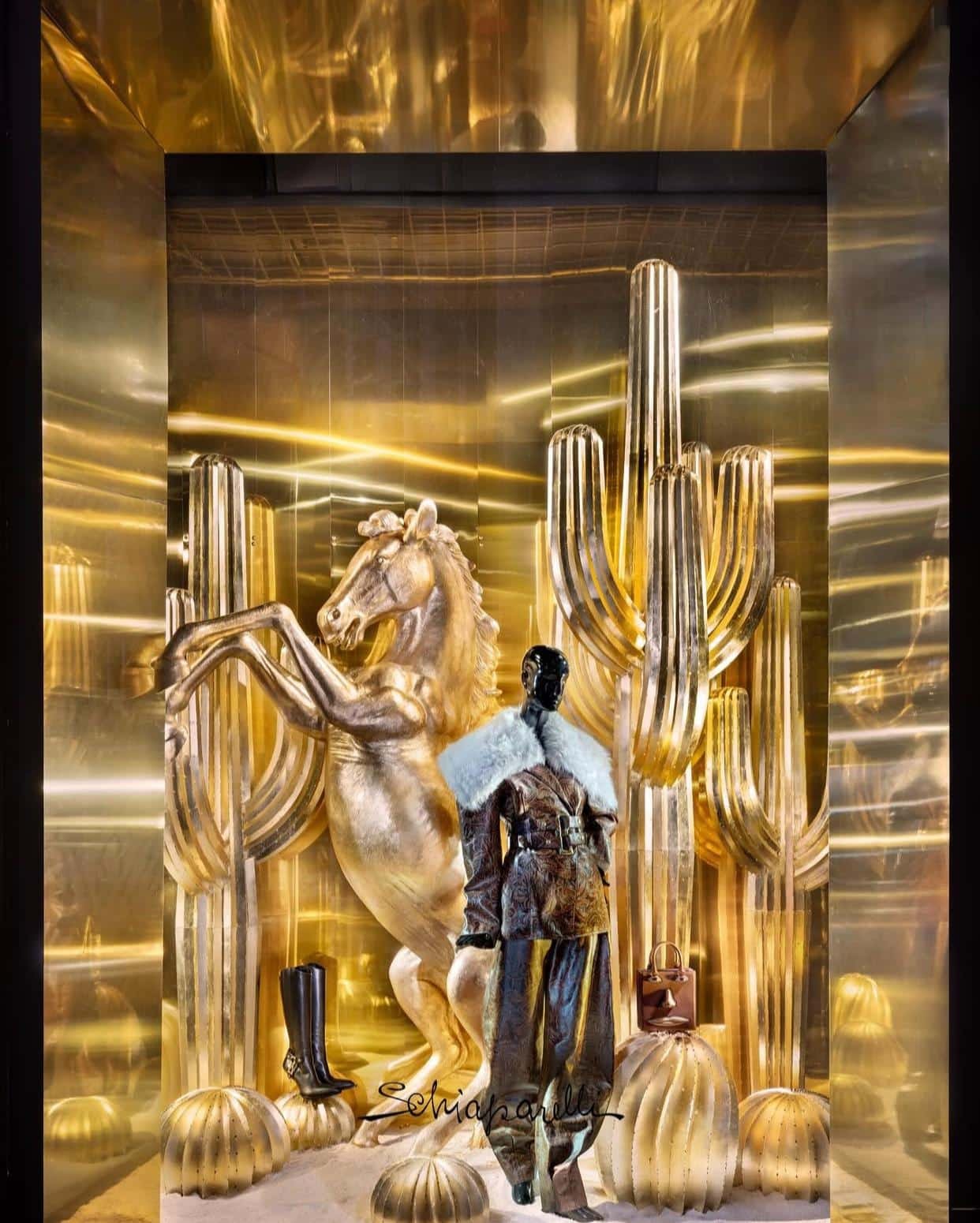
Madison Avenue · New York · The Schiaparelli Boutique
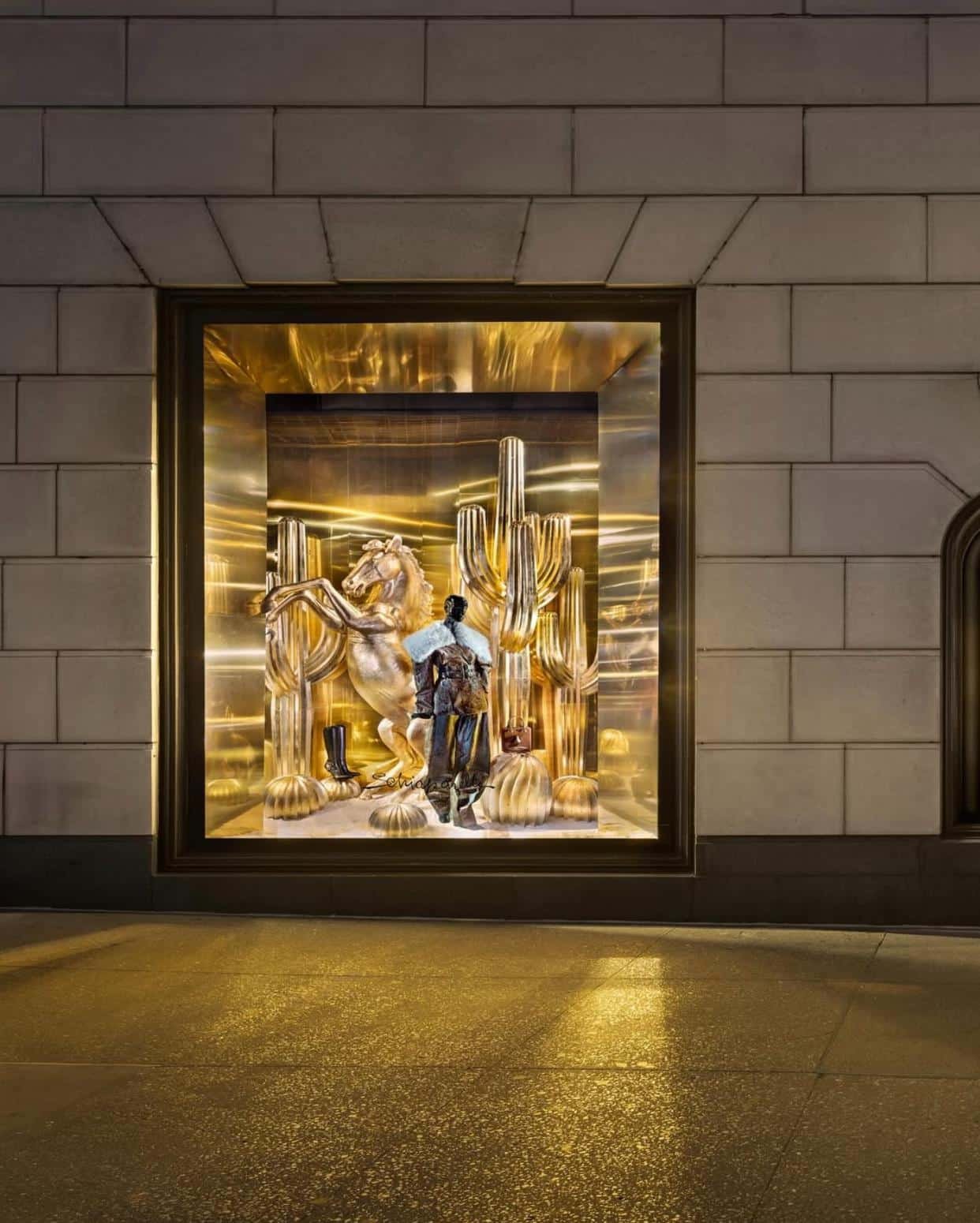
Schiaparelli presents its ready-to-wear in New York at the Madison Avenue boutique — the house's exclusive North American retail address, through which the full collection is available alongside the signature gold jewelry and keyhole accessories that have become the most immediately recognized expressions of the Roseberry era. New York has a particular resonance in the Schiaparelli story: it was the city to which Elsa fled in June 1940 as Paris fell, the city where she spent the war years, and the city whose Lord & Taylor buyer first ordered forty copies of the trompe l'œil bow sweater that launched her career. Schiaparelli and New York have been connected since the beginning of the house. The boutique on Madison Avenue makes that connection permanent and present — the city that received the first sweater now receives every collection that descends from it.
Madison Avenue · New York, NY
Ready-to-Wear · Haute Couture access · Gold anatomical jewelry
Keyhole accessories · Shoes · Bags · Shocking Pink
Daniel Roseberry — Creative Director since 2019
Founded Paris 1927 · Elsa Schiaparelli 1890–1973 · schiaparelli.com
Elsa Schiaparelli drew a white bow
on a black sweater
and knitted the illusion into the fabric.
A Lord & Taylor buyer ordered forty copies on the spot.
She spent the next thirty years
asking what else a garment could be
that it had never been before.
A lobster. A shoe on the head. A torn skin.
A perfume bottle shaped like Mae West.
In 1940, she boarded a ship for New York.
In 2019, a minister's son from Texas
arrived at Place Vendôme to continue the question.
Some houses are founded not on a style
but on a method.
This is one of those houses.
© Schiaparelli
© Schiaparelli
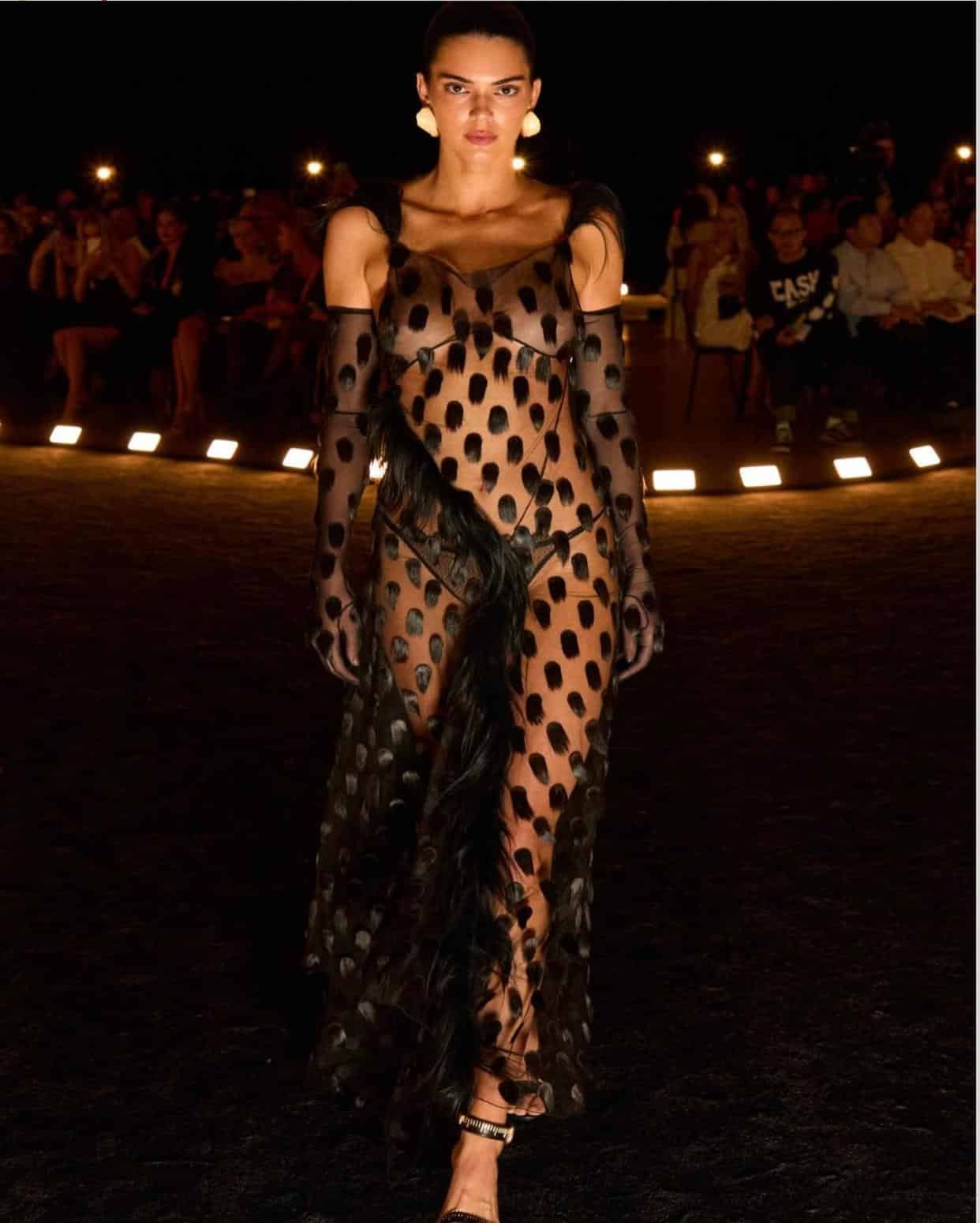
© Schiaparelli
© Schiaparelli
© Schiaparelli
© Schiaparelli
© Schiaparelli
© Schiaparelli
© Schiaparelli
© Schiaparelli
© Schiaparelli
© Schiaparelli
© Schiaparelli
© Schiaparelli
SCHIAPARELLI
© Schiaparelli