© Ralph Lauren
© Ralph Lauren

© Ralph Lauren
Ralph Lauren
He launched his first collection in 1967 from a drawer in the Empire State Building. Wide, colorful ties — the opposite of everything the market was offering. He was twenty-seven, had no design training, and had just changed his name. "People ask how can a Jewish kid from the Bronx do preppy clothes?" he said later. "It has to do with dreams."
The Bronx · 1939 · Ralph Lifshitz
Ralph Lauren was born Ralph Lifshitz on October 14, 1939, in the Bronx — youngest son of Frank and Frieda Lifshitz, Jewish immigrants who had fled Belarus. His father painted houses when he couldn't find other work. The family lived on Mosholu Parkway, in the same neighborhood where Calvin Klein, three years his junior, was growing up at the same time. They knew each other only by sight. Ralph was teased at school for his surname. At sixteen, he and his brother Jerry changed their name to Lauren — the choice, by some accounts, inspired by Lauren Bacall, who represented to them a particular idea of American glamour. He worked after school at department stores to buy clothes. He studied business briefly at Baruch College, enlisted in the Army, came back. He took a sales job at Brooks Brothers on Madison Avenue — the store that would become his foundational education in the grammar of American classic style. In 1967, working out of a drawer in the Empire State Building for Beau Brummell Ties, he began designing his own neckwear: wide, colorful, European-proportioned, at odds with the narrow dark ties that dominated the market. They sold. He launched his own company under the name Polo. The following year, a full menswear line. In 1972, a women's line. In 1972, the polo player emblem. He had not attended a design school. He had not trained in a atelier. He had, as he has put it, "dreams."
The American Dream · The Ralph Lauren Universe
Ralph Lauren's proposition has been consistent for over fifty years: that the most powerful thing fashion can do is build a world. Not a collection — a world. The Ralph Lauren world borrows from the English aristocracy and the American East Coast prep tradition; from the American West and the Colorado ranch; from Hollywood's golden era and the Greenwich polo field; from the Jamaican vacation house and the Hamptons summer. It is, as he has said, "a sensibility and an approach to life — about developing the world you see in your imagination and using that to create an environment of comfort and ease." The genius of this proposition is its democratic appeal: the world Lauren built is aspirational precisely because he himself had to aspire to it. He has never pretended otherwise. "Maybe because I didn't have it, I always reached for it." He is, by most measures, the most commercially successful American fashion designer in history — the first to receive the Presidential Medal of Freedom, the first American designer awarded an Honorary Knight Commander of the British Empire, honored with the French Légion d'honneur, presented with the Key to the City of New York. A fashion empire valued, across all its lines, at many billions of dollars, grown from a drawer of ties in the Empire State Building.
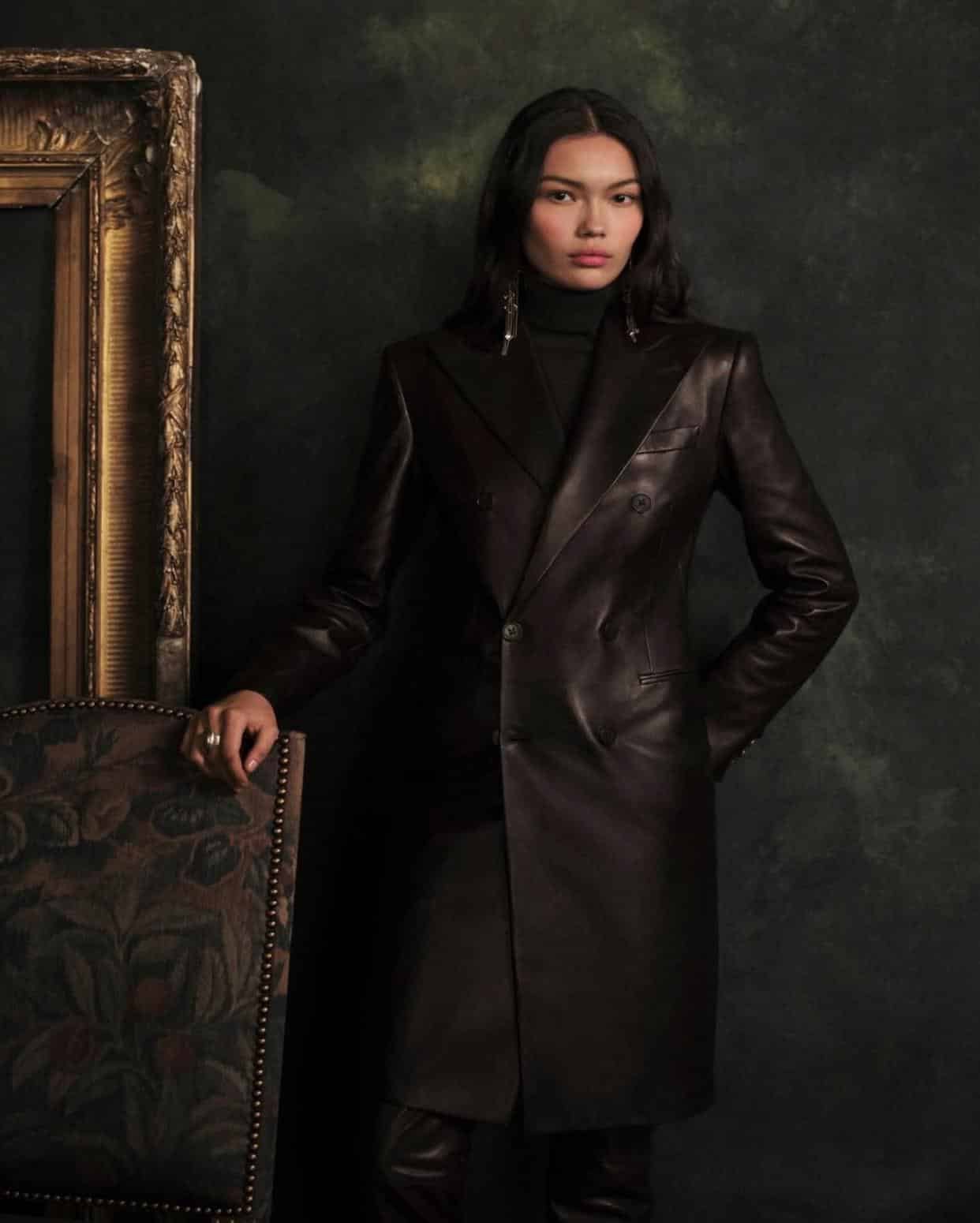
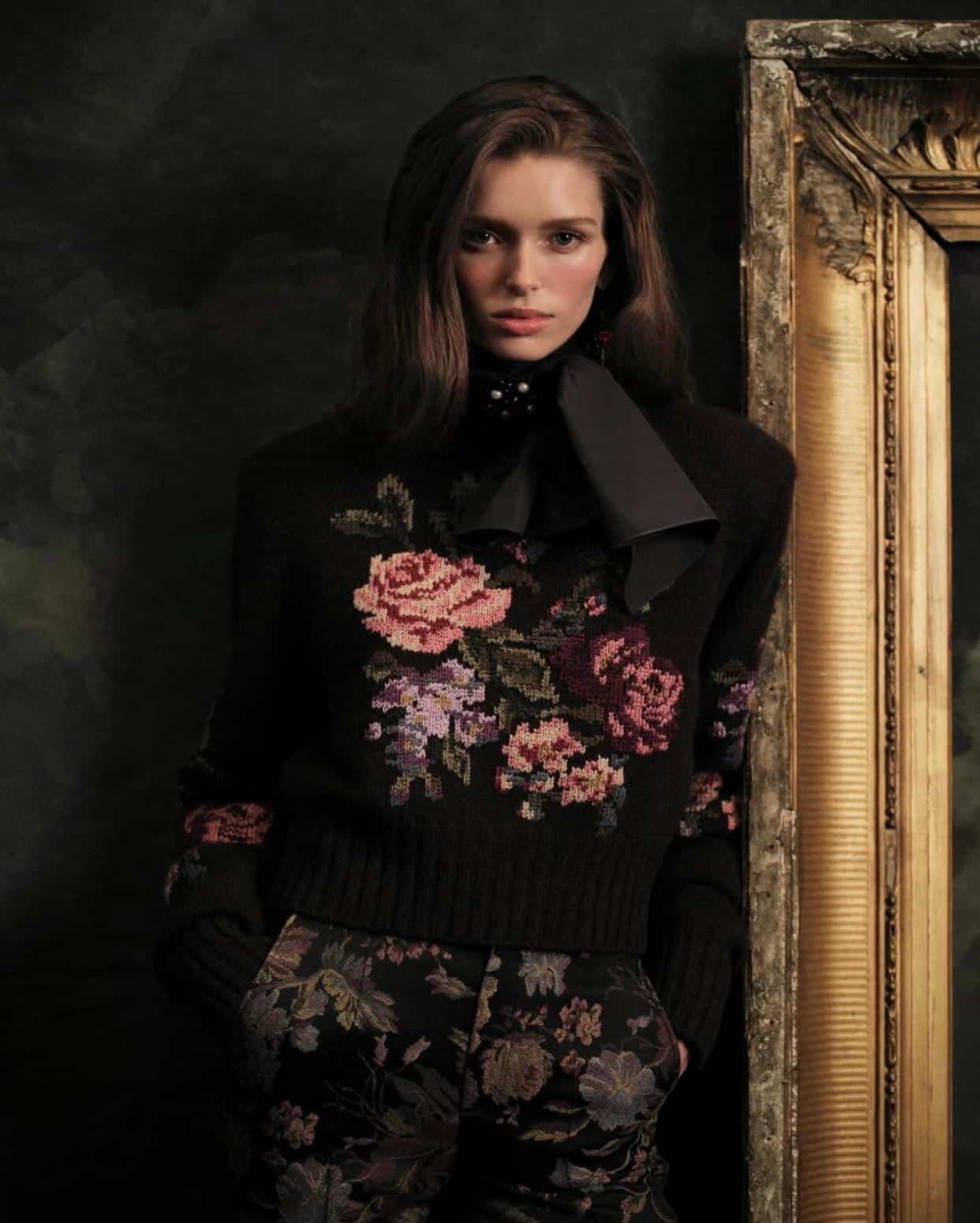
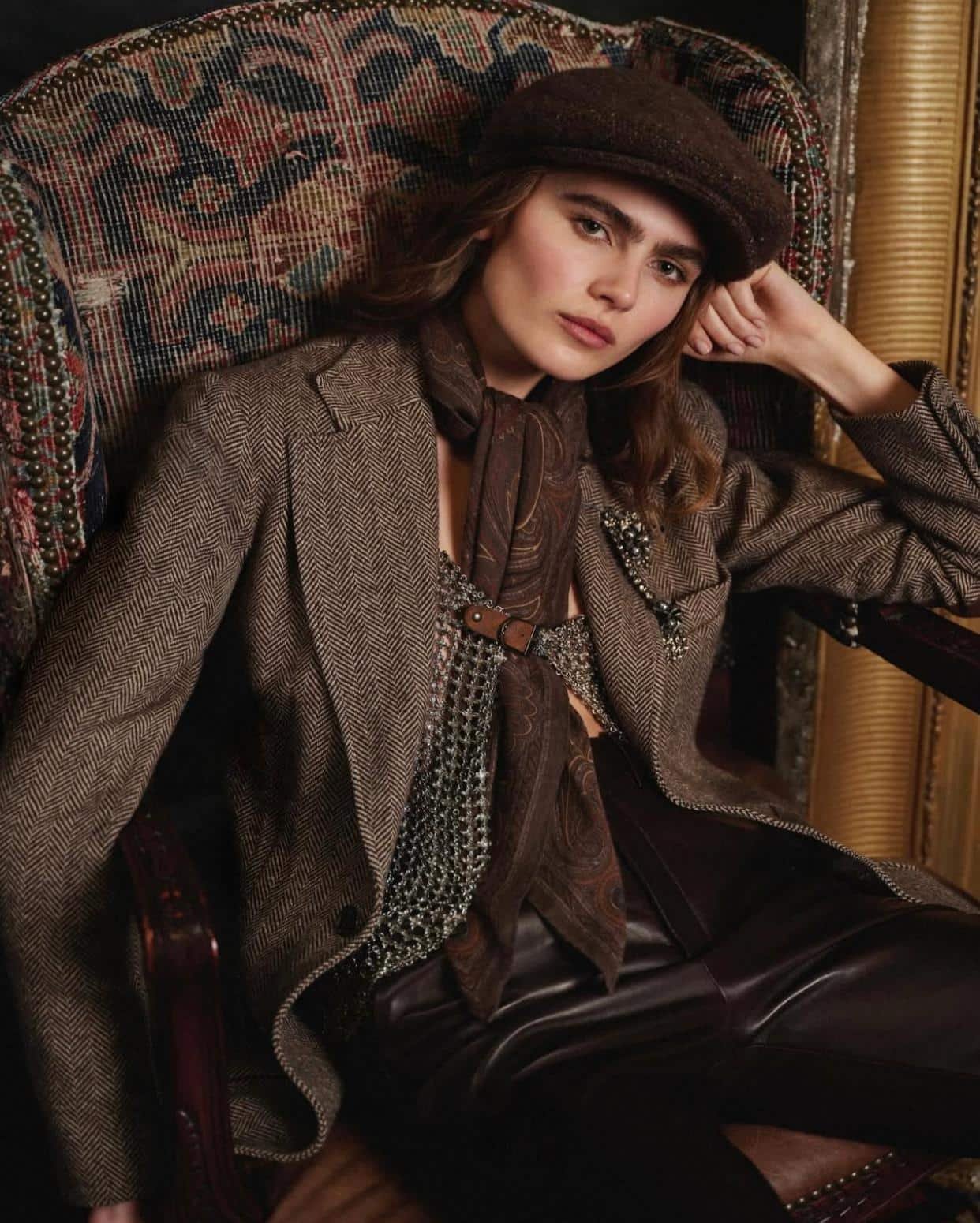
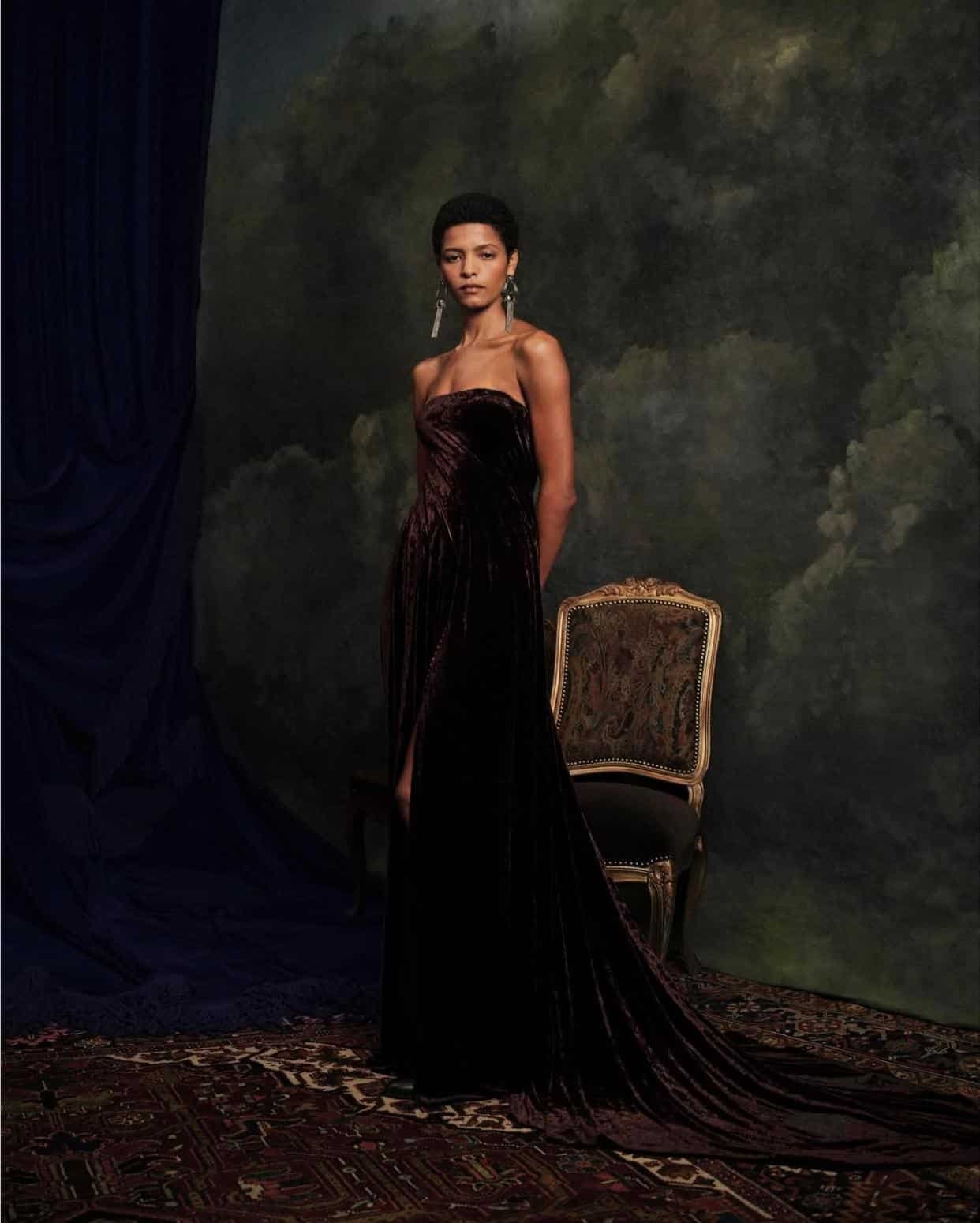
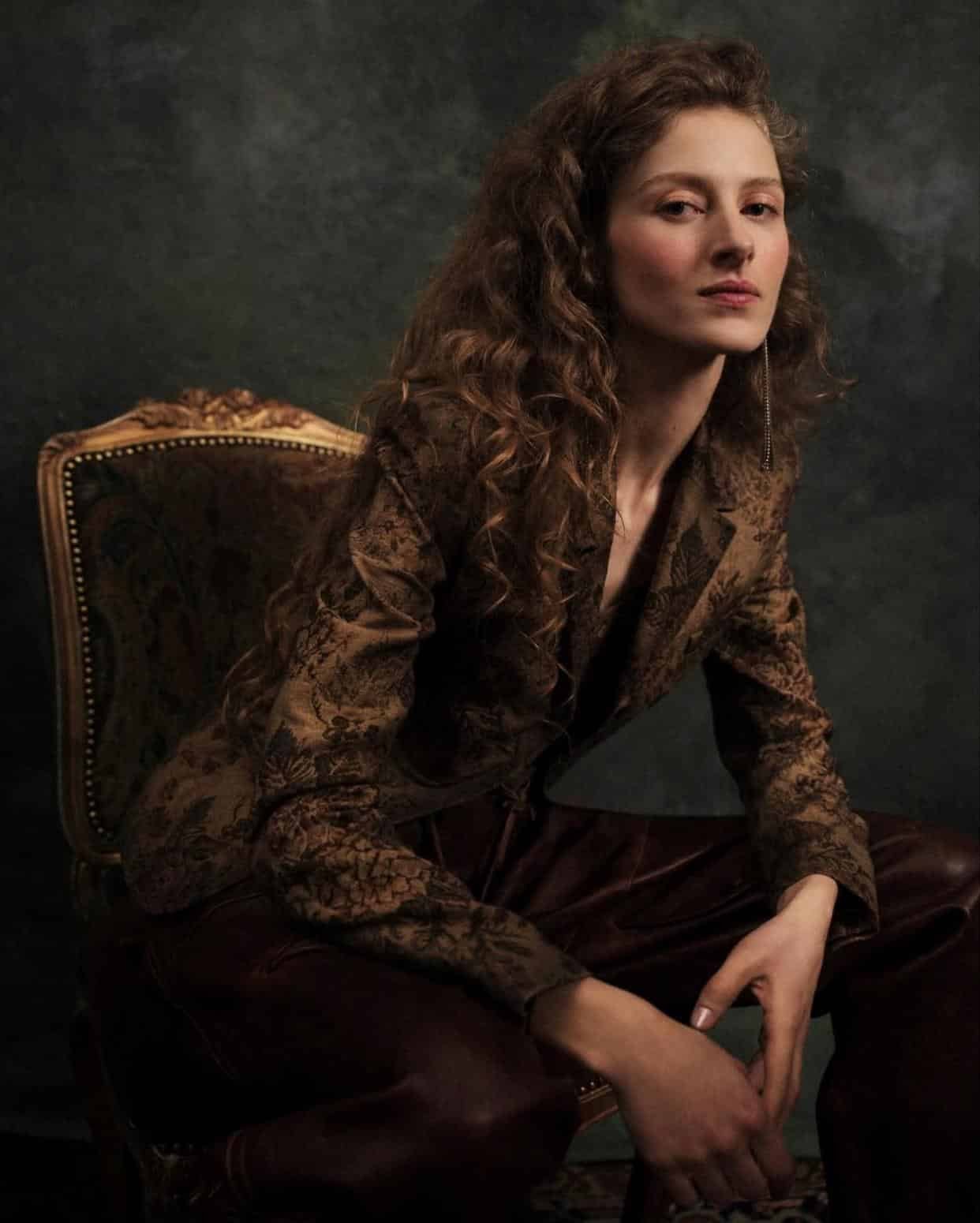
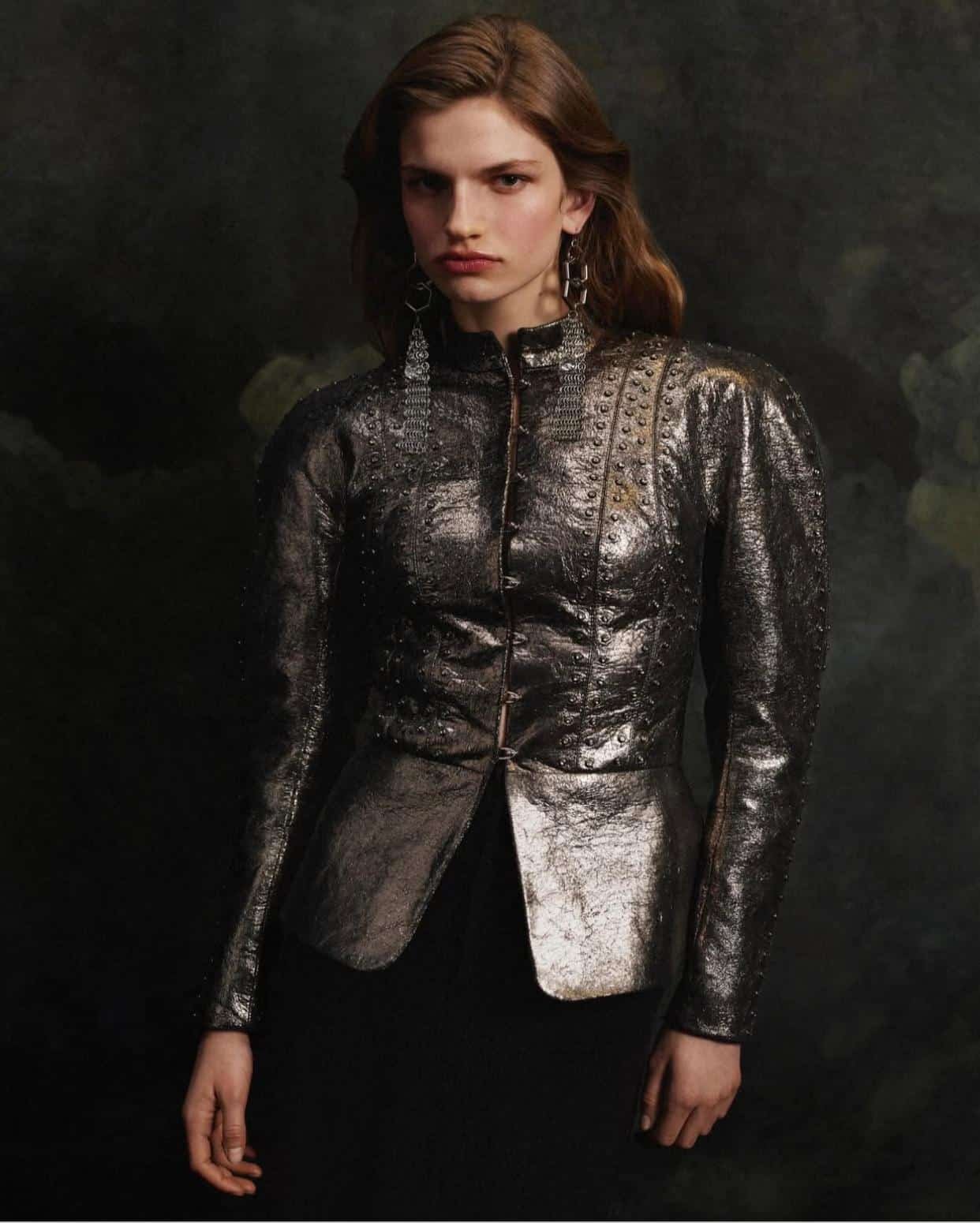
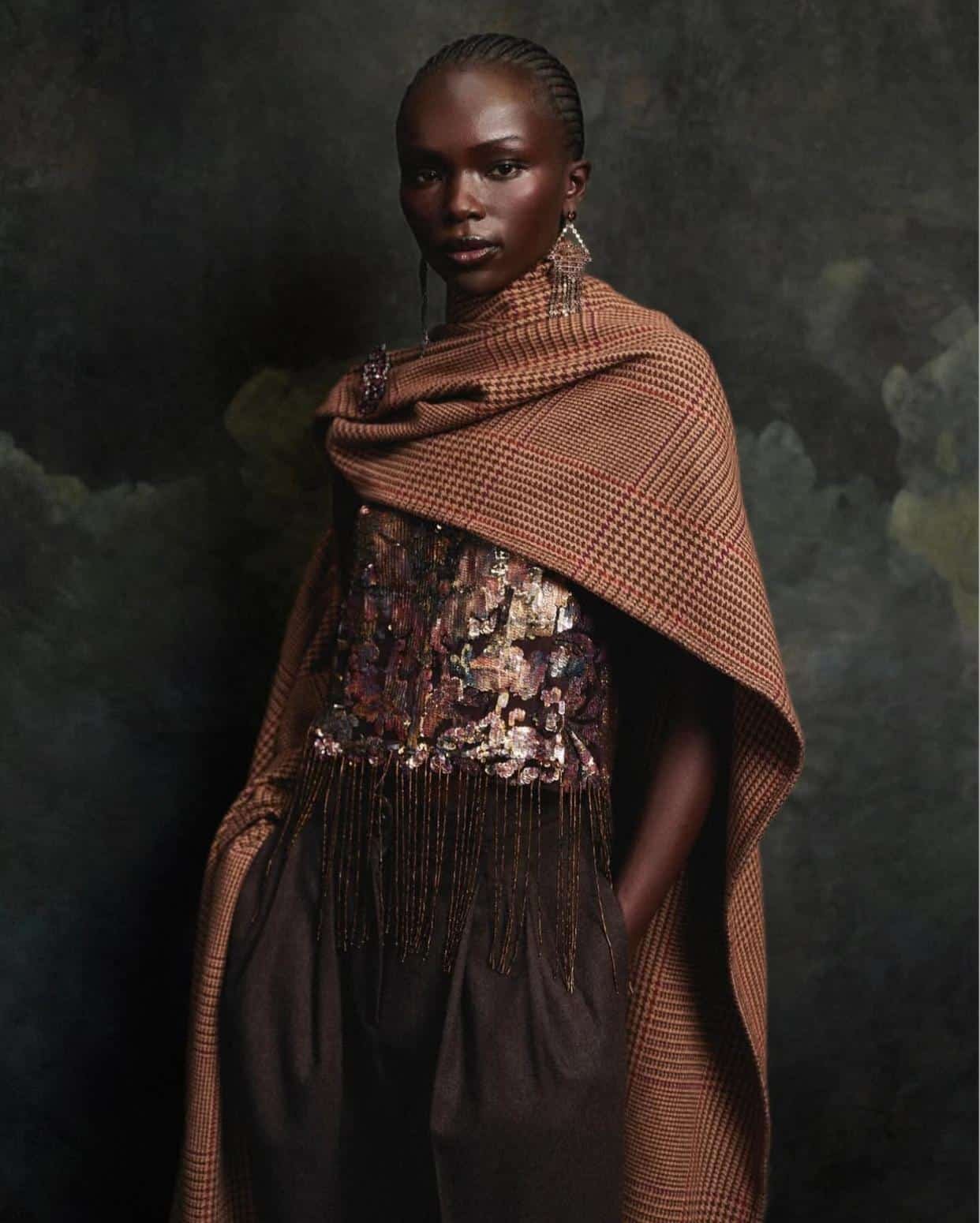
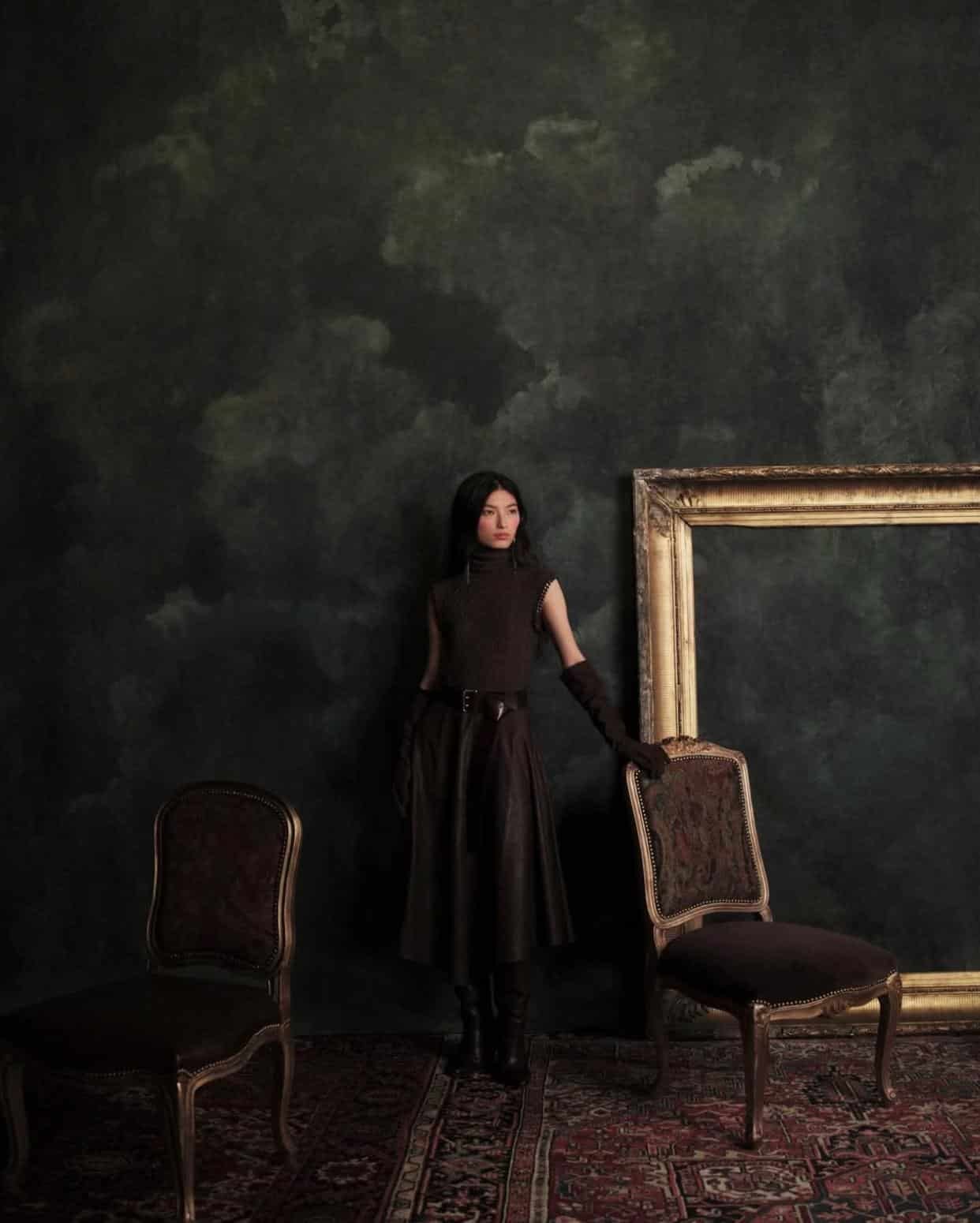
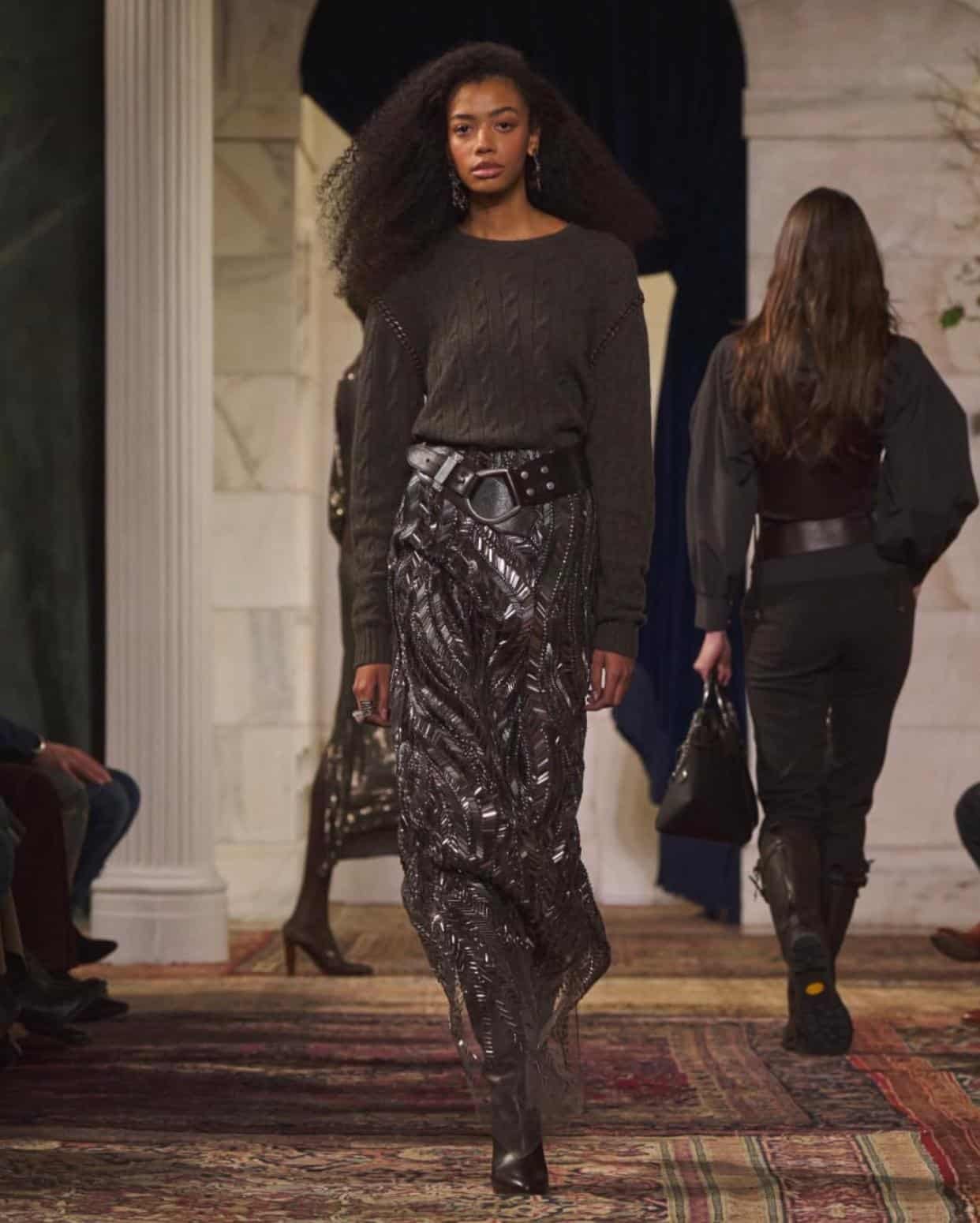
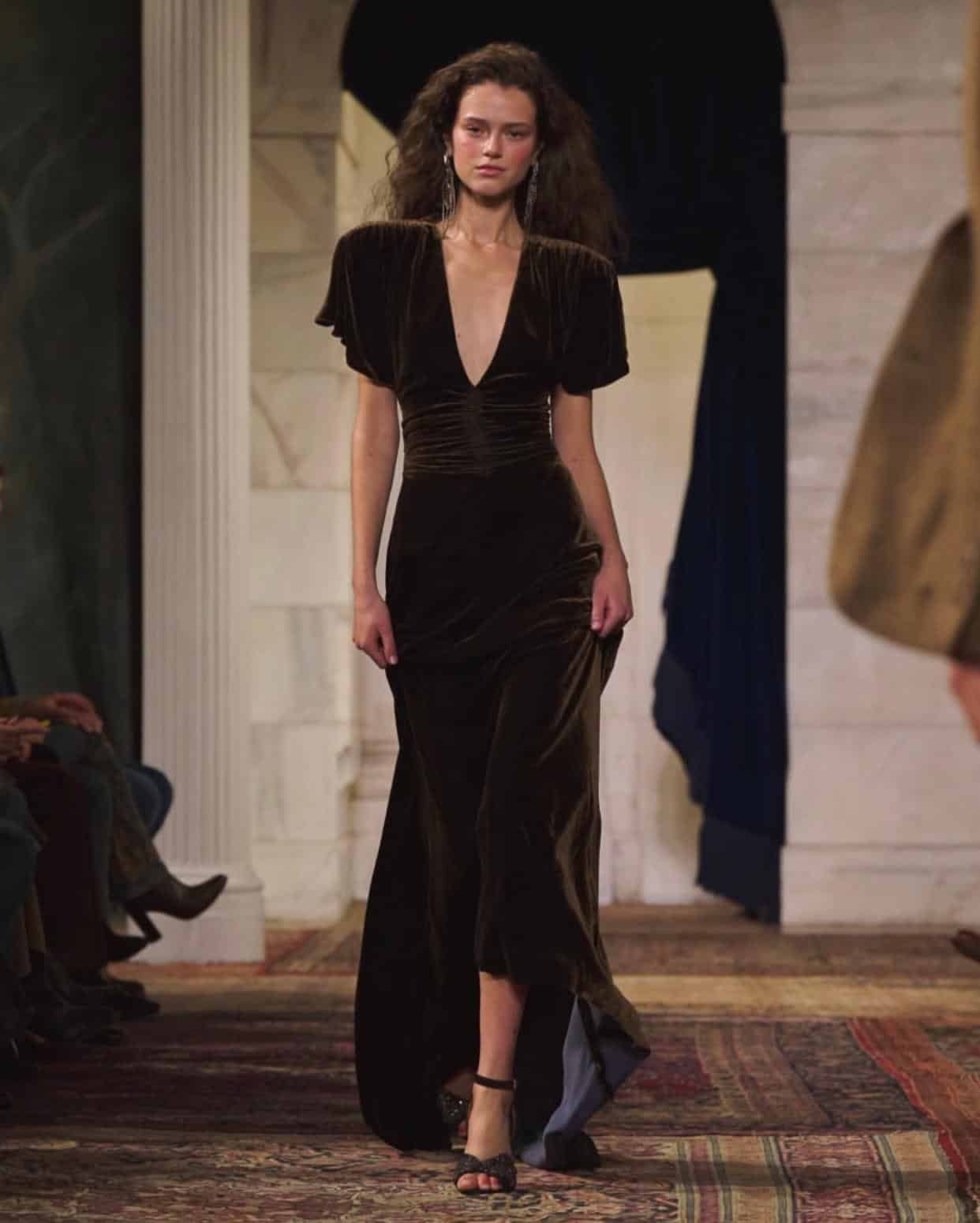
The Ralph Lauren Collection is the house's highest women's ready-to-wear expression — the line in which the full vocabulary of the Ralph Lauren universe is concentrated into garments of couture-level material quality and construction. Bias-cut halter neck gowns in satin. Hand-painted jodhpurs. Racing green bonded leather trenches. Cashmere lace sweaters. Edwardian-infused silhouettes in a "Modern Romantics" register — Fall 2025, shown midday at the Jack Shainman Gallery flagship in TriBeCa, with deliberate natural light designed to convey the juxtapositions in the collection: the moodiness of dark richness alongside the clarity of structural precision. Each season, Ralph Lauren Collection demonstrates the same intelligence: that luxury dressing is not about novelty but about the depth of craft and material applied to familiar silhouettes whose authority comes from their permanence rather than their novelty.
Ralph Lauren's runway presentations are distinguished from every other New York Fashion Week show by their consistent intimacy — the sense that what the audience is witnessing is not a performance but an invitation into the designer's private world. Fall 2024 was shown inside his own design studio at 650 Madison Avenue, echoing his very first womenswear show in 1972 when he presented to editors and friends in his office. Spring 2024 transformed a warehouse at the Brooklyn Navy Yard into a rustic artist's loft with glimmering chandeliers and reclaimed wood, followed by dinner in a barn setting inspired by the Double RL Ranch in Colorado. Spring 2025 was shown at his Hamptons estate — multiple collections, multiple generations, with First Lady Jill Biden in attendance. Fall 2025 and Fall 2026 were presented at the Jack Shainman Gallery in TriBeCa, the space decorated to evoke the Bedford, New York estate. Every venue is a room in the Ralph Lauren world. The show is always a home visit.
The Spring 2026 collection organized the Ralph Lauren vocabulary into its most stripped and confident statement — a minimalist palette of red, black, and white, worn in bold silhouettes that oscillated between the dramatically fitted and the dramatically fluid. Pattern-play prints and bold chevron striping brought graphic energy to the black-and-white base. Unexpected hats punctuated the minimal approach. "When I create a collection," Lauren said, "I am always inspired by the spirit of the woman who will wear it and make it her own. She is daring, decisive, and alive." The collection reflected the conviction that has governed every Ralph Lauren season: that the most lasting fashion is built not from novelty but from the clarity of a formal idea applied with absolute commitment. Red, black, and white have been in his vocabulary since 1971. He is still finding new things to say.
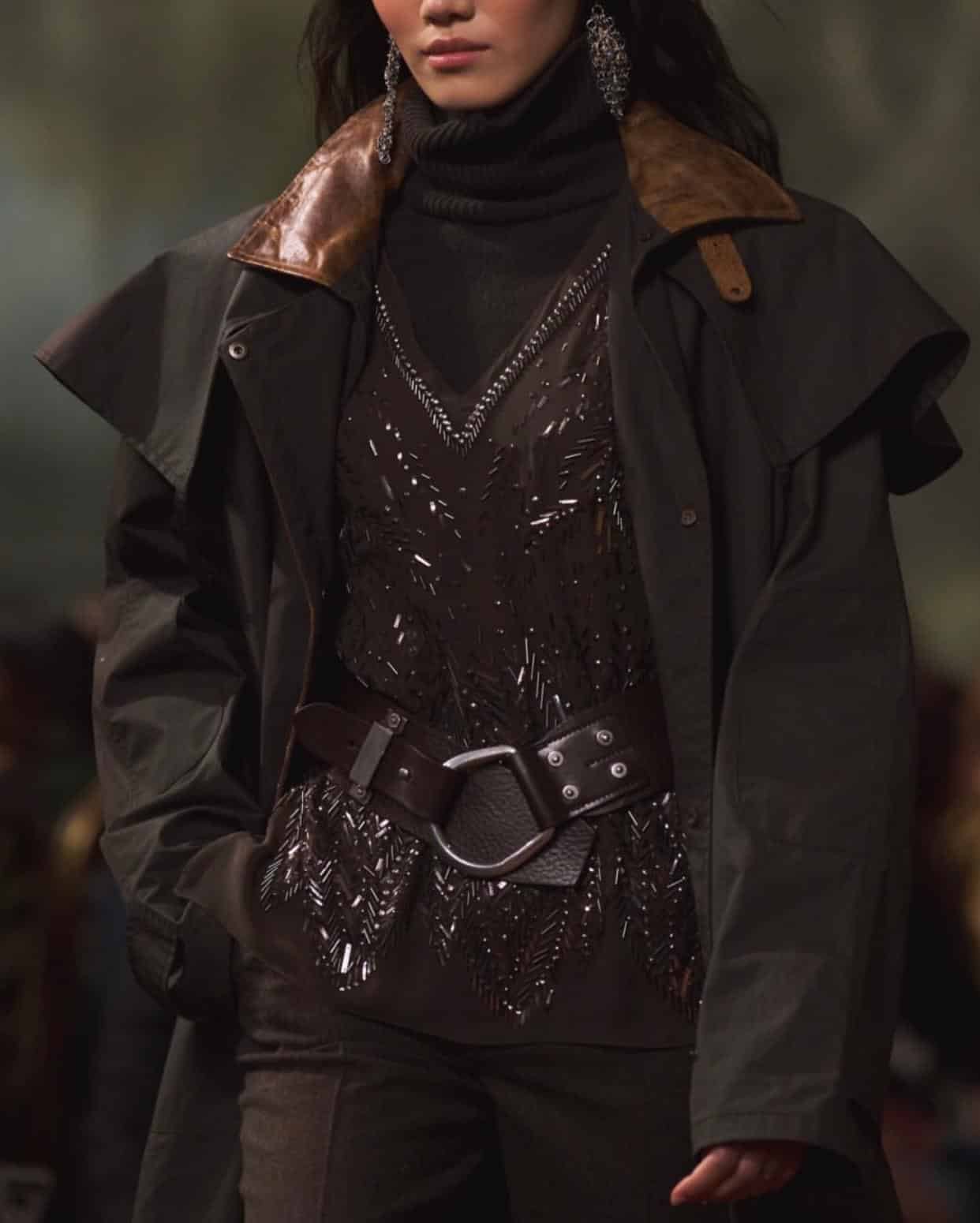
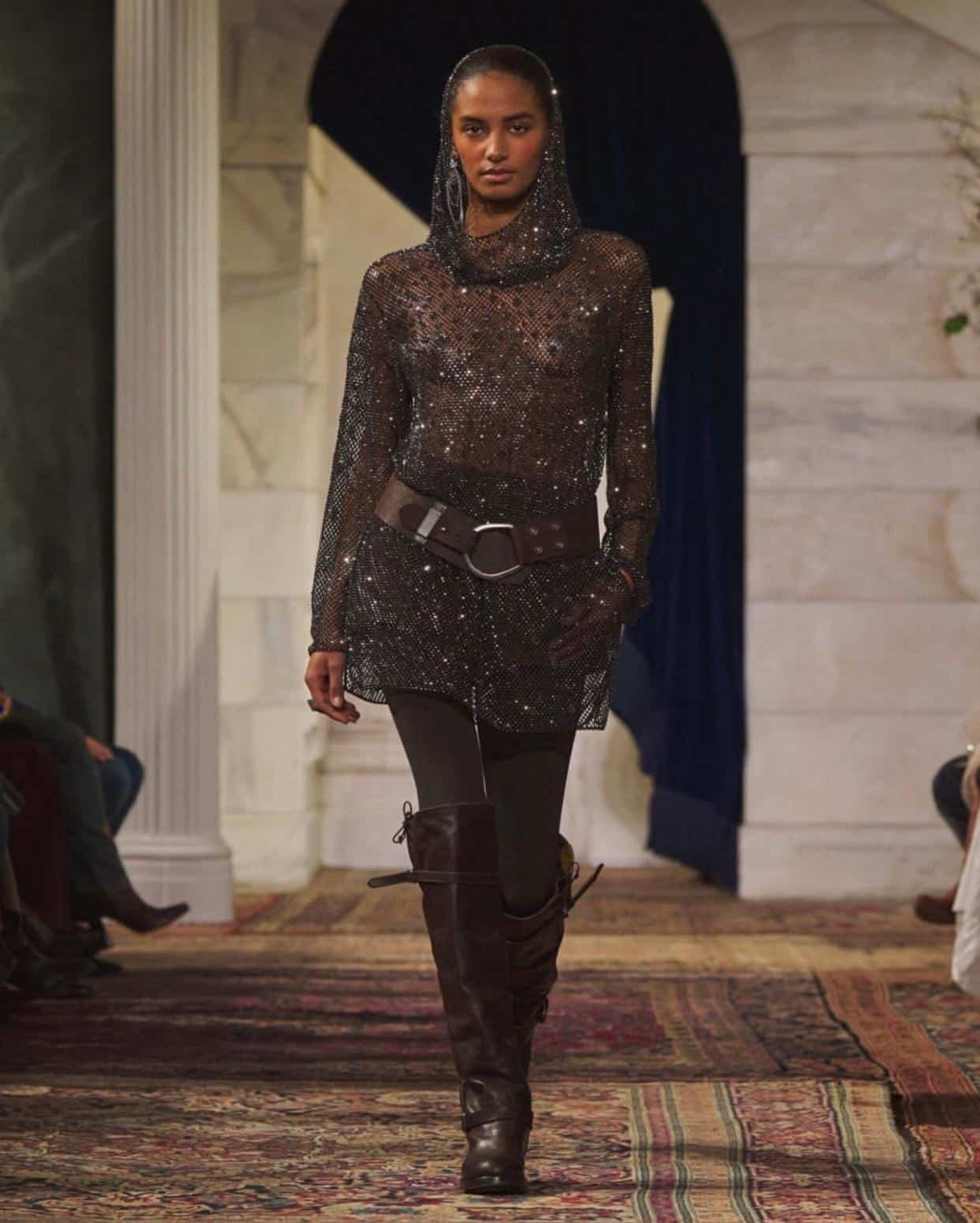
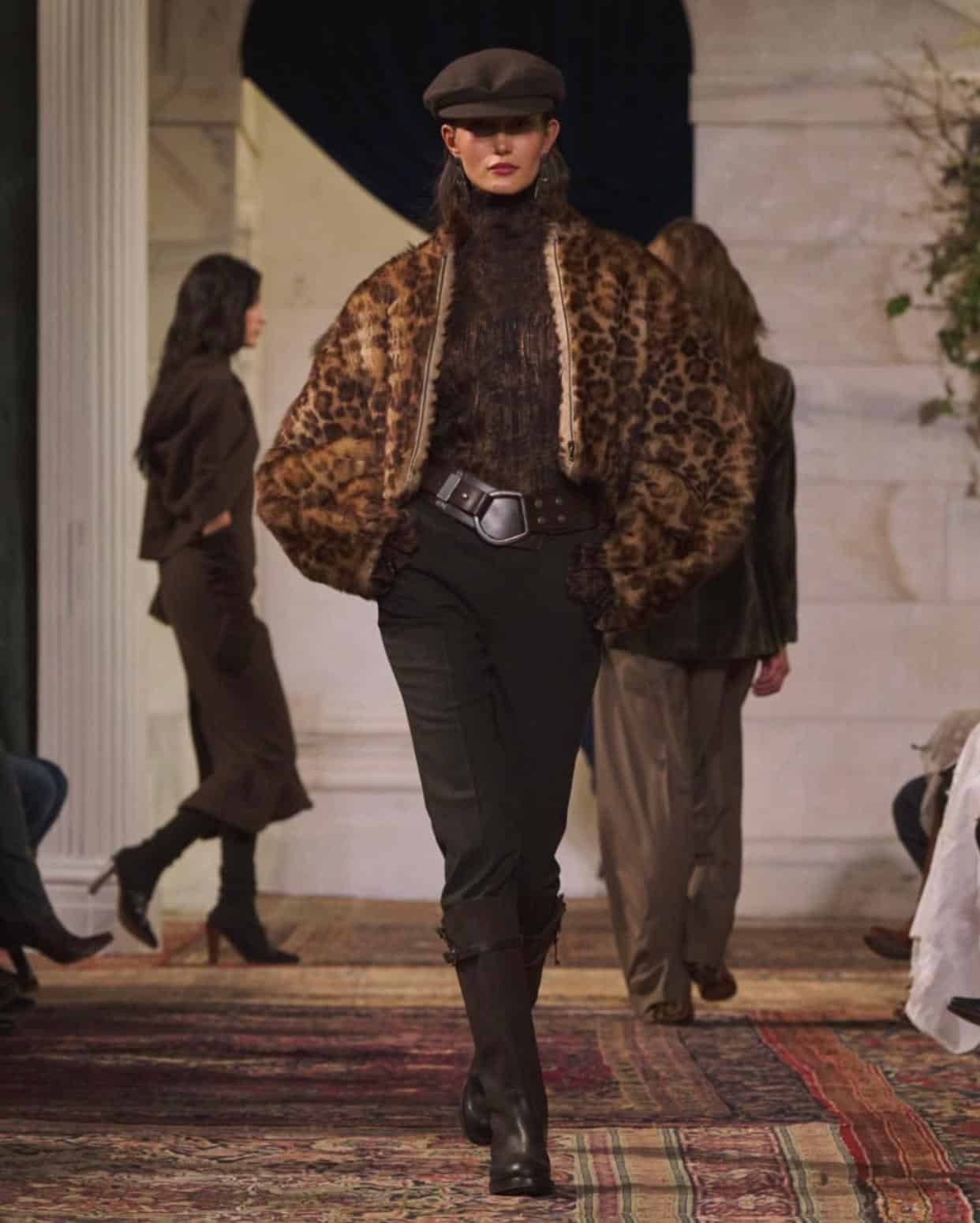
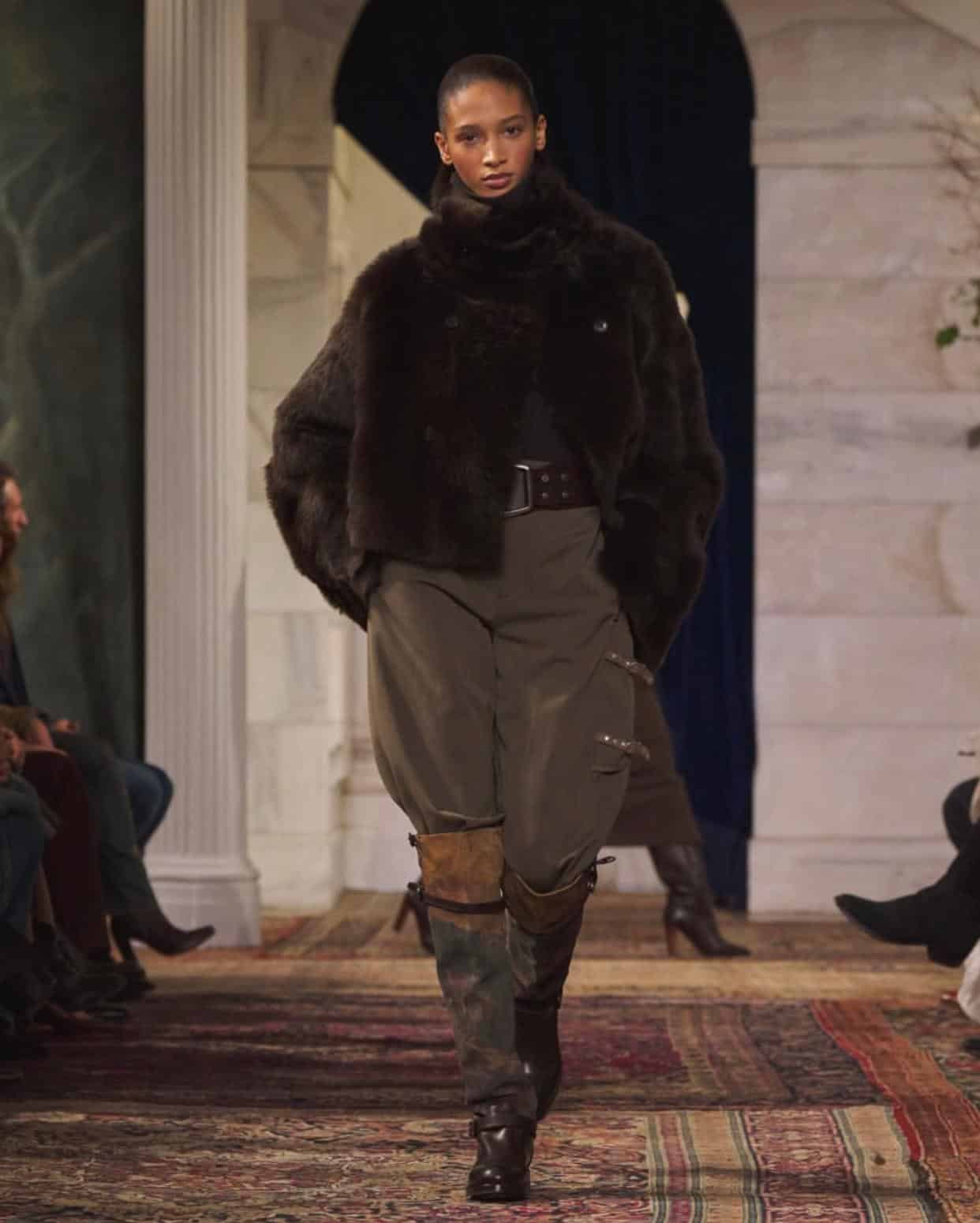
Polo Ralph Lauren — the women's sportswear line that operates alongside the Collection — is the most immediate expression of the Ralph Lauren world's democratic proposition. Fall 2026 drew from the 1970s Western Americana that Ralph and his wife Ricky lived during that era, translated into plaid flannel shirts with chocolate tuxedo coats, A-line dresses with Henley collars, slim '70s tailored toggle coats, and a sheepskin suede fringe jacket with hand beadwork from the Polo Ralph Lauren x Tópa collaboration with Oceti Sakowin designers Jocy and Trae Little Sky, through the Artist in Residence Program. A new bag family — the Polo Blaze — was introduced for Fall 2026, inspired by a vintage Lauren bag from the 1980s and named after the white markings on horses' faces, its saddle-stitched leather carried with a downtown moto attitude. The high and the low, the rustic and the refined, the heritage and the contemporary: the Polo juxtaposition that has been defining American sportswear since 1971.
The Ralph Lauren world extends, as it always has, far beyond the collection itself. The Polo Bar — the restaurant on East 55th Street, with its mahogany paneling, leather banquettes, rich green walls, and equestrian paintings — is one of New York's most consistently full reservations: a dining room that has become a touchstone of American luxury hospitality. Ralph's Coffee, the brand's coffee concept operating globally, brings the Ralph Lauren aesthetic into daily life at the lowest possible price point. The home collection, Ralph Lauren Home, continues the same sensibility — the same layering of vintage and new, classic and eccentric, that governs the fashion. And the fashion show dinners — the seated meals at the Polo Bar or in barn settings at the ranch, featuring "Ralph's Brownie à la mode" and Polo Bar classics — are as considered as the clothes themselves. This is the Ralph Lauren proposition in full: a complete world, entered from any door.
The Ralph Lauren codes — the tweed jacket, the Polo shirt, the bias-cut gown, the jodhpur, the western shirt, the cable knit, the oxford — are not changed. They are reinterpreted. This is the house's formal method: "What Holstein does is never a revolution so much as an evolution" — the same sentence that could be written about Ralph Lauren, and indeed has been. The tweed jacket for Fall 2025 was not a revision of the tweed jacket; it was a clarification. The bias-cut halter neck gown for Spring 2025 was the bias-cut halter neck gown at its current level of refinement. "I believe in clothes that last, that are not dated in a season," Lauren has said. "The people who wear my clothes don't think of them as fashion." This is the most radical proposition available to a fashion designer: the insistence that the best clothes are the ones that refuse to participate in the logic of fashion entirely.
Ralph Lauren was born Ralph Lifshitz in the Bronx.
His father painted houses.
His neighbors teased him for his name.
At sixteen, he changed it to Lauren.
At twenty-seven, he designed ties from a drawer
in the Empire State Building.
Someone asked later:
how can a Jewish kid from the Bronx do preppy clothes?
He answered: it has to do with dreams.
American luxury is about the world
you see in your imagination.
Ralph Lauren has now presented over a hundred women's runway collections. He has dressed First Ladies, outfitted Olympic teams, sponsored Wimbledon and the US Open, launched fragrance lines and home collections and restaurants and coffee shops and a ranch in Colorado and a flagship in Paris and, most recently, a Hamptons show attended by the First Lady of the United States. He has received the Presidential Medal of Freedom — the first fashion designer to do so. The French Légion d'honneur. An Honorary Knight Commander of the British Empire — the first American designer to receive it. The Key to the City of New York. A retrospective at the Guggenheim in 2011. None of this was available to a boy named Lifshitz in the Bronx in 1939, whose father painted houses and whose family had come from Belarus with nothing. Ralph Lauren built it all from imagination. "My father," he has said, "people say he was a house painter, but he wasn't. He painted houses when he couldn't get a job. But he was an artist." The son of an artist, who became one.
650 Madison Avenue · The Polo Bar · New York
Ralph Lauren's principal New York address is 650 Madison Avenue — the building that houses the flagship boutique, his private design studio, and the corporate headquarters of the Ralph Lauren Corporation. It was inside this studio that he showed his Fall 2024 collection, retracing his footsteps to the intimate setting of his very first womenswear show in 1972. The Polo Bar, at 1 East 55th Street, is the house's New York hospitality anchor — a restaurant that serves as the dining room of the Ralph Lauren world and the setting for the post-show dinners that complete each collection presentation. Together, 650 Madison and the Polo Bar constitute the core of the Ralph Lauren New York geography — the addresses around which the designer has organized his fifty-year relationship with this city, the city he was born in, the city whose name he chose as his own.
650 Madison Avenue · New York, NY 10022 · Flagship & Design Studio
The Polo Bar · 1 East 55th Street · New York, NY 10022
Ralph Lauren Collection · Polo Ralph Lauren · RRL · Ralph Lauren Home
Spring 2026 — Red, Black, White · Fall 2025 — Modern Romantics
First US designer: Presidential Medal of Freedom · Honorary KBE
Founded New York 1967 · ralphlauren.com
In 1967, Ralph Lifshitz designed ties
from a drawer in the Empire State Building.
Wide. Colorful. Against everything the market wanted.
They sold.
Fifty years later, he showed his hundred and fourth
women's collection inside his own studio
on Madison Avenue,
in the same spirit as that first
small presentation to editors in 1972 —
intimate, personal, convinced
that the most powerful thing
a designer can build
is not a collection,
but a world.
© Ralph Lauren
© Ralph Lauren
© Ralph Lauren
© Ralph Lauren
© Ralph Lauren
© Ralph Lauren
© Ralph Lauren

© Ralph Lauren

© Ralph Lauren
© Ralph Lauren

© Ralph Lauren
© Ralph Lauren

© Ralph Lauren

© Ralph Lauren
© Ralph Lauren
© Ralph Lauren
© Ralph Lauren
© Ralph Lauren
© Ralph Lauren
© Ralph Lauren
RALPH LAUREN
© Ralph Lauren