
© Celine
© Celine
© Celine
Celine
Eyewear
In the early 1970s, Céline Vipiana's car broke down on the Place de l'Étoile in Paris, in front of the Arc de Triomphe. While she waited, she looked at the ornamental chains encircling the monument and noticed something: each link formed a mirrored C, a perfect double curve reflected against itself. She returned to her atelier on rue Vivienne and drew the motif. It became the Triomphe. Forty years later, Hedi Slimane found it in the archives and placed it on the temples of a pair of sunglasses. That is where it lives now.
1945 · 1971 · 2018 · Three Moments That Made The Same Object
Céline Vipiana founded her house in Paris in 1945 — not as a fashion house but as a children's made-to-measure shoe boutique, named for herself, then not yet thirty years old. The business expanded into women's ready-to-wear, then into accessories, then into the full vocabulary of a luxury maison. In 1971, Vipiana created the Triomphe monogram — two interlocking Cs, drawn from the chain of a Paris monument, registered as the house's founding emblem. The motif disappeared from active use over the following decades, surviving only in the archives as the brand moved through successive creative directions: Michael Kors from 1997 to 2004, then Phoebe Philo from 2008 to 2017, whose era at Celine — rigorous, minimalist, intellectual, without logos — became one of the most influential creative periods in contemporary luxury. In 2018, Hedi Slimane succeeded Philo, removed the accent from Céline to produce Celine, and went directly to the archives. He retrieved the Triomphe and placed it at the center of his vision: on handbags, on belt hardware, on the temples of eyewear frames, on the body chain of small leather goods. The logo born from a breakdown on the Place de l'Étoile became the house's most commercially powerful symbol in fifty years.
Architecture For The Face · The Eyewear Philosophy
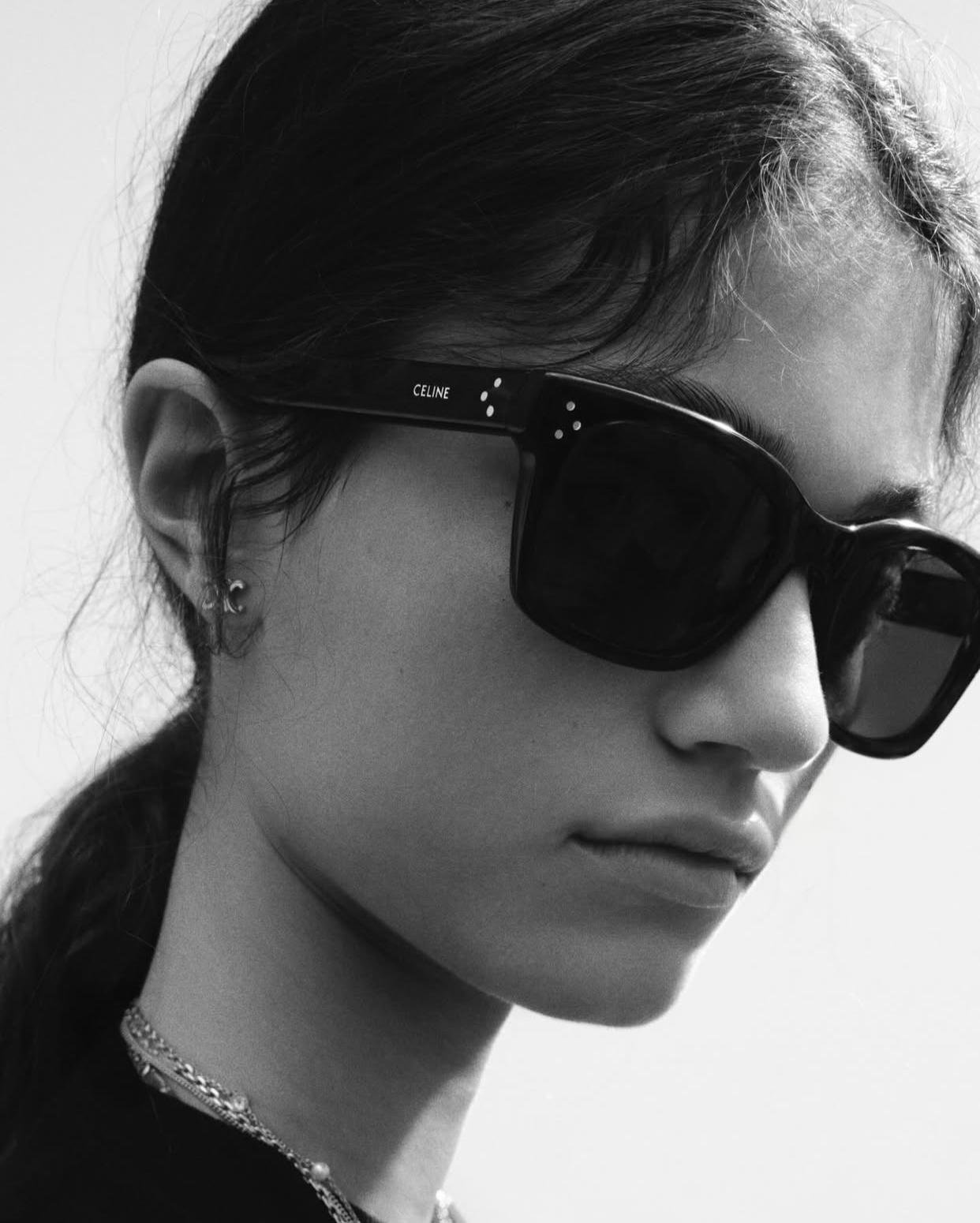
Hedi Slimane's background is in photography, art history, and the design of masculinity — he made his reputation at Dior Homme by narrowing the silhouette to something almost architectural. At Celine, that same architectural intelligence is applied to the face. The frames are conceived as structure: dense acetate that gives mass and geometry to the head, or thin metal that draws a precise line around the gaze. Nothing decorative. Each element serves the proportion. The Celine eyewear vocabulary organizes itself around two signatures that operate at different registers of legibility. The Triomphe — the interlocking double C in gold or silver on the temple — declares affiliation clearly, a logo that rewards recognition. The 3 Dots — three small metal points set vertically at the hinge where temple meets front — speaks only to those who know where to look. Both are present in the 2025-2026 collection. Both are valid. They address two different relationships to luxury: one that wants to be read, and one that prefers to be found.
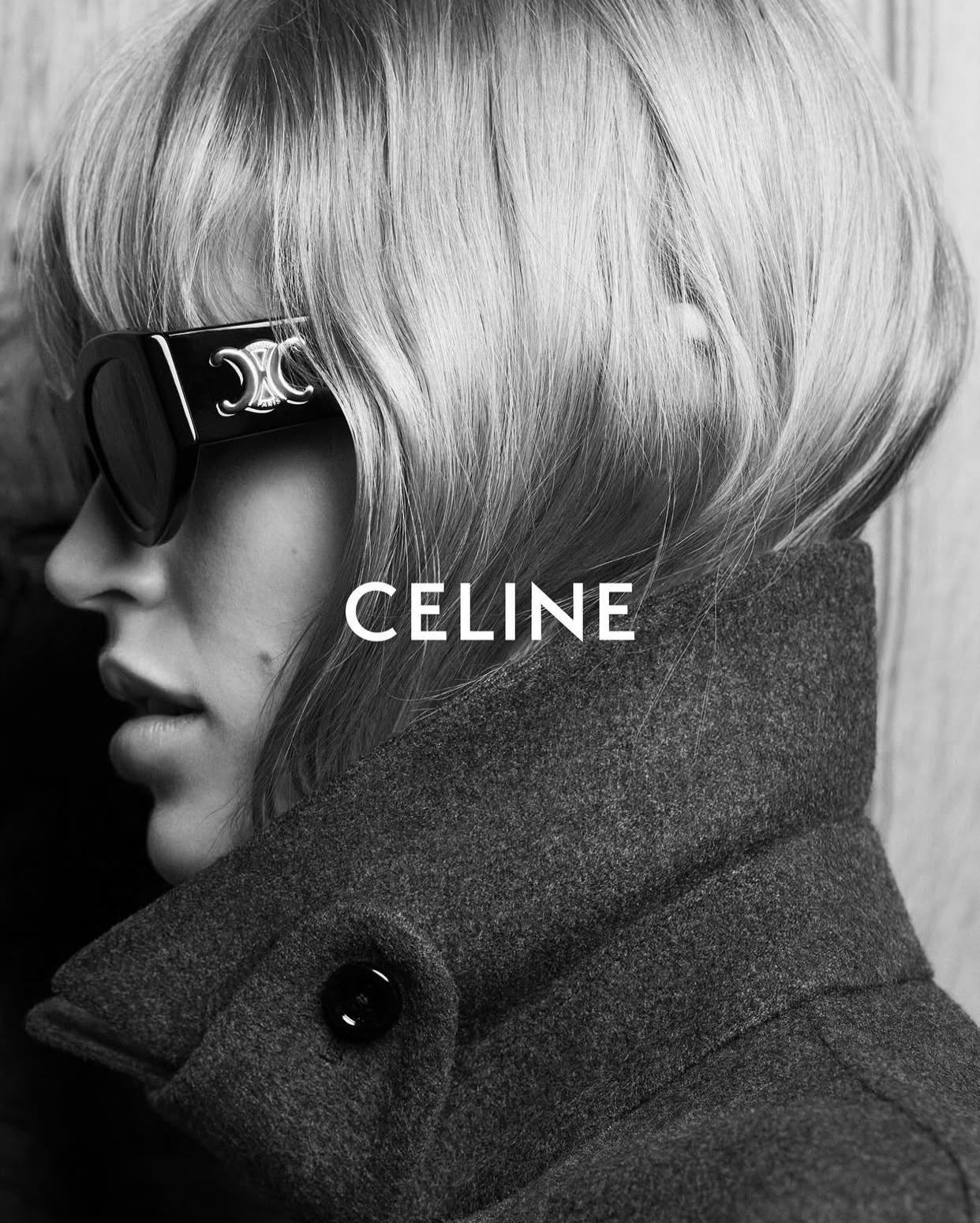
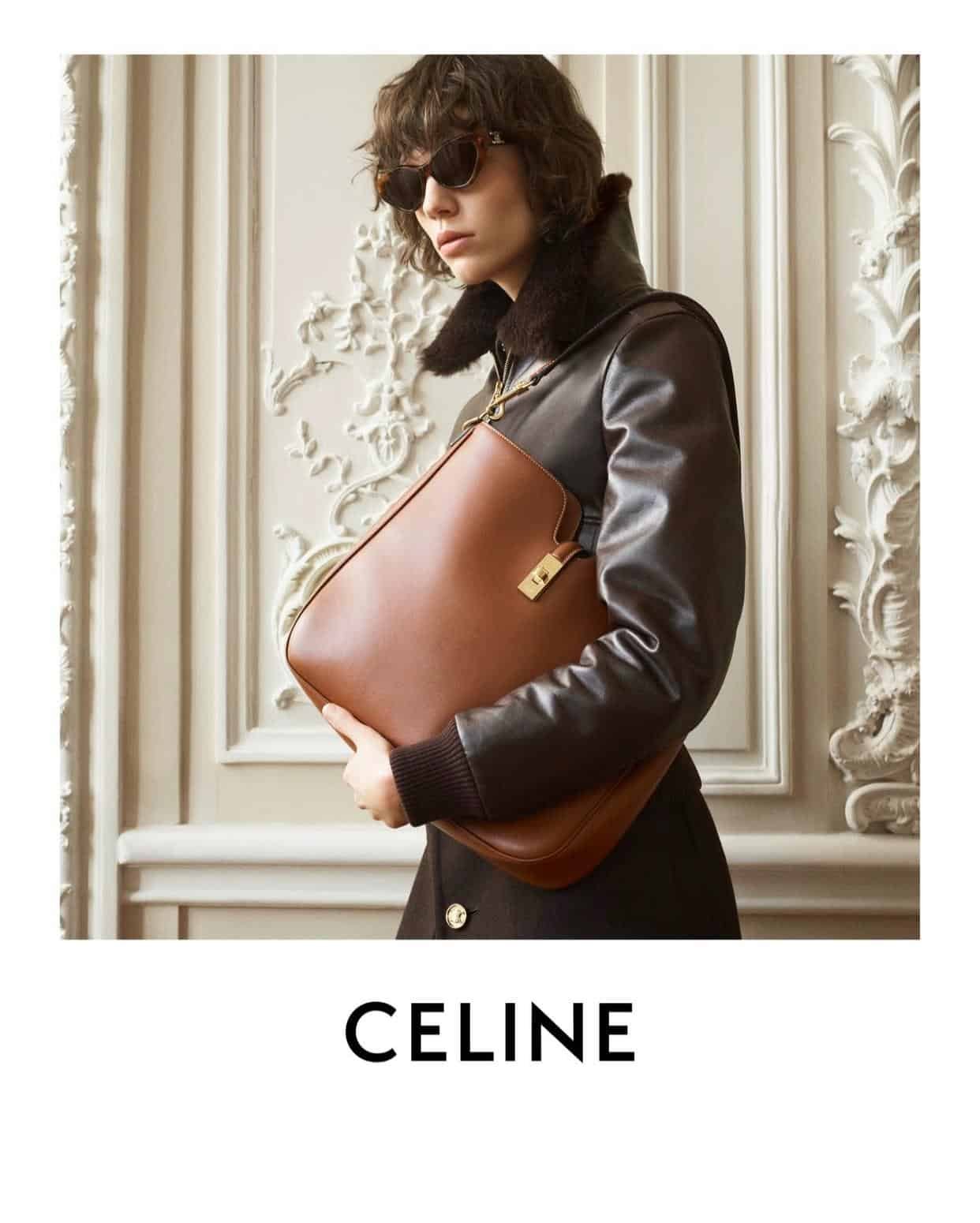
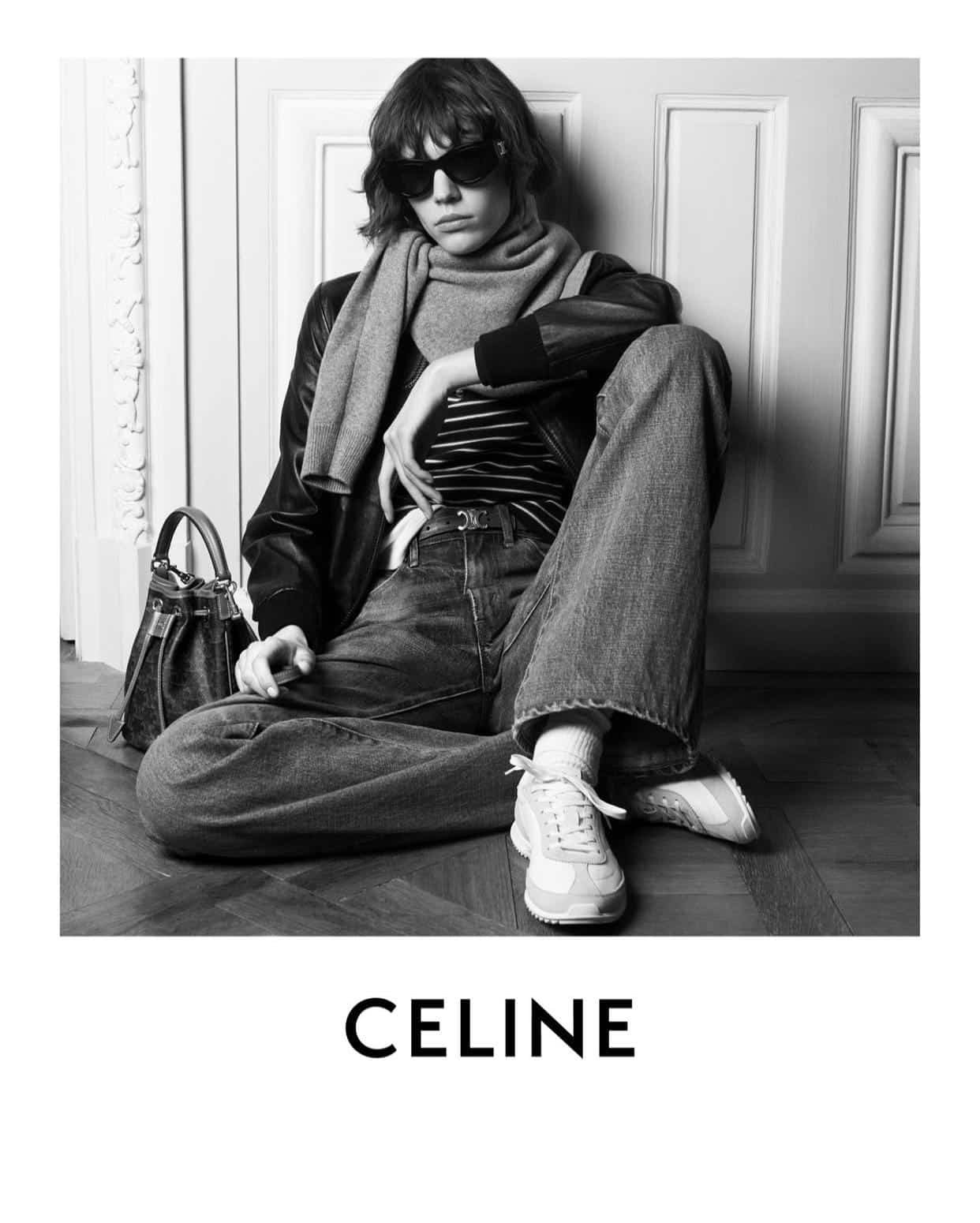
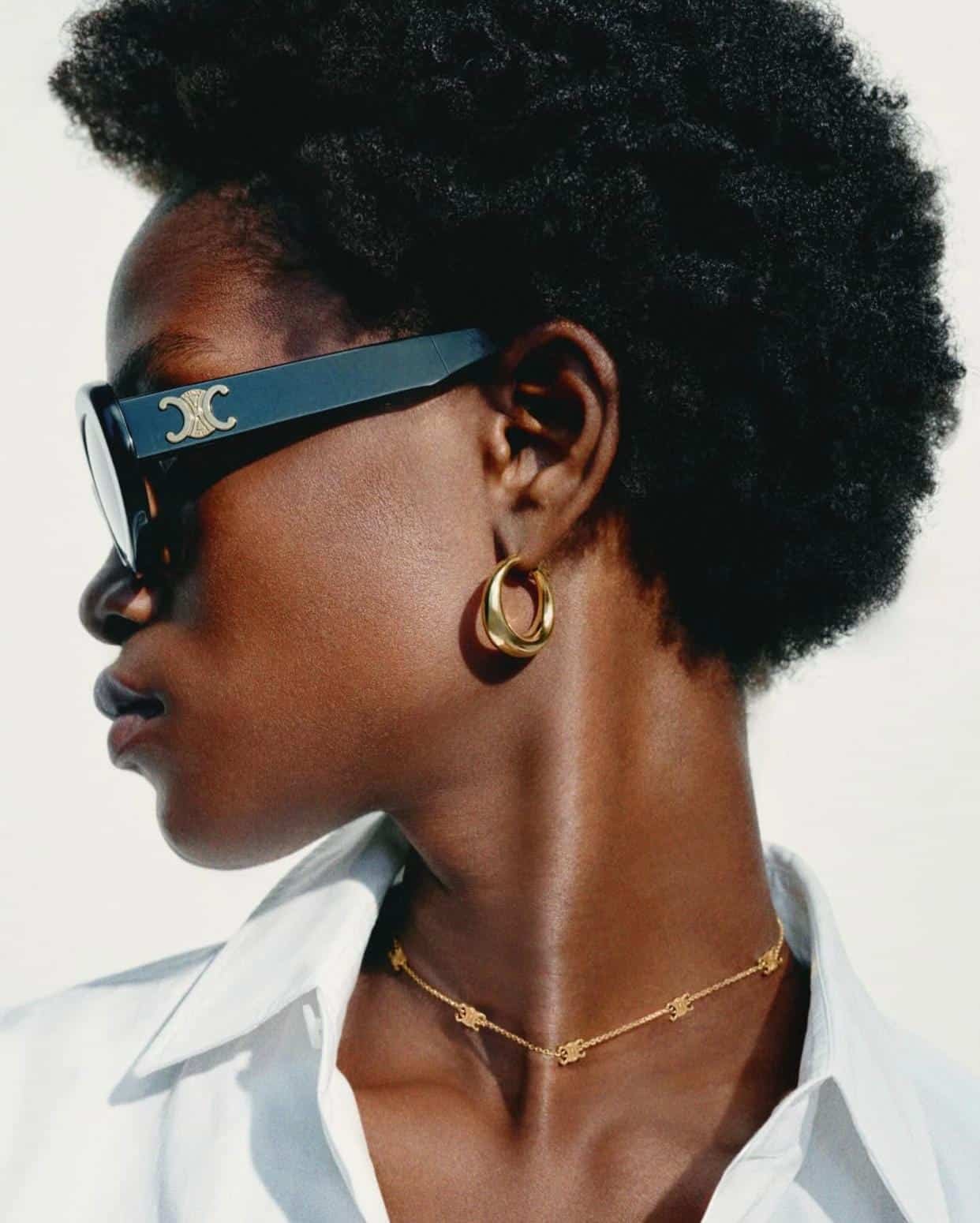
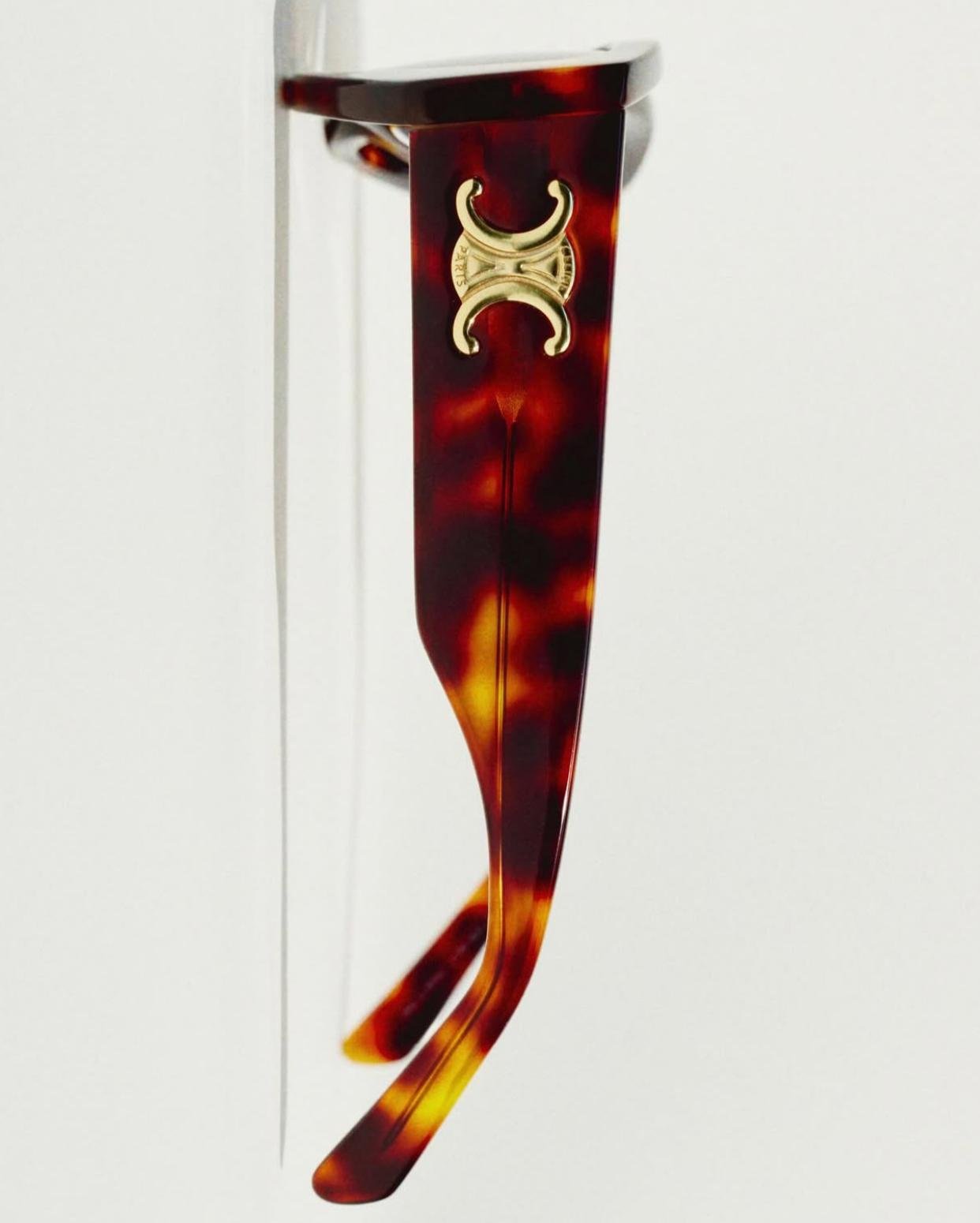
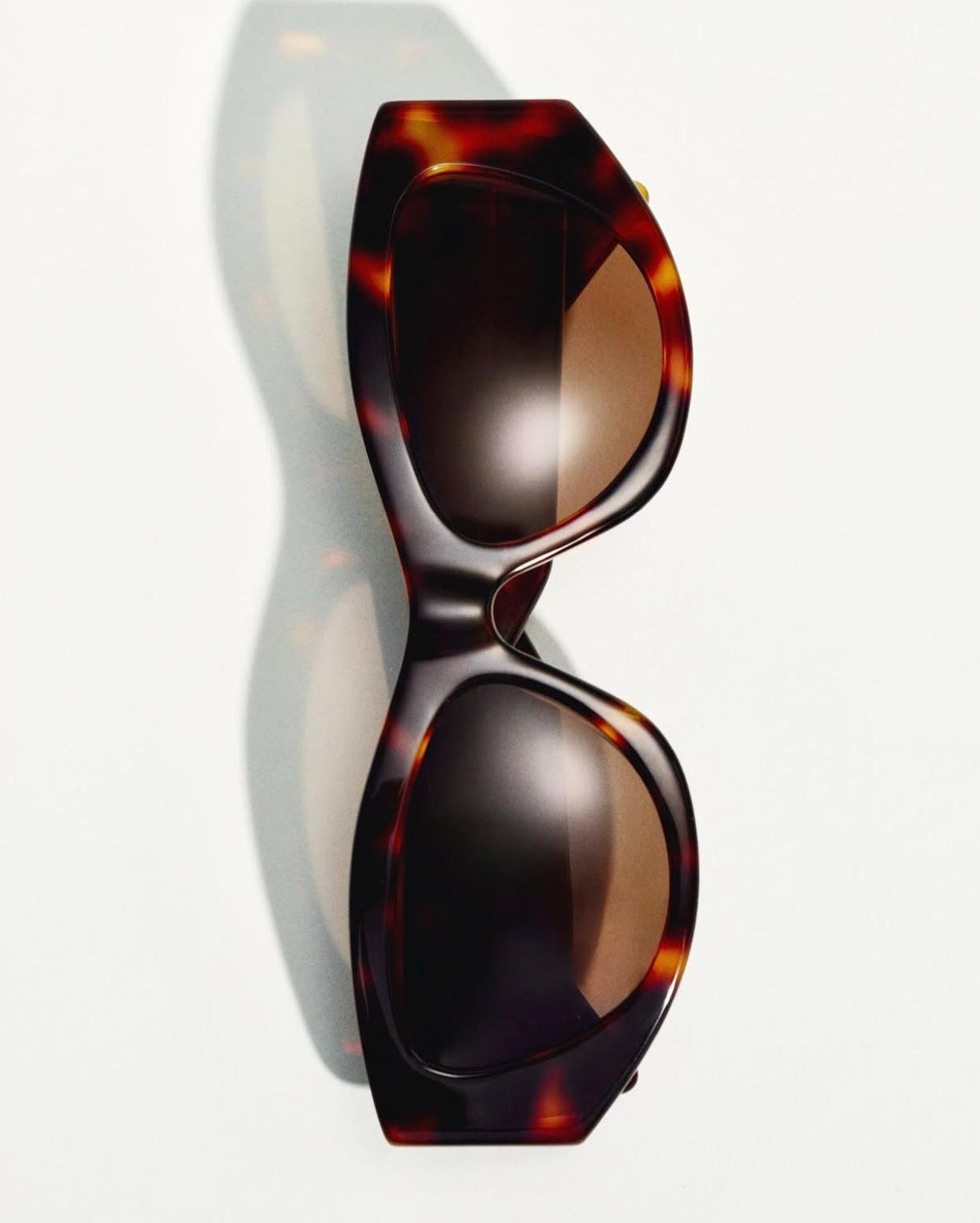
The Triomphe eyewear collection places the interlocking double-C monogram on the temple of every frame — in gold or silver, cast in polished metal, at a scale that is neither discreet nor aggressive but precise. The frames themselves range from the large square acetate that became Slimane's first signature at Celine, recalling the oversized rock-era sunglasses of the 1970s, to the refined Triomphe Metal 02 in a sleeker, more architectural finish. The cat-eye silhouettes extend the monogram into a more feminine vocabulary without softening the structure — the geometric rigor of the frame holds against the curl of the corner. For 2025-2026, the Triomphe collection extends into new acetate volumes: deep black, tortoiseshell, rich havanas, and structured transparencies that catch light differently depending on what is happening behind them. The Triomphe on the temple is not a logo. It is a citation — the chain of the Arc de Triomphe, held still at the side of the face.
The 3 Dots signature is the eyewear expression of a different relationship to the house: three small metal points, set at the hinge where the temple attaches to the front of the frame, visible only if you know they are there. This is the detail that addresses the client who knows Celine from the Phoebe Philo era — who dressed in the intellectual minimalism of that decade and wants to continue that conversation without a logo. The Bold 3 Dots frames are large in format and dense in acetate — they are not modest objects — but their identification is reserved, available only to those who look closely enough to count. For 2025-2026, the Bold 3 Dots collection arrives in new square and round silhouettes in black, medium brown havana, and a shiny transparent that allows the three dots to be seen against the light of whatever is behind the face. Hedi Slimane maintained this signature alongside the Triomphe revival, understanding that the house holds both publics simultaneously: the one that wants recognition and the one that refuses it.
The Celine men's eyewear collection is organized around the same architectural logic as the women's — geometric shapes designed to give structure to the face rather than decorate it — but pushed toward a harder vocabulary: assertive rectangular fronts, dense acetate profiles, pilot shapes in polished metal with sharp angular lines. The preferred palette is strict: deep black, rich havana, structured transparency. No softening. The frames are described in the house's internal language as "an architectural fragment worn every day" — the same description Slimane applies to the clothing. The Thin acetate collection narrows the profile while maintaining the volume, producing a frame that is simultaneously large and restrained. Metal versions offer precision without ornament. The men's collection at 650 Madison Avenue is presented alongside the women's in the same 5,000 square-foot space — lava stone floor, black granite walls, reclaimed oak — where the eyewear occupies the same shelving register as the leather goods, treated with the same weight.
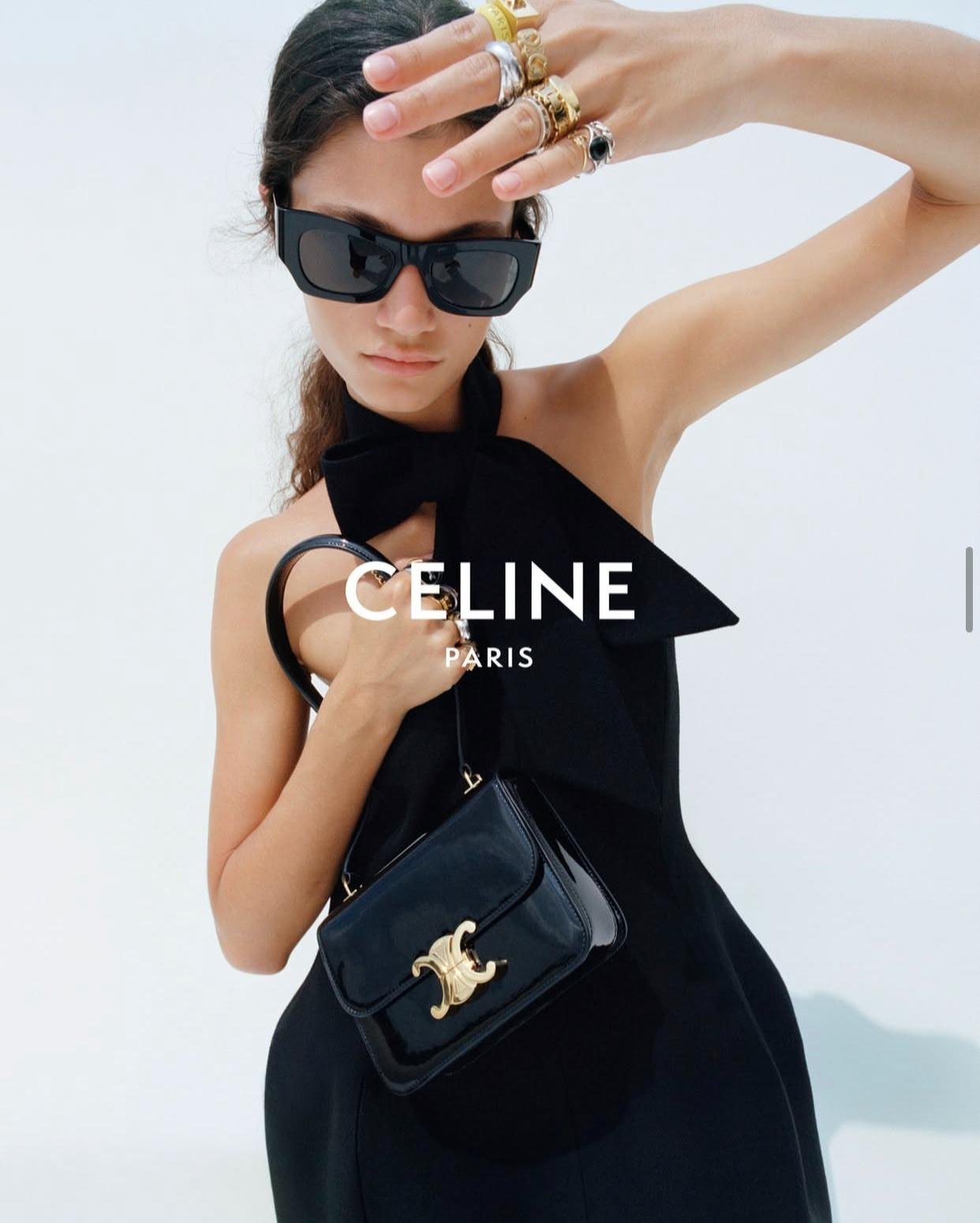
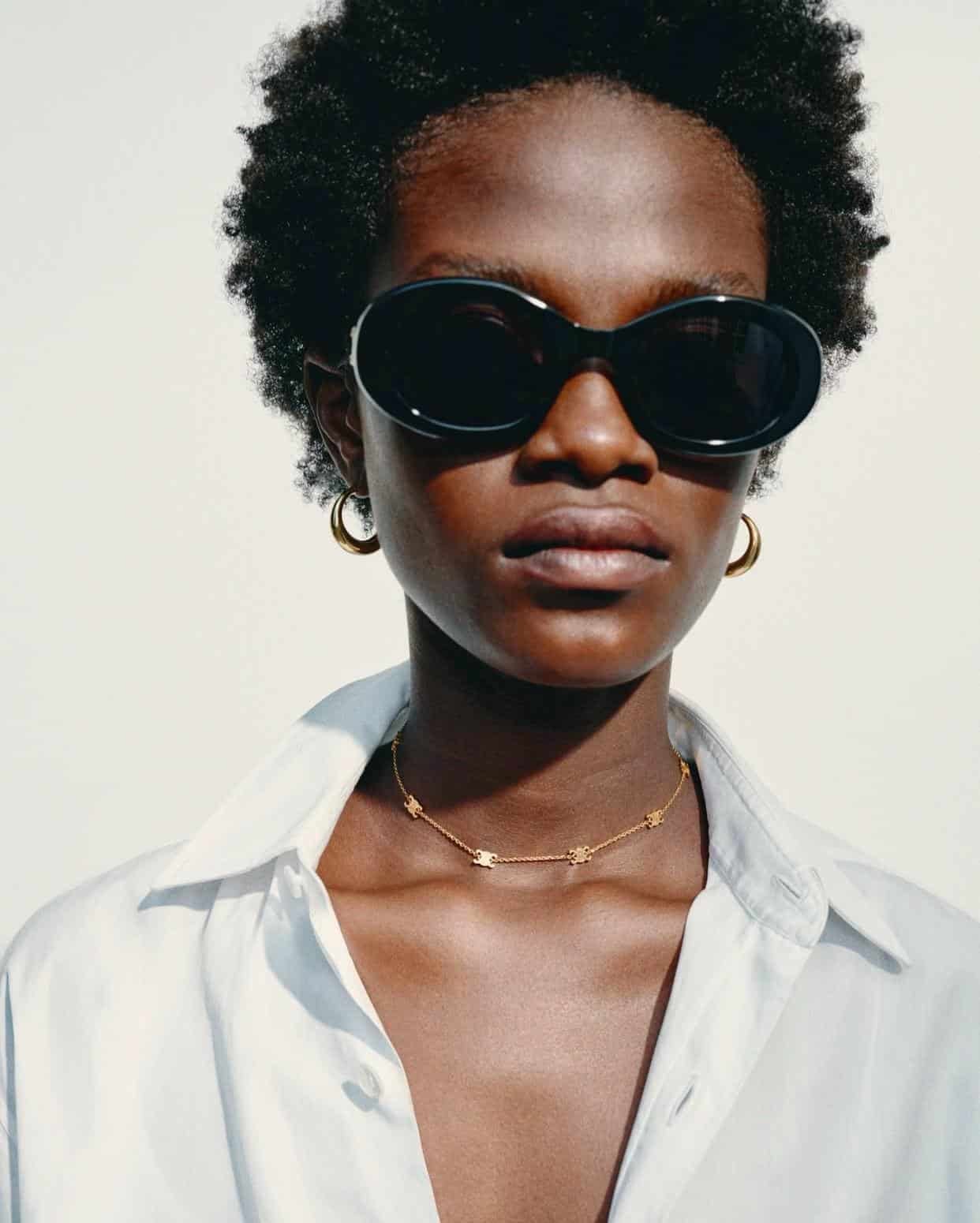
The Celine Été 26 campaign — photographed by Zoë Ghertner — places sunglasses at the center of the summer accessory story: oversized frames worn with flowing fabrics and sculptural tailoring, eyewear as the primary statement rather than the supporting element. The White Disc sunglasses — round acetate frame, light green lenses, Celine Paris branding on the temple — are the capsule's most distinctive proposition: a shape that references the optical experiments of the 1960s and 1970s while remaining entirely current. The collection's oversize logic holds throughout: the frame should be large enough to register as a decision, not a detail. For those who prefer the sun proposition at its most legible, the Triomphe appears in the Été 26 versions as well — the chain motif on the temple catching the summer light at the same angle as the Arc de Triomphe chains catch it in the afternoon on the Place de l'Étoile.
© Celine
© Celine

© Celine
© Celine

© Celine

© Celine
© Celine

© Celine
© Celine
© Celine
© Celine
© Celine

© Celine
© Celine

© Celine

© Celine
© Celine

© Celine

© Celine

© Celine
CELINE
© Celine