
© David Yurman
© David Yurman
© David Yurman
David Yurman
In 1969, David Yurman was a sculptor selling hand-welded belt buckles at Woodstock. In the late 1970s, in a TriBeCa studio, he twisted fifty feet of wire by hand — the height of a five-story building — into the first Cable bracelet, which he gave to Sybil, his wife. He has been building on that moment ever since.
TriBeCa · 1980 · An Artist's House
David Yurman is not a jeweler who became a sculptor. He is a sculptor who became a jeweler — and the distinction runs through everything the house produces. David trained as a sculptor in the art scene of downtown New York, working in the studios of Greenwich Village alongside Hans Van de Bovenkamp, where he met Sybil — a painter — who became his wife, his collaborator, and the co-founder of the house they opened together in 1980. The brand began as a small endeavor in Lower Manhattan and grew, collection by collection, into one of the most recognized American jewelry houses in the world. David and Sybil's son Evan, now President and Chief Creative Officer, has continued the house's design evolution while maintaining its founding conviction: that jewelry is sculpture — that each piece is a wearable work of art with a formal logic as serious as any object in a museum.
David Yurman remains family-owned and operated — one of the few American jewelry houses of its scale that has resisted acquisition. The Cable motif it introduced in 1982 has been described, within the house, as "the river that runs through all of our designs." Over four decades, that river has never stopped moving.
Cable · 1982 · The Brooklyn Bridge On The Wrist
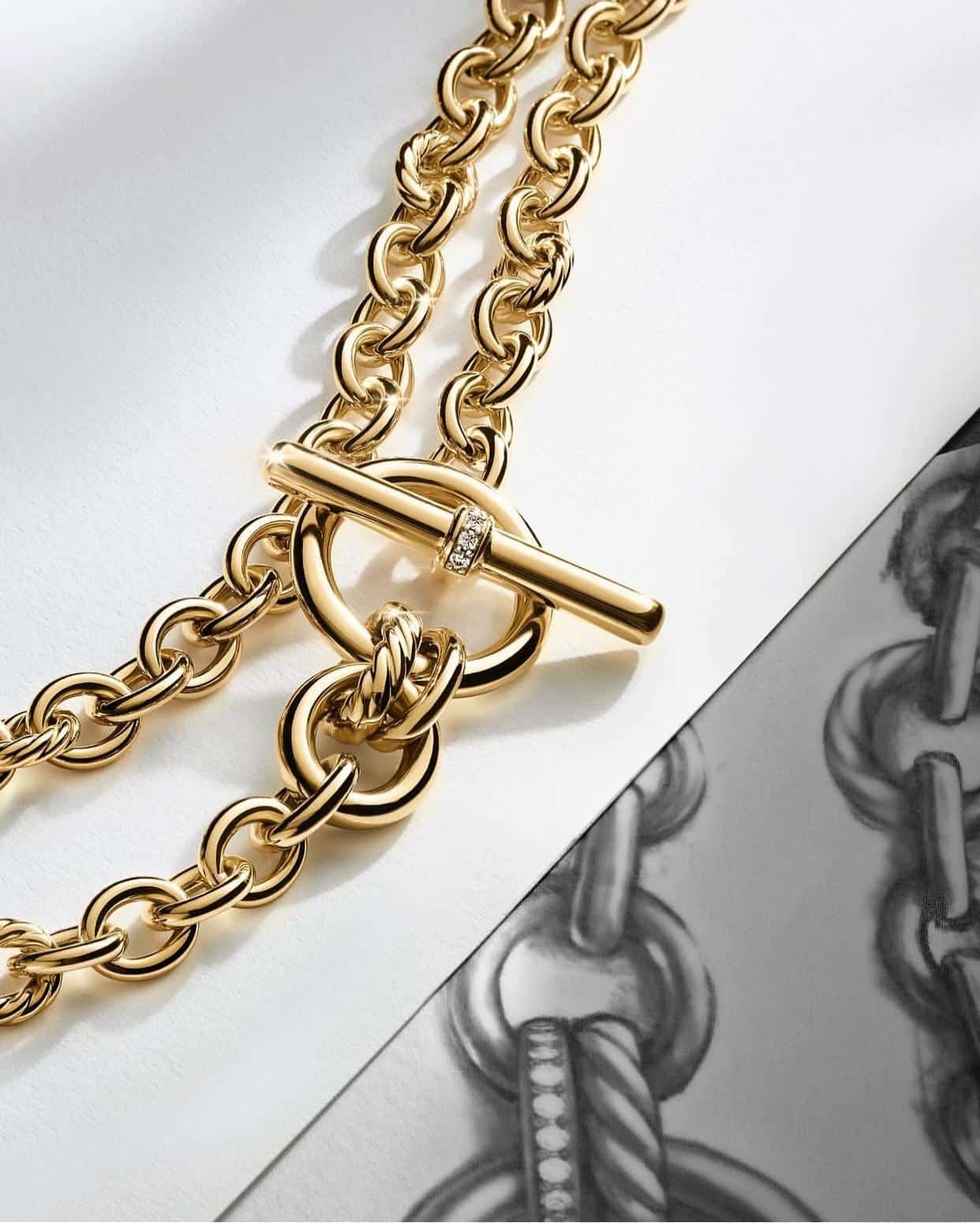
The Cable bracelet was born from two sources of inspiration that David Yurman encountered almost simultaneously in the late 1970s. The first: the suspension cables of the Brooklyn Bridge — the twisted steel helices that had held the bridge since 1883, carrying a formal elegance he found as compelling as any classical sculpture. The second: ancient torque jewelry in the collection of the Metropolitan Museum of Art, where the incomplete circle — open at both ends, held in tension — had appeared in Celtic, Roman, and Greek jewelry for centuries. He fused both into a single form, twisted fifty feet of wire by hand, and placed the result on Sybil's wrist. In 1982, the Cable bracelet debuted commercially as part of the Renaissance collection. It became an instant success — the fusion of relaxed American style and traditional European craftsmanship that the American jewelry market had not seen before.
The Cable bracelet — the twisted helix in sterling silver with gold terminals, set with a colored gemstone or diamond at each end — remains the house's most recognized piece and its commercial foundation. Over four decades, it has been produced in hundreds of configurations: different metals, different stone combinations, different proportions. Cablespira and Cable Flex use patented technology that gives the metal a flexible, ergonomic character without sacrificing the visual integrity of the original form. The bracelet that inspired the house is still being made, daily, by hand.
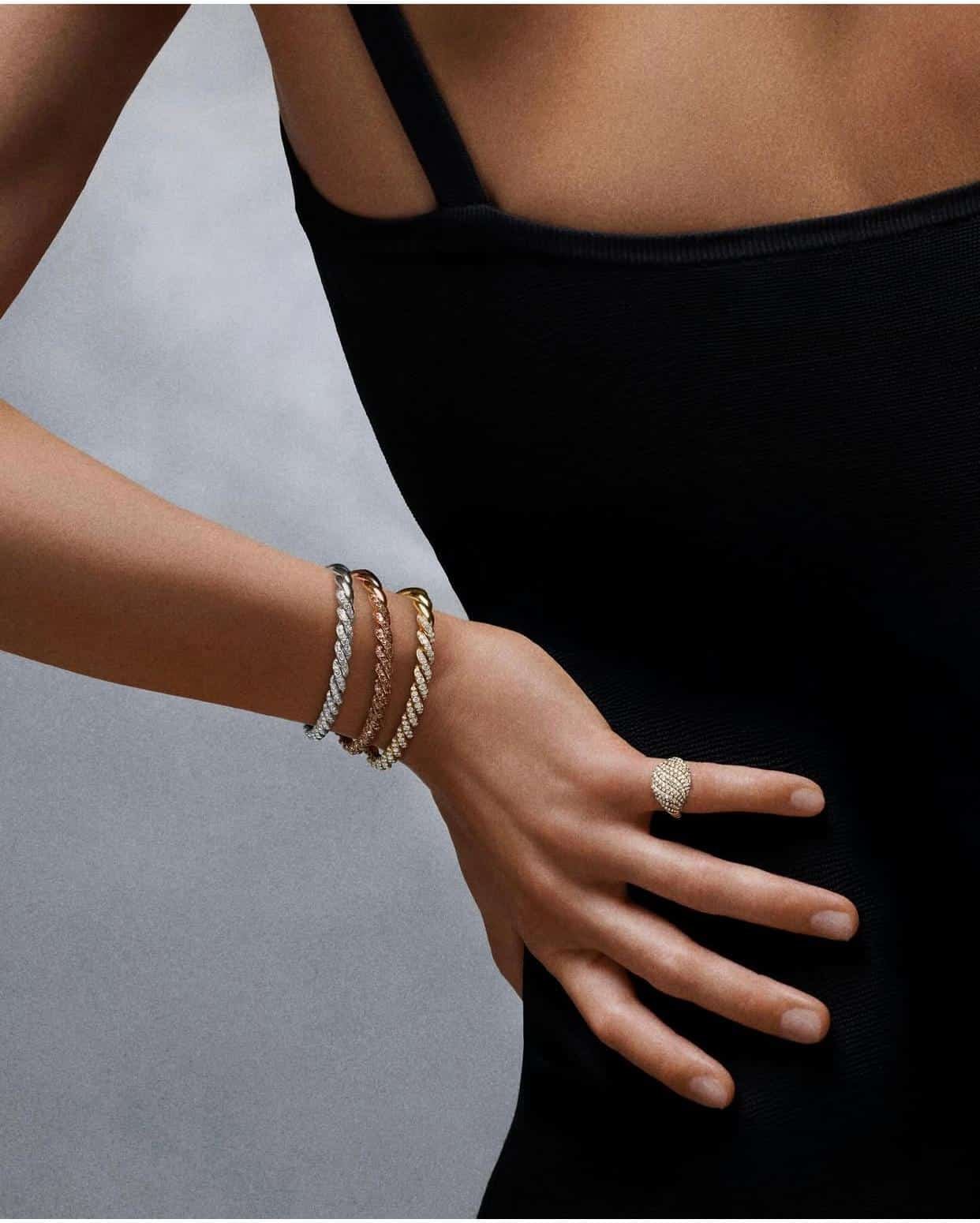
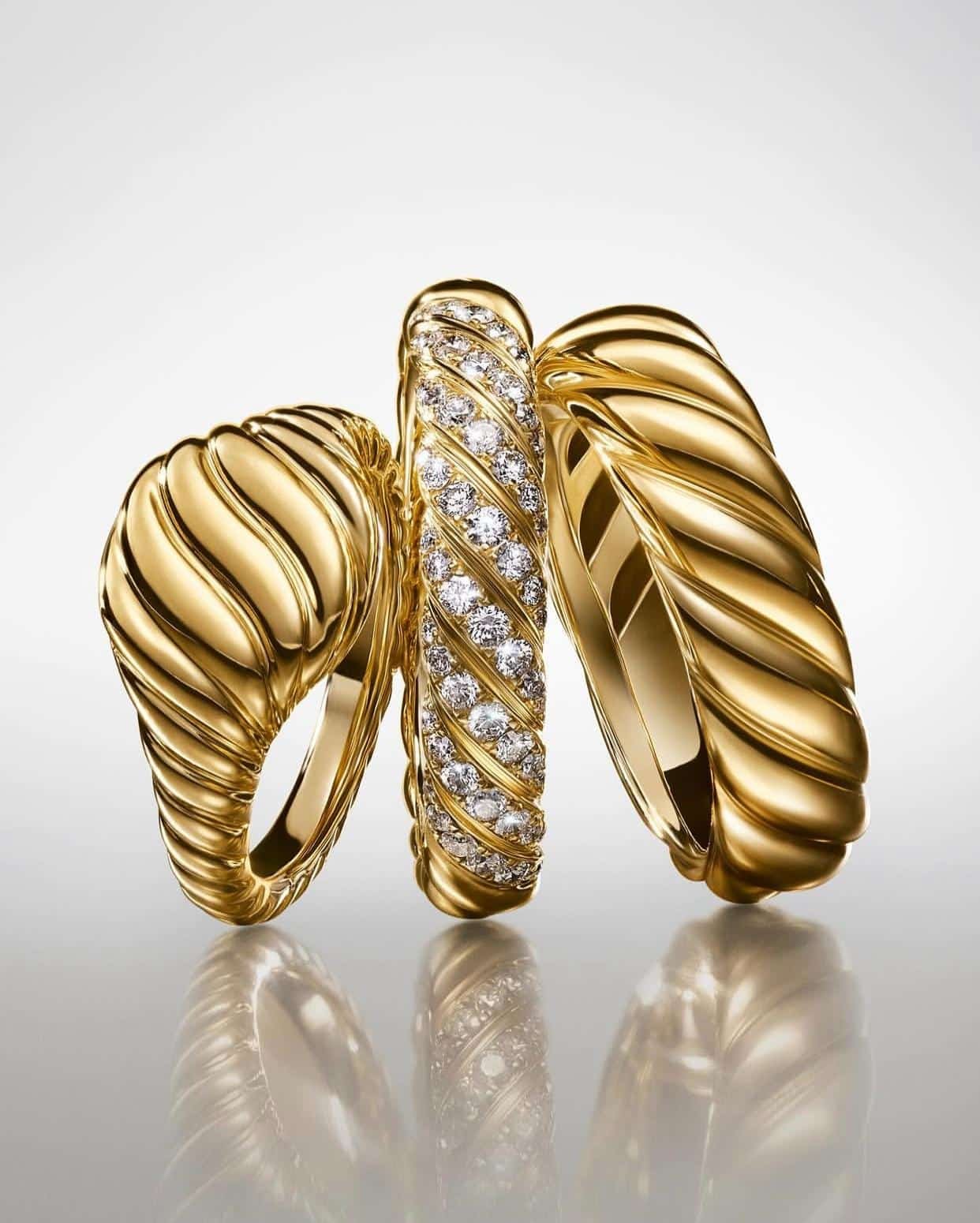
Sculpted Cable emerged from Evan Yurman's reconsidering of the original Cable form through an architectural and bas-relief lens. Where the original Cable is a three-dimensional twisted helix, Sculpted Cable flattens the form into a carved relief — S-shaped flutes cut deep into the metal surface, dramatically capturing the way light moves across the piece as the wrist turns. David Yurman describes it as "the line of beauty for its elegant proportions." Available in sterling silver and gold combinations, with pavé diamond versions finished entirely by hand. The collection that most clearly demonstrates the generational evolution of the house's founding motif.
The Chevron collection traces its origin to 1969, when David Yurman hand-welded belt buckles at Woodstock — one of which featured a V-shaped Chevron motif with roots in classical Greek and Roman architecture. Evan Yurman has evolved the Chevron into the house's defining men's collection: deeply carved grooves alternating with polished planes, links individually carved and connected with hidden hinges, rare stone inlays of lapis lazuli, tiger's eye, malachite, turquoise, and nephrite jade. A symbol of momentum and the pursuit of excellence — the Chevron tag, the Chevron bracelet, the Chevron ring — sculptural, precise, and built to be worn daily rather than preserved.
DY Madison — named after Madison Avenue, the house's home street — is the sleekest collection in the portfolio: bold architectural lines, sophisticated rectangular links, a design language that references the avenue's particular combination of classical buildings and contemporary energy. DY Mercer — named after Mercer Street in SoHo, one block from David Yurman's original TriBeCa studio — is more urban, more versatile, designed for the layering and stacking culture that defines how the house's clients wear jewelry today. Two streets, two neighborhoods, two registers of the same New York sensibility.
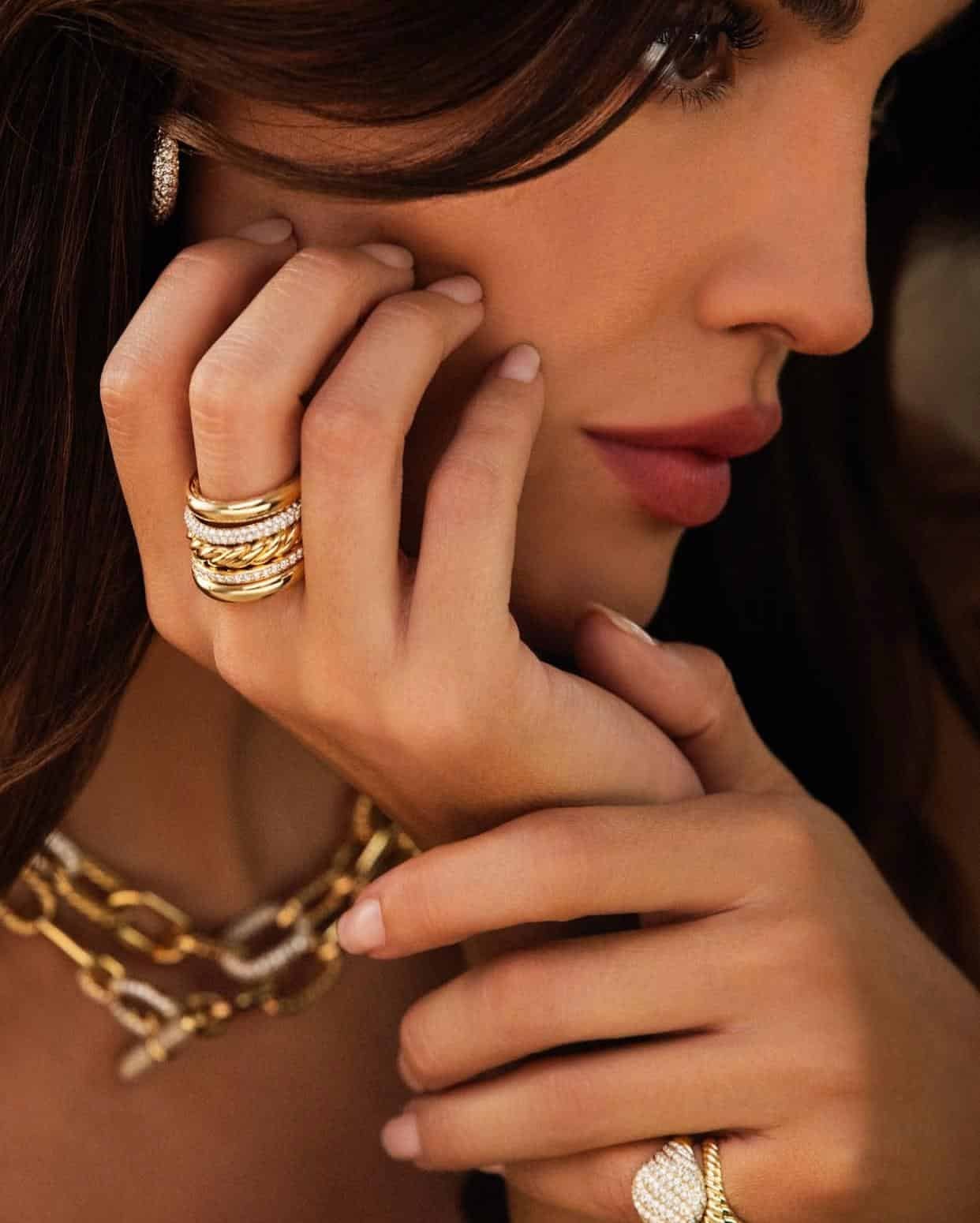
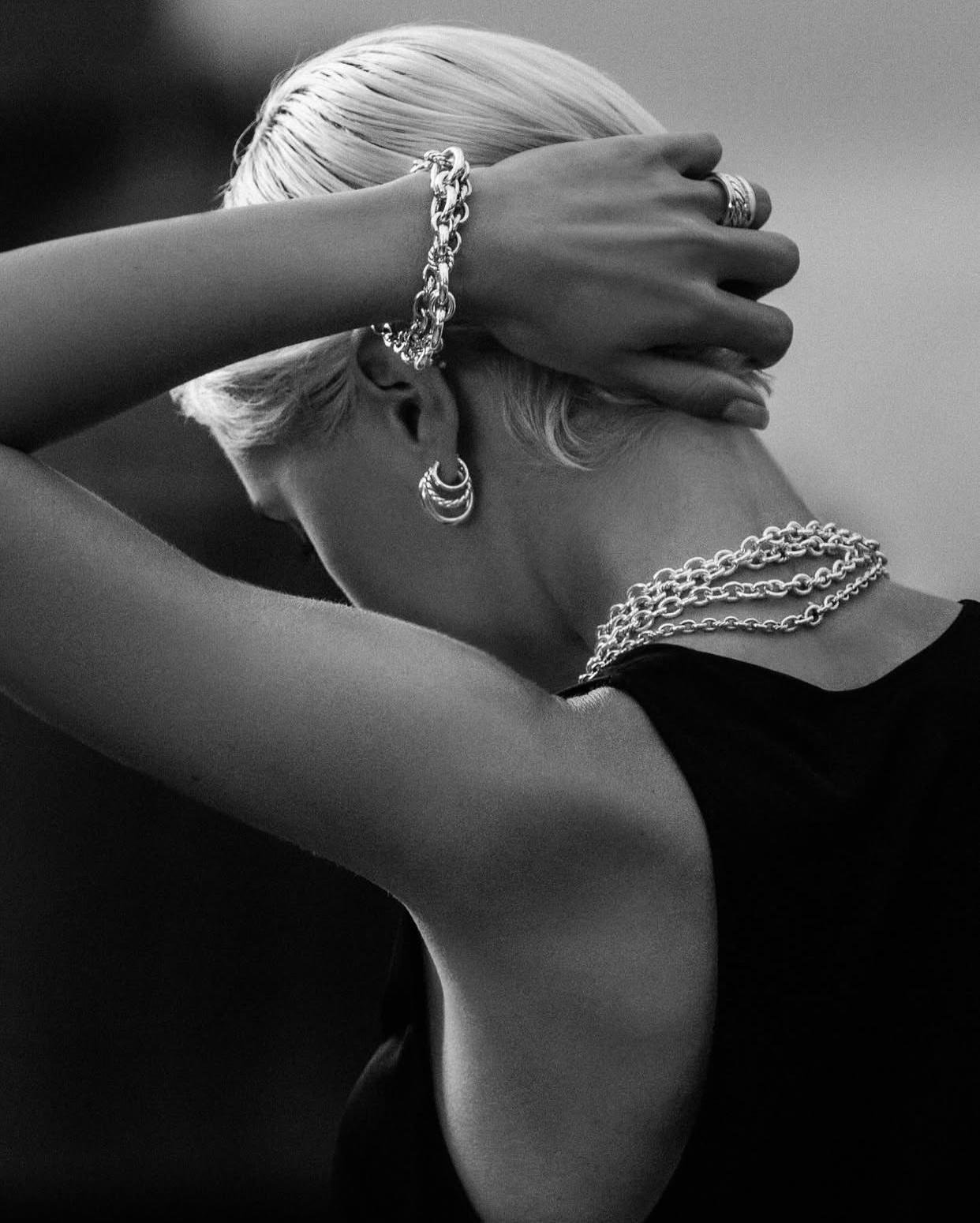
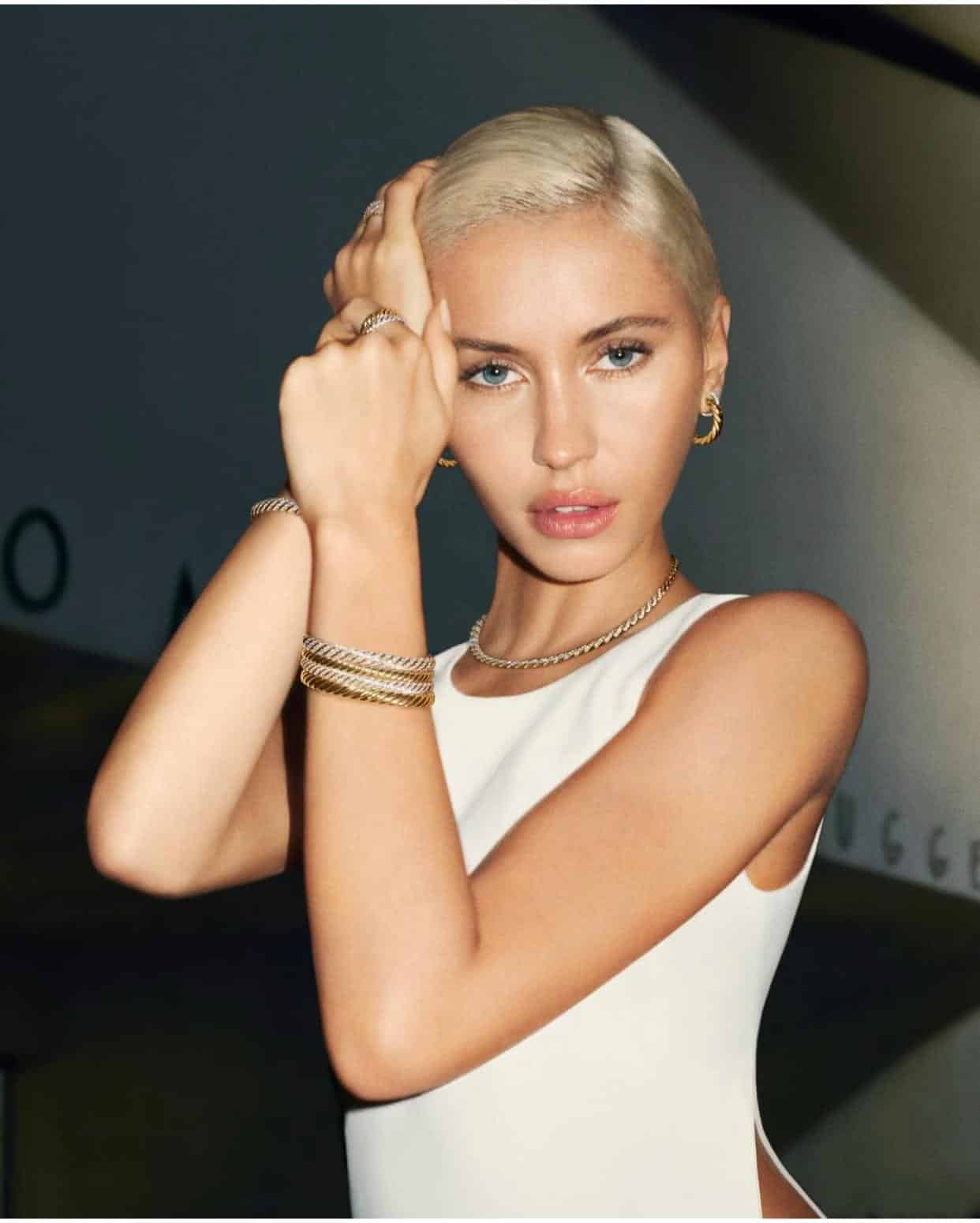
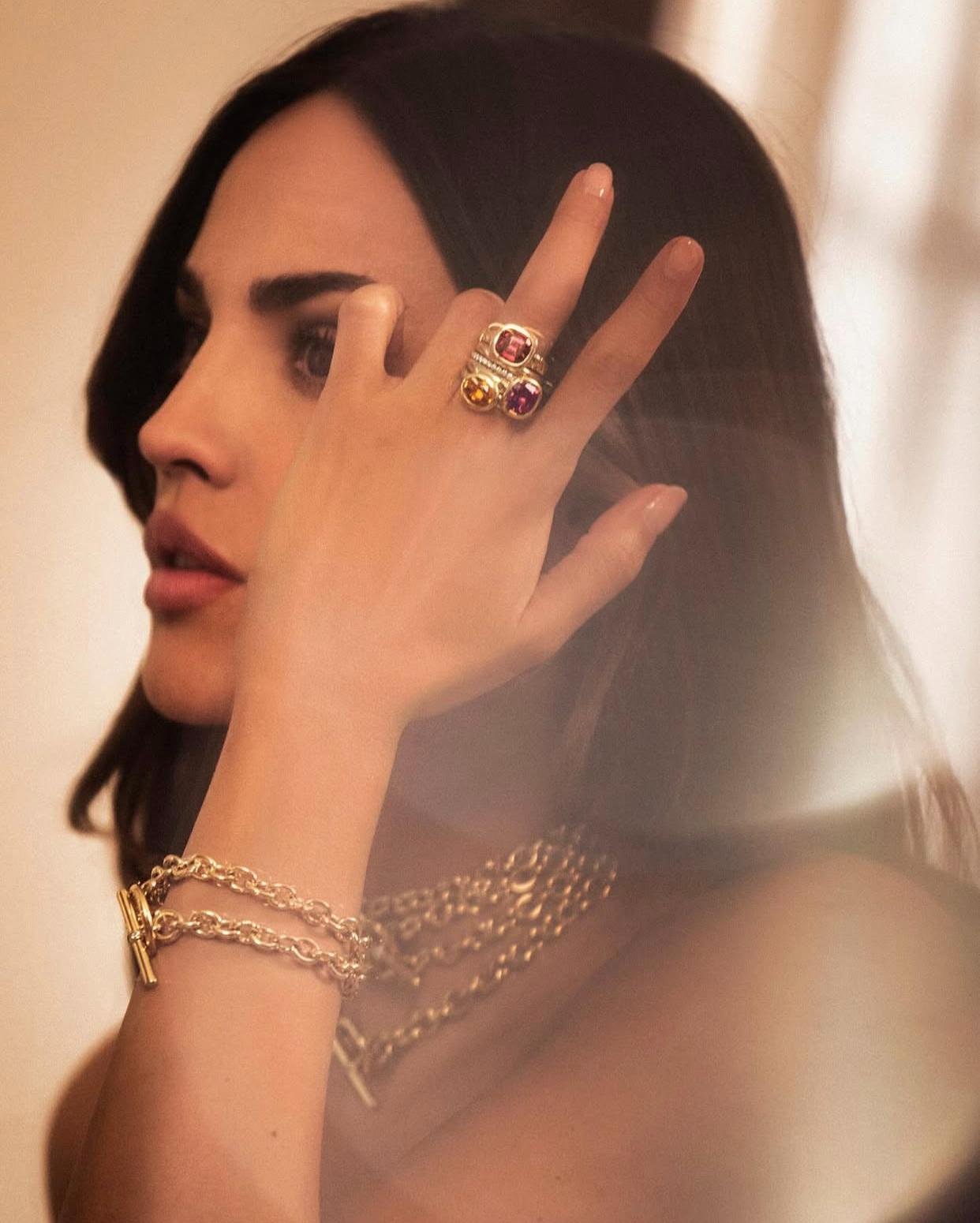
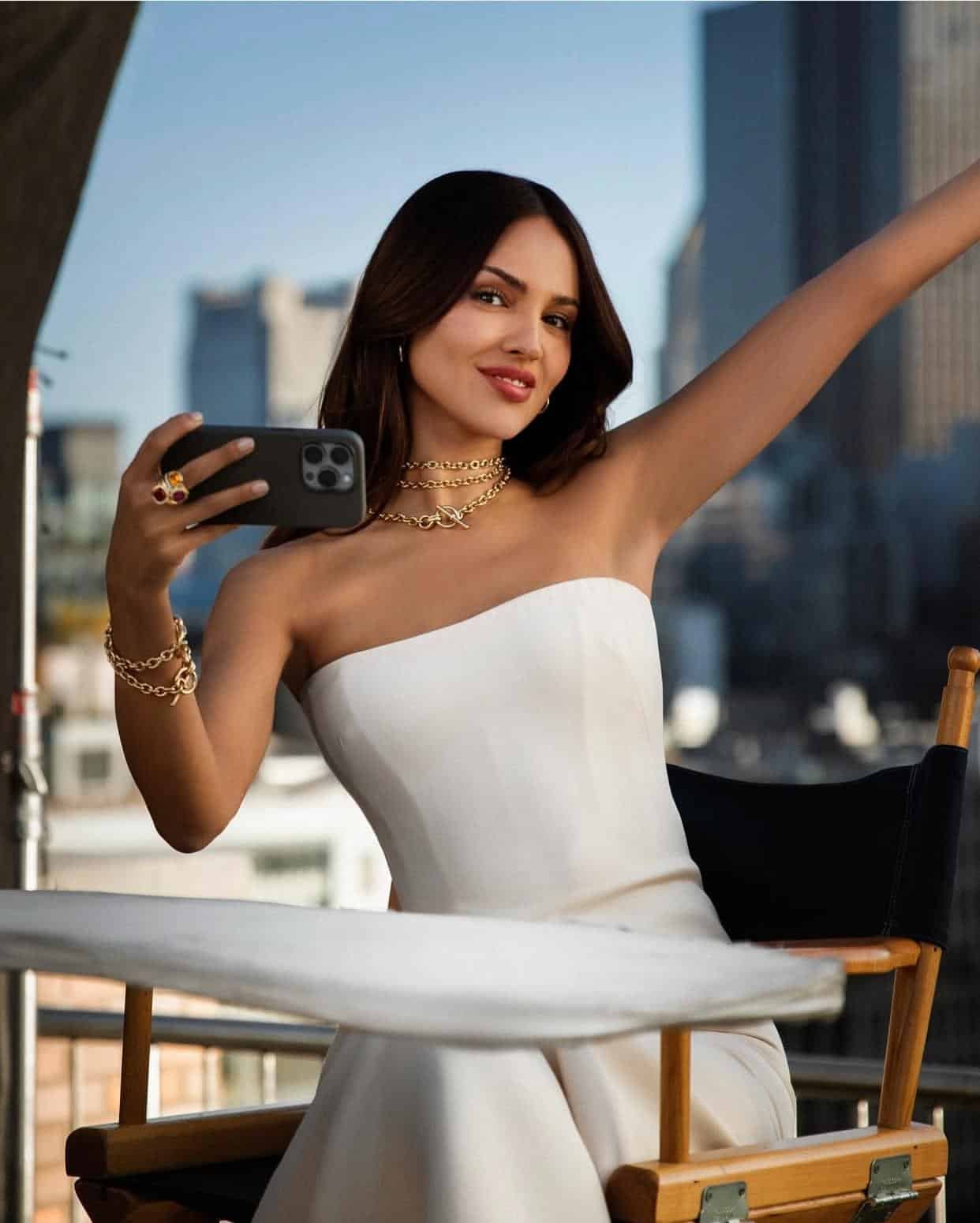
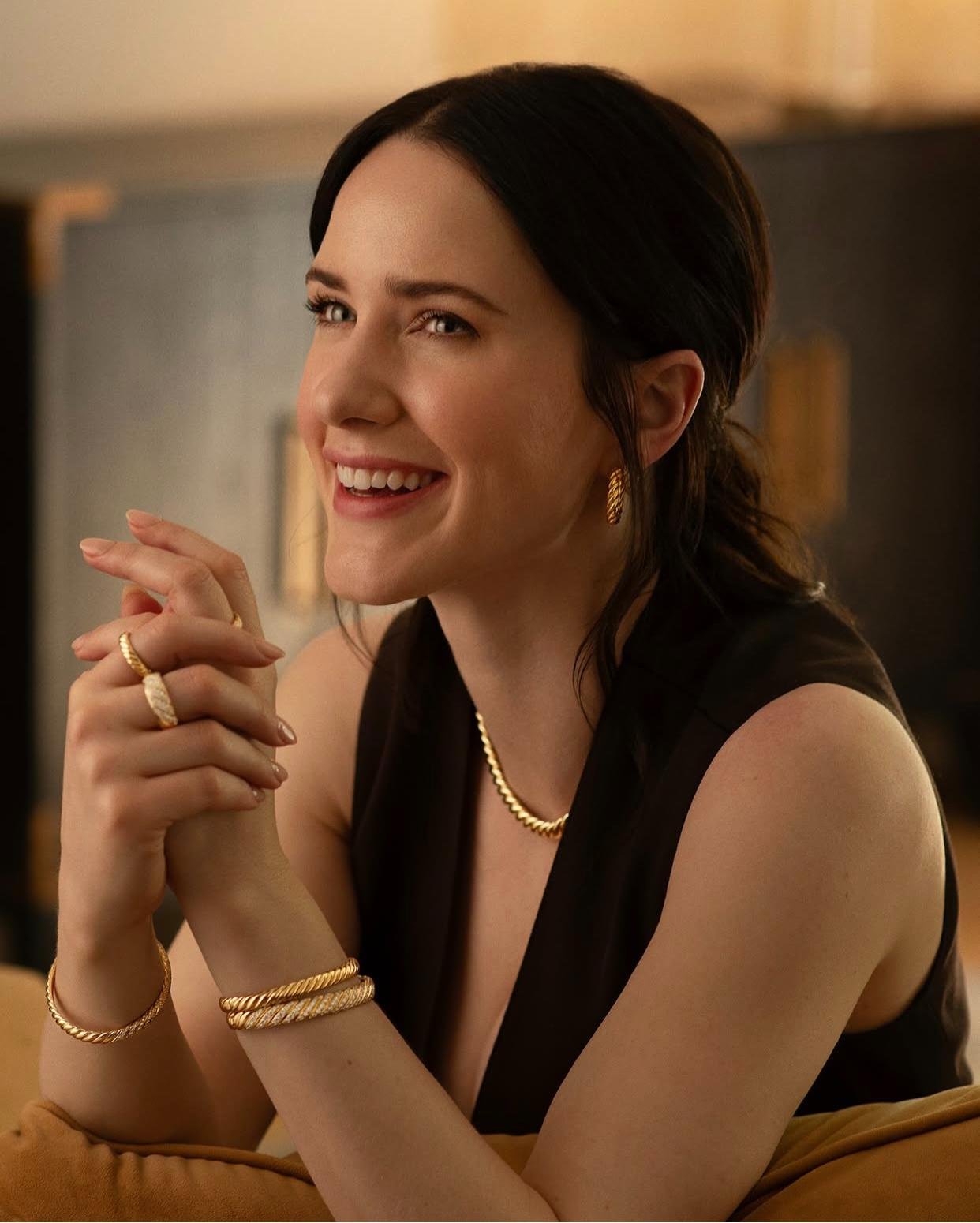
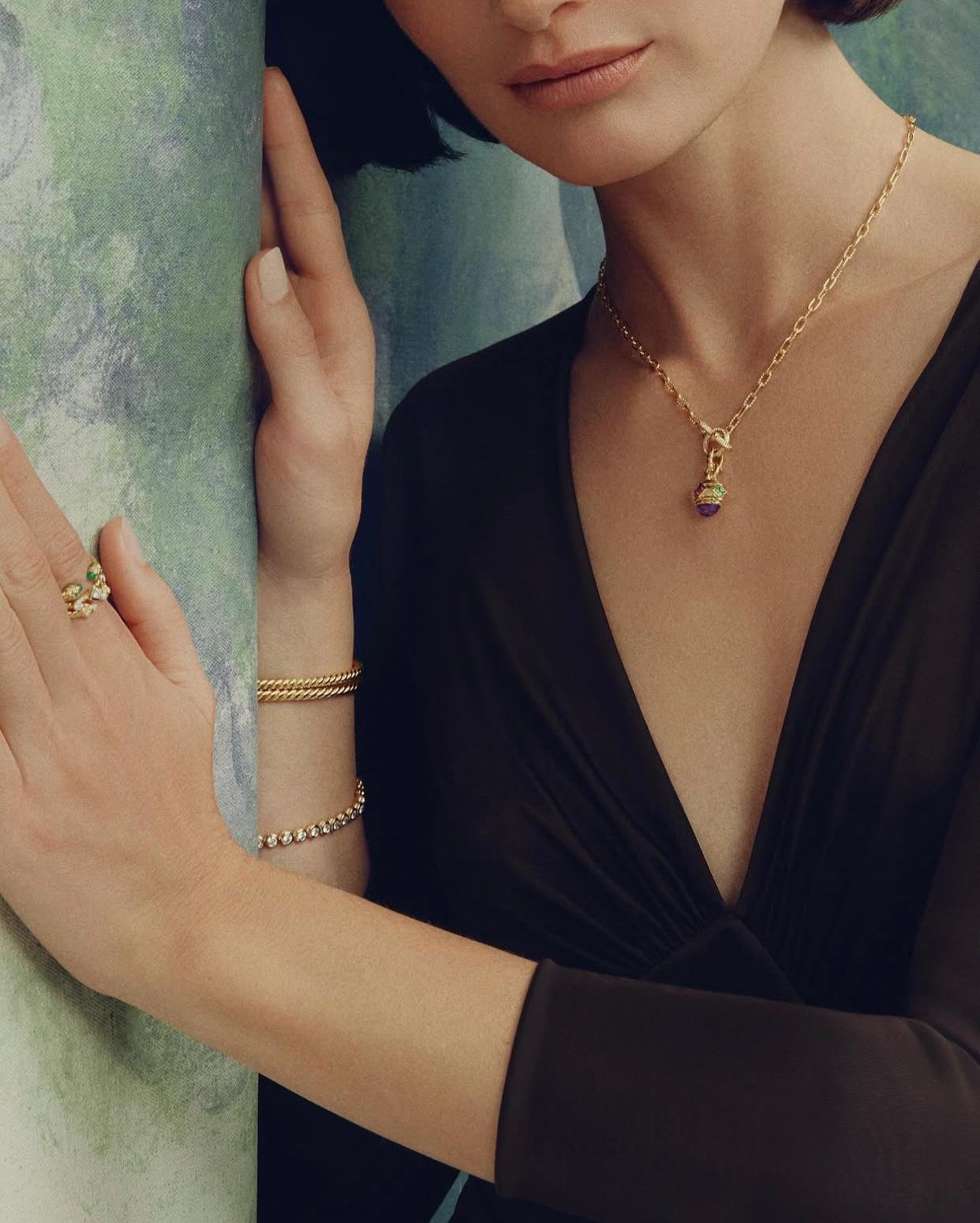
David Yurman pioneered the stacking approach to fine jewelry in the American market — the layering of multiple bracelets on one wrist, multiple rings on one hand, creating a personal composition that changes daily. The Cable bracelet was designed from the beginning to be worn with other pieces: its open terminals and its proportions were calibrated for combination rather than isolation. Every subsequent collection has been designed with the same logic. The stack is not an accident of how clients choose to wear the pieces. It is a design intention embedded in the pieces themselves.
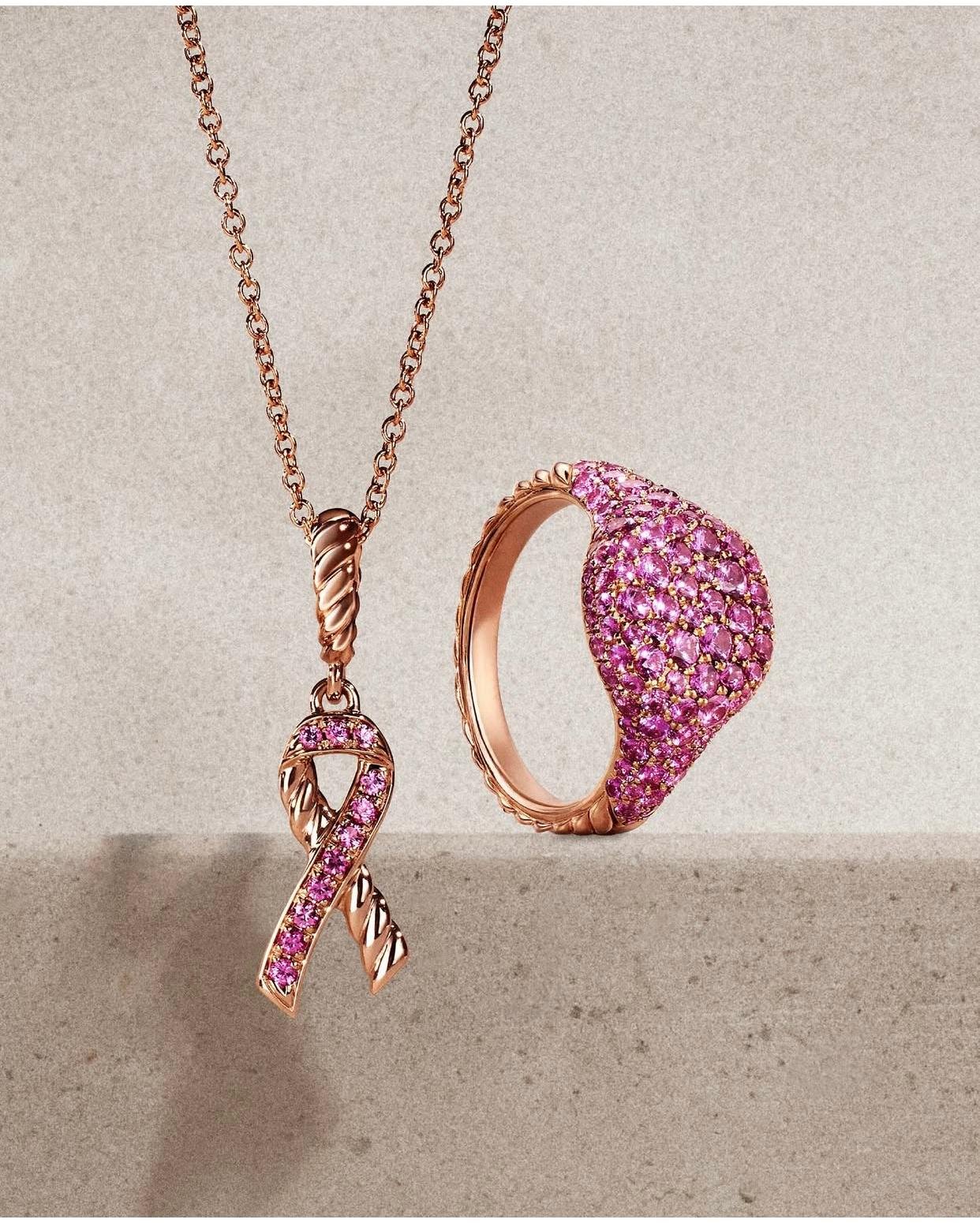
At the apex of the David Yurman collection, the mosaic pavé pieces — each diamond and gemstone set individually by hand to create a field of continuous light — represent the house's highest level of craft. Sculpted Cable pavé bangles. Mosaic-set diamond rings. Pieces where the Cable or Sculpted Cable form is entirely covered in stones, the metal structure visible only at the edges. The technique is labor-intensive and the result is immediately distinguishable from machine-set alternatives. These are the pieces that justify the house's position at the intersection of American fine jewelry and atelier craftsmanship.
David Yurman twisted fifty feet of wire by hand
to make the first Cable bracelet —
the height of a five-story building, for Sybil's wrist.
He was inspired by the Brooklyn Bridge
and by torques he found in the Metropolitan Museum.
A sculptor's love letter, expressed in sterling silver.
David Yurman is among the very few jewelry houses in which the creative partnership between two people is genuinely constitutive of the work — not a marketing narrative but an architectural fact. David, the sculptor, provides the formal language: the Cable helix, the Chevron V, the Sculpted Cable relief. Sybil, the painter, provides the color sensibility: the stone combinations, the palette of gemstones, the way a rose quartz or a blue topaz or a prasiolite reads against sterling silver and yellow gold. Their collaboration began in an artist's studio in Greenwich Village before the house existed. It has never stopped. Evan Yurman, their son, has added his own chapter — the Sculpted Cable, the Chevron's architectural evolution, the Crossover collection's dynamic interlocking forms. Three artists, one house, four decades of continuous production.
Madison Avenue · New York · The Flagship
David Yurman's Madison Avenue flagship is the house's principal New York address — a space designed to reflect the same formal intelligence as the jewelry, with display systems that allow the stacking philosophy to be experienced physically before it is purchased. The full range of collections is present: Cable, Sculpted Cable, Chevron, DY Madison, DY Mercer, high jewelry. Virtual try-on technology for bracelets and rings is available in-boutique and online, allowing clients to preview the stack on their own wrist before committing to a combination. It is a practical tool for a house whose core proposition requires seeing multiple pieces together to be fully understood. The stack, after all, begins with an idea of what it might become.
712 Madison Avenue · New York, NY 10065
Cable · Sculpted Cable · Chevron · DY Madison · DY Mercer · DY Crossover
High jewelry · Mosaic pavé · Sterling silver · 14K & 18K gold · Black titanium
Founded 1980 · David & Sybil Yurman · Evan Yurman, President & CCO
Family-owned & operated · American house
davidyurman.com
David Yurman was a sculptor before he was a jeweler.
He found his form in the cables of the Brooklyn Bridge
and the torques of the Metropolitan Museum.
He twisted fifty feet of wire by hand to give Sybil a bracelet.
Everything the house has built since
began in that gesture.
© David Yurman
© David Yurman
© David Yurman

© David Yurman
© David Yurman

© David Yurman

© David Yurman

© David Yurman

© David Yurman
© David Yurman

© David Yurman

© David Yurman
© David Yurman
© David Yurman
© David Yurman
© David Yurman

© David Yurman
© David Yurman
© David Yurman
© David Yurman
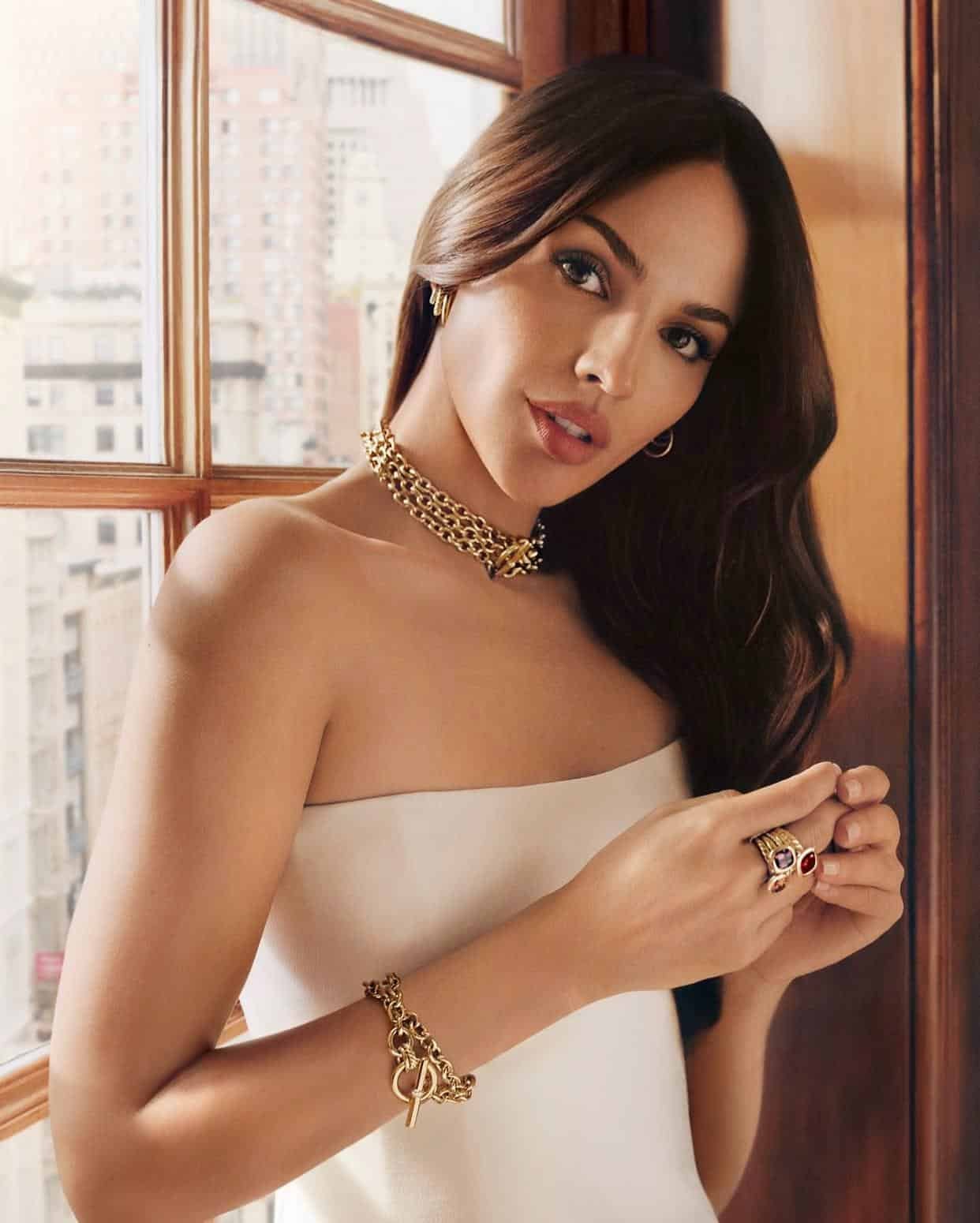
© David Yurman
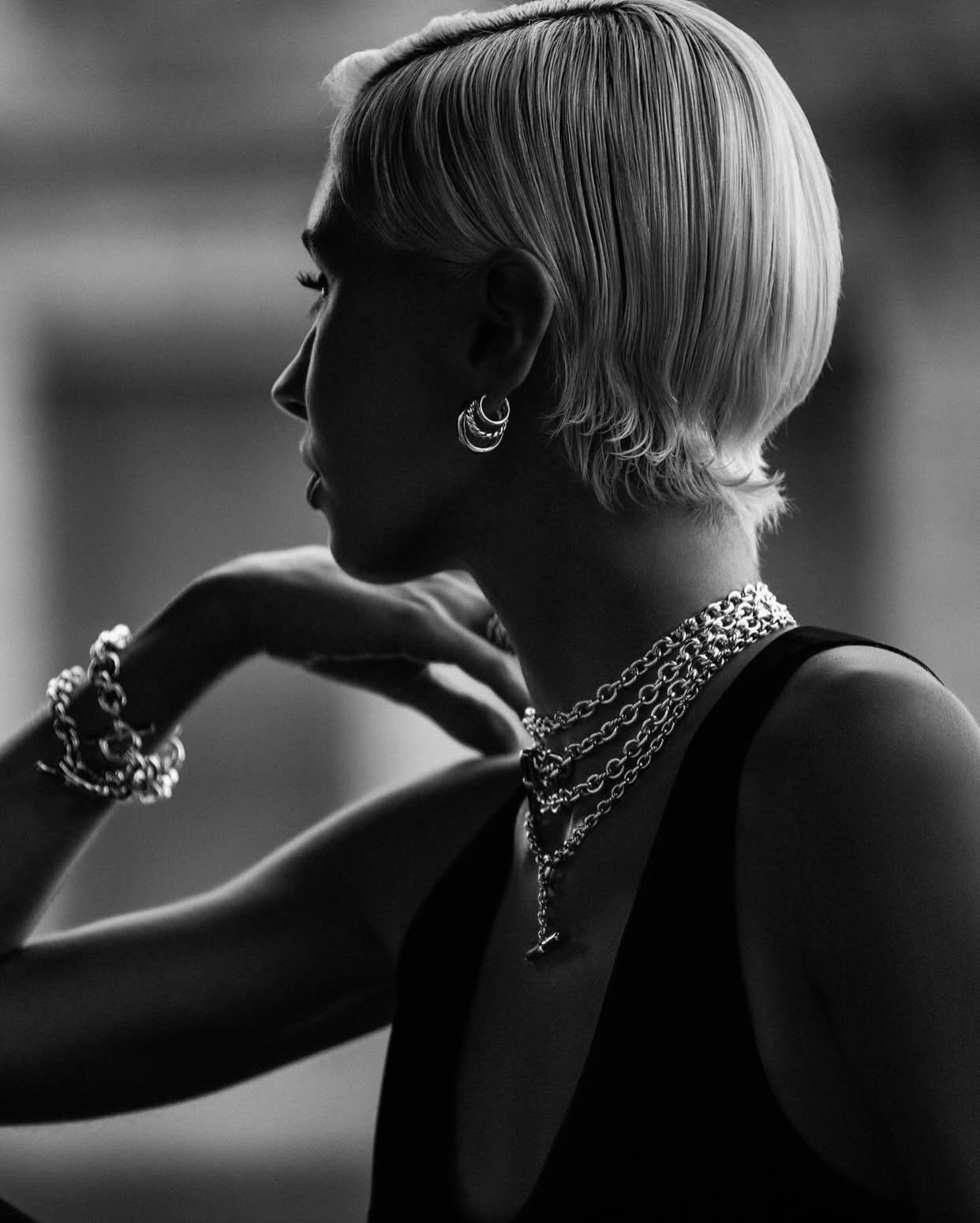
© David Yurman
DAVID YURMAN
© David Yurman