© Celine
© Celine
© Celine
Celine
Handbags
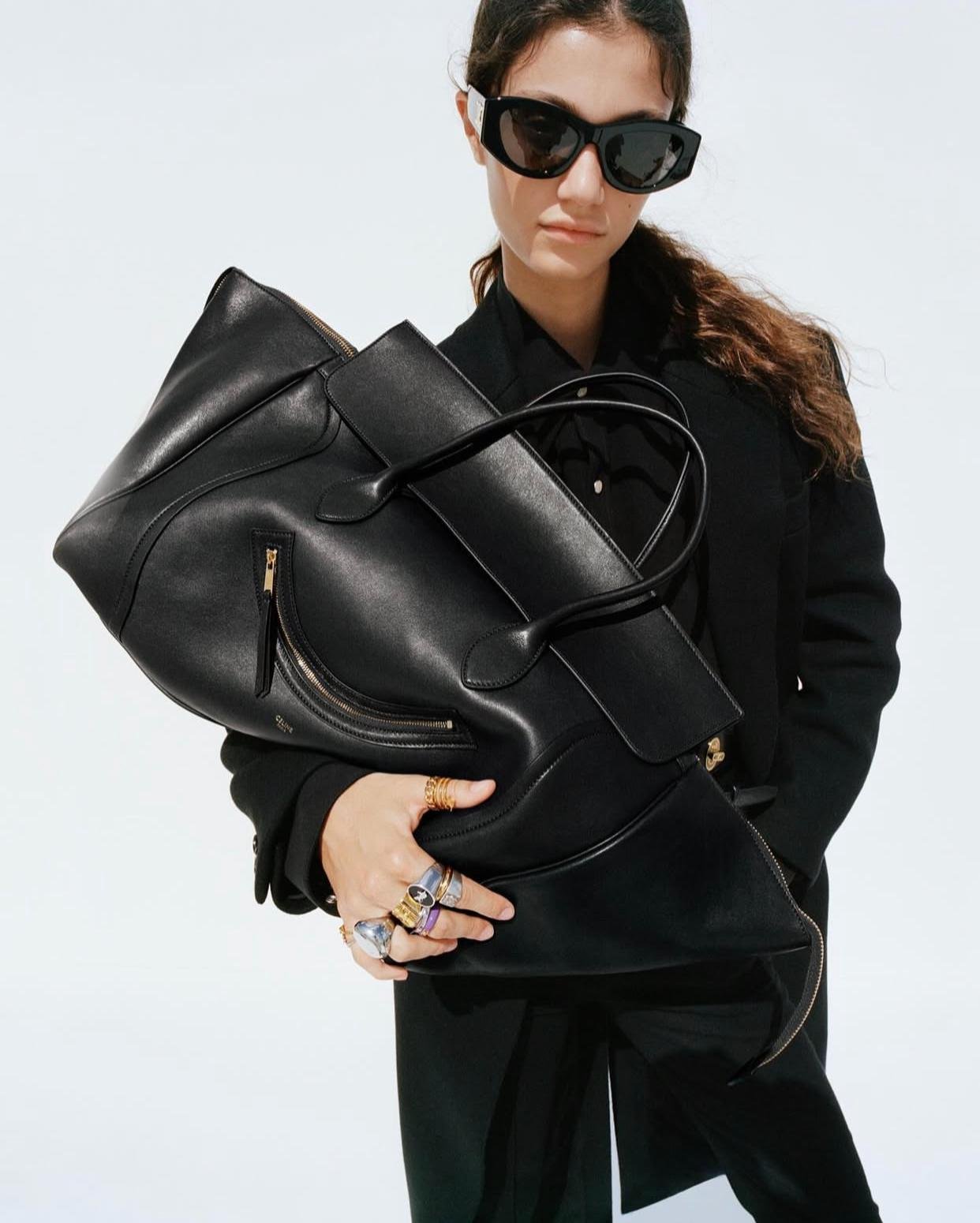
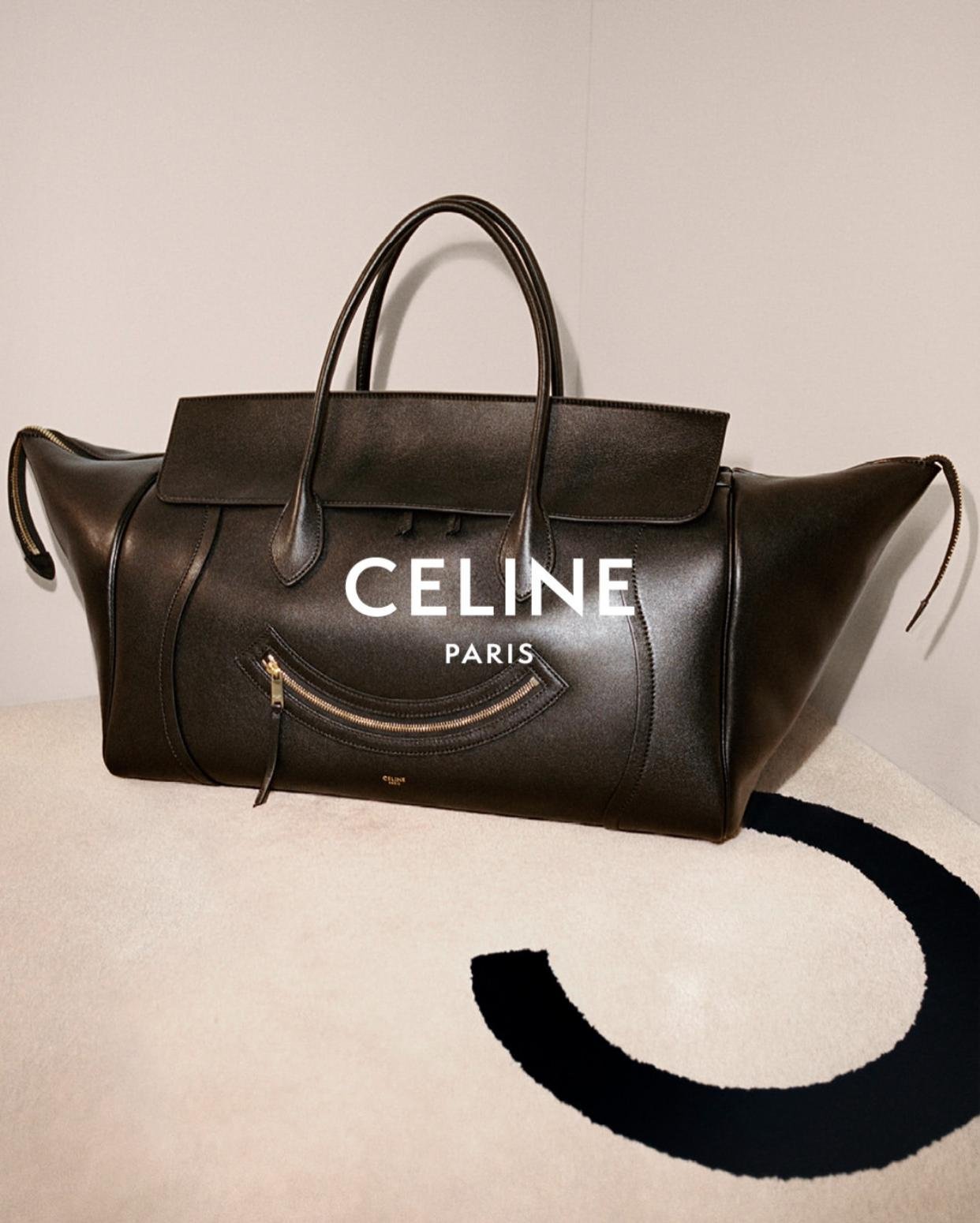
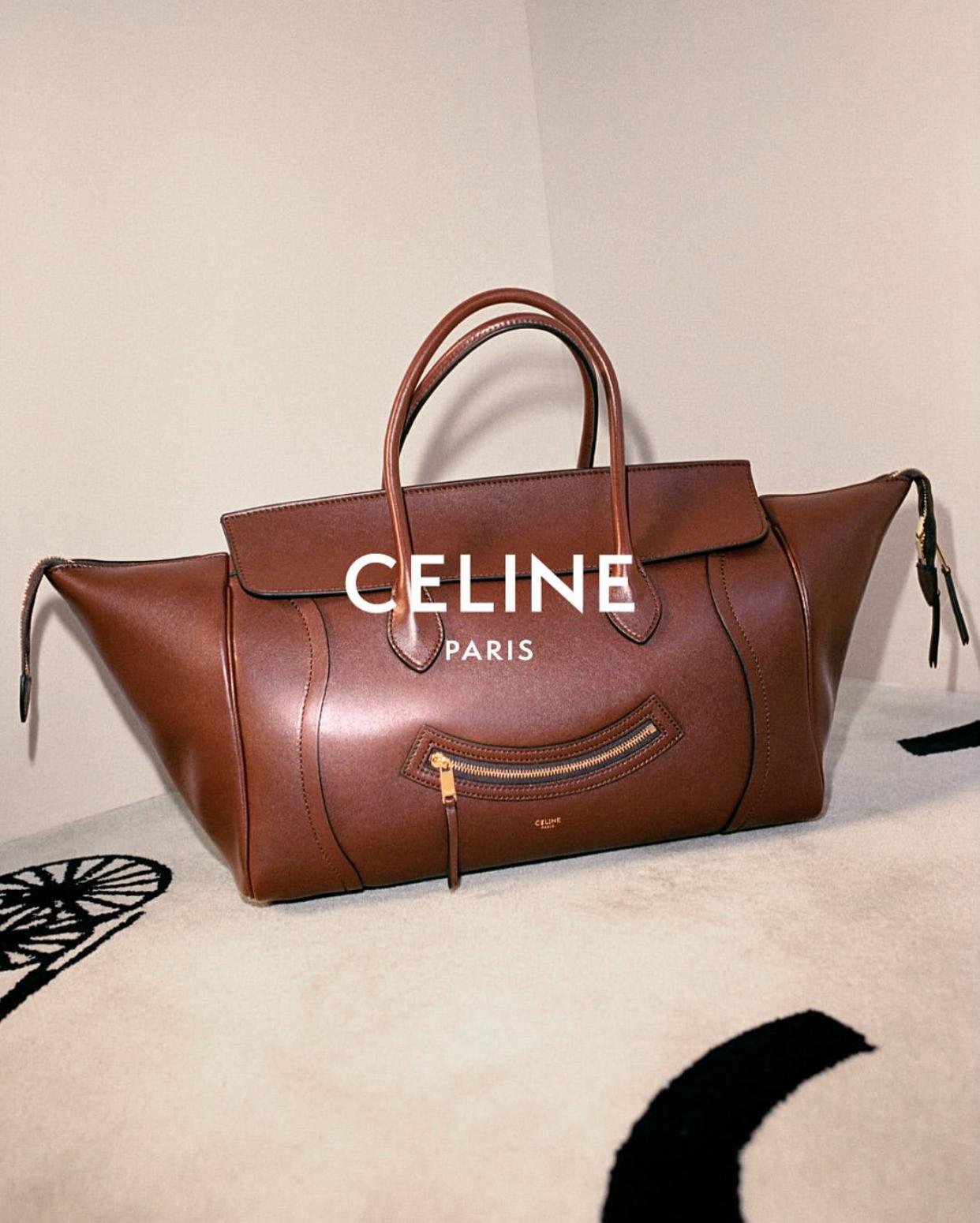
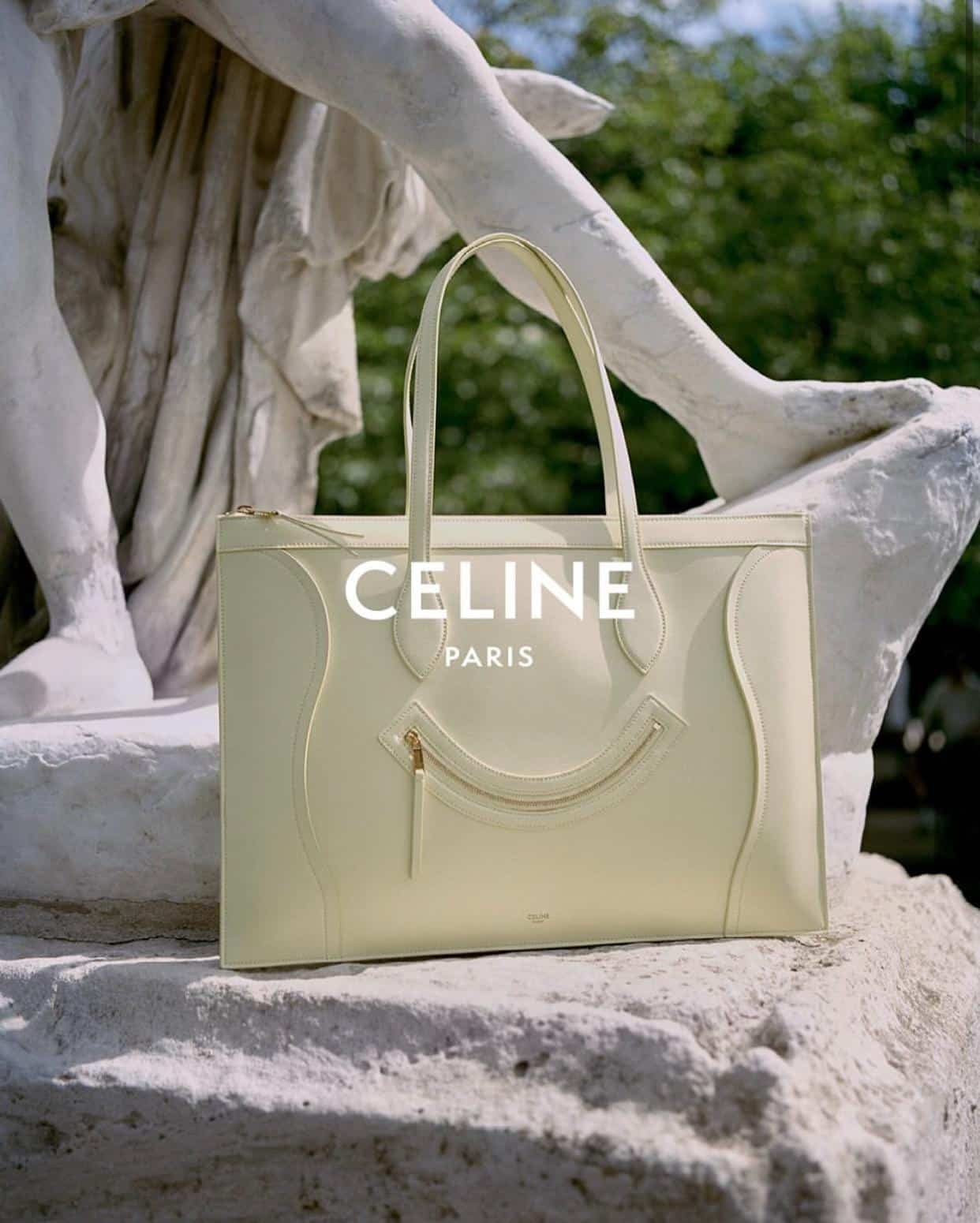
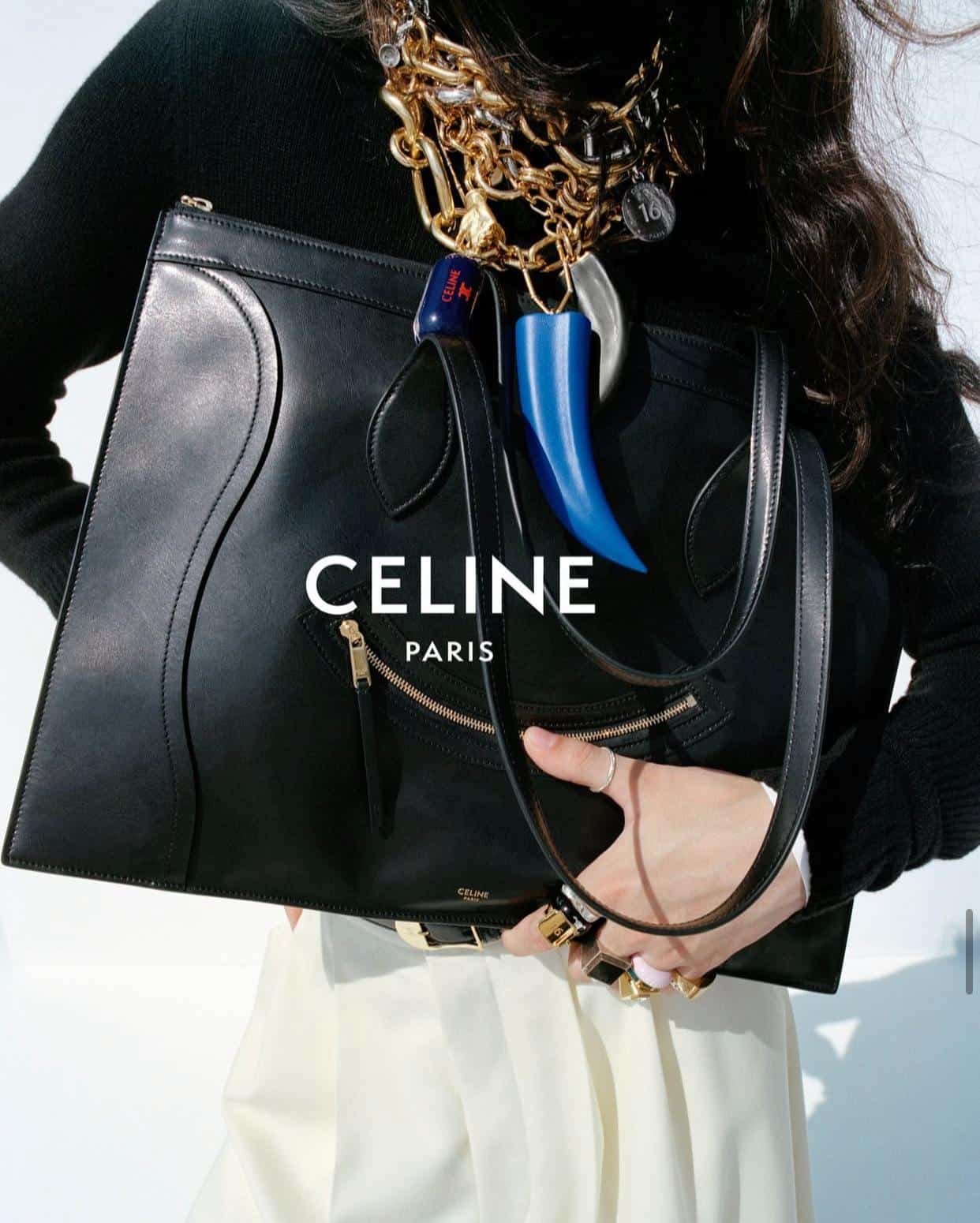
In 2010, Phoebe Philo designed the Luggage bag — a structured tote with two rounded top handles and a zipper across the front. The handles and the zipper formed, incidentally, a face. It was never intended. When Michael Rider arrived in 2025, he added a curved zipper to the Luggage's front. The face smiled for the first time. That single incurvature — applied to a fifteen-year-old bag — announced the beginning of a new era. It is the most precise definition of what a house icon means: something so established that a single detail change tells the whole story.
Paris · 1945 · Leather Goods As House Identity
Céline Vipiana opened her first shop in 1945 on the Rue de Malte in Paris — a made-to-measure children's shoe business, not a fashion house. The pivot to women's ready-to-wear came in 1960; the first leather goods followed. The house changed creative direction multiple times before Phoebe Philo arrived in 2008 and reoriented its entire identity around a specific idea of what women's luxury should feel like: clear, functional, minimal, intellectually precise, physically comfortable. Her bags embodied this idea more completely than any other house's bags of the decade. The Luggage in 2010. The Trapeze and the Classic Box in 2011. The Phantom in 2011. The Trio in 2011. The Belt bag in 2015. Each one designed, as Philo said of her debut collection, by someone who "just thought I'd clean it up" — and whose cleaning-up produced some of the most influential leather goods silhouettes in contemporary fashion. Hedi Slimane followed in 2018 with a different vision — more logo, more hardware, the Triomphe clasp and the Ava crescent — and built an equally substantial accessories franchise. Michael Rider arrived in 2025 with the particular advantage of having been inside Philo's Celine for ten years, and the particular intelligence to smile at the bag that was already almost smiling.
The Luggage · 2010 · The First It-Bag Of The Decade
The Celine Luggage bag debuted in 2010 — derived from a suitcase design from the house's 1970s archive, reimagined as a structured everyday tote with a square bottom, front zipper, and protruding winged sides. It was introduced to the world through a spring 2011 campaign photographed by Juergen Teller in pastel, washed-out images, with Daria Werbowy and Stella Tennant carrying it in two-tone colorways. Within two years, it was on the arm of every celebrity who wanted to signal a particular kind of taste: serious, not flashy, intelligent, practical, desirable without loudness. Mary Kate Olsen carried it. Kim Kardashian carried it. The mid-2010s produced a period of total Luggage saturation. Then it disappeared from the front rows as quickly as it had arrived — associated, suddenly, with the wrong decade, with fur vests and wide-brimmed hats and the early Instagram era. Resale prices dropped. Supply outran demand. And then Michael Rider put a curved zipper on it in 2025, and searches for the Phantom on Vestiaire Collective rose by 700 percent in the week after the runway debut. Resale sales of Celine Luggage bags rose 39 percent in July versus June. The bag had been waiting to smile. It just needed someone to ask.
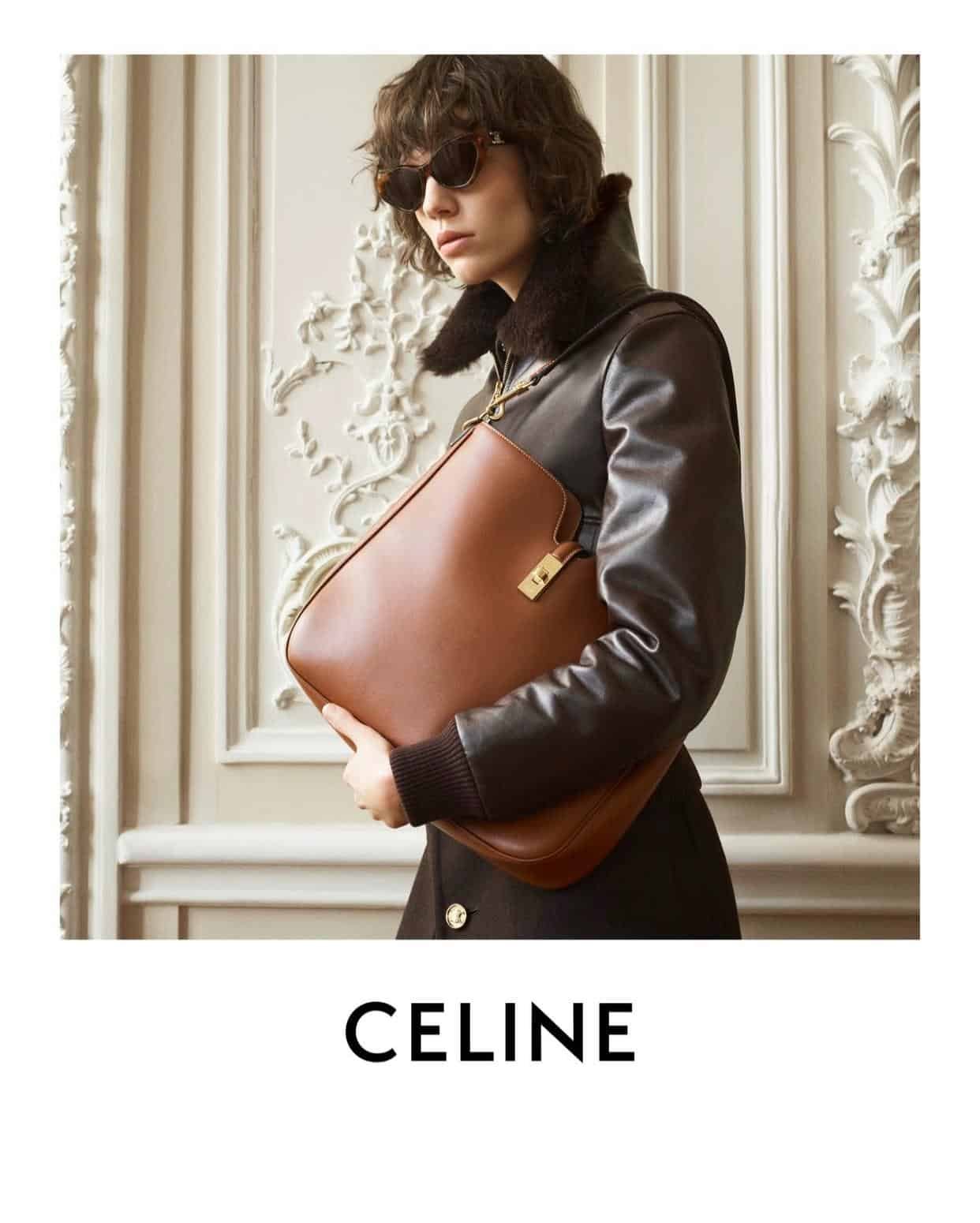
The New Luggage — Michael Rider's first official Celine bag — is the Luggage bag with a curved zipper that transforms the front of the bag into a smile. The Smile Variation, as Celine calls it, launched globally on September 26, 2025, in select stores and on celine.com. Rider also introduced an east-west shape — wider, more relaxed — and expanded the color palette to include Ultra-Red, Citrus, and Ultra-Blue alongside the classic black. Material options span shiny lambskin, suede calfskin, and Porosus crocodile. The Flat Cabas New Luggage, a flat companion format, retails from $2,100. A$AP Rocky, Julia Roberts, and Meryl Streep were among the first spotted carrying the new versions. The campaign was shot by Zoë Ghertner in full color, drenched in sunlight — a deliberate departure from the moody black-and-white photography that characterized the Slimane era's image language. The smile was not only on the bag.
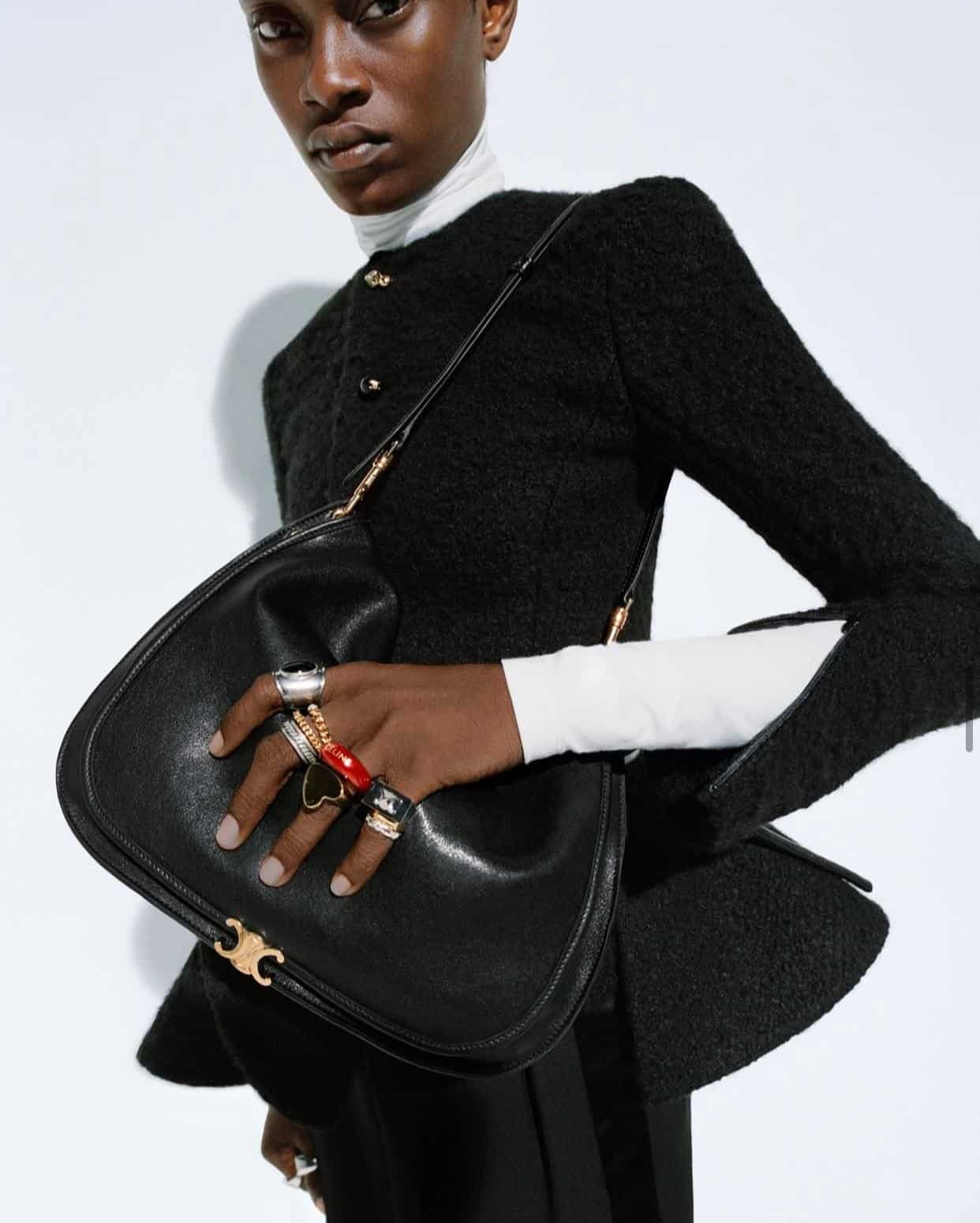
The Celine Phantom — the Luggage's wider, more dramatic sibling introduced by Philo in 2011 — returned on Michael Rider's debut runway in XL format, given an east-west touch and the same curved zipper smile as the New Luggage. Its return was the most immediately reactive moment of the Spring 2026 show for the bag community: searches on Vestiaire Collective surged 700% in the days following the runway. The Phantom had been discontinued under Slimane; its reappearance signaled Rider's intent to bridge all eras of the house — to honor what Philo had built without becoming a curator of her archive. The Phantom is the bag that proves the principle: that great leather goods silhouettes do not become obsolete, they become investments, and investments that wait. Ninety percent of old Celine owners, one resale analyst observed, "are not necessarily looking to sell their Celine." They were waiting for the right moment to carry them again.
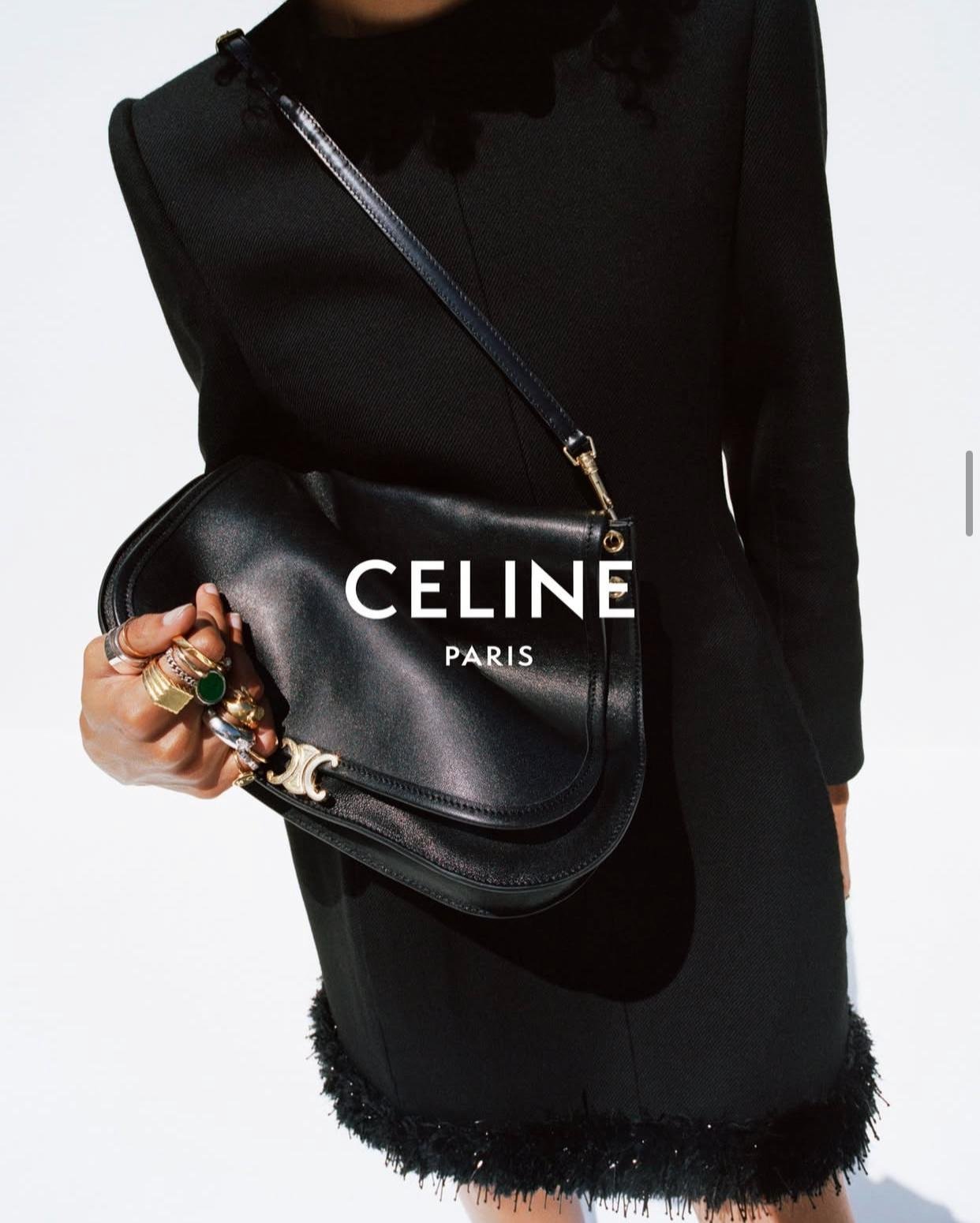
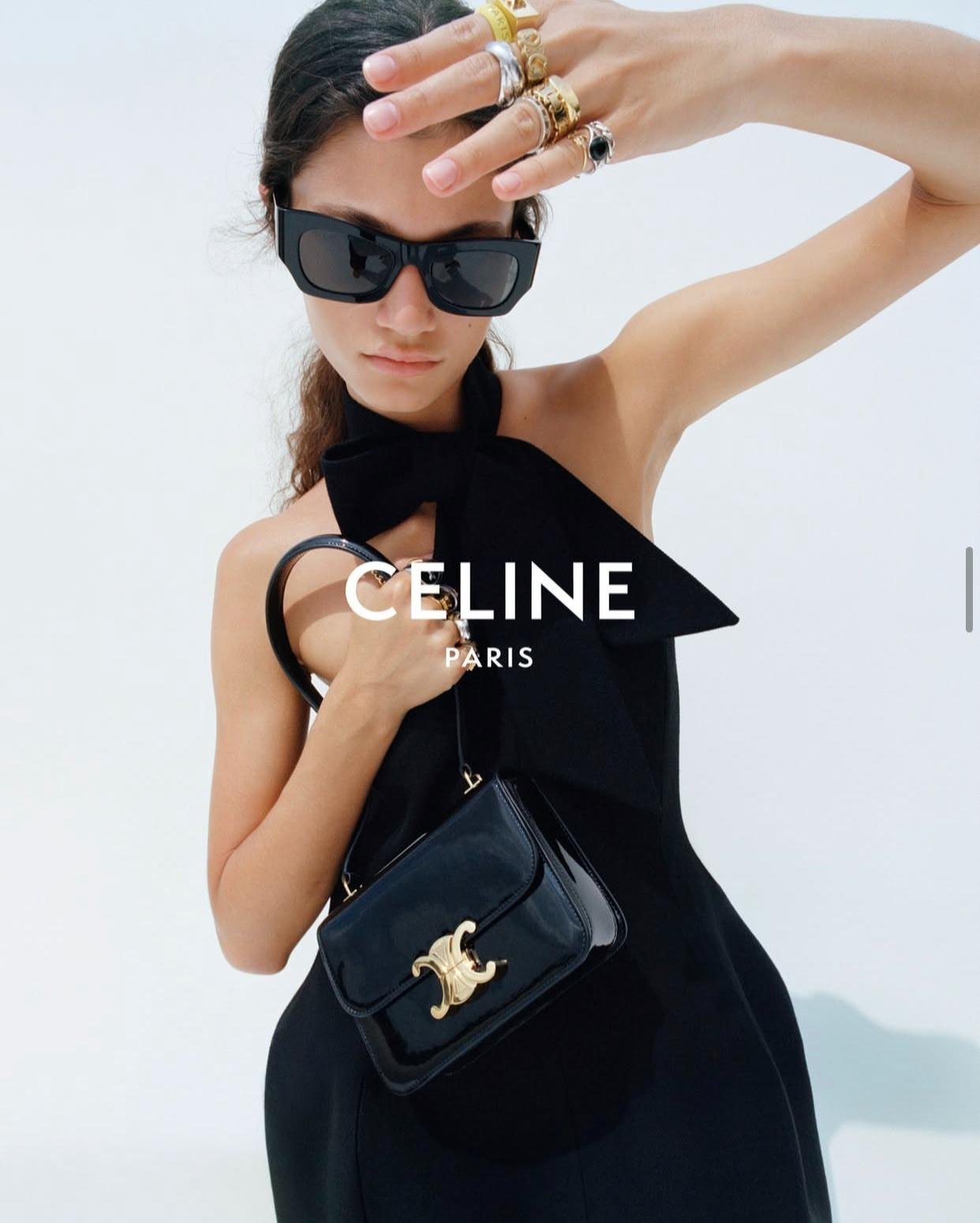
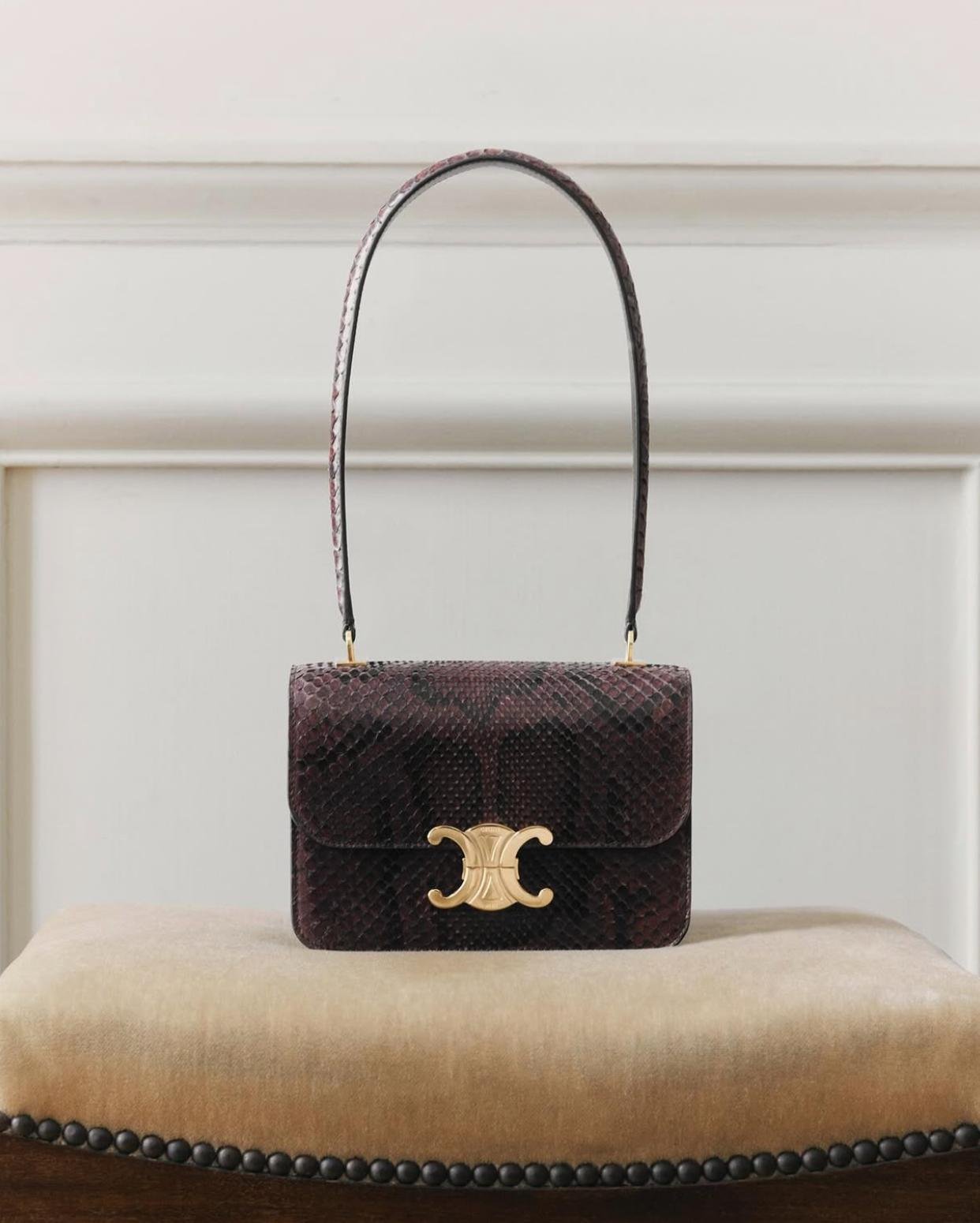
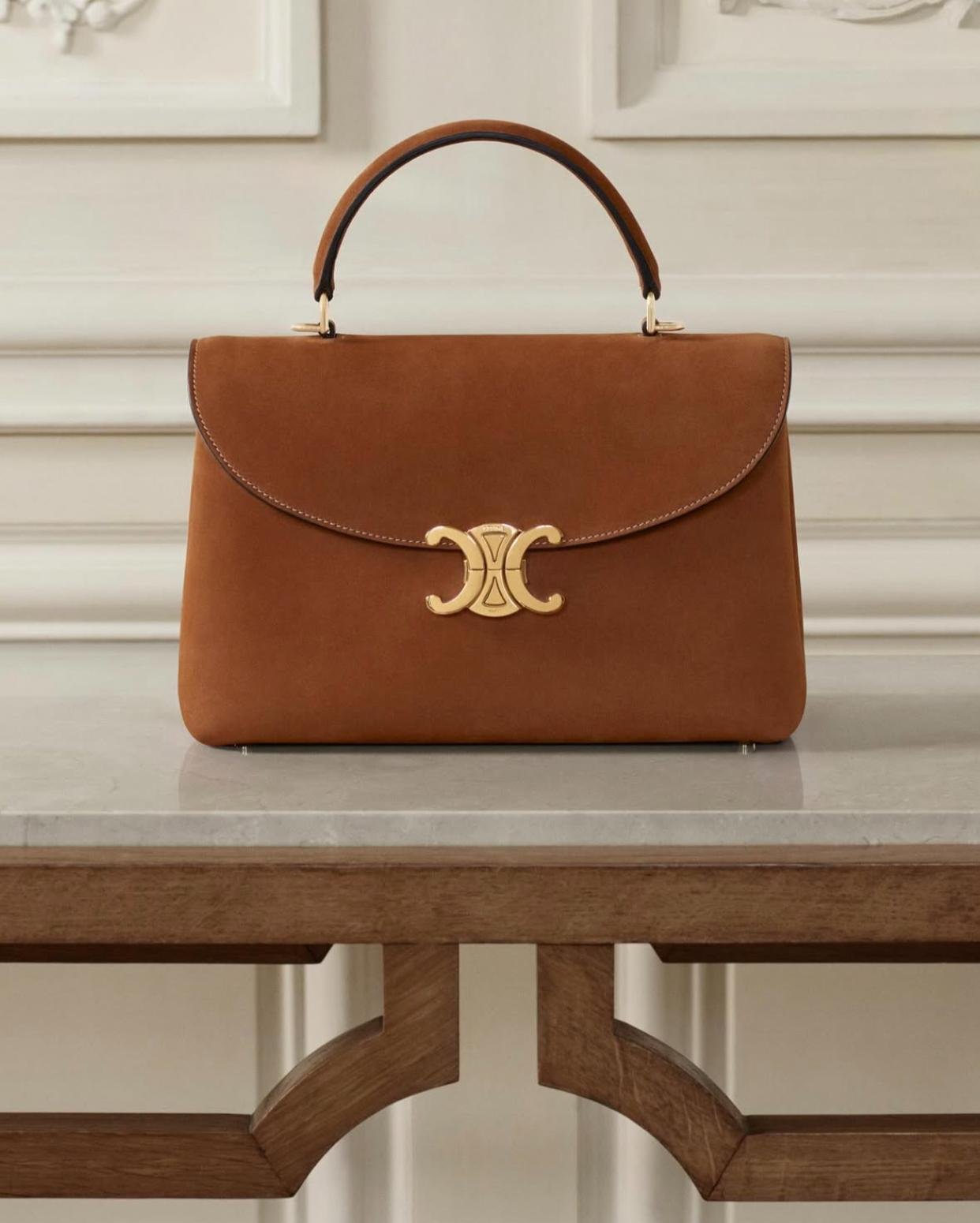
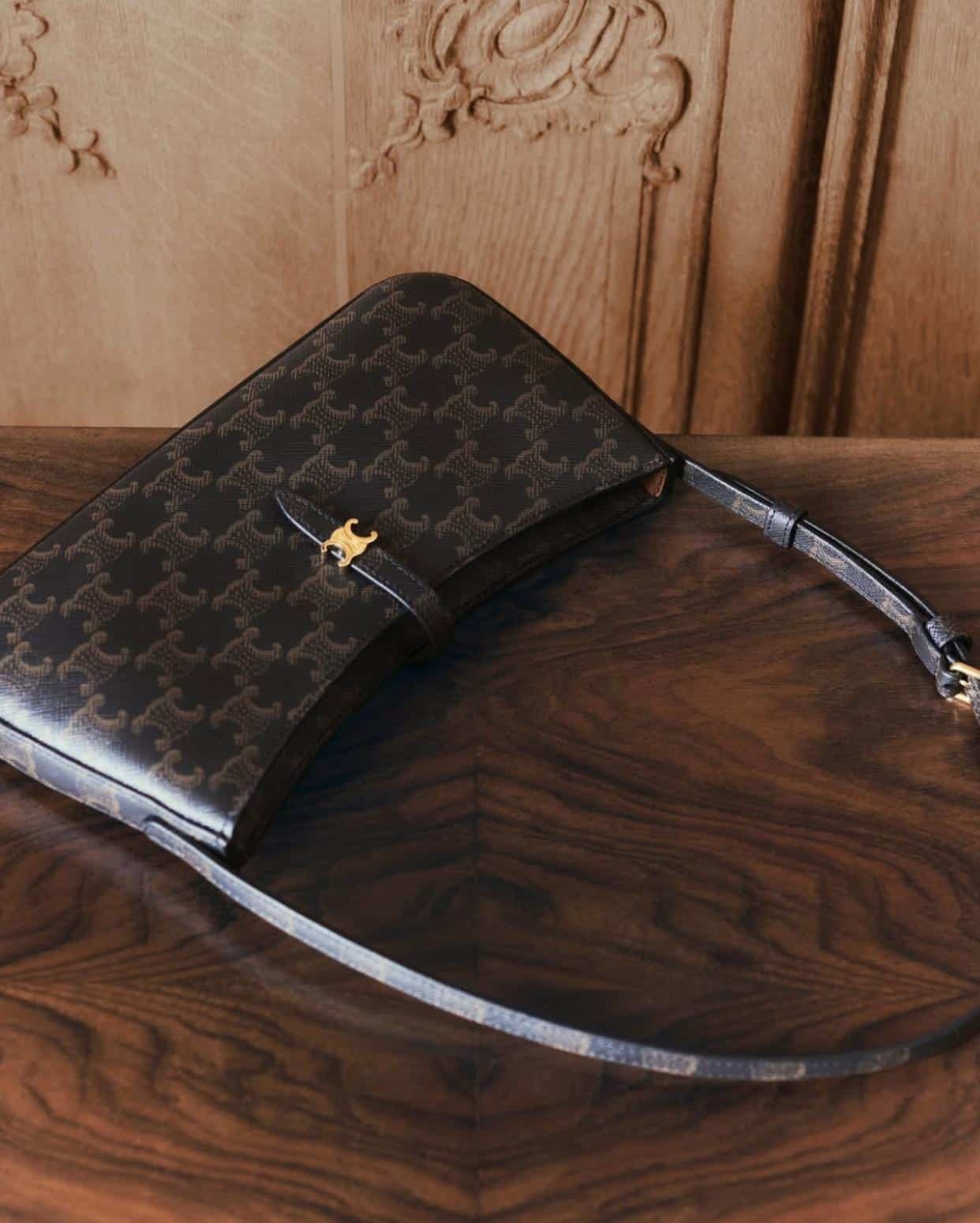
The Triomphe bag — introduced by Hedi Slimane in 2018 as part of his reimagination of the Celine identity — takes its hardware from a vintage Celine logo clasp of the 1970s, enlarged and made prominent on a clean square flap bag. The crossbody format, its gold Triomphe clasp centered on the front, became one of the decade's most immediately legible accessories — carried by Kaia Gerber, Angelina Jolie, and Doja Cat across the full spectrum of celebrity aesthetic. The Triomphe canvas — the interlocking Triomphe logo repeated across a coated canvas ground — became the Slimane era's equivalent of the Philo era's logotype embossed in leather: a way of announcing the house without announcing a specific product. Under Rider, the Triomphe clasp and canvas remain in the collection, though deployed more quietly — present but no longer dominant, the heritage of one era absorbed into the next without erasure.
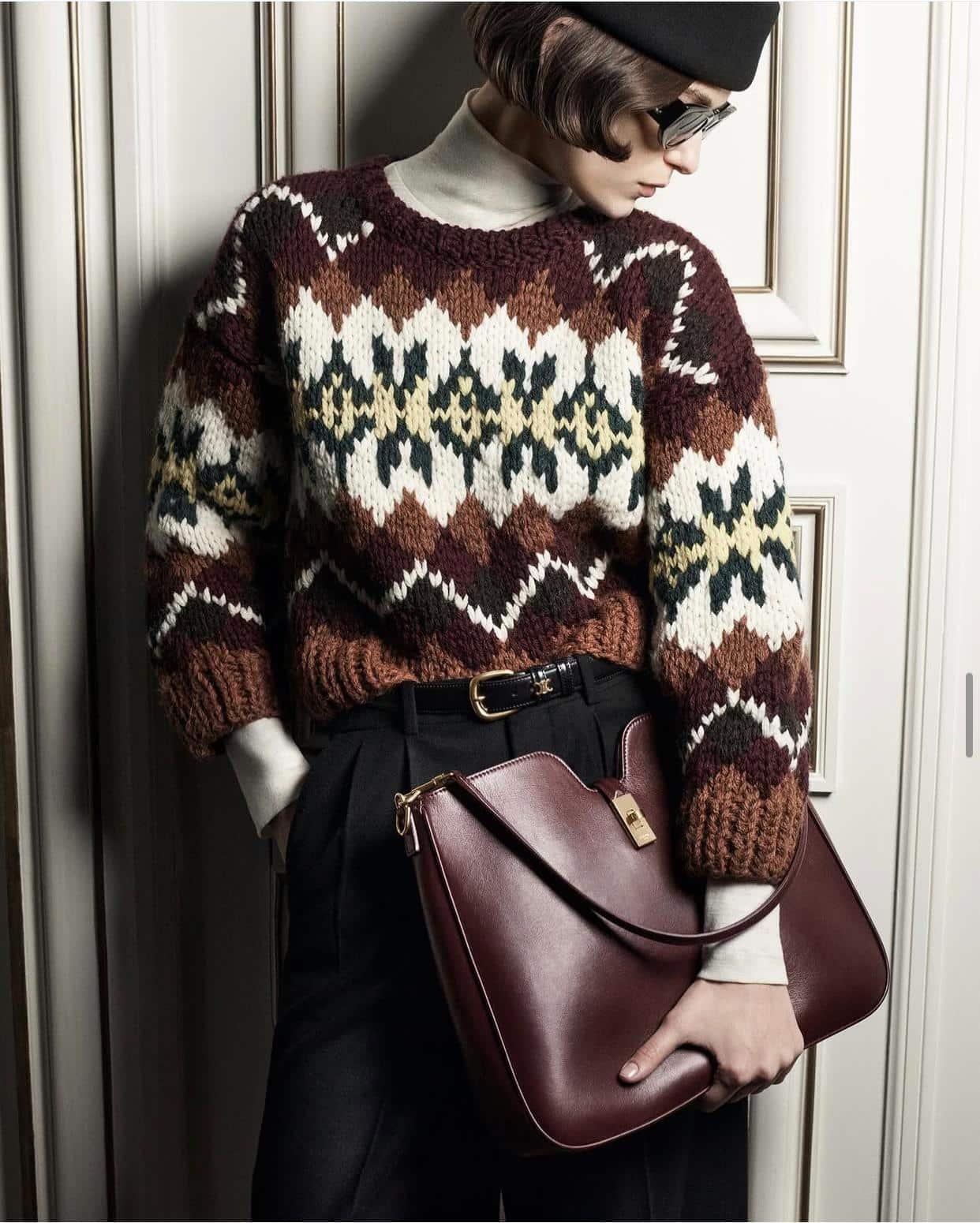
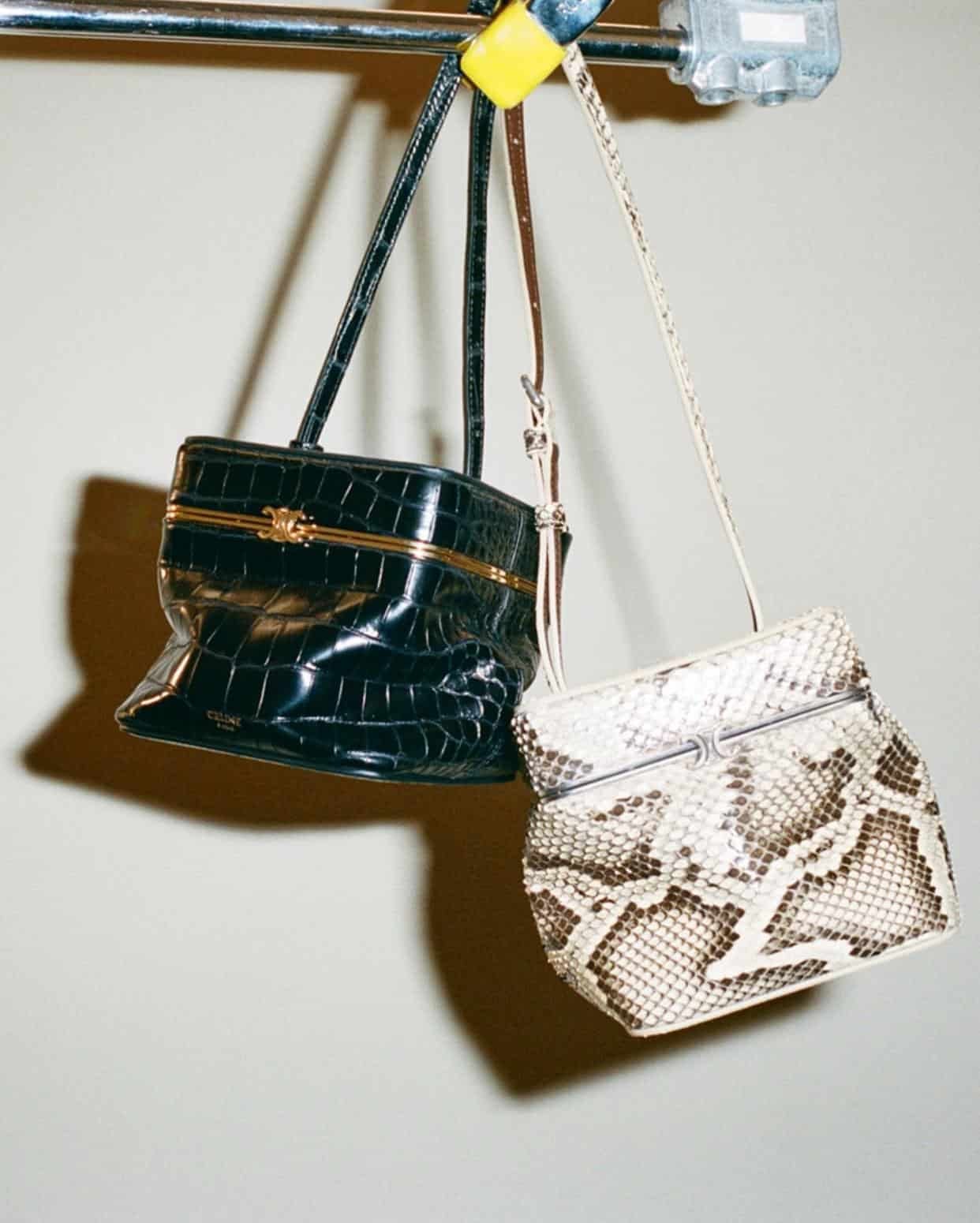
Rider's Spring 2026 debut introduced several new and revived formats alongside the New Luggage. The Trio Flap — a return of Philo's 2011 Trio bag, now unified under a single folded flap with the Triomphe emblem rather than modular separable pouches — in lambskin with jersey lining, the CELINE Paris hotstamp alongside the Triomphe, uniting both house eras in a single object. The Soft Triomphe Besace — a relaxed, accordion-structured crossbody in supple shiny lambskin with a downsized Triomphe clasp that "whispers rather than screams Celine" — in black, Soft Tan, and Syrah at $3,450. The Halfmoon Soft Triomphe in a crescent format that can be tucked under the arm as an oversized clutch. Each piece balances Rider's described ambition: "clothing that lives on, that becomes a part of the wearer's life, that may capture a moment in time but also speaks to years and years of gestures and occasions and change."
The Phoebe Philo-era Celine bags occupy a specific position in the luxury resale market: objects so coveted that their owners are reluctant to release them, and so abundant in supply (from their years of mass production during the 2010s) that prices have not spiked in the way of rarer archive pieces. "Ninety percent of old Celine owners are not necessarily looking to sell their Celine," the CEO of Rebag has said. "Most Celine sells in the first thirty days on The Real Real." The Luggage in good condition ranges from $1,500 to $3,500. The Classic Box from $1,200 to $2,000. The Phantom in rarer colorways or exotic materials commands a premium. The Trapeze, discontinued in 2017, remains among the most affordable and most functional Philo-era pieces for new collectors. Each of these bags is described, consistently, by those who carry them as possessing the same quality: they improve with age, they match everything, and they feel like nothing that replaced them.
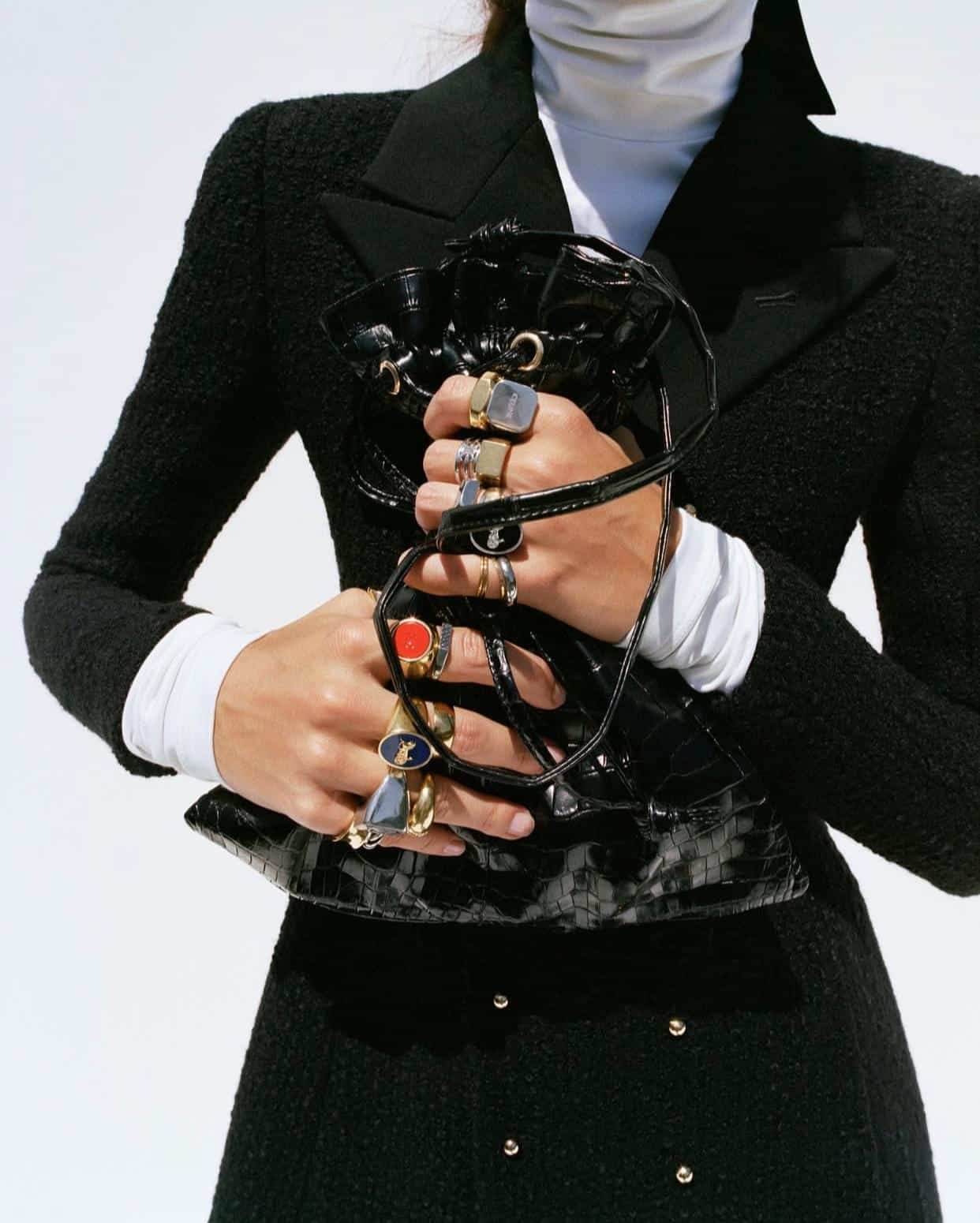
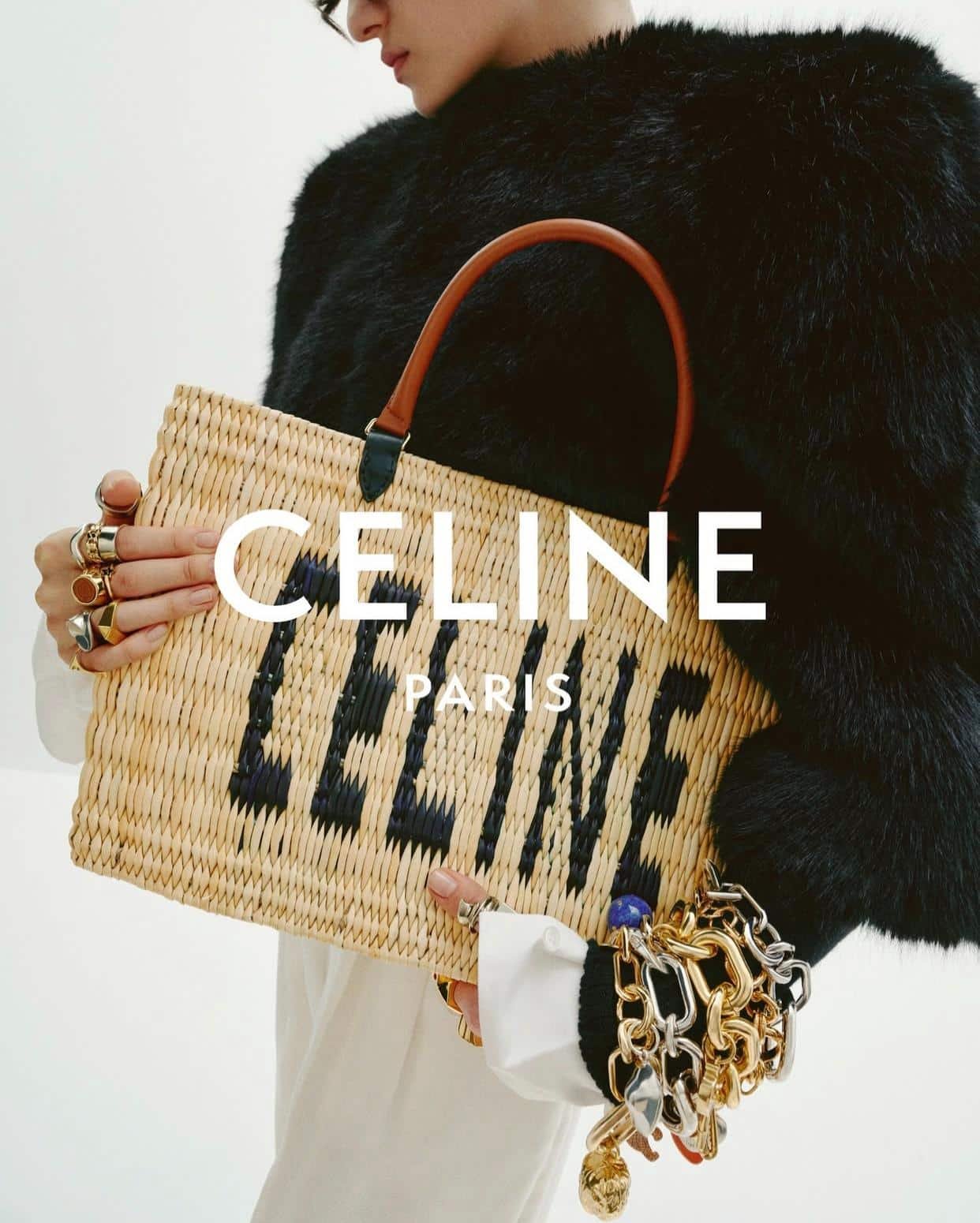
The Celine accessories ecosystem extends well beyond handbags — the Triomphe sunglasses are a perennial it-buy, among the most consistently repurchased luxury eyewear in the market, their oversized square frames and gold Triomphe hardware among the most photographed at any fashion week worldwide. Small leather goods — card holders, coin purses, zip pouches in Triomphe canvas — carry the house codes in the most accessible format. Under Rider, the jewelry has been emphasized: gold chains worn in abundance, layers of colorful necklaces and rings, the gold charms that appeared throughout the Spring 2026 runway winking at a 1992 Celine campaign where models wore identically excessive gold jewelry with tweed sets. The accessories are not afterthoughts. They are the entry point to the house — the Celine Triomphe sunglasses on someone's face before they can afford the Luggage; the card holder that precedes the bag; the moment of recognition that begins a longer relationship.
Phoebe Philo designed the Luggage bag in 2010.
Its two handles and front zipper formed, incidentally, a face.
It was never intended to look like anything.
Michael Rider arrived in 2025
and added a single curved zipper.
The face smiled for the first time.
Searches for the Phantom on Vestiaire
rose 700% in the week that followed.
A single incurvature.
Fifteen years.
The longest setup for a smile in fashion history.
The Celine bag story is, in condensed form, the story of what happens to a luxury accessories house across three distinct creative eras — each one building on and departing from what preceded it, each one producing objects that define their moment and then outlast it. Philo's decade produced the Luggage, the Phantom, the Trio, the Classic Box, the Belt bag — objects so precisely calibrated to what women in the 2010s wanted from a bag that they remain, in resale, the house's most actively hunted archive pieces. Slimane's six years produced the Triomphe bag, the Ava, the Triomphe canvas — objects that spoke directly to a different generation's desire for visible heritage and hardware presence. And Rider's opening chapters have produced the New Luggage with its curved smile, the Trio Flap that unites both eras' signatures, and the Soft Triomphe Besace that holds the Triomphe clasp at a quieter volume. The three eras coexist in a single boutique. The Luggage and the Triomphe on the same shelf. The Phantom and the Ava side by side. A house that has built enough history to have multiple concurrent vocabularies — and a new director who knows all of them from the inside.
650 Madison Avenue · New York · The Celine Flagship
Celine's New York handbag presentation is centered at the 650 Madison Avenue flagship — the same address that houses the ready-to-wear collection, and the boutique that Hedi Slimane designed in 2019 with basaltina lava stone floors, ginger and cream-veined black granite, and site-specific artworks by James Balmforth and Jose Dávila. The full handbag range is available at this address: the New Luggage and Flat Cabas in the Smile Variation, the returning Phantom, the Trio Flap, the Soft Triomphe Besace and Halfmoon, the Triomphe crossbody and canvas bags, the Ava, and the Triomphe sunglasses and small leather goods. New York has long been a significant market for Celine accessories — one of the first cities where the original Luggage generated its decade-defining demand, and one of the first where Michael Rider's smile registered as exactly the right gesture at exactly the right moment.
650 Madison Avenue · New York, NY 10022
New Luggage · Smile Variation · Phantom · Trio Flap · Soft Triomphe Besace
Triomphe · Ava · Classic Box · Triomphe Canvas · Triomphe Sunglasses
Michael Rider — Creative Director since 2025
Founded Paris 1945 · LVMH Group · celine.com/en-us
The Luggage bag had two handles
and a zipper that formed a face
since 2010.
Nobody noticed it was almost smiling.
Fifteen years later,
Michael Rider added a curved zipper
and the face finally smiled.
Phoebe Philo didn't know
she had designed a face.
Michael Rider noticed
what she hadn't seen.
That is what creative directors do
when they know the archive well enough:
they find what was always there
and finish it.
© Celine
© Celine
© Celine
© Celine
© Celine
© Celine
© Celine
© Celine
© Celine
© Celine
© Celine
© Celine
© Celine
© Celine
© Celine
© Celine
CELINE
© Celine