© Chopard
© Chopard
© Chopard
Chopard
Women's Watches
In 1993, Caroline Scheufele presented a watch that combined steel with diamonds — a proposition the workshop told her was impossible, improper, and commercially hopeless. The Happy Sport became Chopard's best-selling watch. The workshop manager sent her a rosebush. It has bloomed ever since.
The Dancing Diamond · 1976 · The Founding Idea
The story of Chopard's women's watchmaking begins with a walk in the Black Forest in 1976. Ronald Kurowski — the house's in-house designer — observed sunlight playing across a waterfall and understood something about diamonds: that their beauty was maximized not when they were fixed in a setting but when they moved, catching light from every direction simultaneously. He developed a system of capsules with bevelled bases, placed between two sapphire crystals, that allowed diamonds to spin freely above the watch dial without scratching the surface. The first Happy Diamonds watch was a cushion-shaped men's piece with thirty dancing stones. It received the Golden Rose of Baden-Baden award immediately upon release.
Karin Scheufele — Karl Scheufele's wife, mother of Caroline and Karl-Friedrich — saw the first prototype and said something that became the house's organizing principle: "Diamonds are happier when they are free." Her daughter Caroline absorbed this conviction completely. In 1985, she extended the dancing diamond principle into jewelry. In 1993, she transformed it into the watch that changed Chopard's identity entirely.
Happy Sport · 1993 · The Watch That Changed The Rules
Caroline Scheufele designed the Happy Sport from a personal conviction: that she wanted a watch she could wear twenty-four hours a day, from the gym to the office to a dinner in town — and that no such watch existed for women who wanted diamonds on their wrist without sacrificing practicality. Her solution was radical for 1993: pair the dancing diamonds of the Happy Diamonds jewelry collection with a stainless steel case robust enough for daily life. The workshop's response was that diamonds belonged in precious metals, not steel — that the combination would read as a contradiction in terms. Caroline Scheufele proceeded. The seven dancing diamonds — spinning freely above the silver dial in their sapphire crystal capsules — became the most recognizable element in Chopard's history. The Happy Sport has since produced over one thousand variations. It remains the house's commercial foundation.
In 2021, Chopard produced Happy Sport The First — a faithful homage to the 1993 original, limited to 1,993 pieces in tribute to the year of creation, powered by an in-house automatic movement designed specifically for women's proportions, its 33mm case calibrated using the golden ratio. A second edition of 788 pieces — 788 being a lucky number for Caroline Scheufele — featured a diamond-set bezel and mother-of-pearl dial. The message of the reissue was explicit: nothing beats the first.
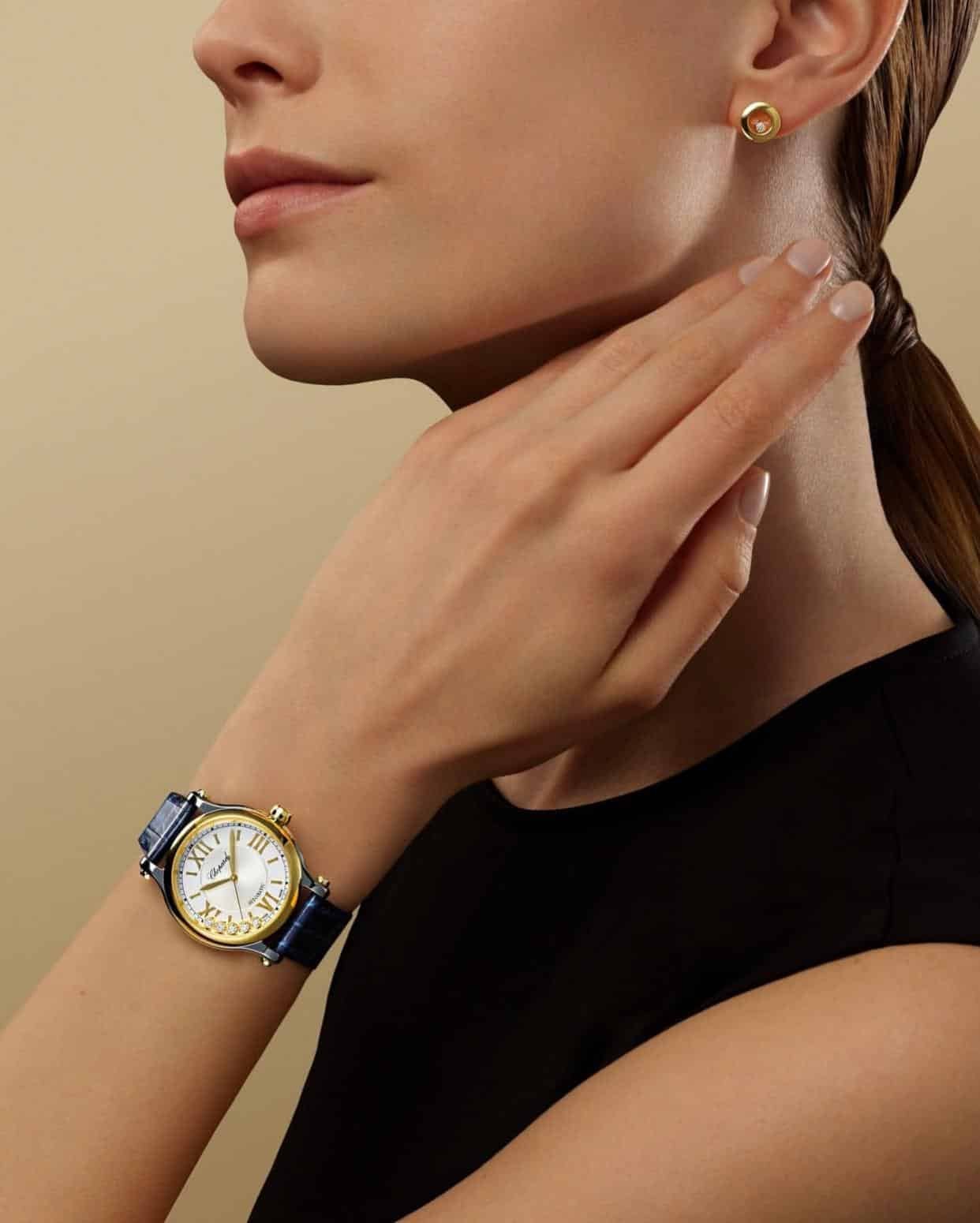
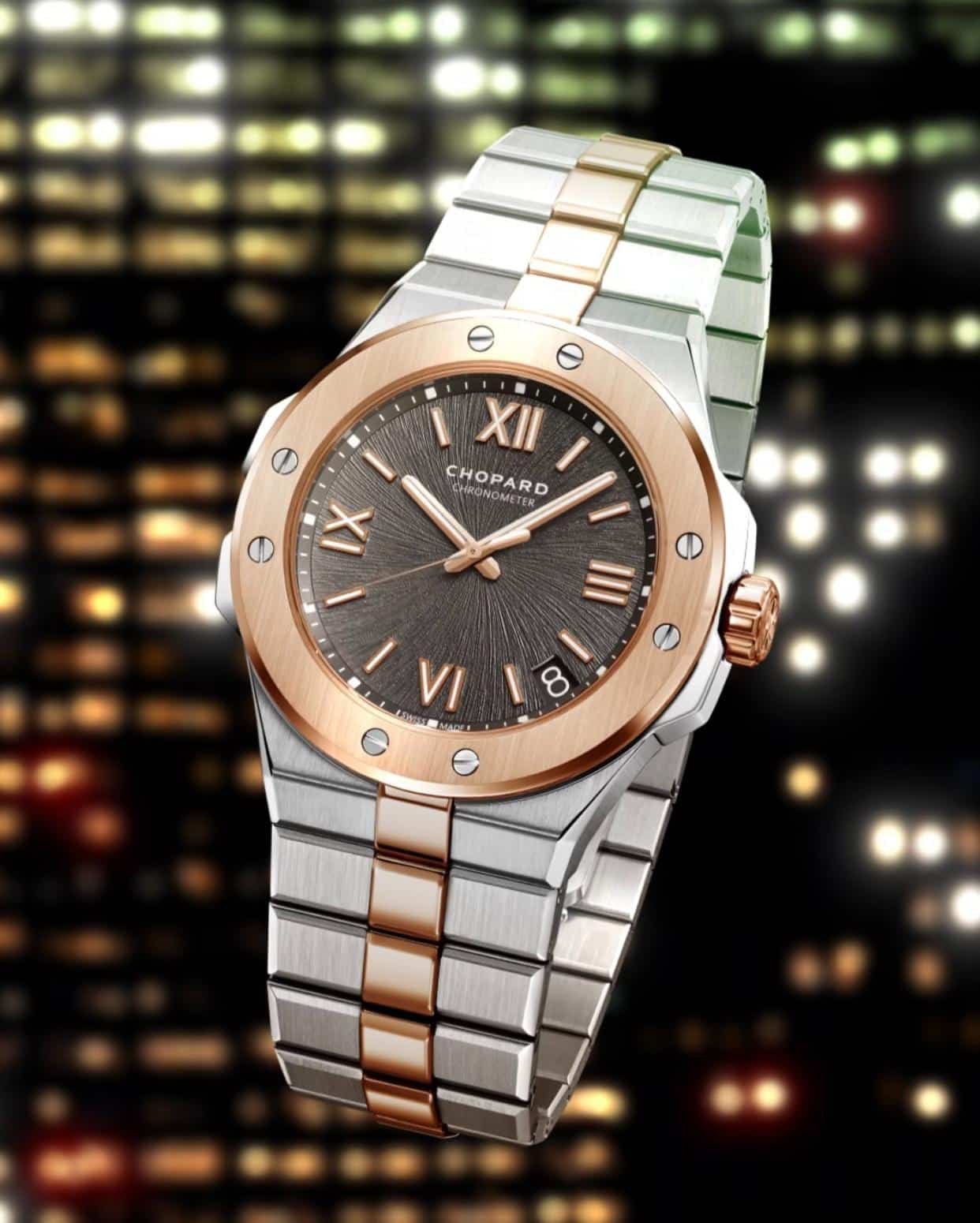
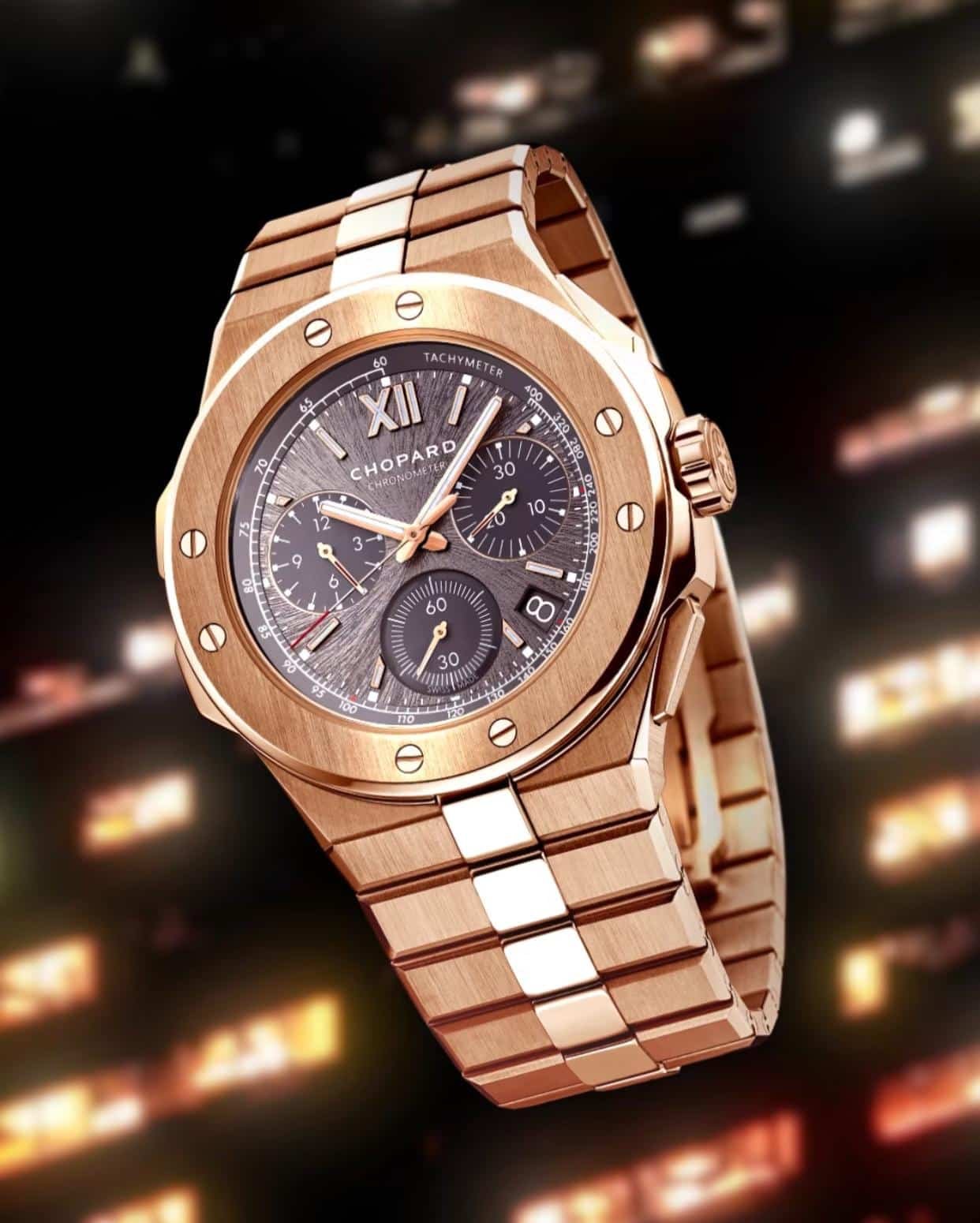
The Happy Sport's defining technical element is also its most visible: seven brilliant-cut diamonds enclosed in individual capsules between two layers of sapphire crystal, free to spin above the dial with every movement of the wearer's wrist. The choreography is never the same twice — the diamonds respond to the wearer's particular rhythm, her particular day, her particular pace through the world. The case is now produced in Lucent Steel — a proprietary alloy developed over four years of research, composed of at least 80% recycled materials, 50% harder than conventional steel, antiallergenic, and luminous in a way that gives it what Chopard describes as an ethereal incandescence. Available in 30mm and 36mm, with quartz and in-house automatic movements, in stainless steel, rose gold, and precious metal configurations. The black lacquered version — released in 2024 — paired the black dial with an onyx-set crown, the dancing diamonds now spinning against darkness rather than light.
The Happy Diamonds Icons watches are the most direct translation of the 1976 invention into watchmaking — round cases in which the dancing diamond principle governs the entire dial space rather than appearing as seven stones above it. Available in yellow, white, and rose gold with varying numbers of free-moving diamonds and colored stone combinations. The collection bridges the space between the Happy Sport's sporty accessibility and the L'Heure du Diamant's jeweled precision — a piece that belongs equally to watchmaking and jewelry, that could sit alongside either in a collection, and that does not require a choice between the two. The diamonds move. Everything else is architecture for their movement.
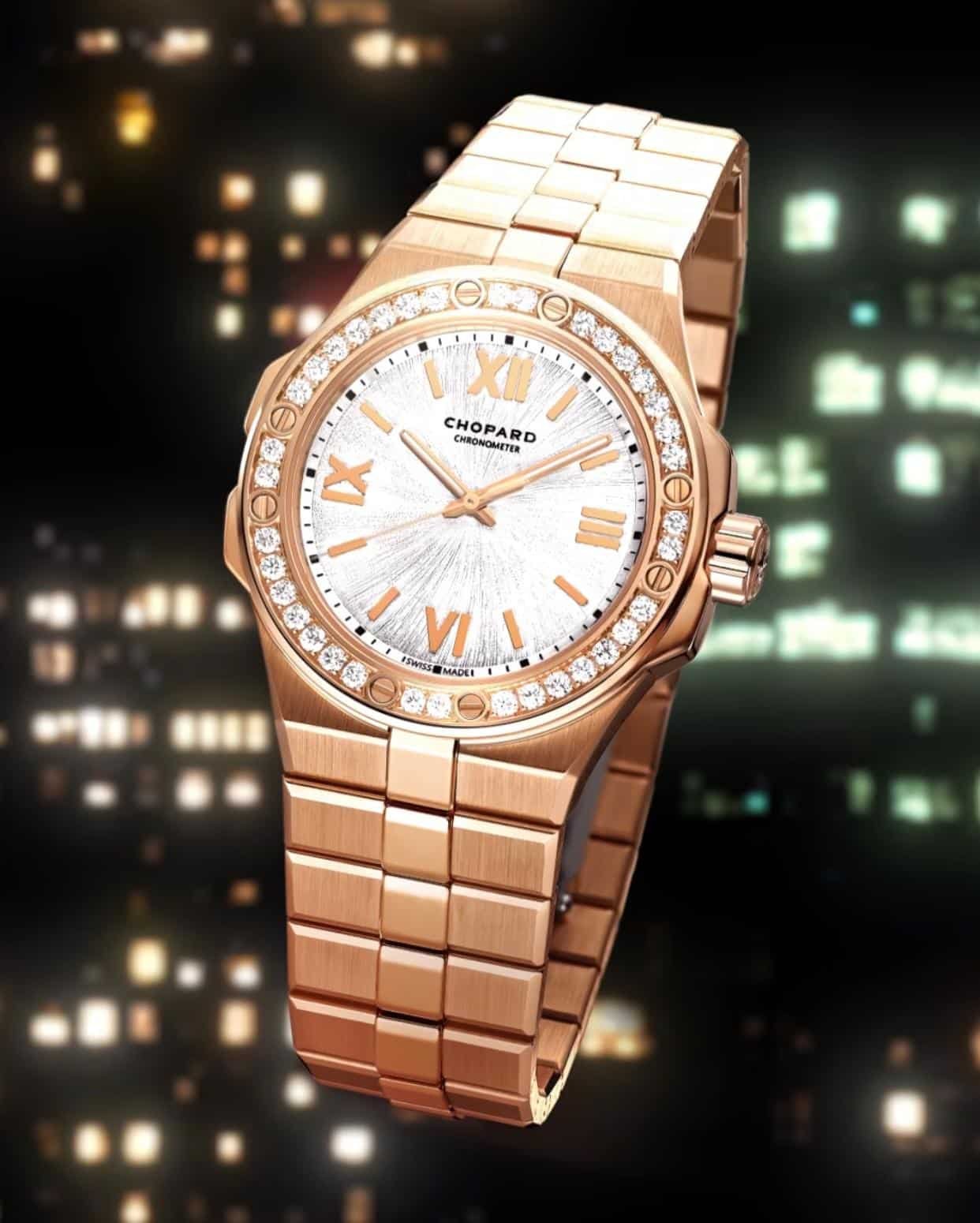
L'Heure du Diamant — the diamond hour — is the collection in which Chopard's gem-setting expertise is pushed to its absolute limit: diamond-encrusted cases, dials, and bezels in which the prong-setting technique creates a density of brilliance that allows no metal to be visible between stones. At Watches & Wonders 2024, the collection introduced an octagonal case form for the first time in its history — a 32mm octagon in ethical gold with mother-of-pearl or malachite dials, the diamonds set in a unique crown technique that encircles the dial. The in-house Chopard 09.01-C movement powers the piece behind a transparent caseback. L'Heure du Diamant is not a watch with diamonds on it. It is a diamond object that contains a watch.
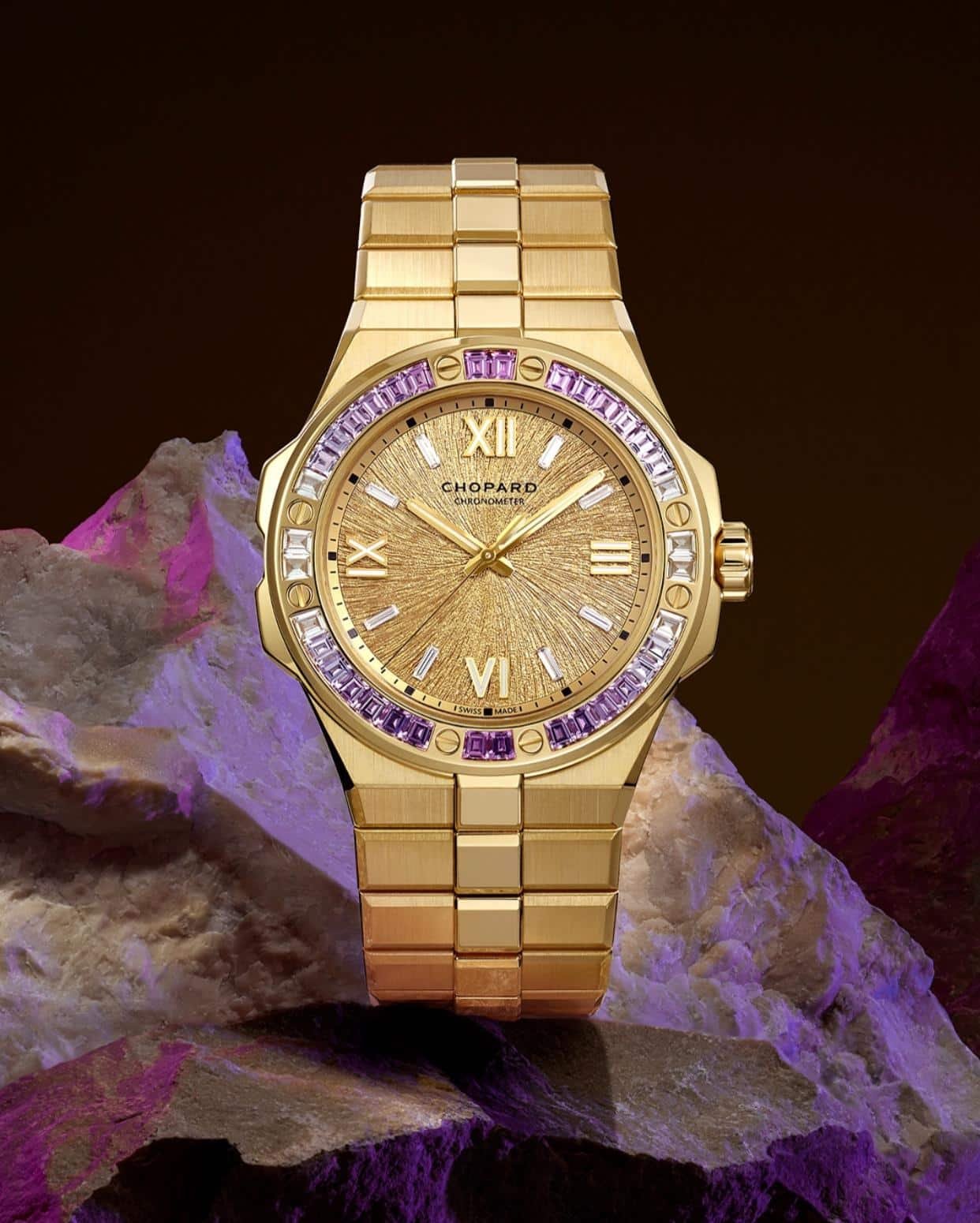
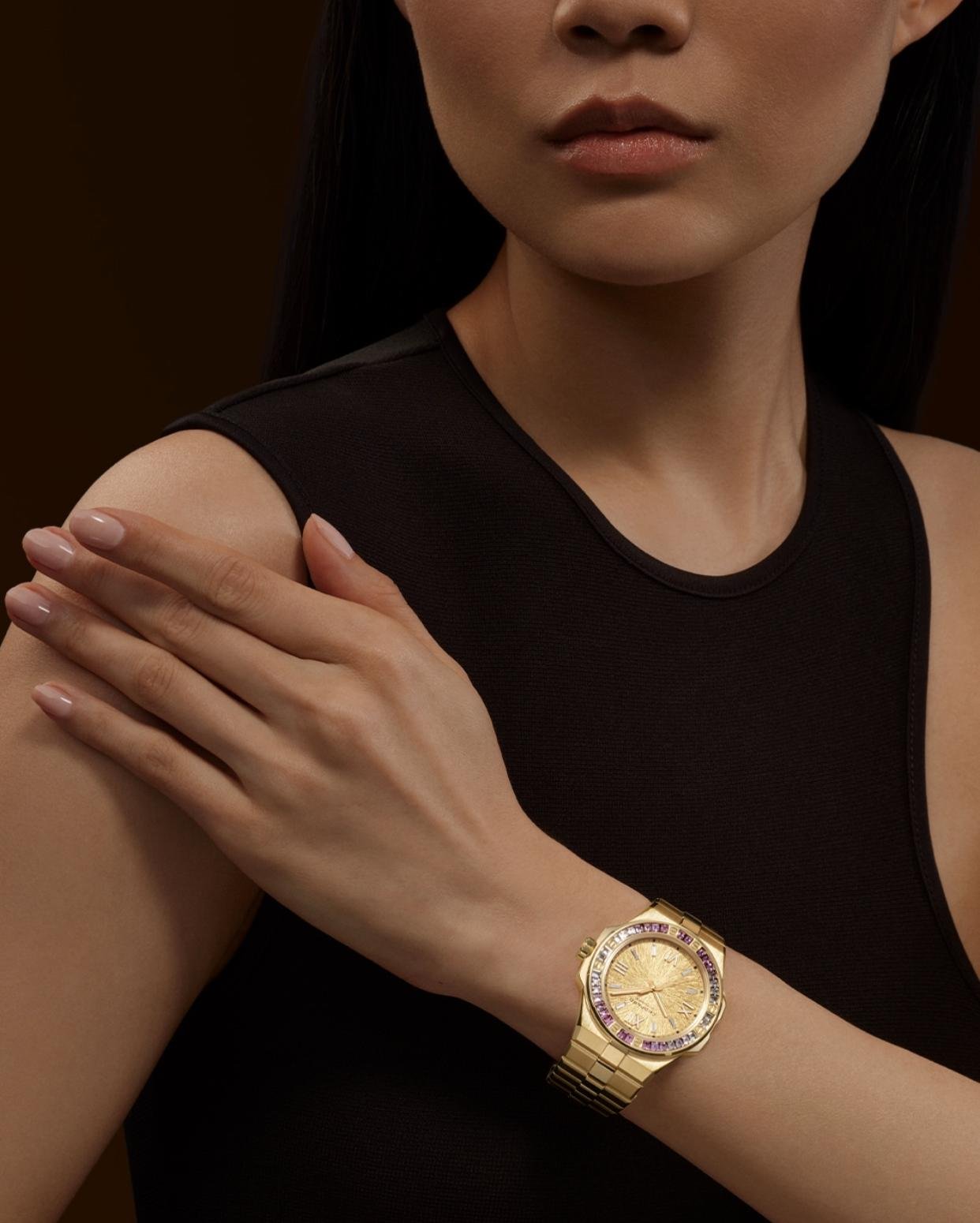
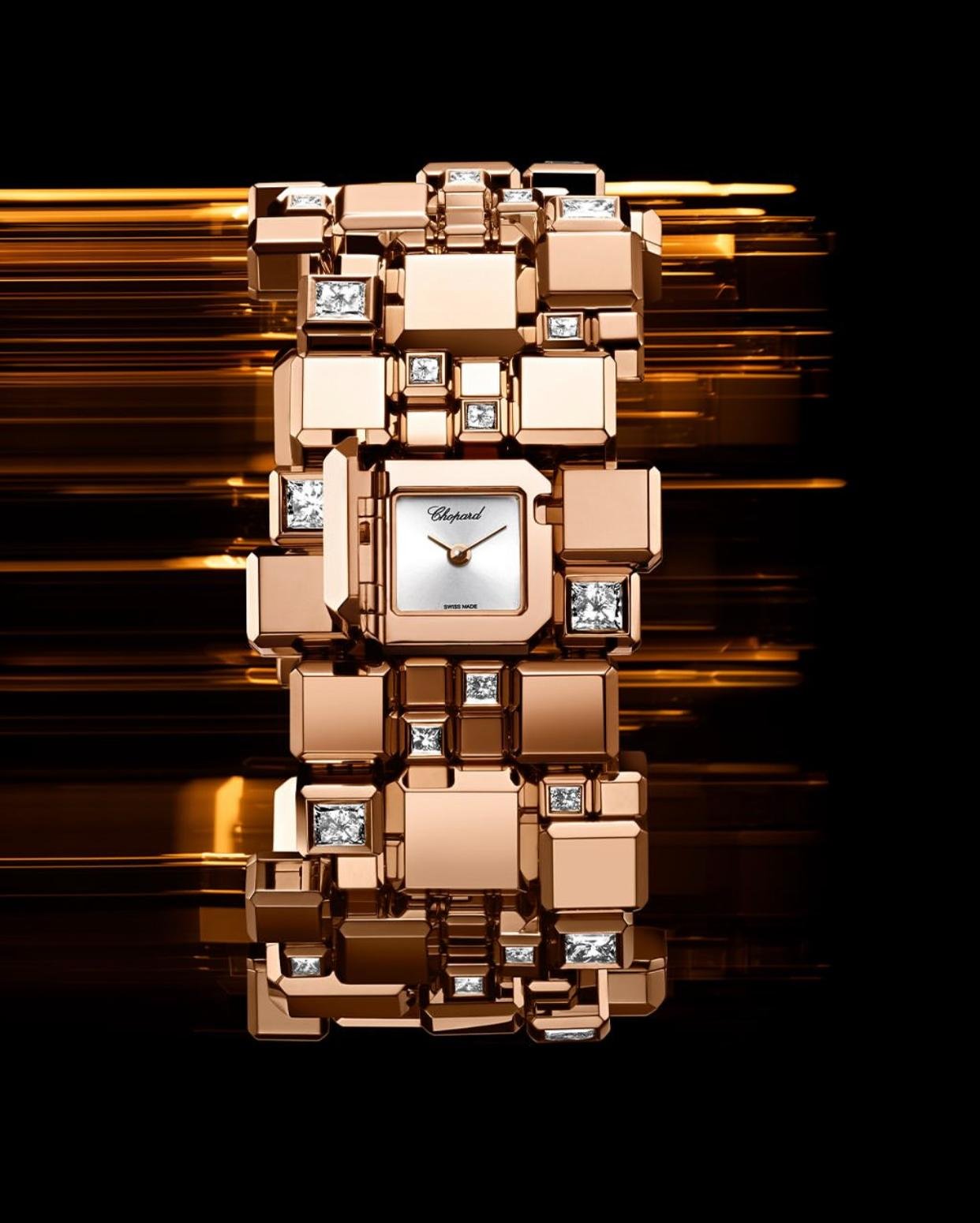
The Imperiale collection is Chopard's most architecturally elaborate women's watch — its signature four-sided flower motif, drawn from traditional royal embroidery and arabesque ornamentation, applied to cases and bracelets in ethical gold with diamonds, amethysts, and pink quartz. The bracelet's high-tech gold wirework is one of the most technically demanding elements in the house's production — supple enough to conform to the wrist like fabric, precise enough to maintain its geometric pattern across hundreds of individual gold elements. Powered by the Chopard 96.17-C movement with 65 hours of power reserve, visible through a transparent caseback. "Irrepressibly feminine," in the house's own description. Dedicated to "modern-day empresses whose noble, majestic beauty is rivalled only by their conquering spirit." Imperiale is the collection that takes that ambition seriously.
The 2024 Happy Sport novelties demonstrated the collection's continuing formal appetite — thirty years after its invention, still finding new registers within the same design logic. The all-black version — in two sizes, 30mm and 36mm with date — paired a black lacquered dial with rose gold accents and an onyx-set crown, the dancing diamonds spinning against darkness rather than the traditional silver or mother-of-pearl surface. A limited 33mm edition in radiant blue featured dancing aquamarines rather than diamonds — colored stones substituted for the classic whites, the movement principle unchanged, the effect entirely different. The little black dress of the Happy Sport family. The something blue. The same seven capsules, the same sapphire crystal, the same choreography — a new mood each season.
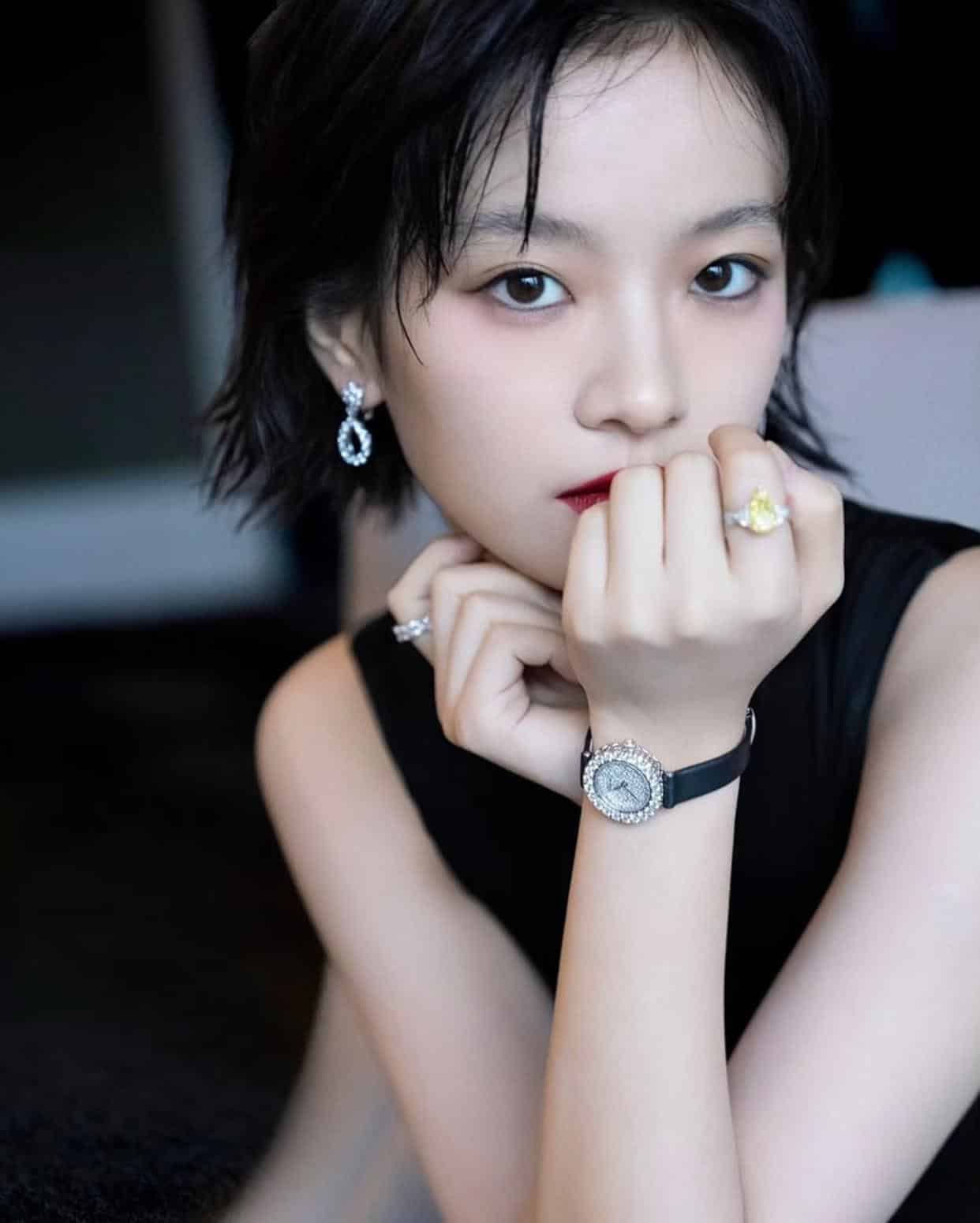
In 1998, Chopard became the official partner of the Cannes International Film Festival — and Caroline Scheufele was asked to redesign the iconic Palme d'Or trophy itself, which she has produced in ethical gold since 2021. The partnership has made Chopard's women's watches among the most photographed on red carpets worldwide, worn by the actresses who carry the Palme d'Or, by the women who present awards, by the creative directors who attend the screenings. The Happy Sport and L'Heure du Diamant have appeared at Cannes every year for over two decades — always on the wrists of women who understand that a watch designed to be worn twenty-four hours a day, from the gym to the gala, is exactly the watch for a film festival that begins at dawn and ends at three in the morning.
The workshop told Caroline Scheufele
that steel and diamonds could not be combined.
She combined them.
The workshop sent her a rosebush.
It has bloomed ever since.
This is what happens when a woman designs
a watch for women, from the inside out.
Caroline Scheufele grew up in the Chopard manufacture — after school, she would race through the factory corridors on a wheeled office chair, and was later given small jobs counting diamonds. She joined the business formally and created the Happy Sport in 1993 from a designer's conviction that was also entirely personal: "I design with the emotions and head of a woman, starting with the aesthetics and then looking at the mechanics. It is easier for women to understand what we might want." The Happy Sport was her first watch design. It became the house's best-selling piece. Over thirty years, she has produced over one thousand variations of it — in plastic, in stainless steel, in gold, in platinum, with diamonds, with colored stones, with aquamarines, with onyx, in every color a woman might want on her wrist on any day she chooses to wear it. The rosebush the workshop manager gave her in 1993 is still growing. So is the collection.
Crown Building · 730 Fifth Avenue · New York
Chopard's women's watch collections are presented at the Crown Building boutique alongside the fine jewelry — Happy Sport beside Happy Diamonds jewelry, L'Heure du Diamant beside Precious Lace necklaces, Imperiale watches beside Imperiale rings. The formal relationship between the house's jewelry and watchmaking vocabularies is made visible by proximity: the dancing diamond is the same object whether it appears on a watch dial or in a pendant. The technical principle invented in 1976, refined for watchmaking in 1993, now governs both categories simultaneously. New York's particular appetite for objects that are simultaneously serious and joyful — for luxury that does not require choosing between practicality and beauty — aligns precisely with what Caroline Scheufele built when she put seven dancing diamonds in a steel case and called it the Happy Sport.
730 Fifth Avenue · New York, NY 10019 · Crown Building
Happy Sport · Happy Diamonds Icons · L'Heure du Diamant · Imperiale
100% ethical gold since 2018 · Lucent Steel — proprietary recycled alloy
Caroline Scheufele — Co-President & Artistic Director
Official partner Cannes Film Festival since 1998
Founded Sonvilier 1860 · Family-owned · chopard.com/en-us/watches
Karin Scheufele saw the first dancing diamonds in 1976
and said: "Diamonds are happier when they are free."
Her daughter Caroline heard this
and spent thirty years proving it —
in steel and gold, on red carpets and tennis courts,
in a thousand variations of the same conviction:
that a woman's watch should move
the way a woman moves.
Always, in every direction, all at once.
© Chopard
© Chopard
© Chopard
© Chopard
© Chopard
© Chopard
© Chopard
© Chopard
© Chopard
© Chopard
© Chopard
© Chopard
CHOPARD
© Chopard