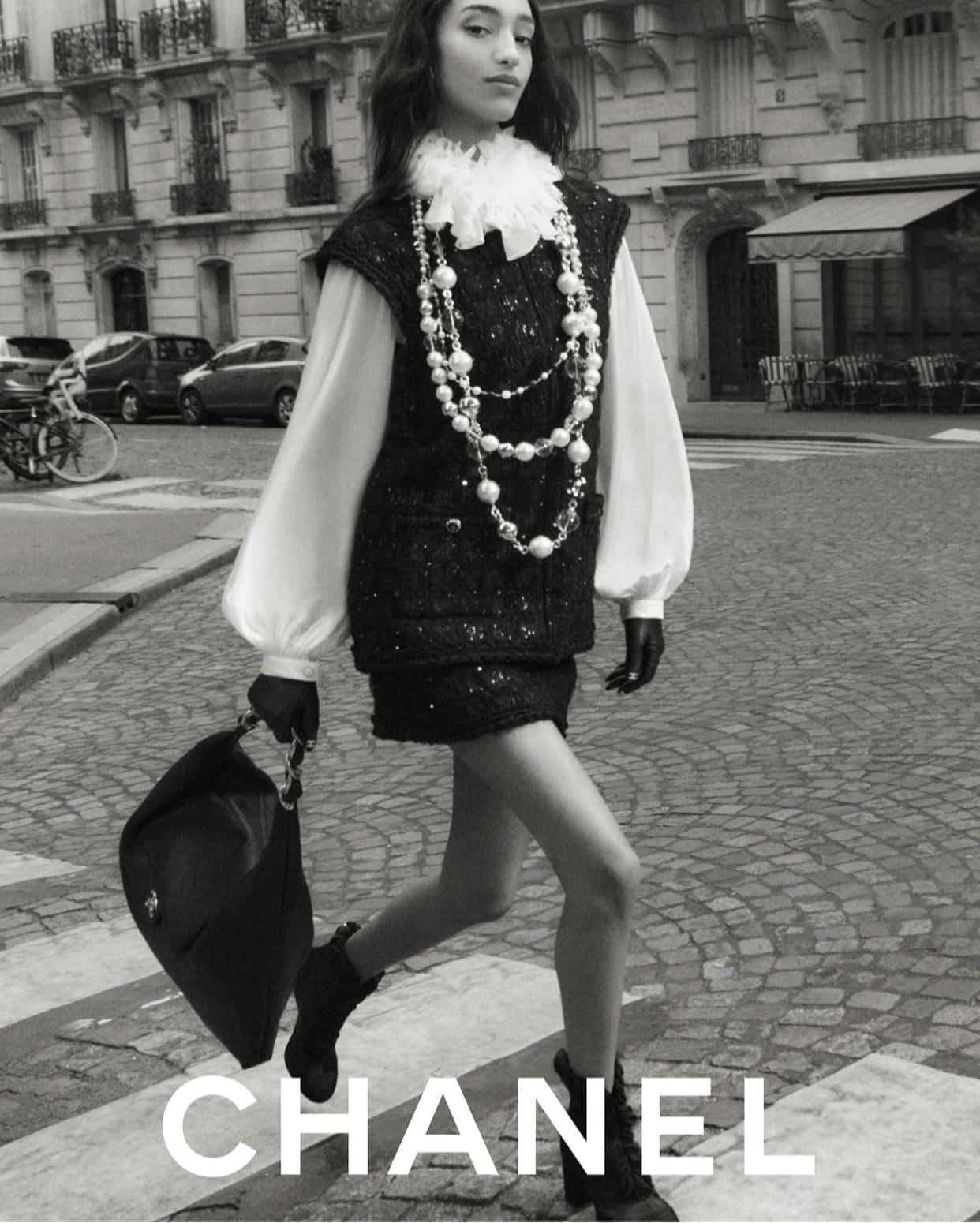
© Chanel
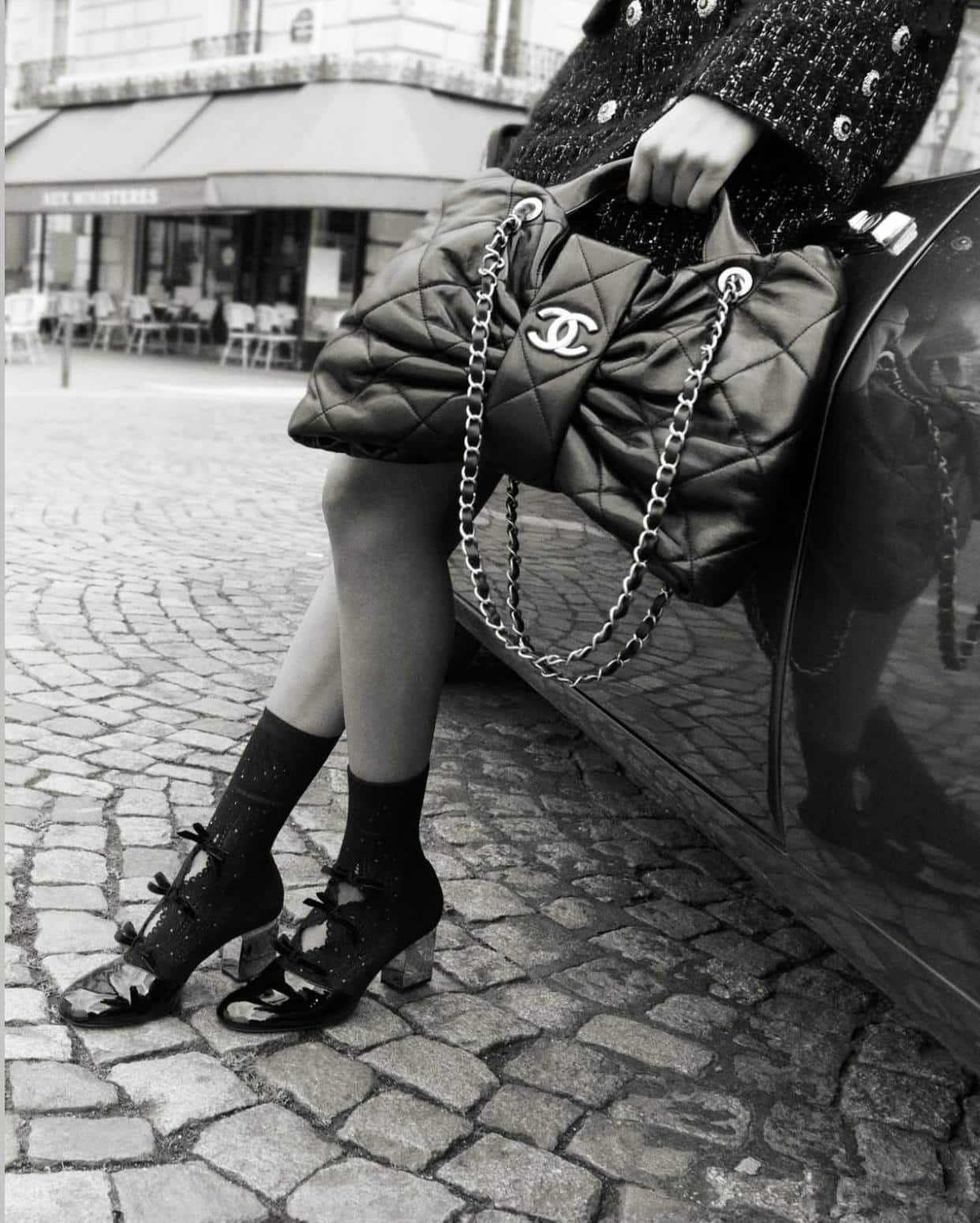
© Chanel
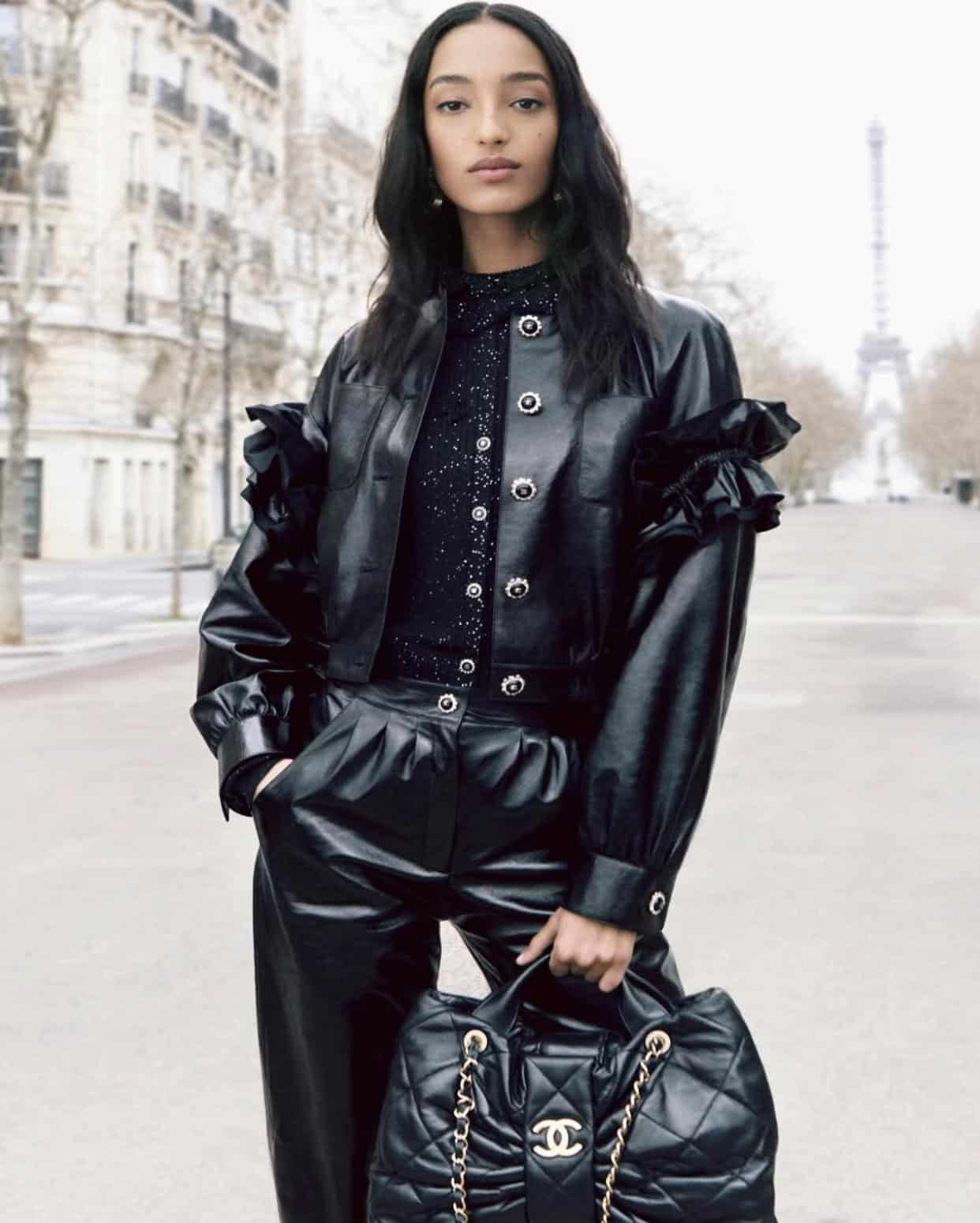
© Chanel
Chanel
Handbags
"Tired of carrying my bags by hand and losing them, I slipped a strap over them and slipped them over my shoulder." Gabrielle Chanel said this of the 2.55, which she created in February 1955 at the age of seventy. The bag freed women's hands. It was the world's first shoulder bag. Seventy years later, Matthieu Blazy showed it open — the bordeaux lining visible — crushed, crinkled, and apparently well-loved. He wanted it to look like it had already been carried for a lifetime. That is exactly what it has.
February 1955 · The Bag That Changed Everything
The Chanel 2.55 was created on February 2, 1955. The name is the date — 2 for February, 55 for 1955 — the same naming principle Gabrielle Chanel applied to her perfumes. She was seventy years old. The bag introduced something that did not exist in women's fashion: the shoulder strap. Before the 2.55, women carried their bags by hand, as clutches or on the crook of the elbow. Gabrielle Chanel, who had spent her entire career designing for practicality as much as for beauty, created the strap from her observation of men's military satchels. The chain strap — all metal, adjustable, light yet strong — was also drawn from memory: the chains the nuns at the Aubazine orphanage used to dangle keys from their waists. The bordeaux interior lining was the color of the uniform she had worn at that same orphanage as a child. The Mademoiselle lock — rectangular, without any logo — was named for her unmarried status. Mademoiselle: she never married. The quilted exterior was drawn from equestrian jackets. The back pocket, styled like the Mona Lisa's pocket, was for loose change and tips. The hidden zippered pocket under the inner flap: for love letters. Each detail is biographical. Every element of the bag is Gabrielle Chanel's life, compressed into a rectangle of leather and chain.
180 Manipulations · 15 Hours · The Craft Of The 2.55
The 2.55 requires one hundred and eighty manipulations to produce — from the cutting of the leather to the signed topstitching — involving between six and fifteen experienced artisans for up to fifteen hours of work. It is sewn, the house specifies, like a garment: from the inside out, following the original principles Gabrielle Chanel established in 1955 and which have not been abandoned in seventy years of production. In 1983, Karl Lagerfeld redesigned the 2.55 for his first years at Chanel — replacing the Mademoiselle lock with the interlocking CC clasp, interlacing leather with the chain strap, and harmonizing the interior lining colors with the exterior leather. This version became the Classic Flap. In 2005, for the 50th anniversary, Lagerfeld relaunched the original 1955 design as the Reissue 2.55 — Mademoiselle lock, all-metal chain, bordeaux lining — so that both versions could coexist: the 2.55 and the Classic Flap, each the descendant of the same idea, each carrying a different element of its biography. The original sold for $220 in 1955. The Classic Maxi Flap sold for $3,700 in 2010. It now retails for $13,200 — a 257% increase in fifteen years.
For his debut collection, Matthieu Blazy treated the 2.55 as what it is: a living object rather than a museum piece. The quilting was gently flattened. The flap was left open, revealing the burgundy interior. The structure appeared moulded by decades of use, the leather crinkled and softened — what Blazy called "crashed, crushed, and cherished." The bijoux chains puddled and swayed rather than hanging precisely. In the show notes: "Lived-in with the worn familiarity of the truly chic, items feel passed down and utilised." He told the Business of Fashion directly: "We did bags that are very narrative and bags that are very reduced to the function. I thought it was interesting to strip it out. Why is it Chanel? Because we say it's Chanel." The Spring 2026 2.55 in dark burgundy lambskin with gold-tone metal retails for $13,800. It is available in mini to maxi sizes, in black, tan, and burgundy, alongside silver and gold finishes — and in solid metal versions, sculptural and rigid, with a jewelry-like quality, priced on request.
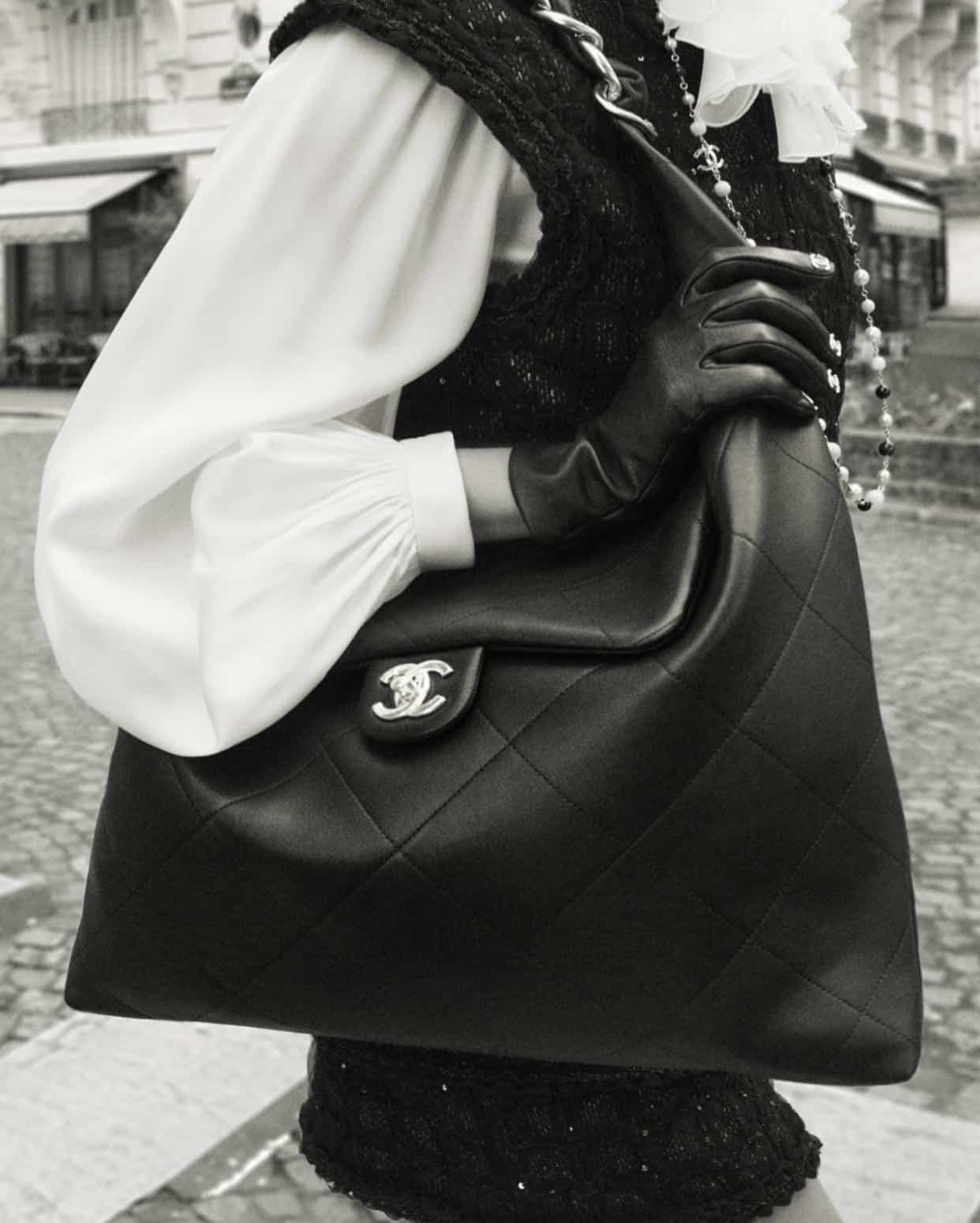
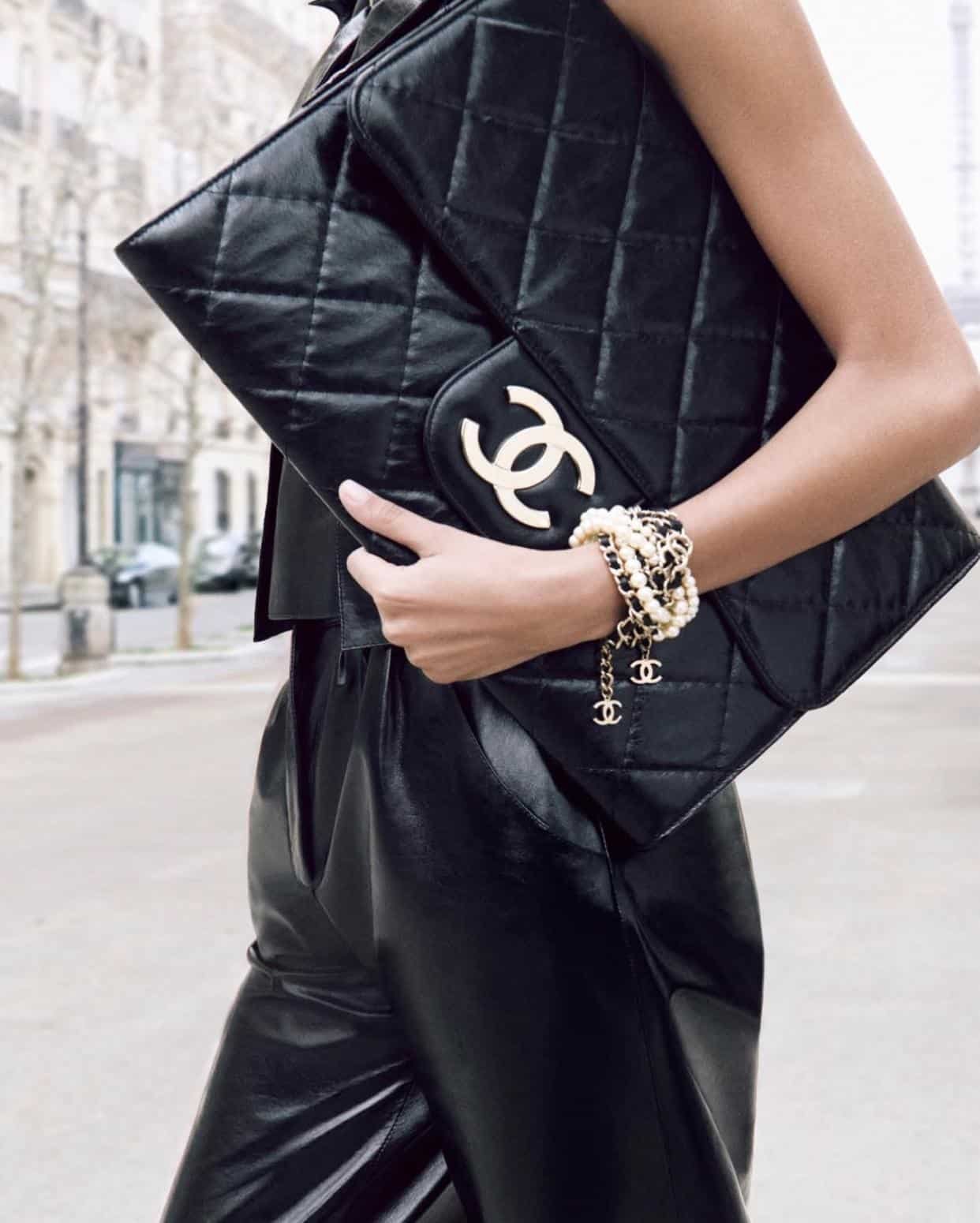
The Classic Flap — the 11.12, named for the date of its relaunch — is the 2.55 as Karl Lagerfeld redesigned it in 1983: the interlocking CC clasp replacing the Mademoiselle lock, leather interwoven with the chain strap, the interior harmonized with the exterior. It is the most commercially significant bag Chanel produces and the one whose price trajectory has been most closely tracked by the luxury market. From $3,700 for the Maxi in 2010 to $13,200 in 2026 — a figure that has increased, in the fifteen years, by 257%. Chanel raises prices regularly and without announcement. The Mini Classic Flap now retails from $10,900; the Large from $12,200. Under Blazy's Spring 2026 collections, the Classic Flap appears in maxi scale — oversized, softened in suede, spotted on A$AP Rocky and Pedro Pascal and described immediately as the season's defining bag. The Maxi Flap's adjustable double leather strap — replacing the chain — is Blazy's most decisive departure from the house code: the bag without its most famous element, and still unmistakably itself.
The Chanel bag family extends well beyond the 2.55 and the Classic Flap into a contemporary range organized, like the founding bag, by date. The Boy Chanel — launched in 2011, named for Arthur "Boy" Capel, Gabrielle Chanel's great love — brought a more structured, rectangular, hardware-heavy sensibility to the Chanel bag vocabulary. The Chanel 19 — launched in 2019, named for its year — is the most relaxed member of the family: soft, slouchy, oversized, with a mixed chain and leather strap. The Chanel 22 — launched in 2022 — is a casual drawstring tote, the least structured and most utilitarian shape the house has produced. The Chanel 25 — the newest permanent addition — is the smallest and most precise: a miniature flap at the intersection of the 2.55's formality and the contemporary moment's appetite for compact scale. Each bag is a document of when it was made and for whom — Chanel's way of writing the date into the object, as it has done since 1955.
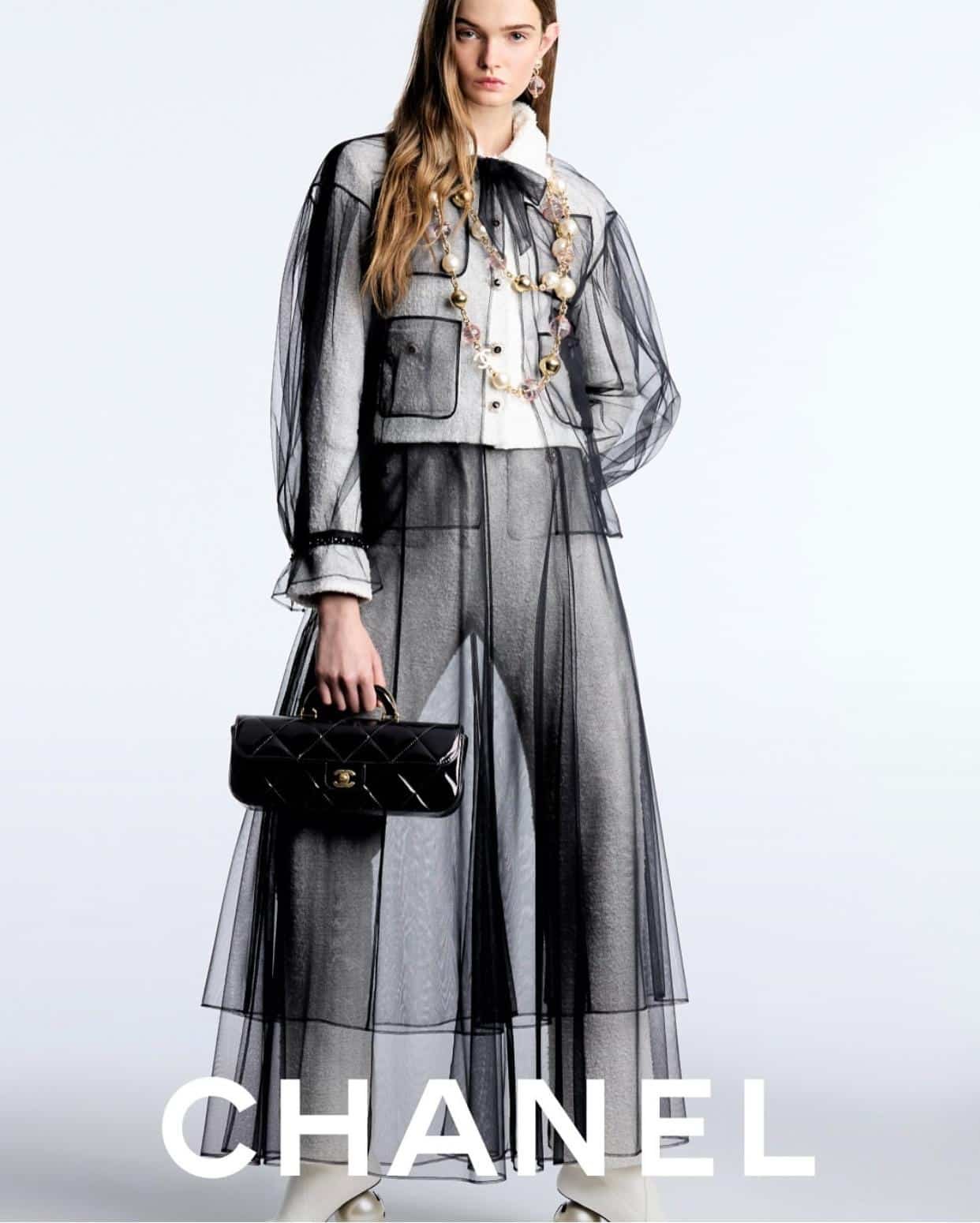
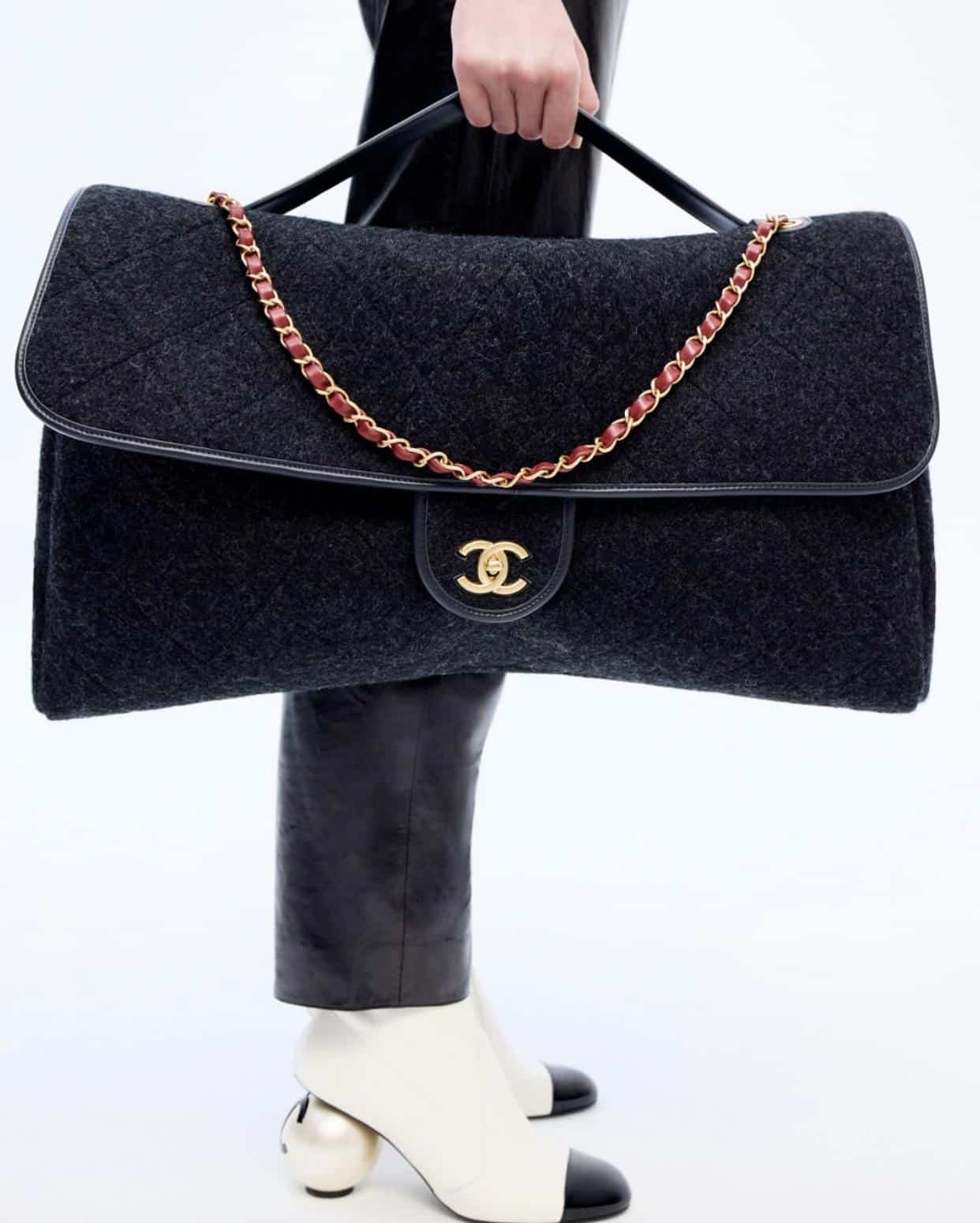
Blazy's Spring 2026 debut introduced several new formats alongside the reimagined classics. The Supermodel Tote — an archival design — returned in new textures and proportions, its name a reference to the era when it was first carried and the models who carried it. A 1991 Chanel Messenger was revisited with its oversized stitched CC logo and wide adjustable strap, now given a full flap front: two eras unified in a single silhouette. A Sphere bag in deep planet-like blue with constellation gold details and a CC kiss-lock clasp extended the collection's celestial theme into the accessories. A double-sided flap bag that could be carried from front or back. A quilted suede bowling bag with two long top handles and a small silver CC. Each new shape proposes a different relationship to the house codes — some referencing them explicitly, some stripping them back entirely. As Blazy told the Business of Fashion: "A flap bag without quilted leather. A lock without the double CC closure." The codes are most powerful when they survive their own subtraction.
Chanel handbags are among the most consistently appreciating objects in the luxury resale market — partly by design, as the house raises prices regularly and without warning (twice in 2025 alone for the Classic Flap and 2.55), and partly because demand has accelerated under Matthieu Blazy's debut. Lines outside boutiques at the Spring 2026 collection release. Demand for the Maxi Flap immediately described as impossible to source. The principle is established: a Chanel bag purchased at retail is likely to appreciate, and a bag purchased in 2010 has more than tripled in value. Vintage pieces — particularly 1950s and 1960s 2.55 bags with the original Mademoiselle lock and pure metal chain — appear at Sotheby's and Christie's and sell for $10,000 to $45,000 depending on condition and provenance. The bag that Gabrielle Chanel created to free her hands from carrying her bags has become, in the resale market, one of the most carefully transported objects in the world of luxury.
Chanel's small leather goods offer the house's formal vocabulary — the quilting, the chain, the CC hardware — at accessible entry points within the brand's overall price structure. The Wallet on Chain, known as the WOC, is the most versatile format: a small wallet with a chain strap long enough to wear crossbody, functioning as both a bag and a billfold. Card holders, coin purses, and key holders carry the camellia motif, the CC logo, and the quilted leather into the category of daily pocket objects. The small leather goods are where many clients begin their Chanel relationship — and where the formal intelligence of the house's bag vocabulary is available at its most concentrated and most personal scale. The WOC in classic black lambskin with gold hardware is among the house's most consistently requested pieces across all boutiques.
Gabrielle Chanel said:
"Tired of carrying my bags by hand and losing them,
I slipped a strap over them
and slipped them over my shoulder."
She was seventy years old.
The bordeaux lining was the color
of her orphanage uniform.
The Mademoiselle lock was named
because she never married.
The hidden pocket was for love letters.
The bag required 180 manipulations
and fifteen hours to make.
It cost $220.
It now costs $13,200.
It was the world's first shoulder bag.
It is still the most copied bag in history.
Matthieu Blazy's approach to the Chanel bag archive is not archival. He does not preserve — he uses. The 2.55 shown open, its bordeaux interior visible, its leather crinkled as if decades of use had shaped it, is not a nostalgic object. It is a proposition about what luxury means when it has been lived with rather than protected. "Why is it Chanel?" he said of the bags from which he had stripped the quilting, the CC lock, the chain. "Because we say it's Chanel." This is the most precise possible formulation of what Chanel's leather goods authority consists of: not in the codes themselves but in what survives their removal. A Chanel bag without its quilting is still a Chanel bag. A 2.55 without its Mademoiselle lock is still a 2.55. The brand's authority is not decorative — it is structural, deep, a function of seventy years of the same bag made the same way by the same hands. Blazy is the first director to show it openly, deliberately worn, as if it belongs to someone who uses it every day. Gabrielle Chanel would have agreed. She made it because she needed it.
15 East 57th Street · New York · The Chanel Handbag Collection
The full Chanel handbag collection is presented at 15 East 57th Street — the house's principal New York address, where the 2.55 and Classic Flap are available in all permanent sizes alongside seasonal editions, the Boy Chanel, the Chanel 19, 22, and 25, and the Spring 2026 debut shapes from Matthieu Blazy including the Maxi Flap, the returning Supermodel Tote, and the reimagined Messenger. The Spring 2026 collection arrived in New York boutiques with the same demand that had been generated in Paris during Fashion Week — lines at the door, sold-out Maxi Flap requests flooding the secondary market within days. The boutique also carries the complete small leather goods range, including the Wallet on Chain and the house's sunglasses, fine jewelry, and watches. New York receives the Chanel handbag collection in the same spirit as every other significant luxury market — except that it was in New York that Gabrielle Chanel first understood the appetite for her work, and where the chain strap on the 2.55 found its earliest American advocates. The bag still arrives from Paris. The shoulder that carries it has always been here.
15 East 57th Street · New York, NY 10022
2.55 · Classic Flap 11.12 · Boy Chanel · Chanel 19 · Chanel 22 · Chanel 25
Spring 2026 Maxi Flap · Supermodel Tote · Sphere · Messenger
Small Leather Goods · Wallet on Chain · Seasonal Collections
Matthieu Blazy — Artistic Director since 2025
Founded Paris 1910 · chanel.com/us/fashion/handbags
Gabrielle Chanel created the 2.55
because she was tired of losing her bags.
She was seventy years old
and had been designing for fifty.
The bordeaux lining was her orphanage.
The chain was the nuns' keyring.
The Mademoiselle lock was her name.
She sold it for $220.
Matthieu Blazy showed it crinkled,
worn open, the lining visible,
as if it had already been carried everywhere.
It has.
For seventy years,
it has been everywhere.
© Chanel
© Chanel Beauty
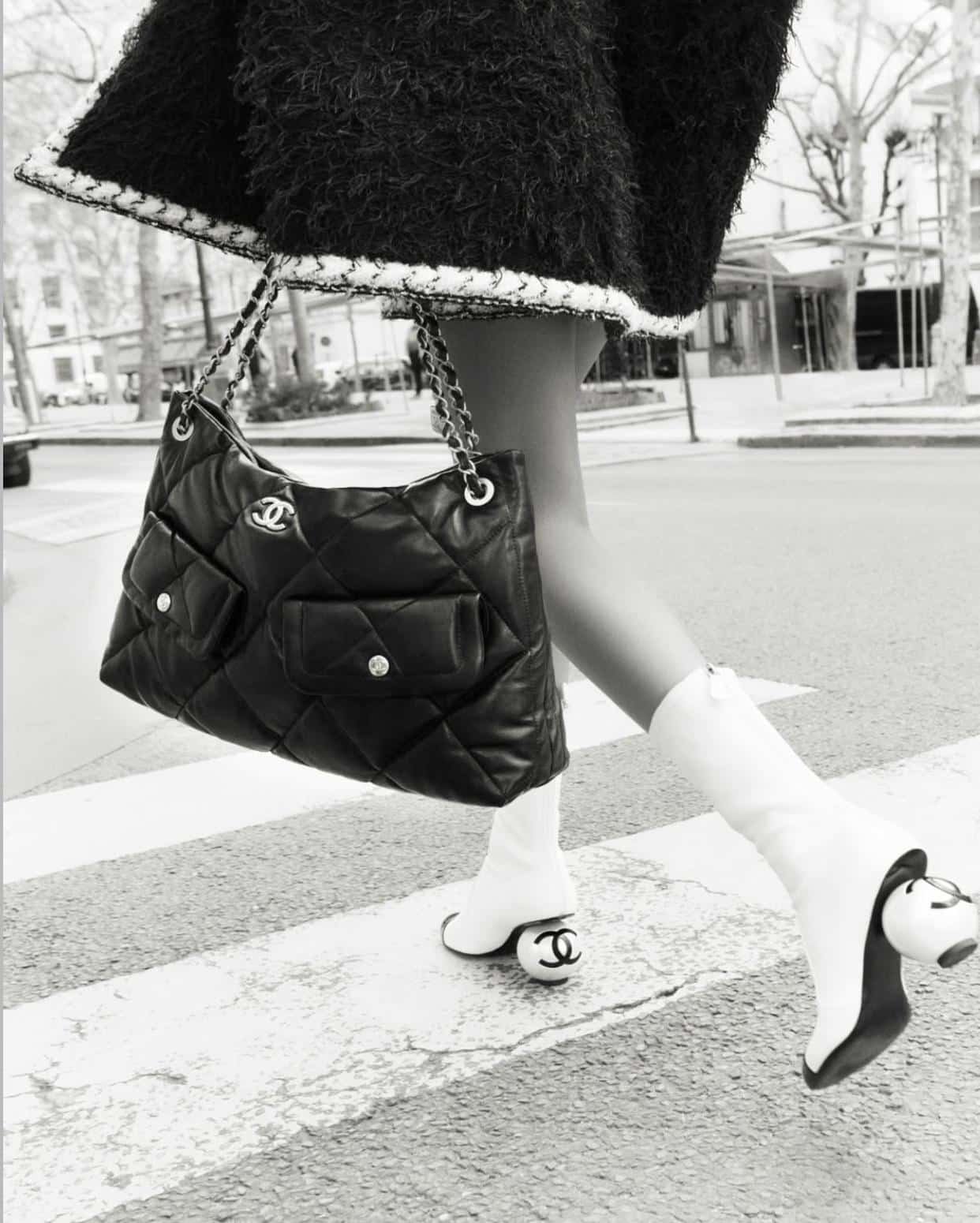
© Chanel
© Chanel
© Chanel
© Chanel
© Chanel
© Chanel
© Chanel
© Chanel

© Chanel
© Chanel
CHANEL
© Chanel