© Maison Valentino
© Maison Valentino
© Maison Valentino
Maison Valentino
Handbags
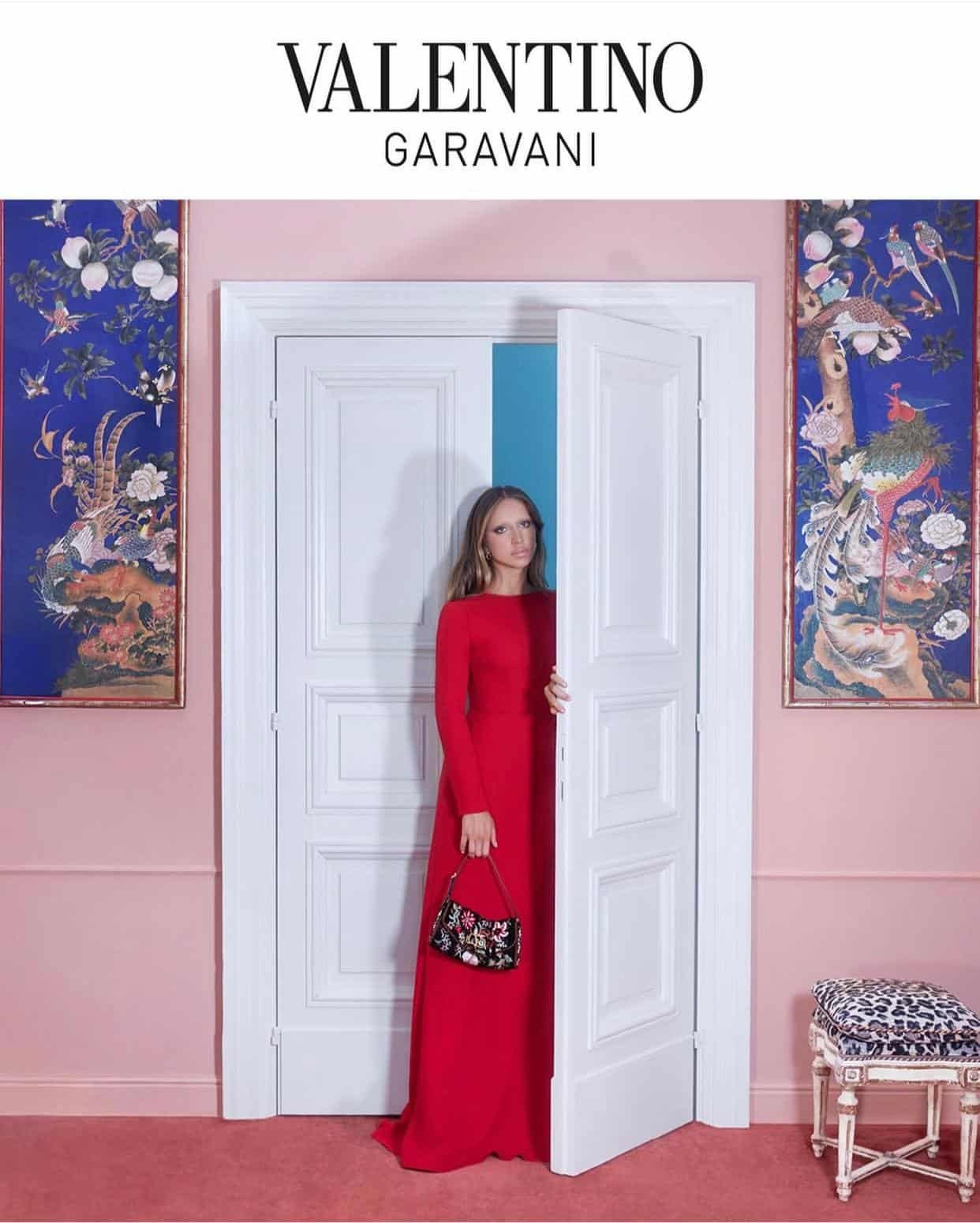
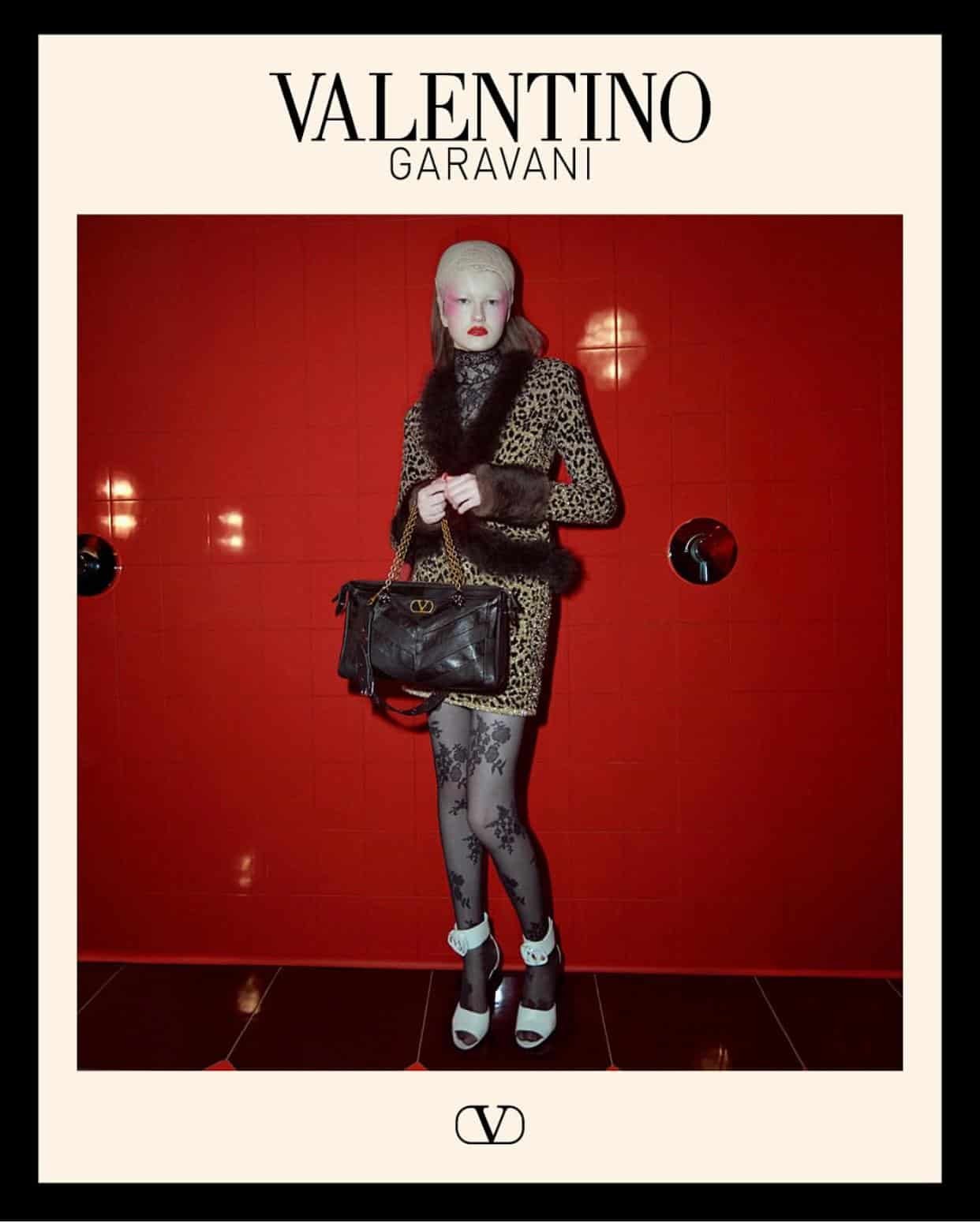
In the 1950s, Valentino Garavani attended an opera in Barcelona. In the theatre boxes, women were dressed in brilliant red gowns. He was not yet twenty years old. He said afterward: "I think a woman dressed in red is always magnificent." He returned to Rome, opened his atelier on Via Condotti in 1960, and made red the founding color of his house. Sixty-five years later, the flagship at 654 Madison Avenue is still organized around that color — walls, marble, lacquered wardrobes — a chromatic argument that began at an opera and has never been resolved.
Rome · 1960 · The House Built On A Color And A City
Valentino Clemente Ludovico Garavani was born in 1932 in Voghera, in Lombardy, and left for Paris at seventeen to study at the École des Beaux-Arts and the Chambre Syndicale de la Couture Parisienne. He worked under Balenciaga, Jean Dessès, and Guy Laroche before returning to Rome in 1959 to open his own studio — the first couture house to establish itself in Rome rather than Paris. From the first collection, the house's reference was Rome itself: its architecture, its light, its palaces, its particular relationship between grandeur and ruin. Valentino dressed Jackie Kennedy after the assassination of President Kennedy — she was a loyal client who would later shop at the New York boutique on Fifth Avenue when Valentino first arrived in the city in 1970. He dressed Audrey Hepburn, Elizabeth Taylor, Lee Radziwill, Marella Agnelli. He was a regular at Studio 54. Andy Warhol was a semi-regular dining companion. Diana Vreeland showed him around New York. The house retired its founder in 2008, after a final haute couture show in Paris where Naomi Campbell, Claudia Schiffer, and Eva Herzigova walked the last collection. What followed was not a diminishment — it was a reinvention organized around a single pyramid-shaped piece of metal.
2010 · The Rockstud · A Roman Palace In A Pyramid
The Rockstud was introduced in Fall 2010 by co-creative directors Maria Grazia Chiuri and Pierpaolo Piccioli. Its source was architectural: the *bugnato* technique found on the facades of Roman palaces and noble buildings — rough-cut stone blocks projecting slightly from the surface, casting their own small shadows, giving mass and texture to otherwise flat walls. Chiuri and Piccioli translated this into a pyramid-shaped metal stud, applied in rows along the trim of shoes and bags. The effect was immediate. The Rockstud Bag debuted in a formal campaign in 2016, by which point the Rockstud had already been responsible for doubling the house's sales. Between 2014 and 2019, Rockstud shoes alone generated over $152 million. Piccioli, speaking as sole creative director after Chiuri's departure to Dior in 2016, described the stud as "a punk symbol on a bourgeois object." That tension — between the discipline of haute couture and the energy of something rougher — was what the Rockstud understood about the moment it arrived in, and what has made it irreplaceable in the house's vocabulary since.
The Rockstud bag entered the permanent collection in 2016 — six years after the stud itself was introduced on shoes — in a campaign that made the pyramid hardware the primary design language of the silhouette rather than a secondary detail. The Rockstud Spike covers the entire bag surface in miniature studs; the classic Rockstud lines the trim. Both are immediately identifiable. For Pre-Fall 2026, Alessandro Michele — who took over creative direction from Piccioli in 2024 — offered his own interpretation of the Rockstud, waiting more than a year after his arrival before touching it. "I didn't want to do this the day after I arrived here," Michele said, "because I found it weird and I didn't know this territory so well." His Rockstud arrives with a tapered squared toe on shoes and a denser, more insistent stud placement on bags — not a reimagining but a deepening. A punk symbol, pressed harder into the bourgeois object.
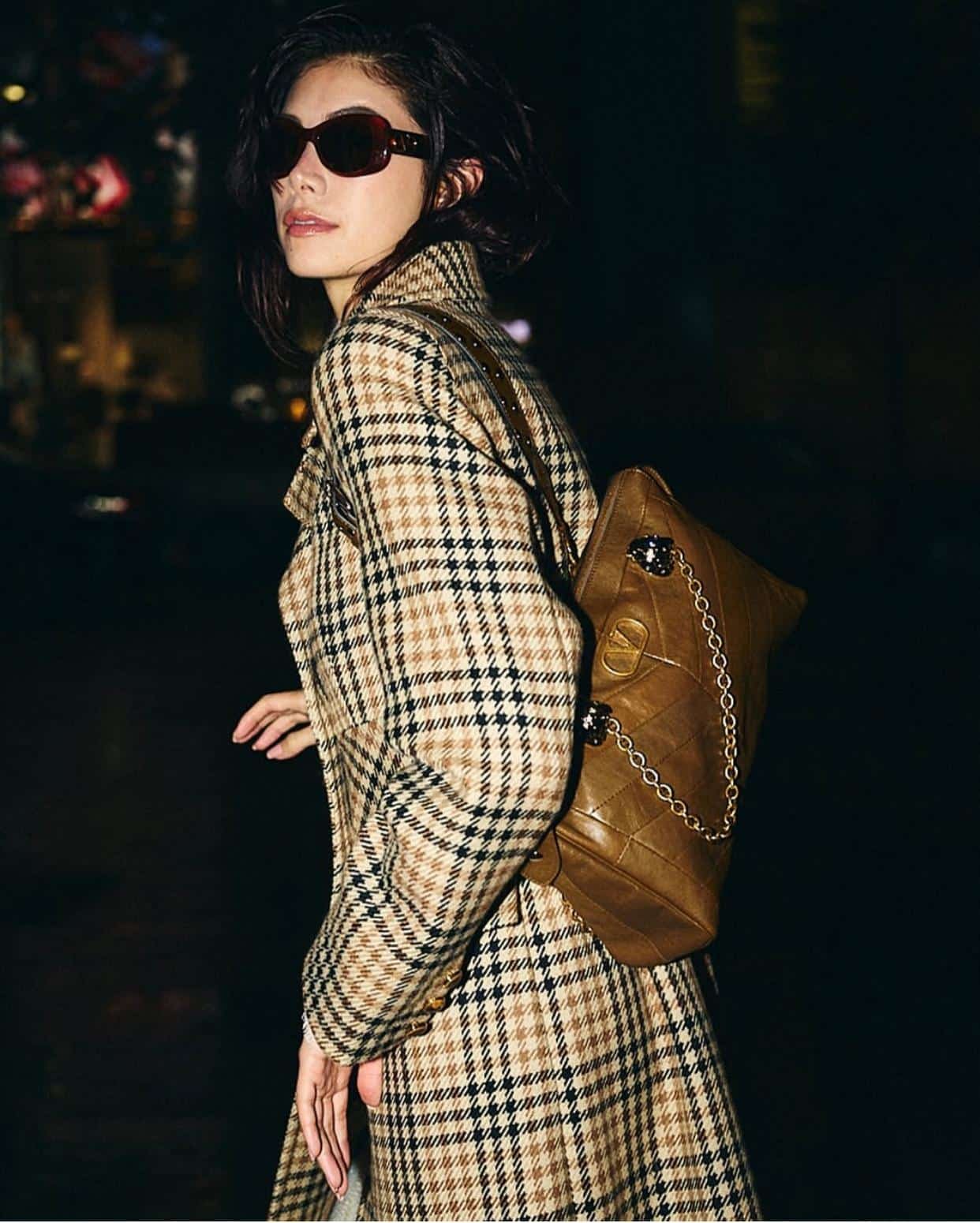
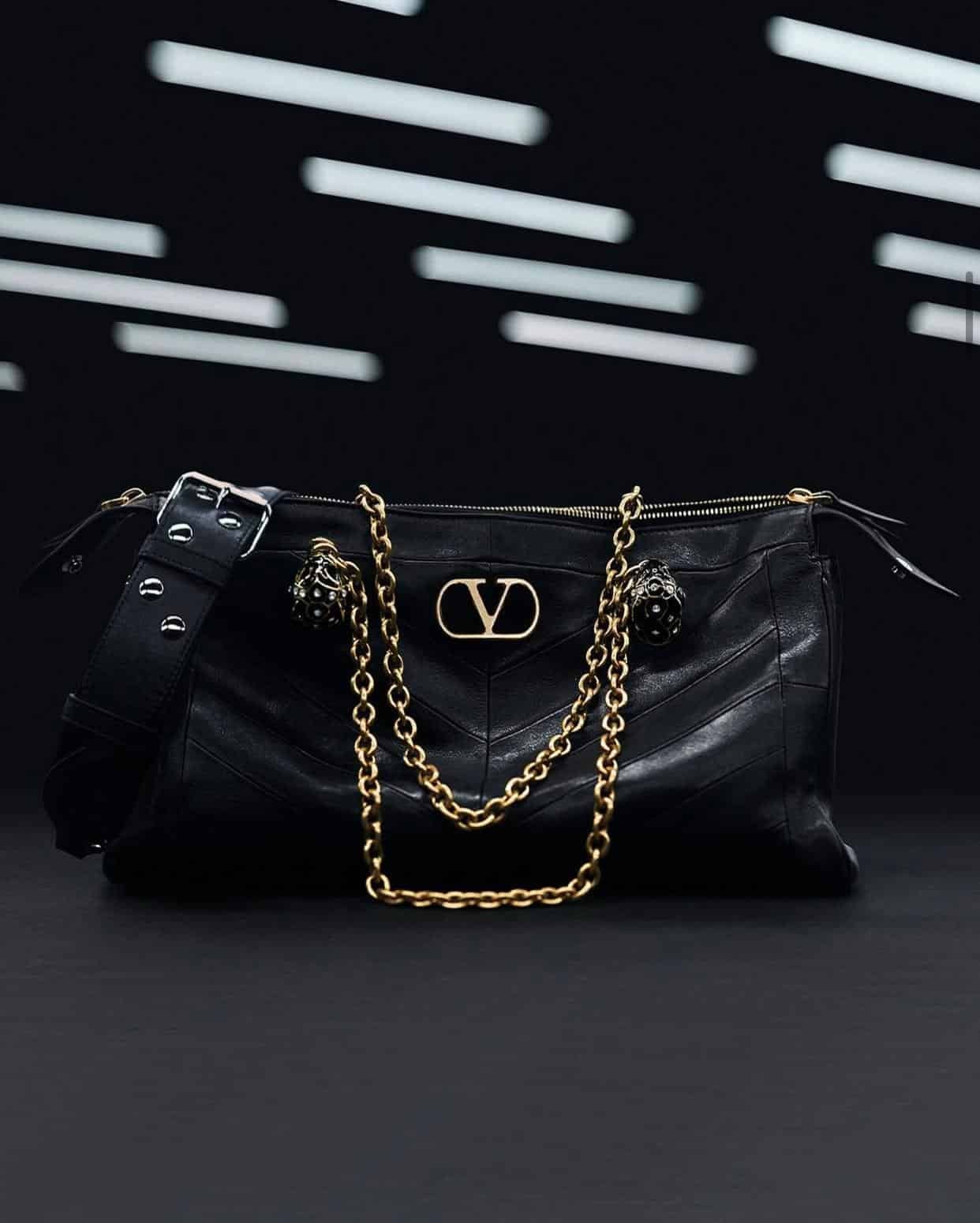
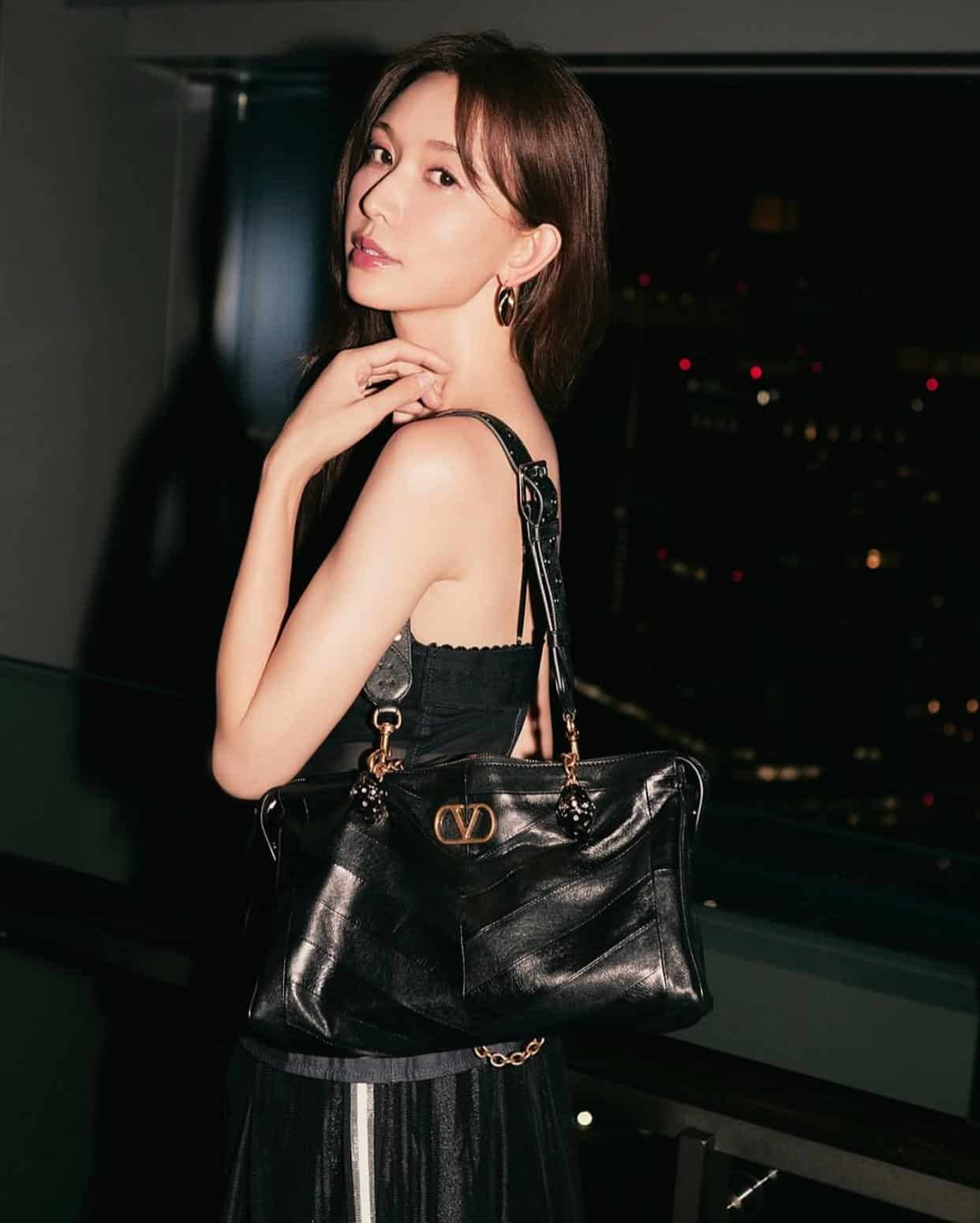
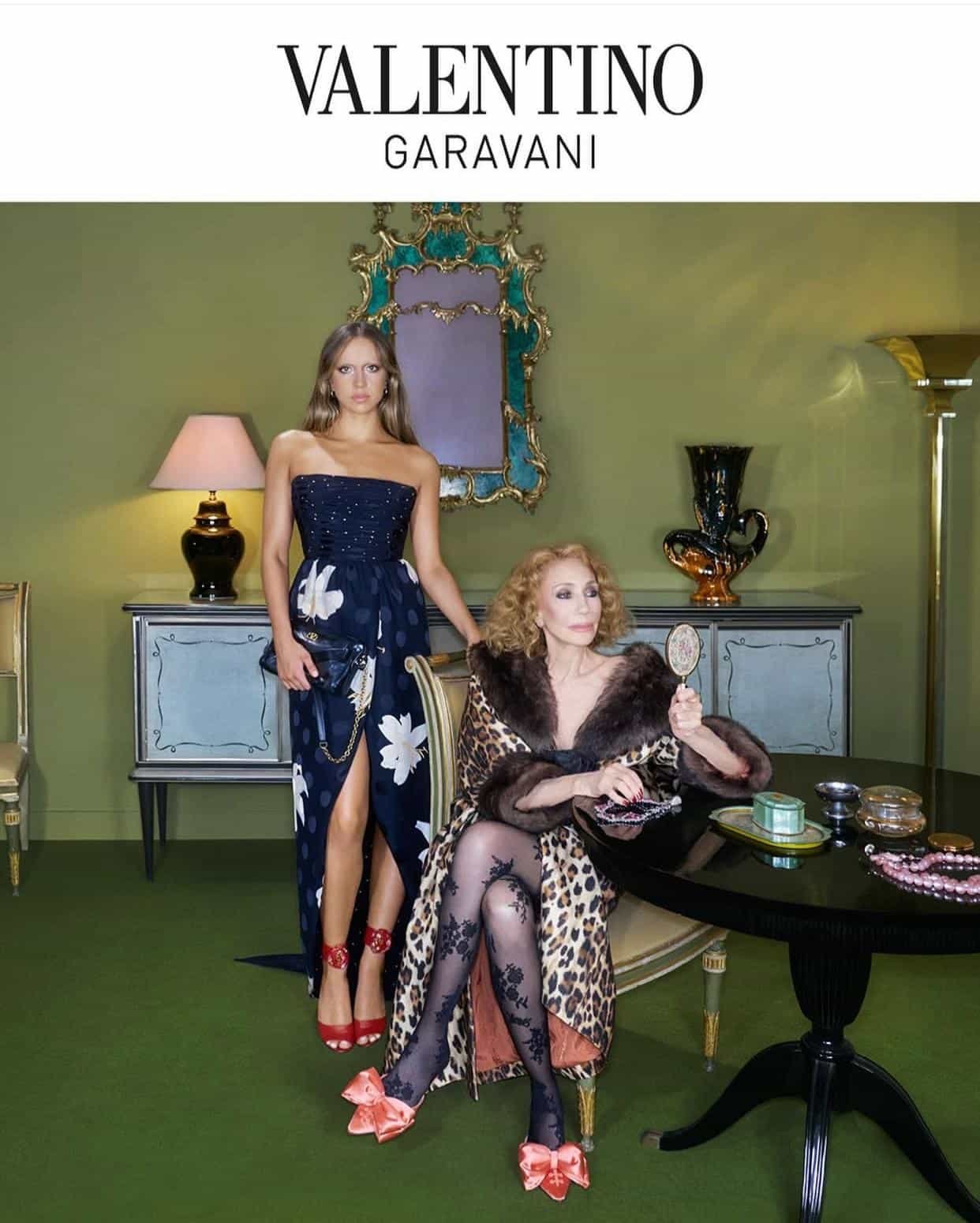
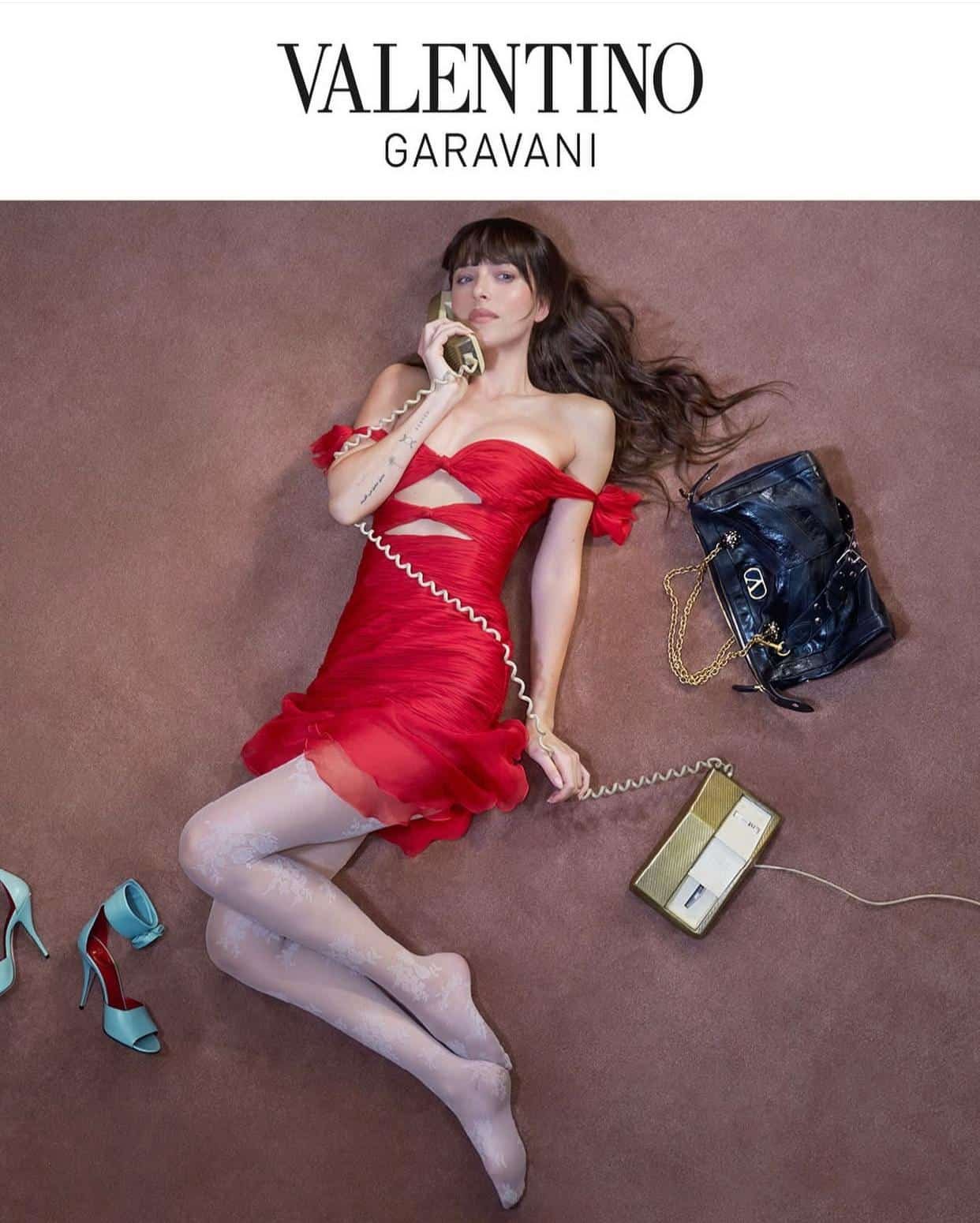
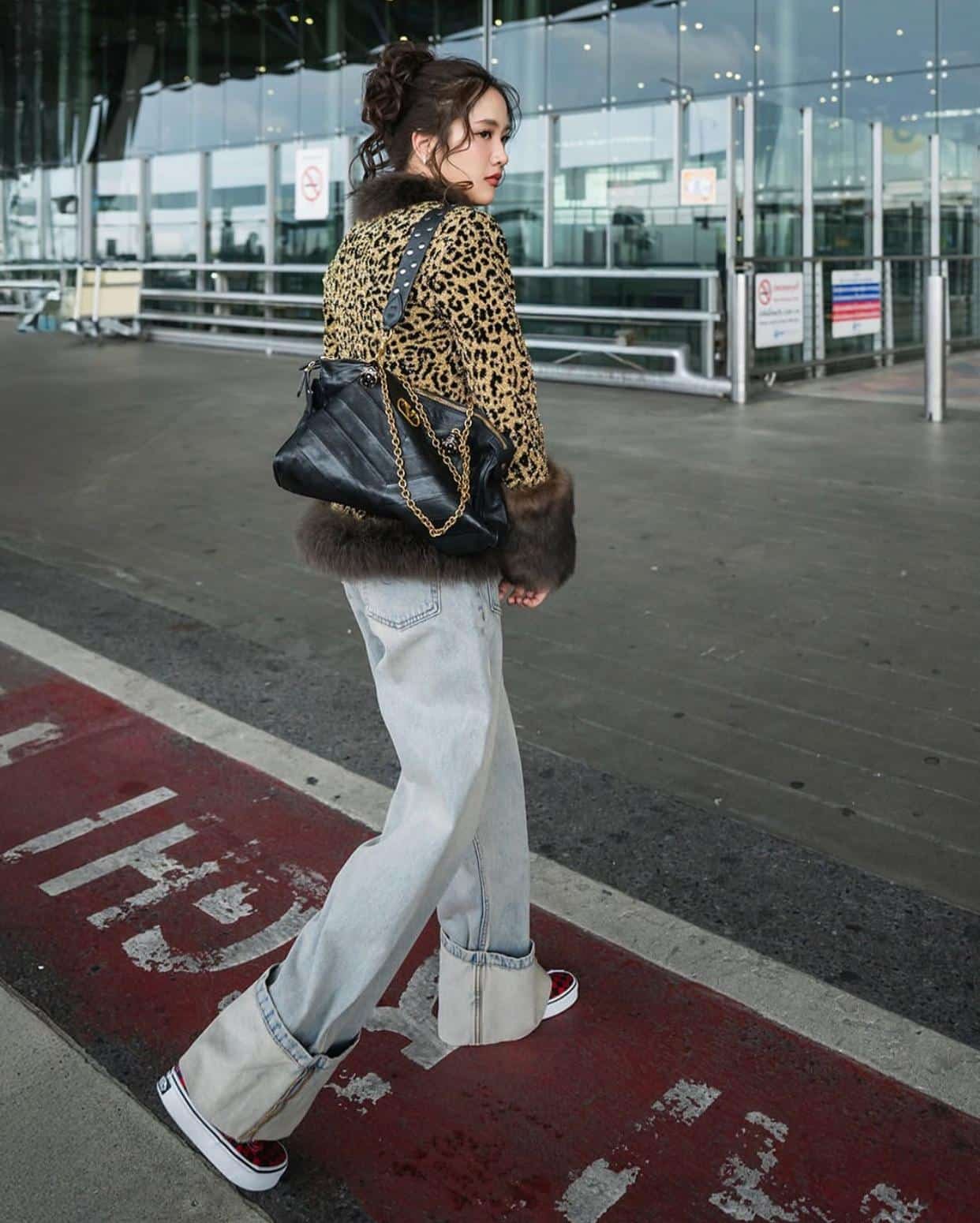
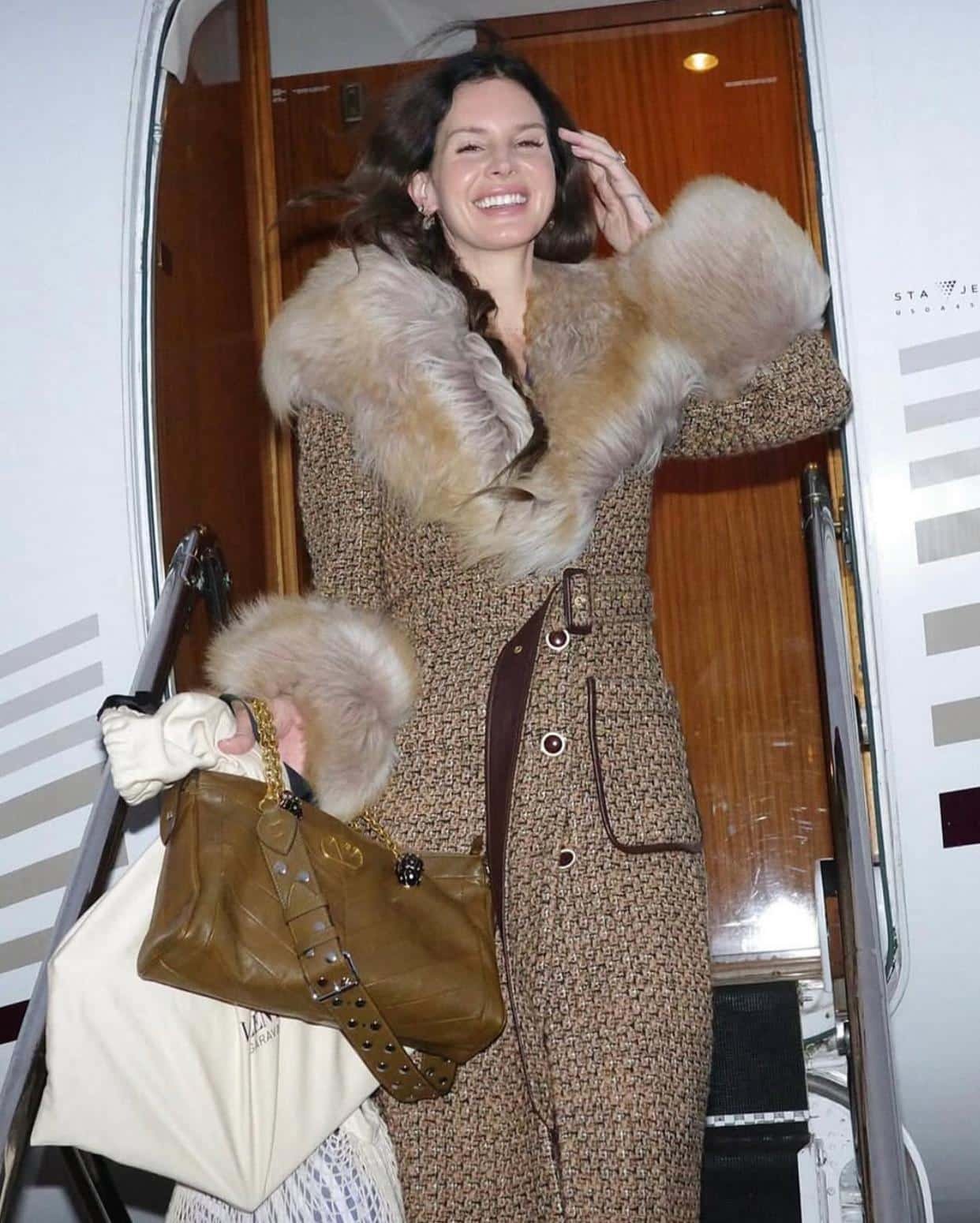
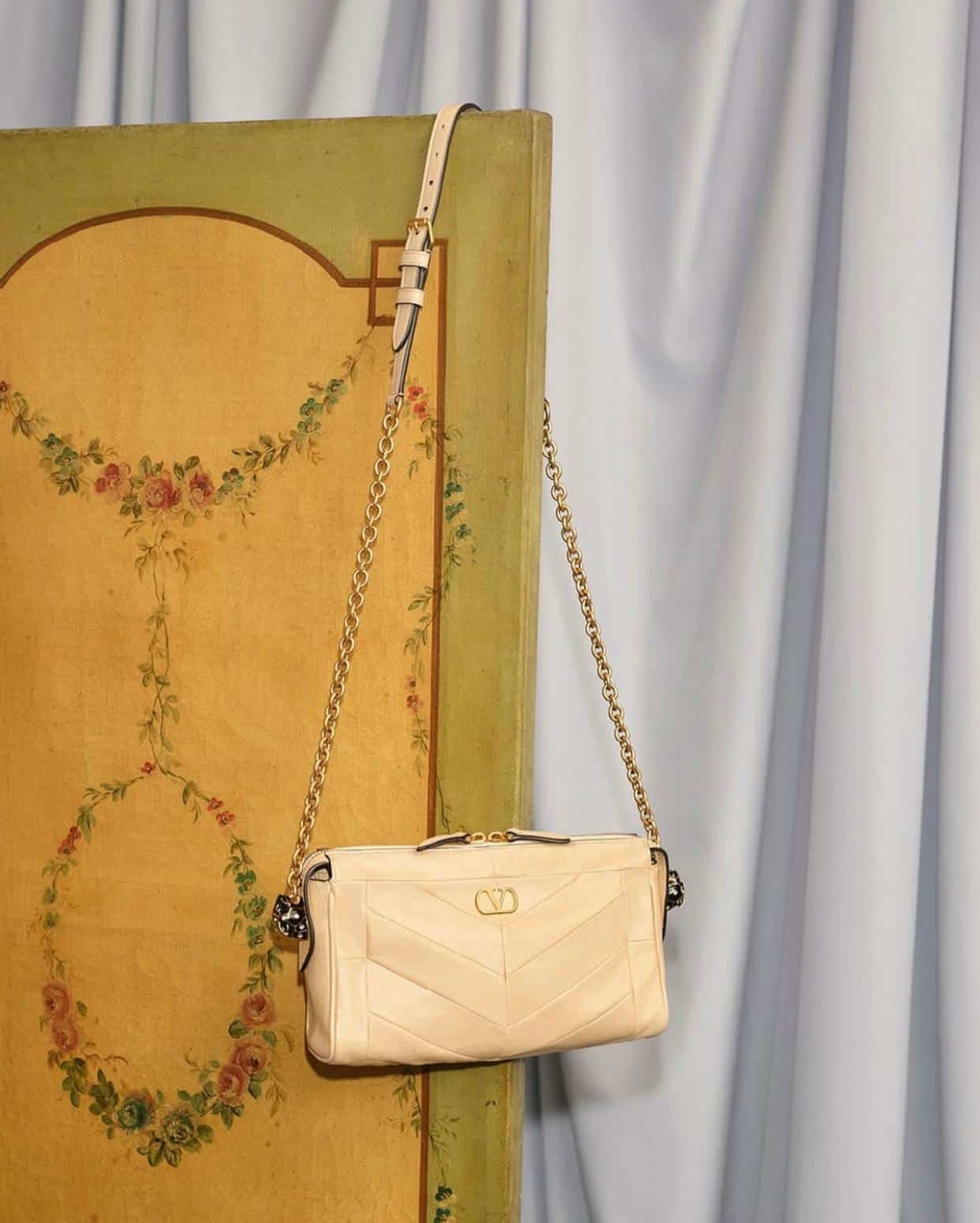
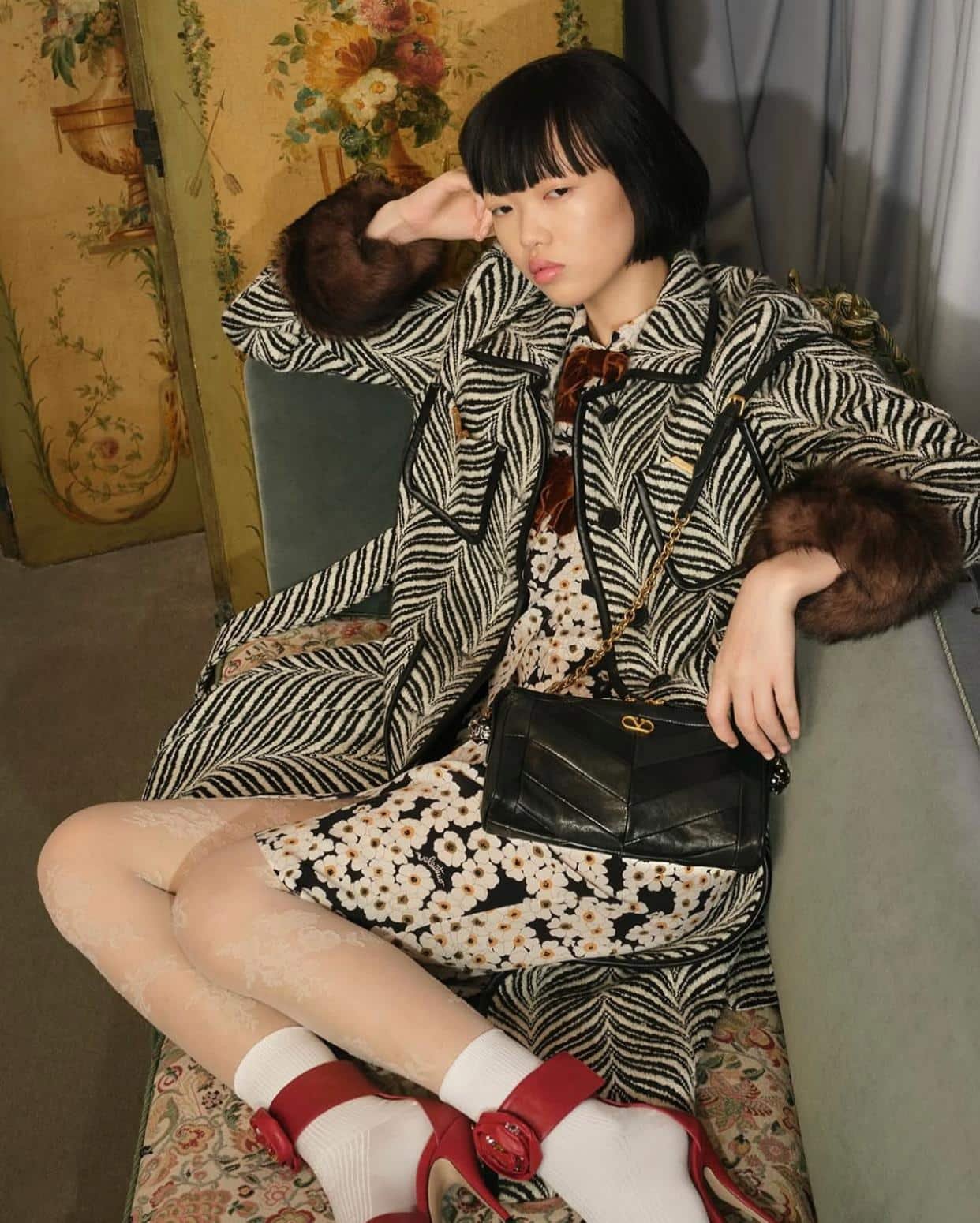
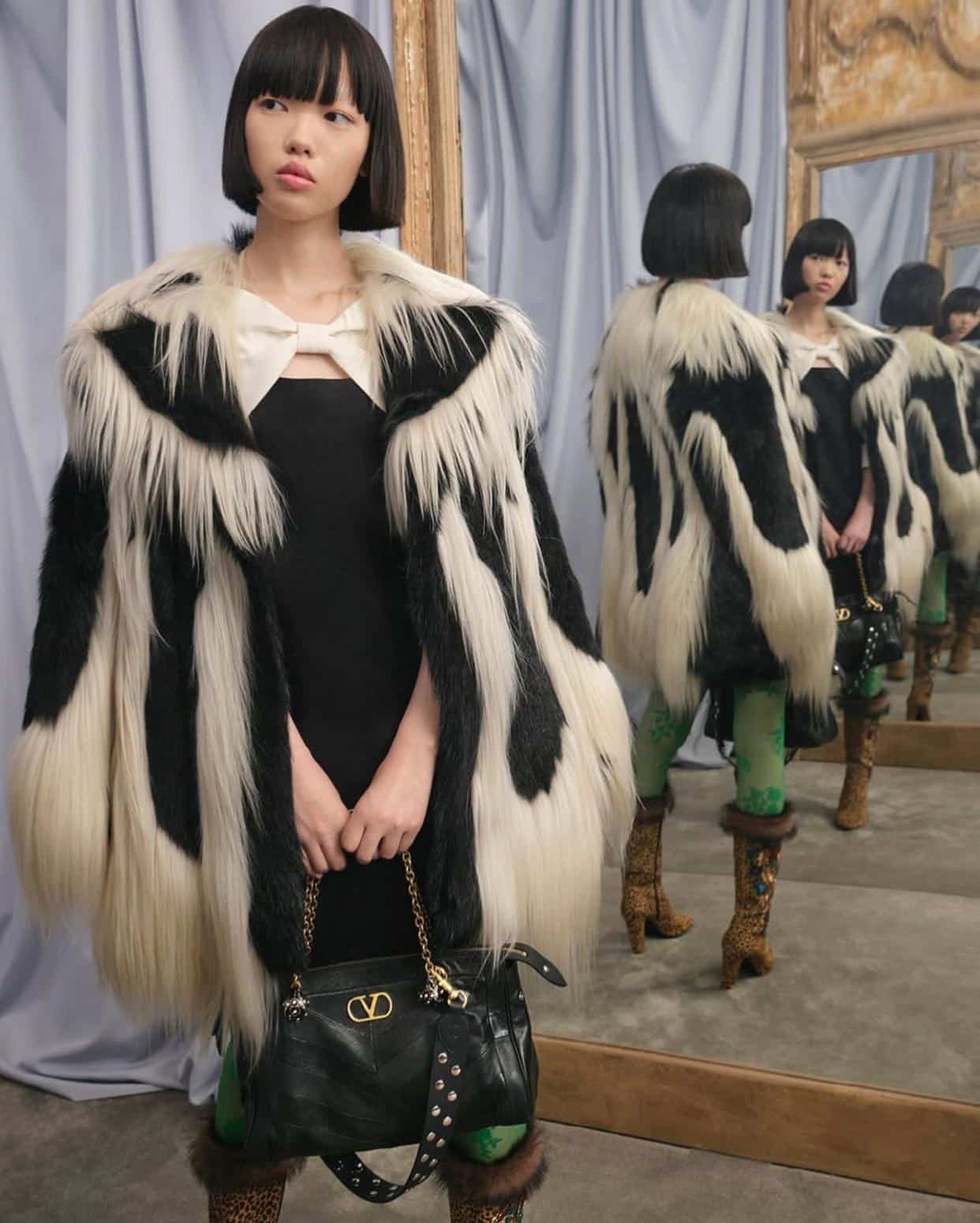
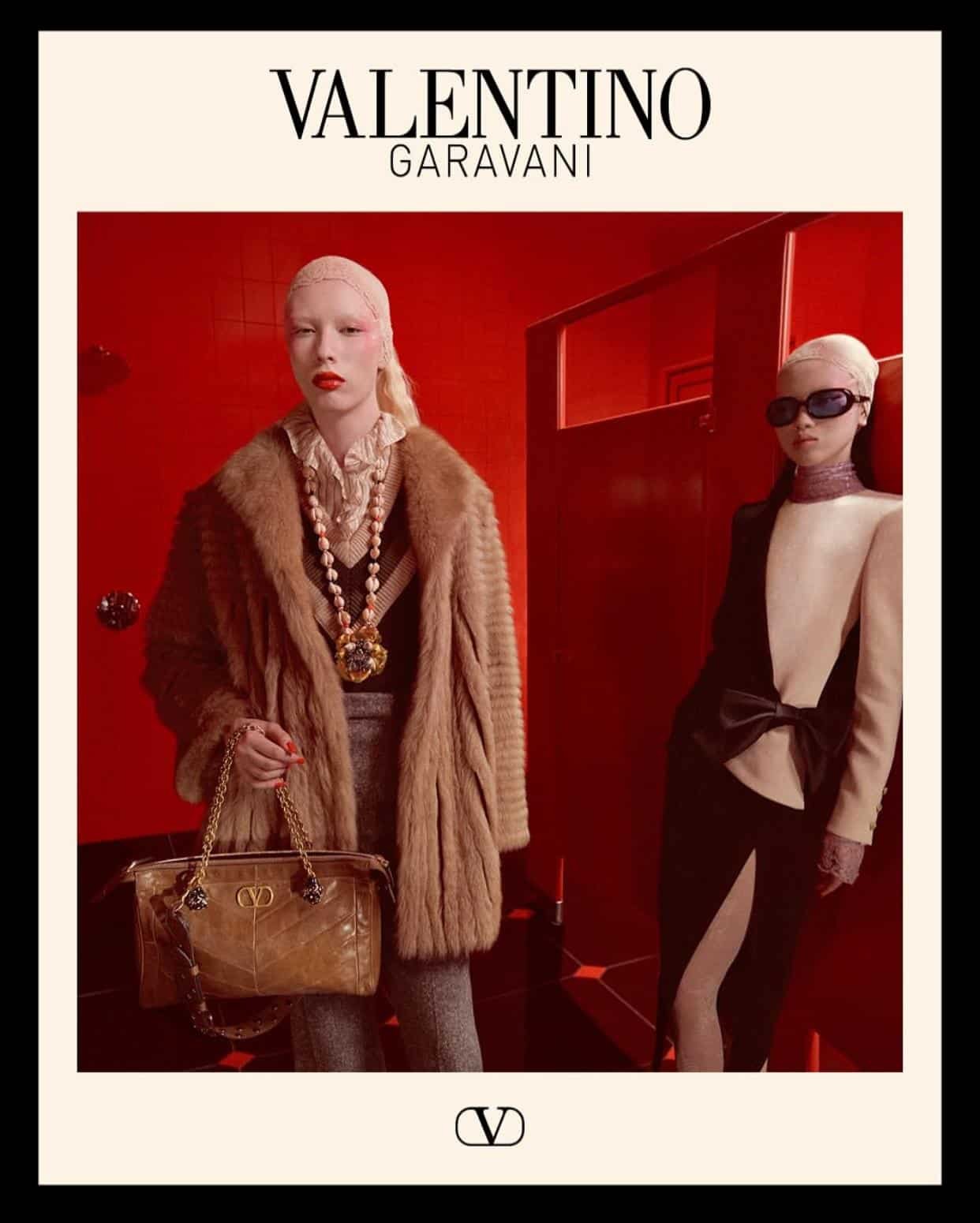
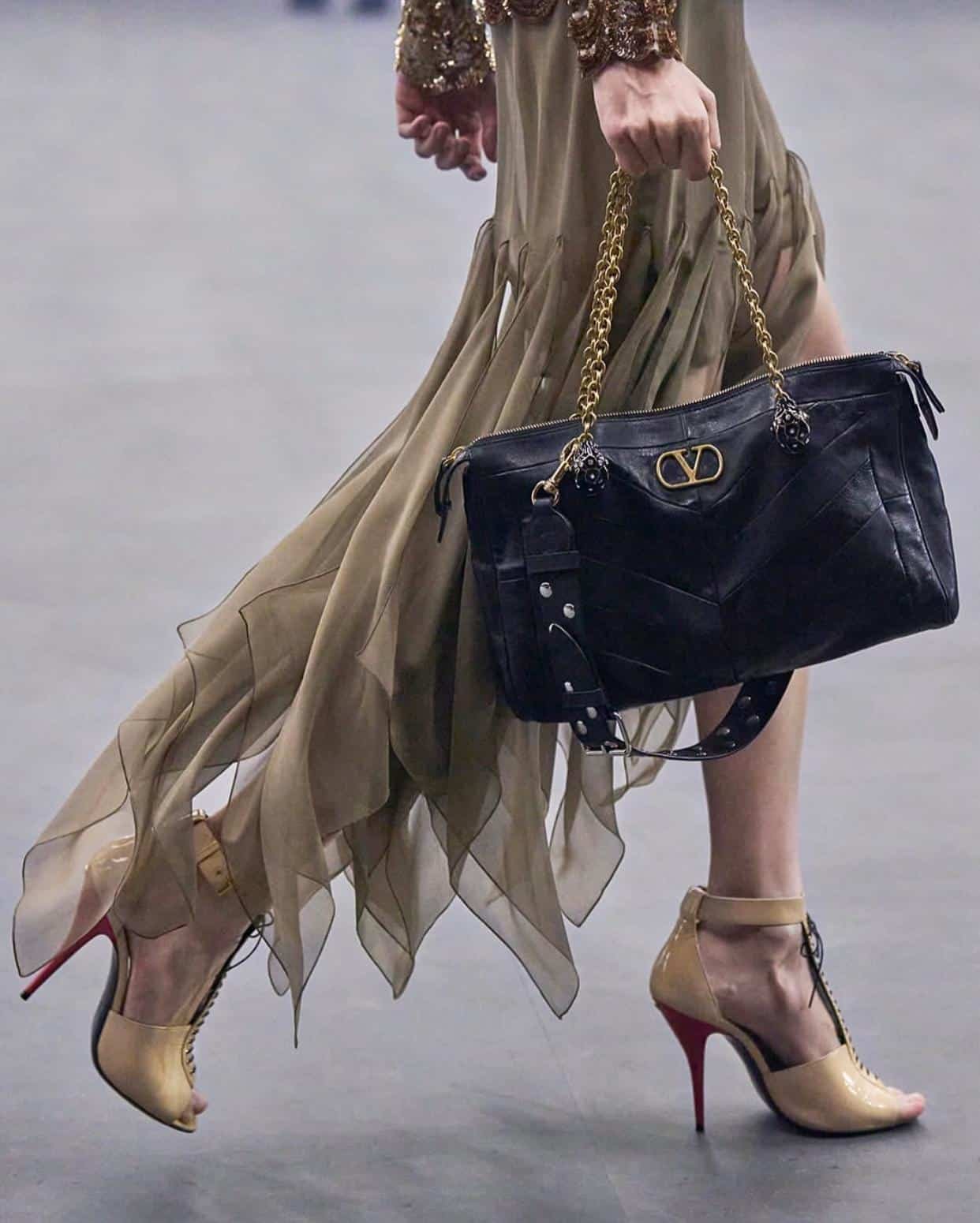
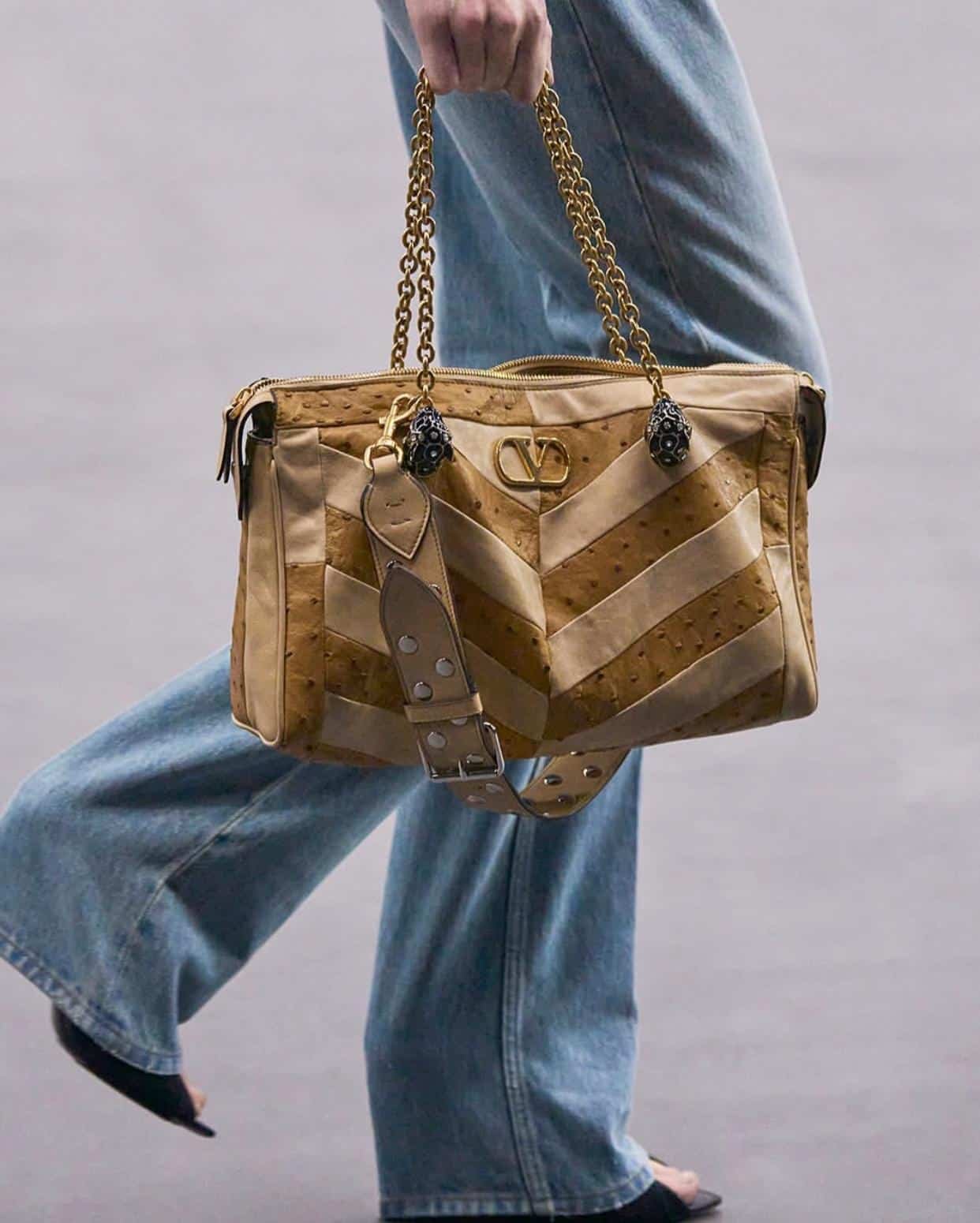
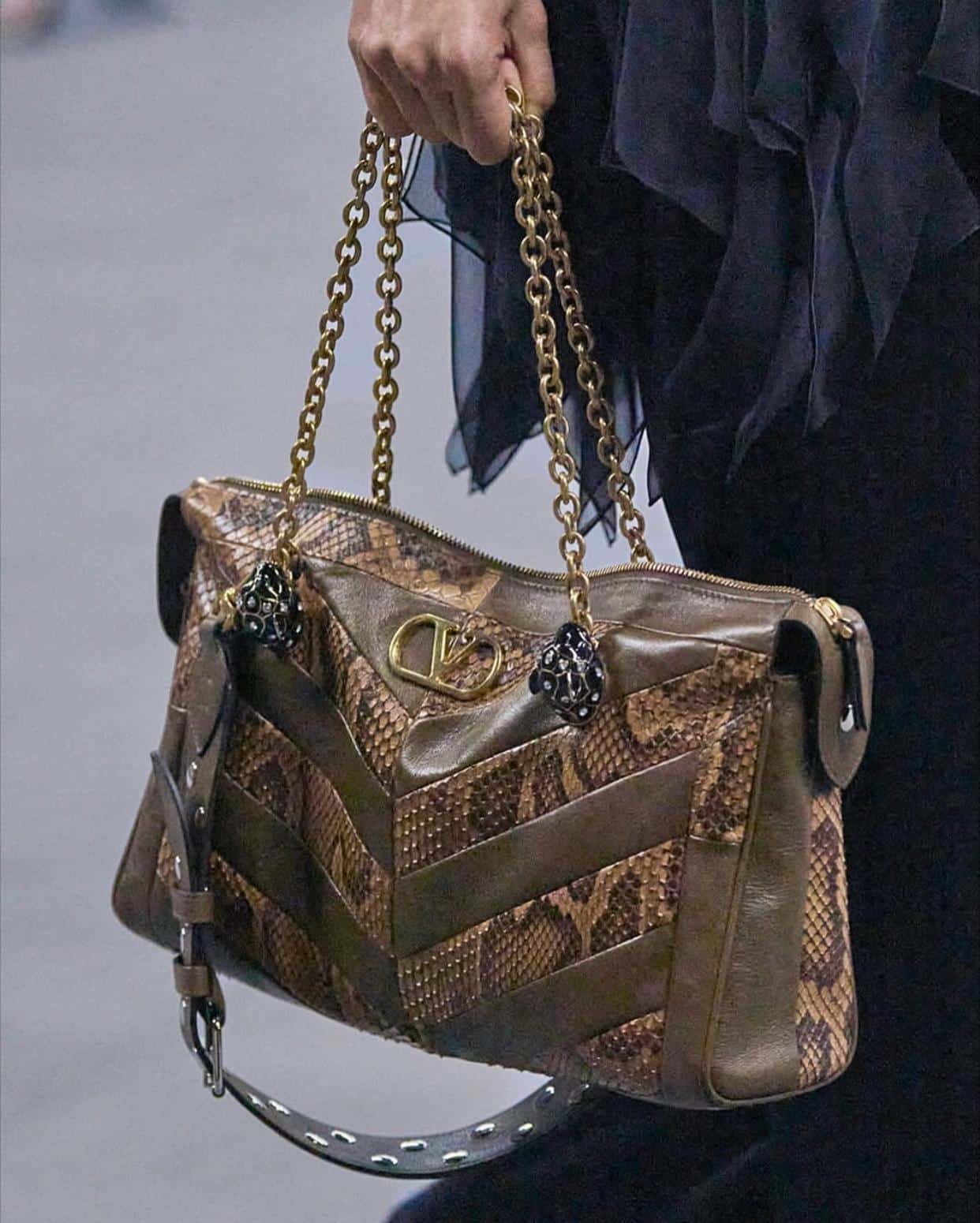
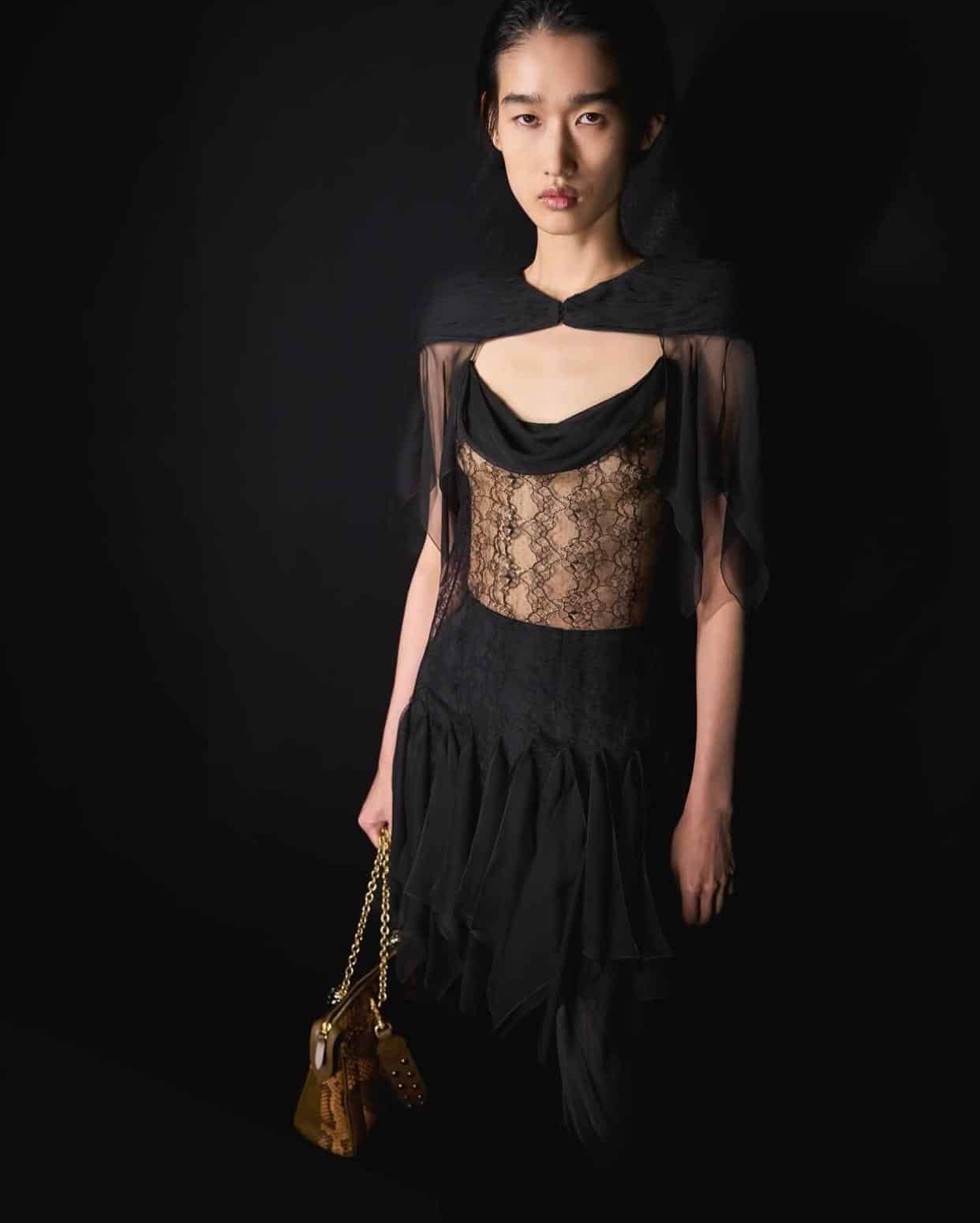
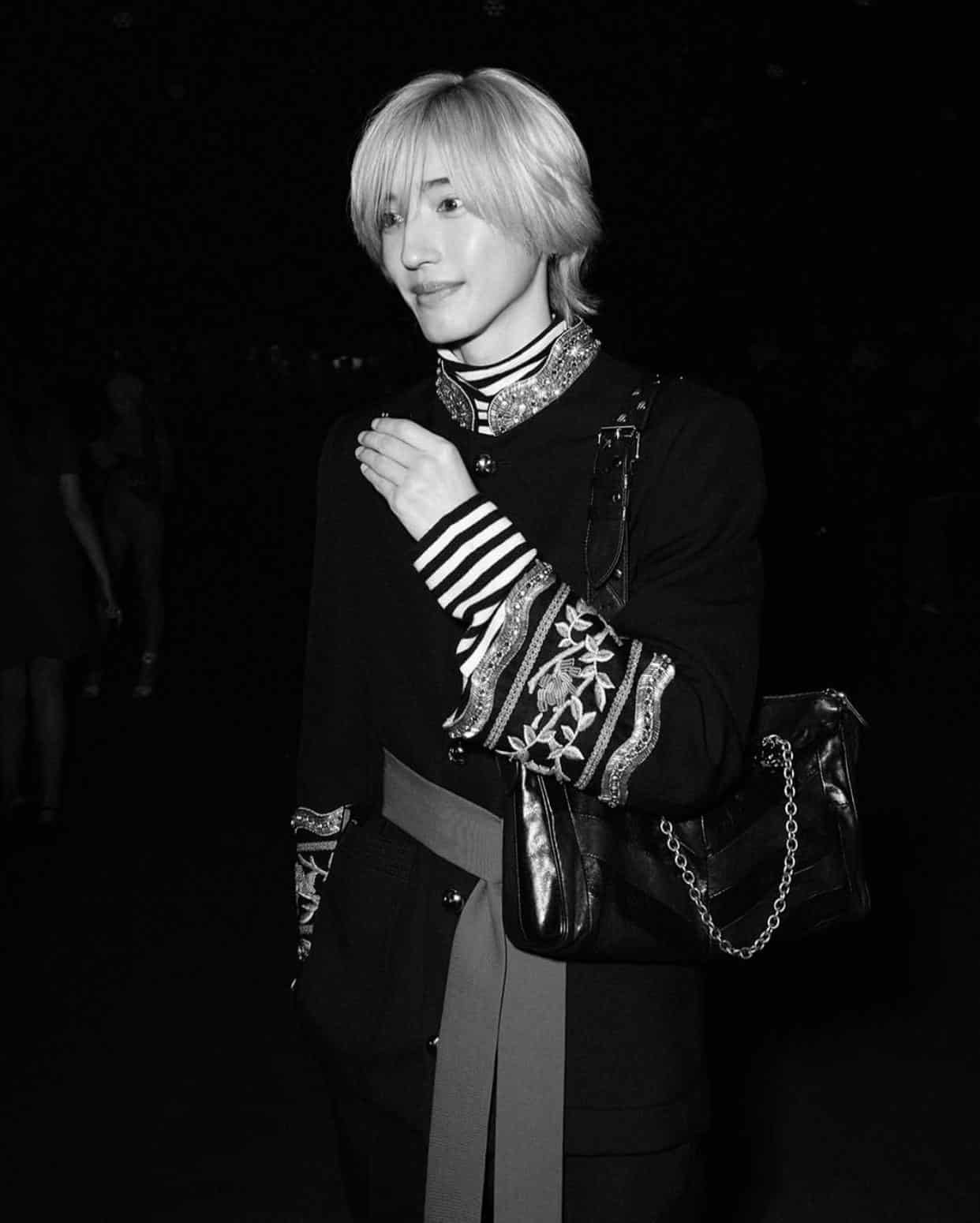
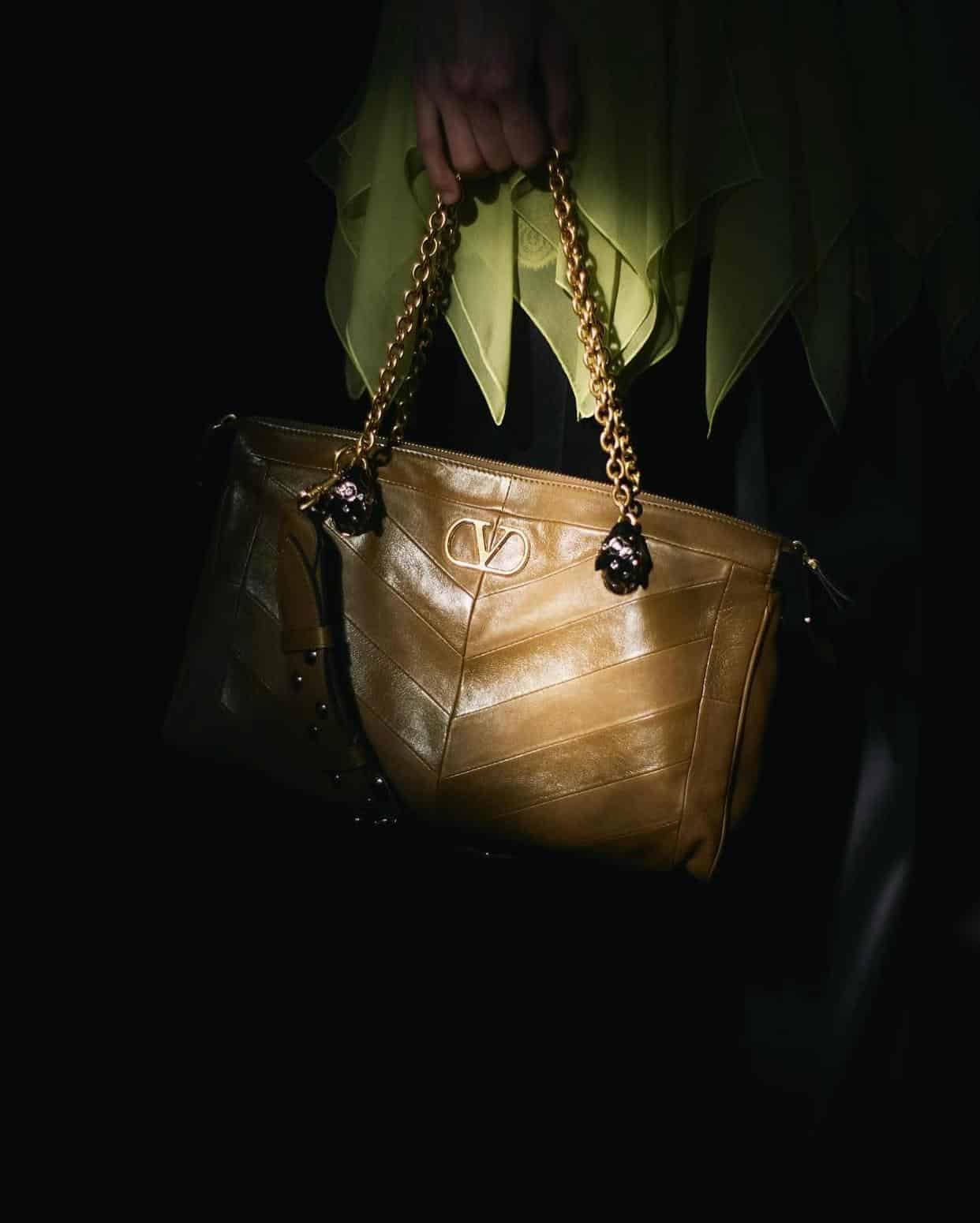
The Panthea is Alessandro Michele's defining bag for Valentino — and its most archival. The feline motif that anchors the bag's chain handles first appeared in the house's haute couture collection for Fall 1967: large, gem-eyed black cats on a silk mikado tunic. For nearly sixty years it circulated through scarves, minaudières, belt buckles, and jewelry before Michele brought it back as two Swarovski-encrusted enameled panther heads that clasp the chain straps of a structured chevron-patterned nappa body. Rihanna carried it. Bella Hadid carried it. Anne Hathaway was photographed with it on the set of The Devil Wears Prada sequel. The Panthea is the bag that makes Michele's position at Valentino legible: he does not invent new codes, he excavates existing ones and returns them at a higher temperature. Available in black, mud green, and beige, in suede, python, and precious-skin iterations, the Panthea continues through Cruise 2026 and Fall-Winter 2026 with new surfaces and embellishments — each season a new argument for the same feline.
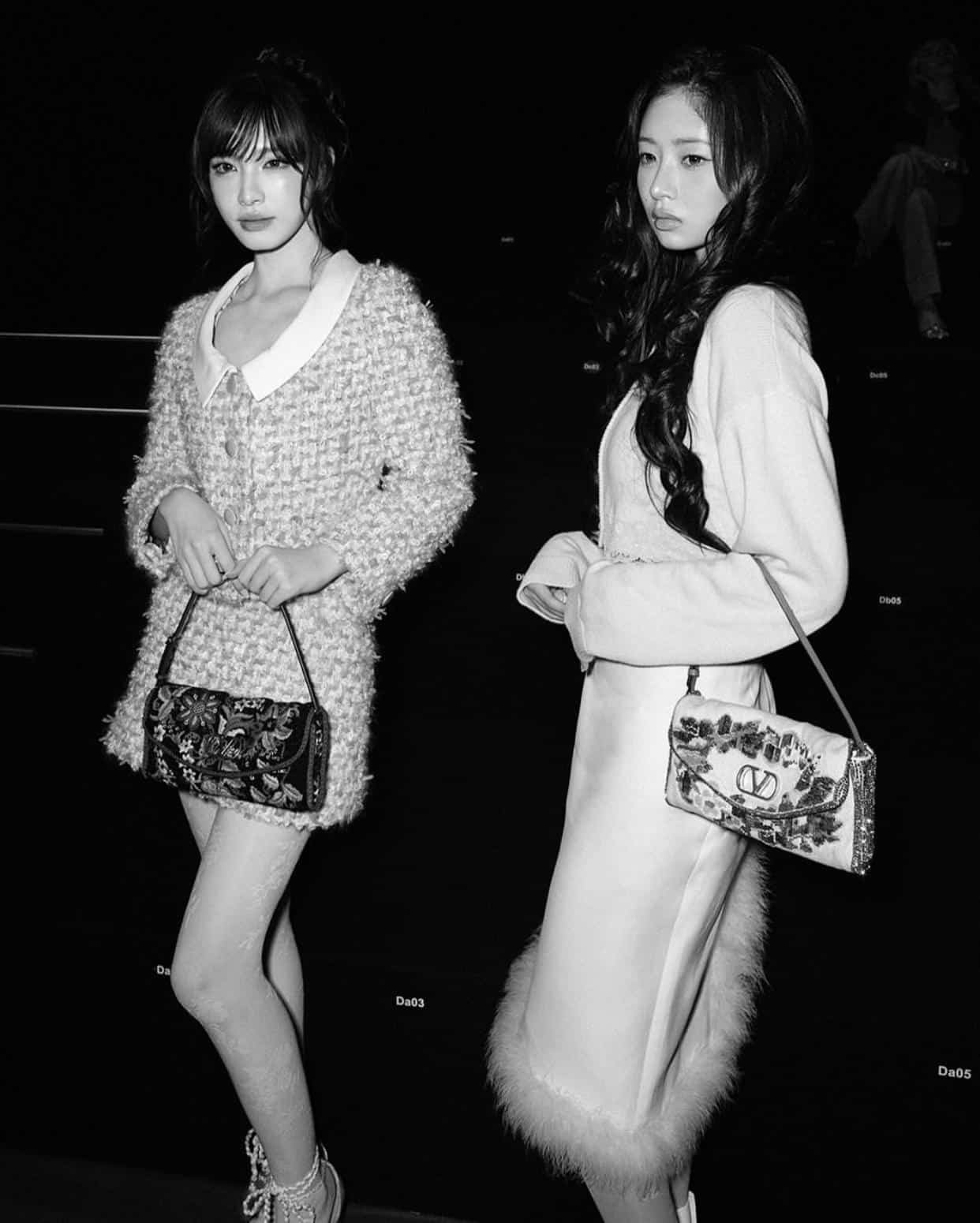
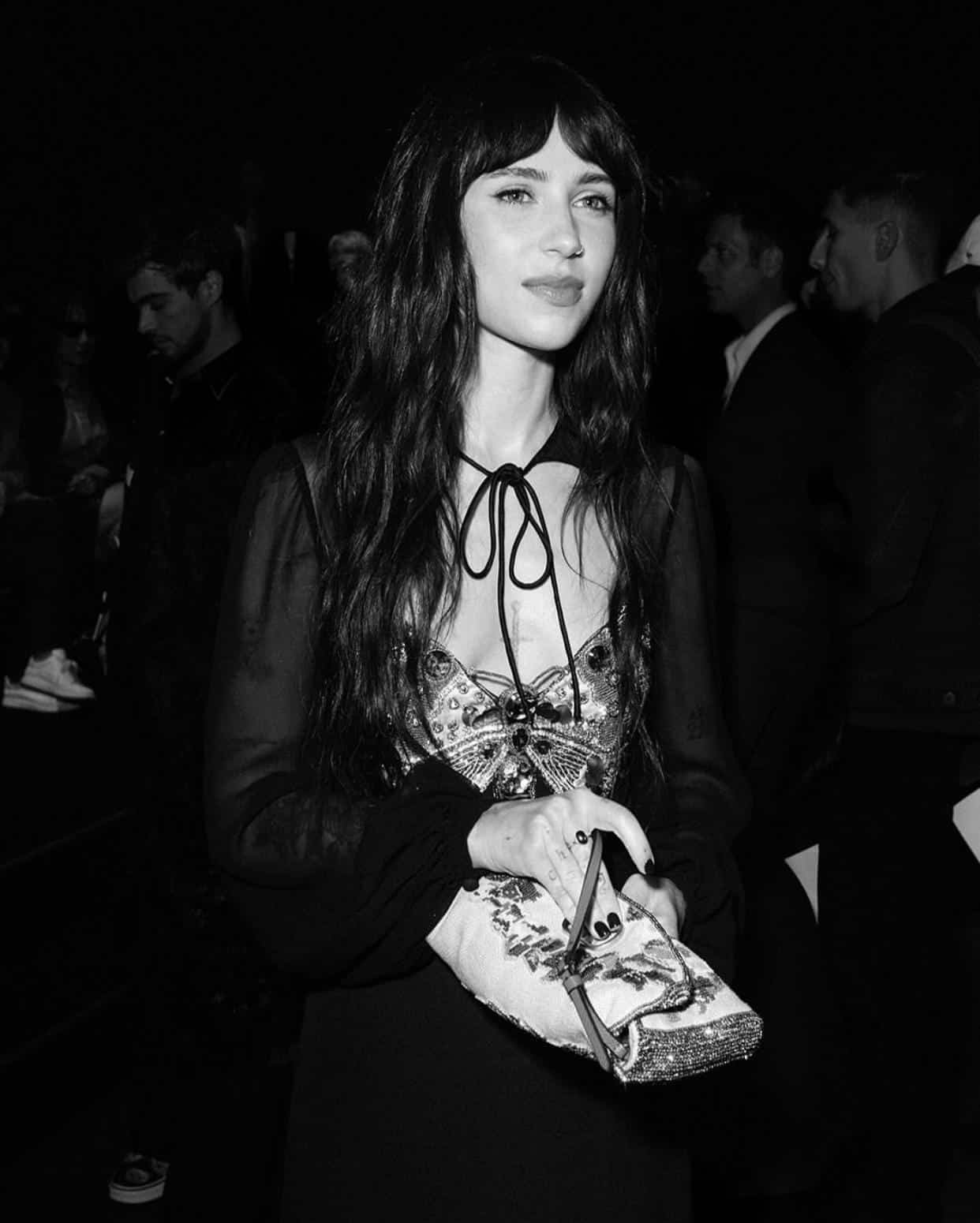
Alessandro Michele's bag vocabulary at Valentino is organized around a single appetite: decoration as intelligence, not compensation. The DeVain — a slim, elongated shoulder bag with a curved flap and prominent VLogo closure — arrives for Fall-Winter 2026 in versions covered in dense floral beadwork, sparkling metallic mesh, and crystal-ground embroidery. The Vain soft clutch is its evening counterpart: the same surface richness in a format that fits in the hand. The Nellcôte, a belt bag worn low across the waist with a studded leather strap, introduces what Michele calls "a more grounded, utilitarian note" — the underground edge that has always coexisted with the house's couture ambitions. The Locò, in soft nappa with VLogo hardware, and the Djuna, in rounded nappa with sensual shoulder shape, complete a contemporary vocabulary that is Valentino's most diverse accessory range since the founding era. Michele said of his Pre-Fall 2026 collection: "I'm in a phase where absence seems an element of decoration." Even the empty spaces, in his hands, are deliberate.
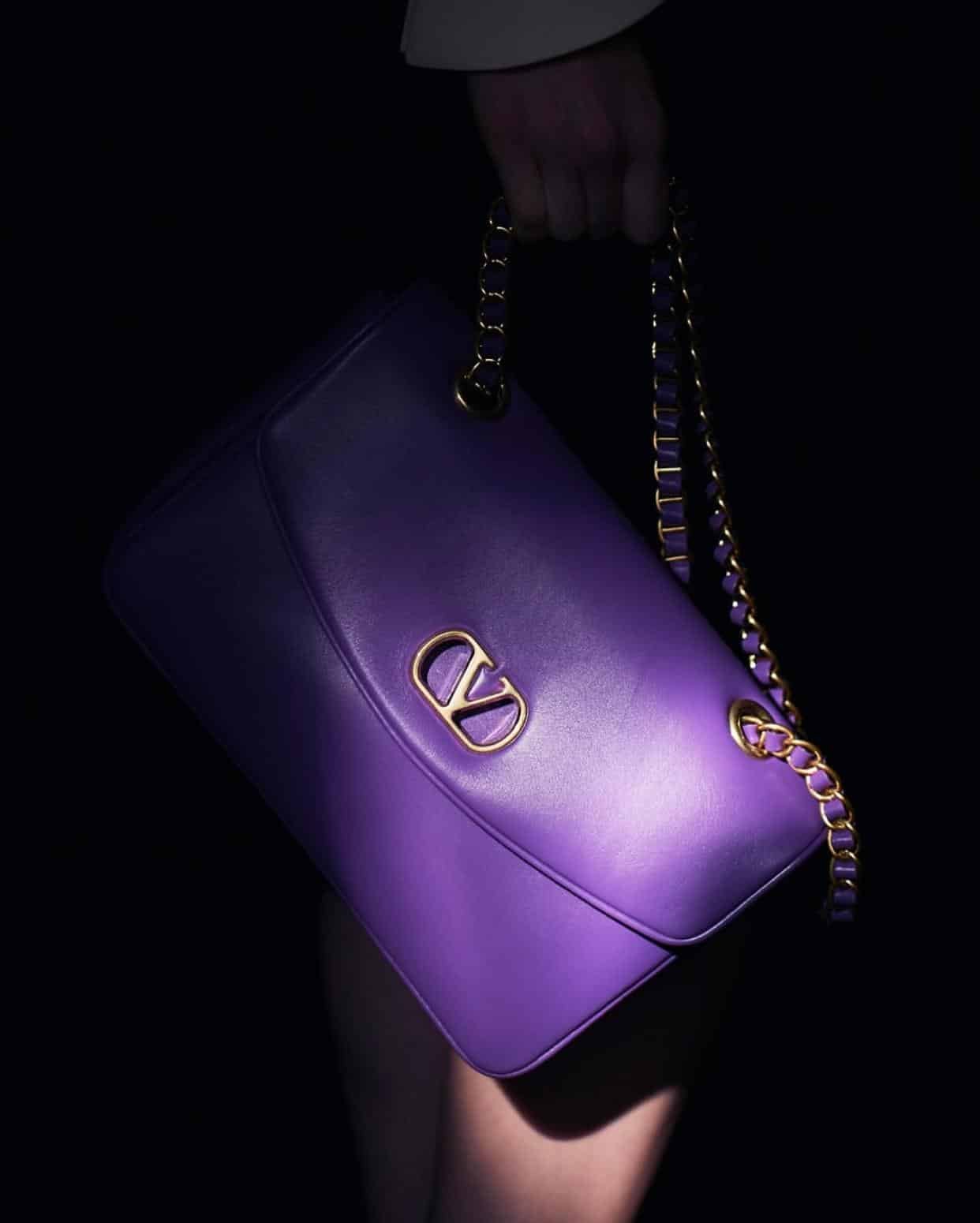
The VLogo Signature — an oversized gold-finished V in metal, set on smooth leather — is the house's most graphic contemporary code: the initial of a founder translated into hardware so large it reads as sculpture. The Vsling carries the logo on a chain-strap bag in a ton-sur-ton palette, clean and minimal in a house otherwise given to maximalism. The Antibes crossbody, available in two sizes, carries the VLogo Signature in antique-brass finish on a buckle-flap silhouette with rounded lines and padded trim — a softer reading of the brand's hardware vocabulary. Each of these bags operates in the same register: the house's identity expressed through the letter rather than the pyramid, the initial rather than the stud. Both systems are Roman. Both are Valentino. They are not competing codes — they are two alphabets of the same language, available simultaneously at 654 Madison Avenue.
For Fall-Winter 2026-2027, Alessandro Michele staged the Valentino runway at Palazzo Barberini in Rome — the 17th-century palace that had never previously hosted a fashion show — in a collection titled Interferenze: interferences, disruptions, the productive tension between order and instability. The Panthea returned in crocodile-effect leather, tapestry-style floral embroidery, and patchworked exotic skins. The DeVain was covered in butterflies and dense embroidery. A large, soft unnamed tote in grained two-tone leather offered what Michele described as "the negative of my maximalism" — the quiet shape that earns its place by contrast with everything ornate around it. Returning the house to Rome for its most important seasonal show was not a nostalgia gesture. It was a statement about where the authority of the codes originates — in the stones of the city, in the bugnato on the palace walls, in the pyramid-shaped shadow a stud casts on a piece of nappa leather.
The Valentino Garavani small leather goods carry the house's two primary codes — the Rockstud and the VLogo Signature — into objects scaled for the pocket. Wallets in Rockstud-trimmed nappa, card holders with the oversized V in antique gold, coin purses in the seasonal colorways, bag charms and keyrings that attach the pyramid hardware to any bag in any wardrobe. These are the most democratic expression of a house that otherwise operates at the scale of haute couture: the same Roman stud, the same Italian nappa leather, the same craftsmanship — in an object that fits between the fingers. At 654 Madison Avenue, they are displayed on the illuminated shelving that runs the ground floor perimeter, visible from the street through tall windows that face both Madison Avenue and 60th Street, as if the house had arranged its smallest objects to be seen first, from the outside, before anything else is known about what waits inside.
At an opera in Barcelona,
a young man saw women in red gowns
and decided that was his color.
In Rome, architects pressed stones into palace walls
in a technique called bugnato.
In 2010, two designers translated this
into a pyramid-shaped metal stud
and placed it on a bag.
Valentino sales doubled.
In 2016, Piccioli called it
"a punk symbol on a bourgeois object."
In 1967, a panther appeared on a couture tunic.
In 2025, it reappeared on a chain handle
encrusted with Swarovski crystals.
The house does not invent its codes.
It finds them in Rome
and returns them at a higher temperature.
Alessandro Michele was appointed creative director of Valentino in 2024, following a celebrated decade at Gucci and a period of reflection between the two positions. His first collections for the house — Avant les Débuts Resort 2025, the Pavillon des Folies Spring 2025 show, the Le Méta-Théâtre des Intimités Fall 2025 collection, the Interferenze Fall-Winter 2026 staging at Palazzo Barberini — have established a position that is both continuous with Valentino's founding DNA and distinctly his own. Michele is a maximalist in a house that was built on grandeur. He is an archivist in a house whose archives span sixty-five years of haute couture. He described his access to the Valentino archive as "a homecoming, a return to my mother's closet four decades ago." The Panthea bag — excavated from a 1967 couture collection and returned as a contemporary icon — is the clearest expression of this method. The Rockstud, which he waited more than a year to touch out of respect for the designers who created it, received his interpretation in Pre-Fall 2026. "What Marc did yesterday is old," Michele has said of his creative process at other moments. At Valentino, the yesterday in question is 1960. The house is still in conversation with its own founding.
654 Madison Avenue · New York · The Building That Was Calvin Klein
The Valentino flagship at 654 Madison Avenue — opened November 2023 — occupies the space that was previously Calvin Klein's iconic New York store, designed by John Pawson: a landmark of minimalist restraint that Valentino filled with seven-meter ceilings, exposed steel columns, green onyx display units, red lacquered wardrobes, Botticino and Nero Marquina marble floors, and the paintings of Mario Schifano in partnership with the Magazzino Italian Art museum. The transformation is not ironic — it is declarative. Valentino has been in New York since 1970, when Valentino Garavani first opened on Fifth Avenue, met Jackie Kennedy at the boutique, attended Studio 54, and understood that the city wanted what Rome had made. The Madison Avenue flagship operates across three floors: ground floor for accessories and footwear, second floor for women's ready-to-wear with two VIP areas inspired by the atmosphere of Italian ateliers. The complete handbag collection is present — Panthea, Rockstud, DeVain, Vain, Nellcôte, VLogo Signature, Vsling, Antibes, Locò — alongside the seasonal capsules and the small leather goods. The flagship also carries a second New York address at 98 Prince Street in SoHo for the full collection in a downtown register
© Maison Valentino
© Maison Valentino
© Maison Valentino

© Maison Valentino
© Maison Valentino
© Maison Valentino
© Maison Valentino
© Maison Valentino
© Maison Valentino
© Maison Valentino
© Maison Valentino
© Maison Valentino
© Maison Valentino
© Maison Valentino
© Maison Valentino

© Maison Valentino
© Maison Valentino
© Maison Valentino
© Maison Valentino
© Maison Valentino
© Maison Valentino
© Maison Valentino
© Maison Valentino
© Maison Valentino
MAISON VALENTINO
© Maison Valentino